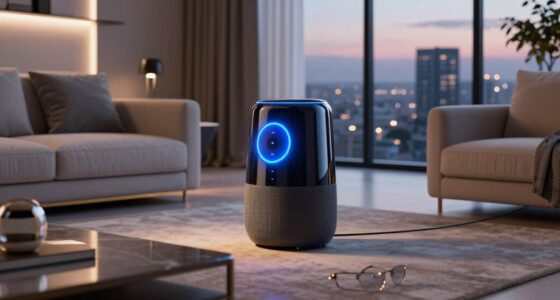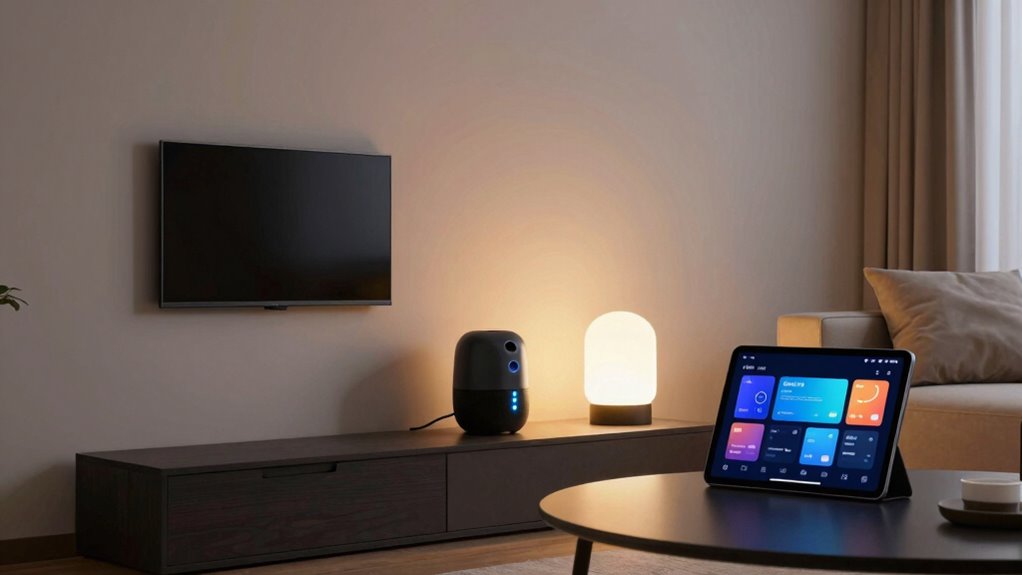

Smart homes are moving beyond single devices to become interconnected ecosystems that work together seamlessly. You can control everything from lighting to thermostats through centralized systems or voice commands, making your home more energy-efficient and responsive. These interconnected systems learn your routines and adjust settings automatically, creating a more intuitive living environment. By embracing this shift, you’ll experience a smarter, more sustainable home—if you stay tuned, you’ll discover how these advancements continue to shape the future of living spaces.

Get home appliances delivered free with Prime
- Fast, free delivery on millions of items
- Prime Video, Amazon Music and more included
- Member-only deals all year
Key Takeaways
- Smart homes are transitioning from isolated devices to interconnected ecosystems for seamless communication and improved efficiency.
- Integrated systems enable adaptive environments that learn routines and automatically optimize settings.
- Centralized control interfaces, such as apps and voice assistants, simplify management of multiple devices.
- Ecosystem expansion enhances user experience with more intuitive, responsive, and sustainable living spaces.
- Moving beyond single devices fosters energy savings, environmental benefits, and a more cohesive smart home environment.

But the benefits go beyond just convenience. These devices are increasingly designed with energy efficiency in mind, helping you reduce waste and lower utility bills. When you use voice commands to turn off unused devices or set your thermostat to an eco-friendly temperature, you’re actively participating in sustainable living. Smart systems can also learn your habits over time, adjusting lighting and climate controls automatically to optimize energy use. For example, your smart thermostat might lower the temperature when you leave the house or turn on the heating just before you wake up, ensuring comfort without unnecessary energy consumption. This intelligent automation not only benefits the environment but also saves you money in the long run. Additionally, energy efficiency has become a key focus in smart home design, emphasizing sustainable living practices. Beyond individual devices, the real shift happens when multiple smart products connect and work together as a cohesive network. Instead of managing each gadget separately, you now have a network that communicates seamlessly. For instance, your smart security system can trigger your smart lights to turn on if it detects movement at night, or your smart blinds can open automatically when sunlight hits the window. This interconnectedness means your home responds dynamically to your needs, enhancing both security and efficiency. It also simplifies your life by centralizing control, whether through a single app or voice assistant, making the smart home feel more integrated and less fragmented. As this ecosystem expands, the focus shifts from isolated devices to integrated, intelligent environments. You no longer need to think about individual gadgets; instead, you experience a smarter, more adaptive home that learns from your routines and adjusts accordingly. Interconnected smart home systems exemplify this trend, enabling a truly cohesive experience. Moreover, the integration of smart home ecosystems encourages the development of more intuitive and user-friendly interfaces, making it easier for homeowners to customize and control their environment. The ability to integrate multiple devices into a single system is transforming the way we interact with our living spaces, creating a more seamless experience. Voice control remains a key interface, making it easy to manage complex systems effortlessly. Ultimately, the move beyond single devices creates a more intuitive, energy-efficient, and responsive living space—one that truly caters to your lifestyle.
Products Worth Considering

Logitech MX Master 4 Ergonomic Wireless Mouse with Haptics – Graphite

LG 27GR83Q-B 27-inch Ultragear QHD IPS Gaming Monitor

DJI Mini 4K Drone Combo with 4K Camera, 3-Axis Gimbal, and Two Batteries
As an affiliate, we earn on qualifying purchases.
Frequently Asked Questions
How Do Smart Home Devices Communicate With Each Other Securely?
Smart home devices communicate securely by using device encryption and secure protocols. You can guarantee this by choosing devices that support strong encryption standards like WPA3 or TLS. These protocols encrypt data during transmission, preventing eavesdropping or tampering. Regular updates and strong, unique passwords further enhance security. By prioritizing devices with robust encryption and secure communication methods, you create a safer, more private smart home environment.
Can I Control My Smart Home Remotely Without Internet?
In the age of dial-up modems, remote access was a distant dream, but now, you can control your smart home offline. While most devices require internet for remote access, some smart hubs and local control systems let you manage your devices offline. This offline control guarantees your smart home remains functional even during internet outages, giving you peace of mind with seamless, secure remote access whenever you need it.
Are Smart Home Systems Compatible With Existing Home Wiring?
Yes, many smart home systems are compatible with existing home wiring, especially when they follow standard compatibility standards. You can often integrate smart devices into your current wiring setup without extensive renovations. However, it’s essential to check each device’s compatibility standards and guarantee your wiring meets the necessary requirements. This way, you can seamlessly upgrade your home with smart technology without costly rewiring or modifications.
What Are the Privacy Concerns With Interconnected Devices?
Privacy concerns with interconnected devices stem from their constant data exchange, risking exposure of your personal information. While data encryption helps protect your data, vulnerabilities still exist if manufacturers neglect security updates. You might enjoy convenience, but your user privacy could be compromised if hackers access unprotected networks. Staying informed about device security features and choosing reputable brands guarantees you maintain control over your personal data in this interconnected world.
How Do I Update or Troubleshoot Multiple Smart Devices Simultaneously?
To update or troubleshoot multiple smart devices simultaneously, first guarantee device synchronization across your network. Use your smart home app’s bulk update feature for firmware updates, which streamlines the process. If issues persist, restart your devices and router. Check for app notifications about updates, and follow prompts to resolve problems. Regularly updating firmware keeps devices secure and functioning smoothly, preventing potential glitches across your interconnected smart home system.
Conclusion
As you embrace the evolving smart home, think of it as planting a garden where each device is a seed, growing together into a thriving ecosystem. Just like a gardener tends to every plant, you’re nurturing a connected environment that adapts to your needs. With over 50 billion devices expected by 2030, your home is becoming a symphony of harmony and innovation—where every note, every click, brings you closer to effortless living.