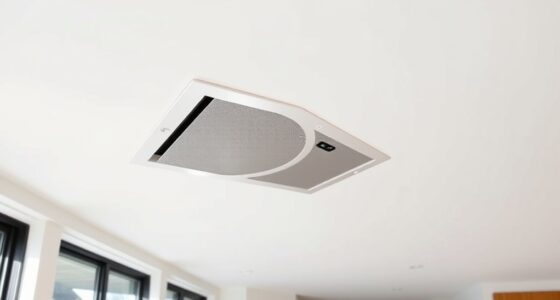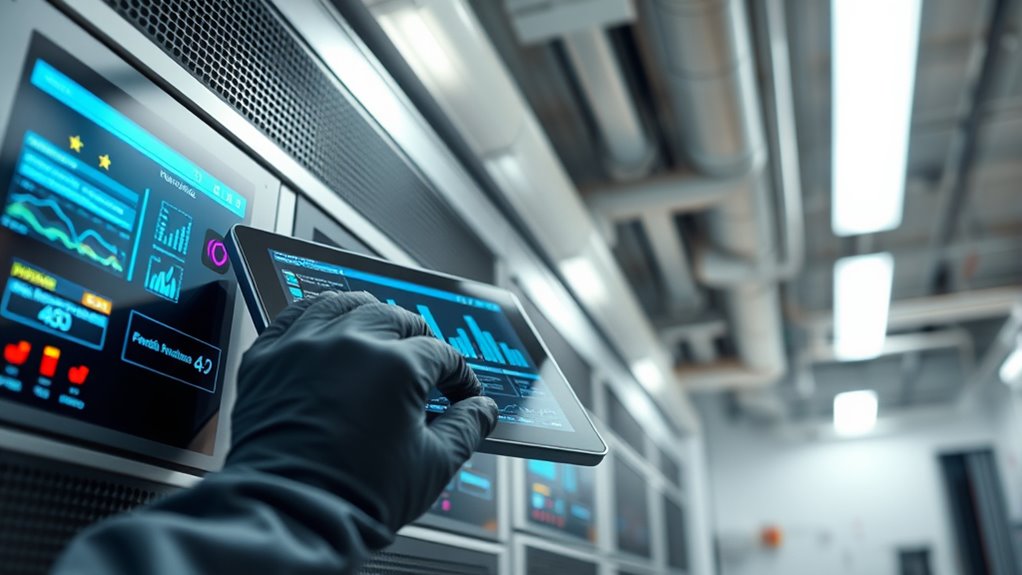

AI-powered predictive maintenance helps prevent HVAC breakdowns by continuously analyzing data from sensors that monitor temperature, pressure, and airflow. When the system detects early warning signs like pressure drops or temperature fluctuations, it alerts you before major issues occur. This proactive approach reduces downtime, extends equipment lifespan, and cuts repair costs. If you want to discover how these advanced techniques keep your system running smoothly, there’s more to uncover.
Key Takeaways
- AI analyzes real-time sensor data to detect early signs of equipment failure, enabling proactive maintenance.
- Continuous monitoring of temperature, pressure, and airflow helps identify anomalies before breakdowns occur.
- Machine learning models predict potential failures by recognizing patterns indicating component wear or malfunctions.
- Automated alerts notify technicians of issues early, reducing unexpected system failures and downtime.
- Proper sensor calibration and high-quality data ensure accurate AI analysis, optimizing maintenance schedules and system reliability.

Elitech HVAC Refrigerant Leak Detector Heated Diode Sensor Halogen Freon Sniffer, Air Conditioning Detection, R22 R410A R134A R1234YF CFCs HCFCs HFCs, ILD-100H
Heated Diode Sensor: Compared to traditional sensors, the results are also more accurate for all halogenated refrigerants.
As an affiliate, we earn on qualifying purchases.
As an affiliate, we earn on qualifying purchases.
Understanding HVAC System Failures and Their Causes

HVAC system failures often stem from common issues like worn-out components, dirty filters, or refrigerant leaks. These are the primary causes behind many breakdowns and follow recognizable failure patterns. For example, worn-out motors may cause inconsistent airflow, while clogged filters reduce efficiency and strain the system. Refrigerant leaks often lead to insufficient cooling and increased energy consumption. Recognizing these failure patterns helps you identify problems early. Frequent cycling, strange noises, or reduced airflow are signs of underlying issues. Understanding these common causes allows you to anticipate potential failures before they escalate. Regular maintenance can catch these issues early, preventing more significant damage and costly repairs down the line. Staying aware of typical failure patterns empowers you to keep your HVAC system running smoothly. Additionally, ventilation considerations and proper airflow are crucial for maintaining system health and efficiency, especially in environments with significant temperature fluctuations.

HVAC Surge Protector, Zuomeng 120/240VAC Universal Air Conditioner Surge Protective Device with 20kA Surge Absorption, Dual LED Indicators, 3 Type of Protection to Protect HVAC Systems
SURGE PROTECTION EXPERT FOR HVAC SYSTEMS: This high-performance surge protector absorbs up to 20kA of surge, effectively shielding…
As an affiliate, we earn on qualifying purchases.
As an affiliate, we earn on qualifying purchases.
The Role of Data Collection and Sensor Technology in HVAC Maintenance
Monitoring HVAC systems has become much more effective thanks to advances in data collection and sensor technology. Modern sensors constantly gather real-time data on temperature, humidity, airflow, and pressure, enabling precise monitoring. Proper sensor calibration is essential to guarantee accuracy, preventing false alarms or missed issues. As you implement these sensors, protecting data security is vital to prevent unauthorized access and maintain system integrity. Secure data transmission and storage safeguard sensitive information and build trust in your maintenance process. These technological improvements allow you to detect inefficiencies early, optimize performance, and reduce downtime. Additionally, integrating advanced analytics tools can help interpret sensor data more effectively, leading to smarter maintenance decisions. By integrating reliable sensors and prioritizing data security, you set a solid foundation for effective predictive maintenance and long-term HVAC system health.

Elmtap Temperature Humidity and Pressure Sensor I2C Module in Waterproof Stainless Steel Housing Compatible with for Automotive HVAC Weather and Industrial Monitoring(BME-280)
[ACCURATE READINGS] The sensors provide precise measurements for temperature, humidity, and pressure, making them for critical applications requiring…
As an affiliate, we earn on qualifying purchases.
As an affiliate, we earn on qualifying purchases.
How AI Analyzes Data to Detect Early Warning Signs
Artificial intelligence analyzes vast amounts of sensor data to identify patterns and anomalies that human operators might overlook. Proper sensor calibration guarantees data accuracy, allowing AI systems to detect subtle changes indicating potential issues early. Proper sensor calibration is essential for maintaining color accuracy and reliable data analysis. As AI monitors HVAC systems, it recognizes deviations from normal operating patterns, signaling possible malfunctions before they worsen. Ensuring data quality assurance is critical for effective AI predictions and avoiding false alarms. Additionally, implementing robust validation protocols helps maintain the integrity of the data used for analysis. Protecting data privacy remains vital; AI systems handle sensitive information securely, guaranteeing compliance with privacy standards. By continuously analyzing real-time data, AI pinpoints early warning signs like abnormal temperature fluctuations or pressure drops, enabling proactive maintenance. This precise data analysis helps prevent costly breakdowns and optimizes system performance, giving you confidence that your HVAC operates efficiently while safeguarding sensitive information. European cloud innovation supports scalable and reliable AI solutions, enhancing predictive maintenance capabilities.

Universal ECM Motor Tester for HVAC, Advanced Diagnostic Tool for Electronically Commutated Motors, Compatible with GE, Emerson, Regal Rexnord, Genteq, York, Carrier, Trane, Lennox
【INSTANT GO/NO-GO DIAGNOSIS】 – Stop the guesswork in seconds! No complicated screens or data to interpret. Just connect…
As an affiliate, we earn on qualifying purchases.
As an affiliate, we earn on qualifying purchases.
Machine Learning Algorithms and Predictive Analytics in Action
Machine learning algorithms transform raw sensor data into actionable insights by identifying complex patterns that traditional methods might miss. Through algorithm refinement, these models enhance accuracy and efficiency, enabling precise predictive modeling. As data flows from HVAC systems, the algorithms analyze variables such as temperature, pressure, and vibration, detecting subtle anomalies indicating potential failures. This process often relies on sensor data quality to ensure reliable predictions. Additionally, data preprocessing techniques help clean and normalize data, further improving model performance. Incorporating robust data integration methods ensures that data from diverse sources remains consistent and reliable. This continuous learning process refines predictions, reducing false alarms and increasing maintenance precision. Implementing reliable data collection is crucial for maintaining prediction accuracy over time. You benefit from real-time insights that pinpoint issues before they escalate, saving time and costs. Predictive analytics powered by machine learning directly support proactive maintenance strategies, allowing you to schedule repairs at ideal times. Incorporating reliable connections and proper hardware setup ensures your data transmission remains consistent, further improving system performance. Ultimately, these advanced algorithms ensure your HVAC systems operate reliably, minimizing downtime and extending equipment lifespan through smarter, data-driven decision-making.
Benefits of AI-Driven Maintenance for HVAC Systems

Leveraging AI-driven maintenance transforms how you manage HVAC systems by providing proactive, data-backed insights. With AI, you can detect potential issues early, preventing costly breakdowns and reducing downtime. This approach leads to significant cost savings by minimizing emergency repairs and optimizing maintenance schedules. Additionally, AI enhances energy efficiency by continuously monitoring system performance and adjusting operations for peak power use. The integration of navigation and mapping in smart systems allows for more precise diagnostics and targeted interventions. As a result, your HVAC systems run more smoothly, consuming less energy and lowering utility bills. The real-time insights offered by AI enable you to make informed decisions quickly, improving overall system reliability. By embracing AI-driven maintenance, you not only cut costs but also create a more sustainable environment with efficient energy use. Predictive maintenance is a key technology that leverages AI to forecast potential failures before they occur.
Implementing Predictive Maintenance: Challenges and Best Practices
Implementing predictive maintenance requires careful data collection strategies to guarantee accuracy and reliability. You also need to optimize maintenance schedules based on real-time insights to prevent unexpected failures. Focusing on these areas helps you overcome common challenges and achieve more effective maintenance practices. Additionally, understanding piercing care and hygiene is essential for maintaining equipment in environments where cleanliness directly impacts system longevity. Incorporating air quality management strategies can further enhance system performance and extend equipment lifespan by reducing contaminants that may cause wear and malfunction. Recognizing the importance of sustainable practices can help reduce environmental impact and promote long-term system efficiency. Regularly monitoring water quality and system conditions can lead to early detection of issues, ultimately preventing costly breakdowns. By integrating reliable backup power solutions into maintenance planning, you can ensure continuous operations even during outages, further supporting system resilience.
Data Collection Strategies
Effective data collection is essential for successful predictive maintenance, but it often presents significant challenges. You need accurate sensor calibration to guarantee reliable data, as miscalibrated sensors can lead to false alerts or missed issues. Additionally, safeguarding data privacy is critical, especially when collecting sensitive information about your HVAC systems or facility. Implementing secure data storage and access controls helps prevent unauthorized use. You should also consider the quality and consistency of data sources, avoiding gaps or noise that can compromise analysis. Automating data collection processes minimizes human error and increases efficiency. Vetted data sources should be prioritized to ensure the accuracy and reliability of collected information. Incorporating automated data validation processes can further enhance data integrity by identifying anomalies early. Maintaining sensor calibration is an ongoing process that ensures continued accuracy over time, reducing errors in predictive models. By focusing on precise sensor calibration, protecting data privacy, and maintaining high data integrity, you set a solid foundation for effective predictive maintenance strategies.
Maintenance Scheduling Optimization
Optimizing maintenance schedules is a key step once you have reliable data from well-calibrated sensors and secure data management in place. Proper sensor calibration ensures accurate readings, which are essential for effective scheduling. By analyzing sensor data, you can predict when components need maintenance, preventing unexpected breakdowns. This proactive approach not only reduces downtime but also enhances energy efficiency, as HVAC systems operate at their best without unnecessary interventions. To maximize benefits, integrate AI algorithms that dynamically adjust maintenance timelines based on real-time data. Prioritize consistent calibration routines and data accuracy to avoid false triggers or missed alerts. Additionally, leveraging connected equipment can provide more comprehensive insights for maintenance planning. Incorporating regulatory compliance considerations ensures that maintenance practices adhere to industry standards and avoid potential penalties. Ultimately, scheduling maintenance based on predictive insights leads to smarter resource use, cost savings, and a more sustainable, energy-efficient HVAC operation.
Real-World Examples of AI Preventing HVAC Breakdowns
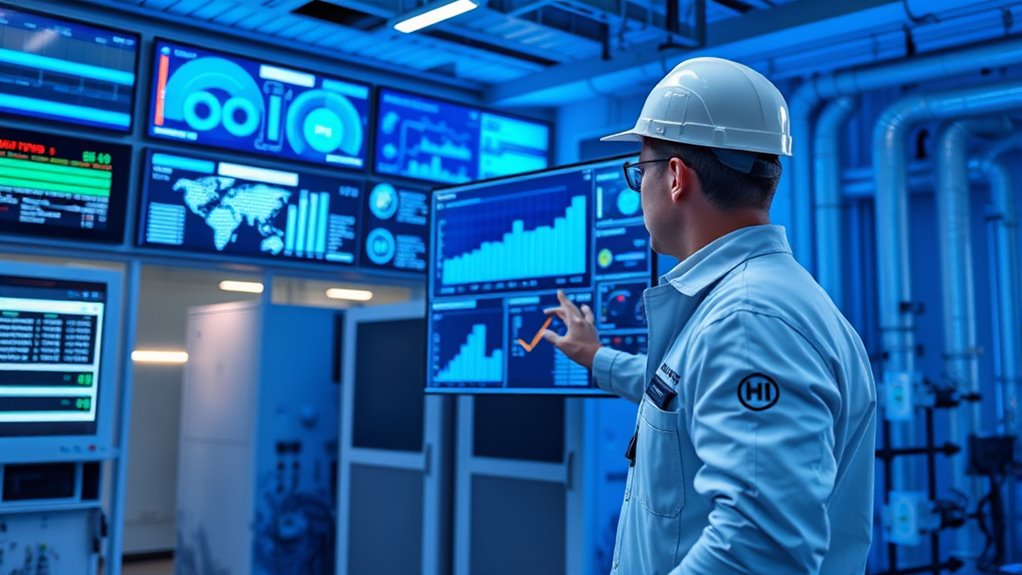
Artificial intelligence is transforming how buildings maintain their HVAC systems by predicting potential failures before they happen. This proactive approach helps prevent costly breakdowns and reduces downtime. For example, a commercial office building used AI-powered sensors to monitor airflow and temperature, catching issues early and saving on repair costs. Another case involved a hospital that improved technician training by integrating AI diagnostics, making repairs faster and more accurate. AI cost savings come from avoiding emergency repairs and optimizing maintenance schedules. Facilities managers now rely on real-time alerts to address issues promptly, keeping systems running smoothly. These real-world examples demonstrate AI’s power to enhance reliability, cut expenses, and empower technicians with better insights:
- Early fault detection
- Reduced emergency repairs
- Increased system uptime
- Improved technician training
- Cost-efficient maintenance
Future Trends in AI-Powered HVAC Maintenance
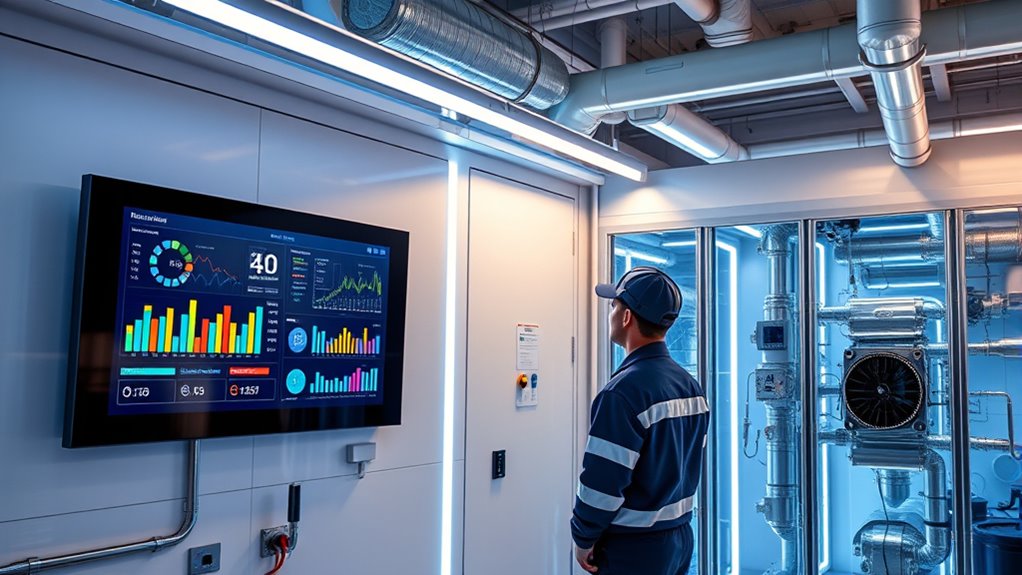
As technology advances, AI-powered HVAC maintenance is poised to become even smarter and more proactive. Future trends include increased automation impact, where AI systems handle more tasks without human intervention, boosting efficiency and reliability. You’ll notice smarter algorithms that adapt to unique building needs, predicting issues before they arise. However, as automation expands, AI ethics become vital—ensuring data privacy, transparency, and accountability. You’ll see an emphasis on balancing automation benefits with responsible AI use, addressing concerns about job displacement and decision-making transparency. Overall, these innovations will make HVAC systems more resilient and cost-effective, while fostering trust through ethical AI practices. Staying informed about these trends helps you leverage AI’s full potential in maintaining comfortable, safe environments.
Frequently Asked Questions
How Does AI Adapt to Changing HVAC System Conditions Over Time?
AI adapts to changing HVAC system conditions through dynamic system learning and adaptive algorithms. You’ll find that these systems analyze real-time data, identify patterns, and adjust their predictions accordingly. As conditions evolve, AI continuously refines its models, ensuring accurate maintenance alerts. This ongoing learning process helps prevent breakdowns, keeps your HVAC running smoothly, and minimizes downtime by staying aligned with the system’s current state.
What Are the Initial Costs of Implementing Ai-Based Predictive Maintenance?
You might worry about the initial costs of AI-based predictive maintenance, but the investment benefits quickly prove its worth. The cost analysis includes hardware, software, and integration, which can seem steep upfront. However, this smart tech drastically reduces breakdowns and maintenance expenses over time. By embracing this technology, you’re not just spending—you’re investing in a smarter, more reliable HVAC system that pays off in the long run.
How Does AI Handle False Alarms or False Positives in System Alerts?
AI handles false alarms through false positive mitigation techniques that improve alert accuracy. It analyzes sensor data patterns to distinguish between real issues and anomalies, reducing unnecessary alerts. When a false positive occurs, AI systems learn from it, refining their algorithms for better precision. This continuous adjustment guarantees you receive reliable alerts, minimizing disruptions and maintaining system efficiency without overreacting to minor fluctuations.
Can AI Predict Failures in Specific HVAC Components More Accurately?
Studies show AI can predict HVAC component failures with over 85% accuracy. By analyzing data from component sensors, AI identifies patterns indicating potential issues. Data analytics help refine these predictions, allowing you to schedule maintenance proactively. This targeted approach minimizes downtime and extends equipment lifespan. You’ll notice fewer breakdowns and improved energy efficiency because AI enables you to address problems before they cause costly disruptions.
What Training Is Required for Staff to Effectively Use AI Maintenance Tools?
You need to provide staff training focused on AI literacy to guarantee effective use of AI maintenance tools. This includes teaching them how AI analyzes data, interprets alerts, and makes maintenance decisions. Practical workshops and hands-on sessions help staff understand the technology’s capabilities and limitations. By improving AI literacy, your team becomes confident in leveraging these tools, reducing HVAC failures and enhancing system efficiency.
Conclusion
By embracing AI-driven predictive maintenance, you gently steer your HVAC system away from potential hiccups before they arise. This proactive approach helps you avoid unexpected disruptions, ensuring comfort and efficiency stay seamless. With smart technology quietly working behind the scenes, you can focus on what matters most, confident that your system is being looked after with care. Ultimately, this future-forward mindset keeps your environment smooth, comfortable, and worry-free—without ever missing a beat.