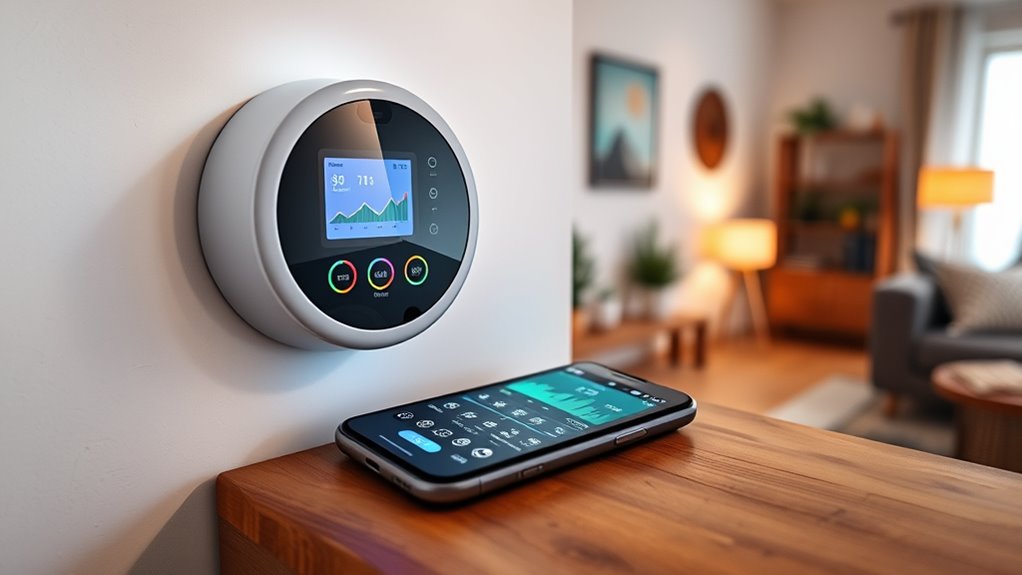

Smart meters help you understand your home’s energy use by providing real-time data on consumption, often via wireless connections. With this information, you can identify patterns, shift usage to off-peak hours, and make smarter choices that save money and support sustainability. They also enable better integration of renewable energy sources and improve billing accuracy. Keep exploring to discover how smart meters can make your home more efficient and eco-friendly every day.
Key Takeaways
- Smart meters provide real-time energy usage data, enabling homeowners to monitor and manage their consumption effectively.
- Analyzing detailed energy patterns helps identify high-usage periods and opportunities to shift usage off-peak for savings.
- Integrating smart meter data with home automation systems allows for automated energy efficiency adjustments.
- Access to precise consumption data supports participation in renewable energy programs like net metering.
- Secure data transmission from smart meters ensures privacy while providing valuable insights to optimize home energy use.
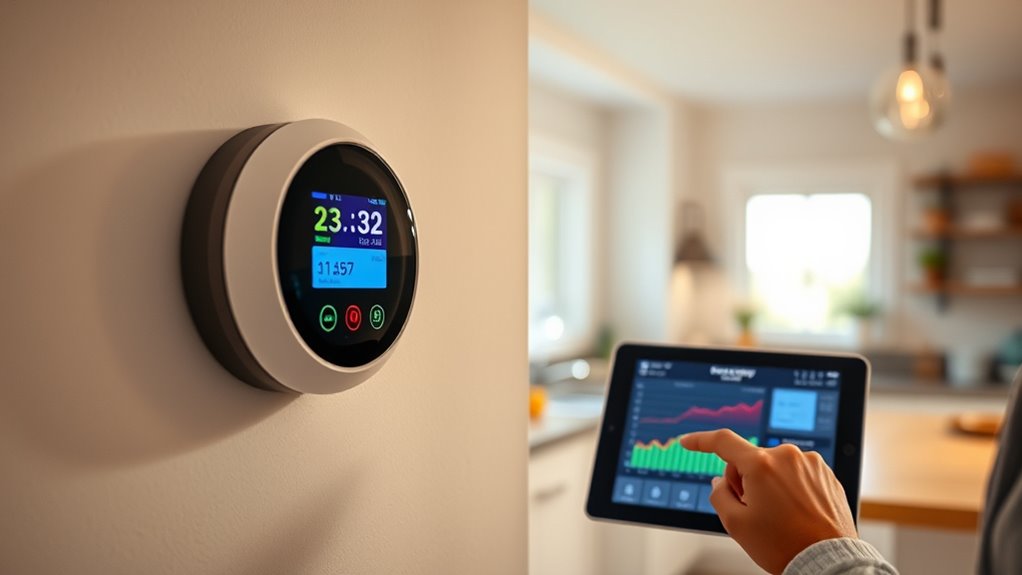
Have you ever wondered how your energy provider tracks your electricity usage in real-time? Smart meters make this possible by replacing traditional analog devices with digital technology that records your consumption instantly. Instead of waiting for a meter reader to visit your home monthly, a smart meter continuously monitors your electricity use and transmits data directly to your utility company. This system enables more accurate billing, reduces errors, and provides you with detailed insights into your energy habits.
Smart meters track your electricity usage in real-time, providing accurate data and insights to help manage your energy consumption.
When your smart meter collects data, it tracks every kilowatt-hour you consume, capturing time-specific information that reveals when you use the most electricity. This level of detail allows you to identify patterns, such as increased usage during certain hours or days. By understanding these patterns, you can adjust your habits to save money and energy. For example, running your dishwasher or laundry machine during off-peak hours can lower your energy bill, especially if your provider offers time-of-use rates.
Your smart meter communicates with the utility via wireless networks, often using radio frequency signals, eliminating the need for manual readings. This seamless communication reduces labor costs and minimizes the chances of billing errors. You may also have access to a home display or mobile app that shows your current energy consumption in real-time. Watching your energy use as it happens can be eye-opening, helping you become more conscious of how your actions impact your overall usage.
Moreover, smart meters support the integration of renewable energy sources, such as solar panels or wind turbines, into your home’s energy system. They can measure both the energy you draw from the grid and the excess you send back. This two-way flow of data ensures you’re accurately credited for the energy you produce, promoting more sustainable practices and potentially generating income through net metering programs.
Security and privacy are valid concerns with smart meters, but utility companies implement safeguards to protect your data. They encrypt transmissions and limit access to authorized personnel, ensuring your usage information remains confidential. Additionally, smart meters are designed to operate reliably over long periods with minimal maintenance, providing you with consistent and precise data. Regular updates and maintenance help ensure their ongoing security and performance.
In essence, smart meters are transforming how you manage and understand your energy consumption. They empower you with detailed insights, promote energy efficiency, and support the shift toward smarter, greener homes. By leveraging this technology, you not only save money but also contribute to a more sustainable future. Understanding how your smart meter works helps you make informed decisions, control your energy costs, and live more consciously in a world that’s increasingly powered by smart technology.

ecobee Smart Thermostat Premium with Smart Sensor and Air Quality Monitor - Programmable Wifi Thermostat - Works with Siri, Alexa, Google Assistant, Black
Save up to 26% per year on heating and cooling costs. ENERGY STAR certified. Included SmartSensor (50 dollar...
As an affiliate, we earn on qualifying purchases.
Frequently Asked Questions
Can Smart Meters Detect All Types of Energy Theft?
No, smart meters can’t detect all types of energy theft. While they can identify some suspicious activity, clever thieves may find ways to bypass or manipulate the system. Smart meters excel at flagging obvious tampering or unusual consumption patterns, but sophisticated theft techniques might go unnoticed. You should combine smart meter data with regular inspections and security measures to better prevent energy theft and guarantee accurate billing.
How Secure Is the Data Transmitted by Smart Meters?
The data transmitted by smart meters is generally secure thanks to strong encryption protocols, making it difficult for hackers to access or tamper with your information. Utility companies also implement additional safeguards like firewalls and secure networks to protect your data. While no system is completely invulnerable, the industry continuously updates security measures to guarantee your energy data stays private and safe from unauthorized access.
Do Smart Meters Work During Power Outages?
Did you know that most smart meters can operate during power outages? Typically, they keep functioning thanks to built-in batteries, ensuring continuous data collection and communication with your utility. However, if the outage lasts longer than the battery life, the meter will temporarily stop transmitting data until power is restored. So, while smart meters are resilient, their performance during outages depends on battery capacity and duration.
Are Smart Meters Compatible With Renewable Energy Systems?
Yes, smart meters are compatible with renewable energy systems. They can monitor and manage energy generated from sources like solar panels or wind turbines, helping you optimize usage and improve efficiency. You can easily track how much renewable energy your system produces and consumes. This integration allows you to make smarter decisions about energy use, reduce costs, and maximize the benefits of your renewable energy investments.
How Often Do Smart Meters Need Maintenance or Updates?
Smart meters typically don’t need much maintenance; they’re like reliable navigators guiding your energy journey. Updates happen remotely, often automatically, like a gentle breeze invigorating a garden. Usually, your utility company pushes updates once a year or as needed, ensuring your smart meter stays in tip-top shape. You won’t have to lift a finger—just sit back and enjoy the seamless flow of energy data keeping your home smart and efficient.

ecobee Smart Thermostat Essential - Energy Star Certified programmable Wi-Fi Thermostat - Works with Siri, Alexa, and Google Assistant
Save up to 23% every year on heating and cooling costs, adjusts to your set schedule to save...
As an affiliate, we earn on qualifying purchases.
Conclusion
Now that you understand how a smart meter works, you can monitor your energy use, identify savings, and optimize your home’s efficiency. You can track your consumption, reduce your bills, and make smarter choices. You can see when your energy peaks, adjust your habits, and take control. Embrace the power of data, harness the benefits of technology, and transform your home into a smarter, more sustainable space. Your energy future starts with a simple step—using your smart meter wisely.
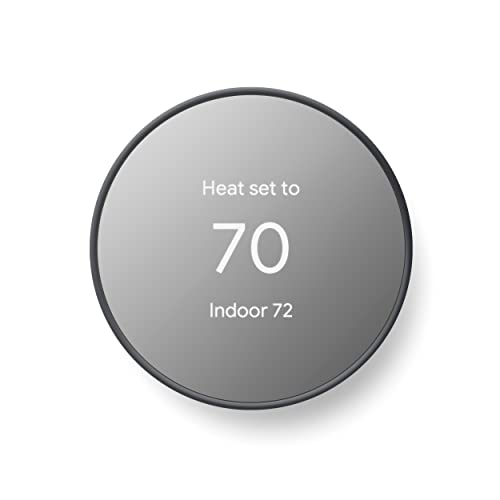
Google Nest Thermostat - Smart Thermostat for Home - Programmable Wifi Thermostat - Charcoal
ENERGY STAR certified smart thermostat for home that helps you save energy and stay comfortable.Connectivity : Wi-Fi -...
As an affiliate, we earn on qualifying purchases.
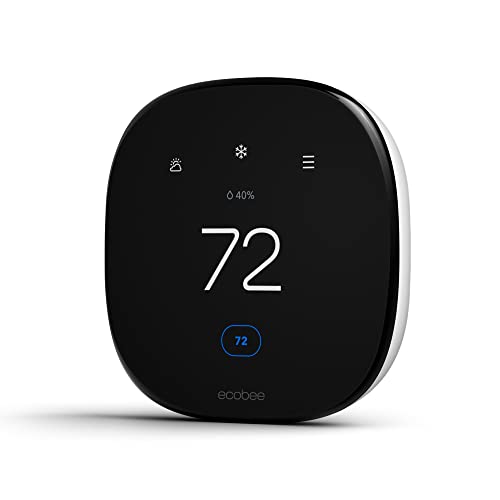
ecobee Smart Thermostat Enhanced - Programmable Wifi Thermostat - Works with Siri, Alexa, Google Assistant - Energy Star Certified - Smart Home
Save up to 26% per year on heating and cooling costs Automatically adjusts the temperature when you’re away...
As an affiliate, we earn on qualifying purchases.