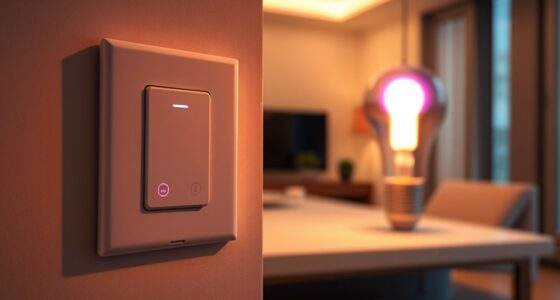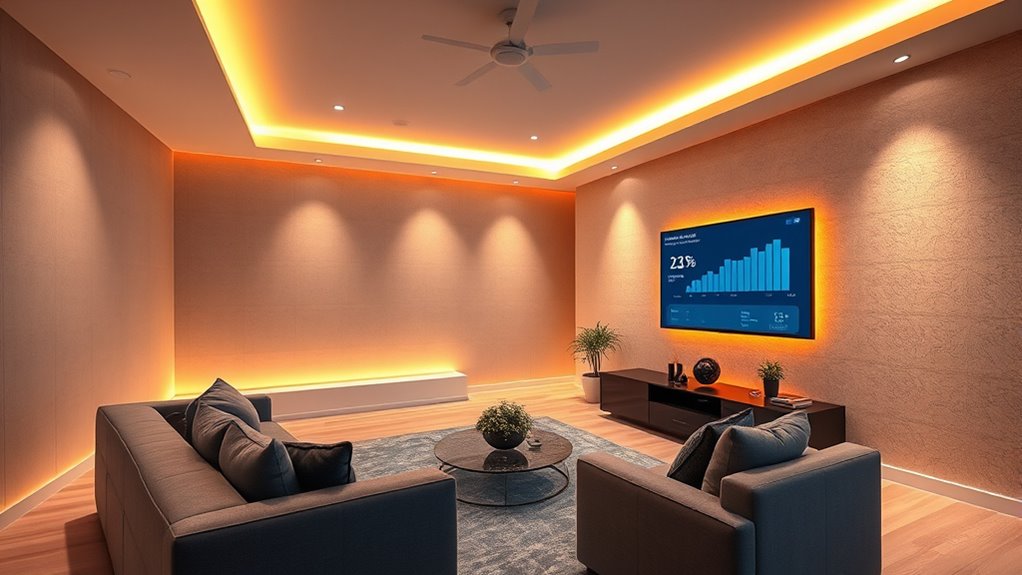

AI-powered smart lighting helps you save energy by adjusting brightness and schedules based on your habits and occupancy data. It uses sensors, analytics, and machine learning to minimize waste while maintaining comfort. These systems automatically adapt to your routines and natural light levels, ensuring lights are on only when needed. By continuously optimizing performance, AI makes your lighting smarter and more efficient. Keep exploring to discover how these technologies can transform your space and boost your savings.
Key Takeaways
- AI learns user habits to automatically adjust lighting, reducing unnecessary energy use.
- Smart sensors detect occupancy and ambient light to optimize lighting only when needed.
- AI-driven scheduling minimizes power consumption during non-peak hours.
- Real-time energy monitoring identifies waste areas and suggests targeted conservation.
- Adaptive lighting systems evolve with user behavior, ensuring efficient and sustainable energy use.

eufy Permanent Outdoor Lights E22, 100ft+ 50ft kit (Total 150ft) with 90 Triple-LED Lights, Smart RGBWW, Up to IP67 Waterproof, AI Lighting Themes for Halloween, Christmas, Links with Cameras, White
Triple-LED Design with Upgraded Lighting: The lights incorporate a triple-LED design, combining RGB, warm, and cool white LEDs….
As an affiliate, we earn on qualifying purchases.
As an affiliate, we earn on qualifying purchases.
How AI Enhances Lighting Efficiency
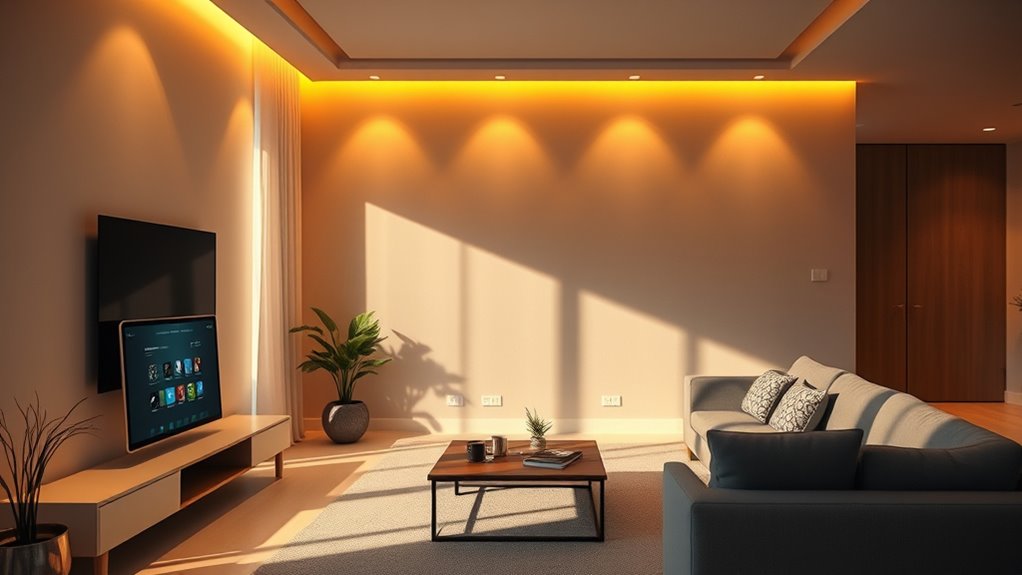
Artificial intelligence plays a crucial role in making lighting more efficient by automatically adjusting brightness and schedules based on your needs and habits. By analyzing your user behavior, AI systems learn when you need more or less light, reducing unnecessary energy use. They monitor your daily routines and adapt lighting patterns to match your activity levels, ensuring lights are on only when needed. Additionally, AI examines energy consumption patterns across your home, identifying areas where energy is wasted. This enables the system to optimize lighting schedules, turning lights off during periods of inactivity and dimming them when full brightness isn’t required. Incorporating smart sensors allows the system to gather real-time data on occupancy and ambient light levels, further enhancing energy savings. Moreover, integrating energy-efficient bulbs can amplify the overall savings and performance of your smart lighting system. Employing AI-driven analytics can also help detect unusual energy consumption trends, leading to more targeted energy conservation efforts. Implementing advanced AI algorithms can further improve the system’s ability to predict and respond to your lighting needs more precisely. As a result, your smart lighting becomes more efficient, helping you save energy while maintaining comfort and convenience, especially when combined with home energy management strategies.

Linkind Matter Smart Light Bulb, WiFi Smart Bulbs, Work with Apple Home, Siri, Alexa, Google, SmartThings, RGBTW Color Changing Bulbs Mood Lighting, Music Sync, A19 E26 60W, 2.4Ghz WiFi 6 Pack
【Powerful Smart Matter】Linkind 120V smart light bulb is certified for Matter platform used for integrating all your smart…
As an affiliate, we earn on qualifying purchases.
As an affiliate, we earn on qualifying purchases.
Features of Smart Lighting Systems

Have you ever wondered what makes smart lighting systems stand out? Their key features include advanced lighting control and energy monitoring that help you save energy effortlessly. You can adjust brightness, color, and schedules remotely, tailoring lighting to your needs. Energy monitoring tracks consumption in real-time, giving you insights into usage patterns. This detailed data allows you to optimize your lighting setup for greater efficiency. Additionally, local automation allows lights to respond automatically to your routines, further enhancing energy savings. These systems often integrate with other smart devices, creating a seamless smart home experience. For example, some systems learn your habits over time, enabling adaptive lighting that adjusts based on your daily schedule. Here’s a quick overview:
| Feature | Benefit |
|---|---|
| Lighting Control | Customizes lighting, enhances convenience |
| Energy Monitoring | Tracks energy use, identifies savings |
| Automation | Schedules lights, reduces waste |

Kasa Smart Motion Sensor Switch, Single Pole, Needs Neutral Wire, 2.4GHz Wi-Fi Light Switch, Works with Alexa & Google Assistant, UL Certified, No Hub Required(KS200MP2),White,2-Pack
【Advanced Motion Detection】Completely hands-free and smart operation of your connected lights. The switch automatically turns lights on when…
As an affiliate, we earn on qualifying purchases.
As an affiliate, we earn on qualifying purchases.
Benefits of Using AI-Powered Lights
AI-powered lights take the benefits of smart lighting systems to the next level by automatically adapting to your habits and environment. This intelligent adjustment helps you conserve energy by turning lights off when not needed and dimming them based on activity or natural light levels. As a result, you’ll notice a significant reduction in energy consumption, contributing to overall energy conservation. These lights also optimize your electricity usage, leading to cost savings on your utility bills. You won’t have to worry about manually controlling every light; the AI handles it efficiently, ensuring minimal waste. By using AI-powered lighting, you not only promote sustainability but also enjoy the financial benefits of lower energy expenses. It’s a smart way to make your home more energy-efficient and budget-friendly. Additionally, integrating European cloud solutions can enhance the management and scalability of your smart lighting systems, ensuring reliable and secure operation. Efficient energy management is further supported by these cloud-based systems, enabling better control and data analysis for optimal performance. Moreover, understanding privacy policies related to data collection is essential when implementing these intelligent systems to ensure user trust and compliance. To maximize these benefits, it’s helpful to understand the role of data security in protecting your personal information. Incorporating advanced cybersecurity measures can further safeguard your data and maintain system integrity.

Lumary BT Remote Controller (Exclusive for Lumary Smart Recessed Lighting), Turns On/Off, Dims or Brightens, Color Changing, Group Control, Requires App, for Home Lighting, Living Room, Bedroom
Note: Before purchasing, please refer to the model indicator in the product images to ensure compatibility with your…
As an affiliate, we earn on qualifying purchases.
As an affiliate, we earn on qualifying purchases.
Installing and Setting Up Smart Lighting
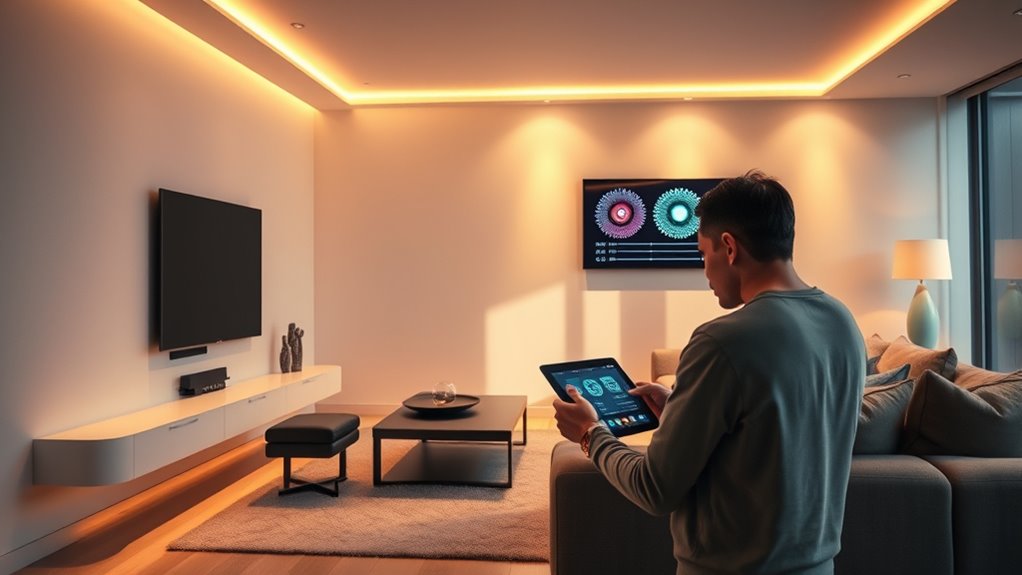
Thinking about upgrading your home with smart lighting? The installation process is straightforward and can substantially reduce your energy consumption. Start by choosing compatible smart bulbs and a hub or app. Follow the manufacturer’s installation tips, such as turning off power before replacing bulbs and ensuring Wi-Fi stability for smooth setup. Once installed, configure your lights for automation and voice control. This setup allows your lights to adapt to your habits, saving energy automatically. Properly integrating smart energy management features can further optimize your overall energy use. Additionally, many systems offer energy monitoring capabilities to help you track and adjust your usage more effectively. Incorporating lighting scheduling can also ensure your lights are only on when needed, enhancing energy savings. Utilizing automation features can optimize lighting based on occupancy or time of day, further reducing unnecessary energy use. Being aware of energy-efficient lighting options can maximize your savings over time. Here’s a quick overview:
| Step | Action | Tips |
|---|---|---|
| Choose devices | Select compatible smart bulbs | Check energy ratings |
| Install | Replace traditional bulbs | Turn off power to avoid shocks |
| Connect | Sync with app or hub | Ensure strong Wi-Fi signal |
| Configure | Set schedules and automation | Use energy-saving modes |
This setup ensures excellent energy use and easy control.
Future Trends in AI-Driven Illumination
As artificial intelligence continues to advance, it is shaping the future of illumination by enabling more intuitive, efficient, and adaptive lighting systems. Machine learning algorithms will increasingly analyze your habits and preferences to customize lighting in real-time, enhancing comfort and energy savings. Predictive analytics will play a vital role by forecasting your lighting needs based on patterns, so your lights adjust proactively rather than reactively. Expect smarter sensors that detect occupancy, ambient light, and even mood, allowing lighting to evolve seamlessly with your environment. Future AI-driven illumination won’t just respond to your commands but will anticipate your needs, creating a more efficient, personalized experience. Additionally, integrating essential oils for health benefits with lighting systems could enhance your well-being by creating environments that support relaxation, alertness, or rejuvenation. As these systems become more sophisticated, adaptive lighting will further personalize environments to suit individual preferences and activities, making lighting smarter than ever before. These advancements will also contribute to sustainable energy use, significantly reducing unnecessary power consumption while improving your overall lighting quality and convenience. Moreover, the integration of trustworthy hardware and secure data management will be essential as these intelligent systems become more interconnected.
Frequently Asked Questions
How Secure Are Ai-Powered Lighting Systems Against Hacking?
AI-powered lighting systems can be secure if you take proper cybersecurity measures. While there are cybersecurity risks, such as hacking or unauthorized access, reputable systems use encryption and regular updates to protect your data privacy. You should guarantee your network is secure, change default passwords, and keep firmware current. These steps help minimize vulnerabilities, making your smart lighting safer and less susceptible to cyber threats.
Can Smart Lighting Adapt to Different Room Sizes Automatically?
Did you know that smart lighting systems can automatically adjust brightness? They use adaptive brightness and room size detection to tailor lighting to each space. When you enter a larger room, the system increases brightness, while it dims in smaller areas. This seamless adaptation saves energy and enhances comfort, so you don’t have to manually change settings. With these features, your lighting becomes smarter and more efficient, perfectly suited to any room size.
Do AI Lights Require Internet Connectivity to Function Properly?
AI lights usually need internet connectivity to access voice control and customization options seamlessly. Without internet, your smart lighting may still operate manually or through local controls, but features like adjusting brightness via voice or setting custom schedules might be restricted. To enjoy full functionality and easy control, maintaining your device connected ensures you can use voice commands and personalize your lighting experience effortlessly.
How Do AI Lights Handle Power Outages or System Failures?
Power outages or system failures won’t leave your smart lights in chaos. AI lights are designed with robust power outage management, automatically switching to backup power or manual controls. For system failure recovery, they quickly reset or reconnect once power is restored, ensuring minimal disruption. You won’t even notice a hiccup—your lighting stays smart, reliable, and efficient, no matter what chaos strikes your home.
Are There Privacy Concerns With AI Monitoring in Lighting Systems?
Yes, privacy concerns with AI monitoring in lighting systems are valid. You might worry about data security, as these systems collect movement or occupancy data. To safeguard your privacy, verify the manufacturer uses strong encryption and transparent policies. Regular updates and secure network practices help prevent unauthorized access. Being aware of what data is collected and how it’s used allows you to maintain control and confidently enjoy smart lighting benefits without compromising your privacy.
Conclusion
By embracing AI-powered smart lighting, you can reduce energy consumption by up to 50%, saving money and helping the environment. With features like adaptive brightness and automated scheduling, you’ll enjoy a more comfortable and efficient space. As technology advances, expect even smarter systems that anticipate your needs. Don’t miss out—adopting AI lighting today could make a significant difference in your energy bills and sustainability efforts. It’s a bright future you don’t want to ignore!