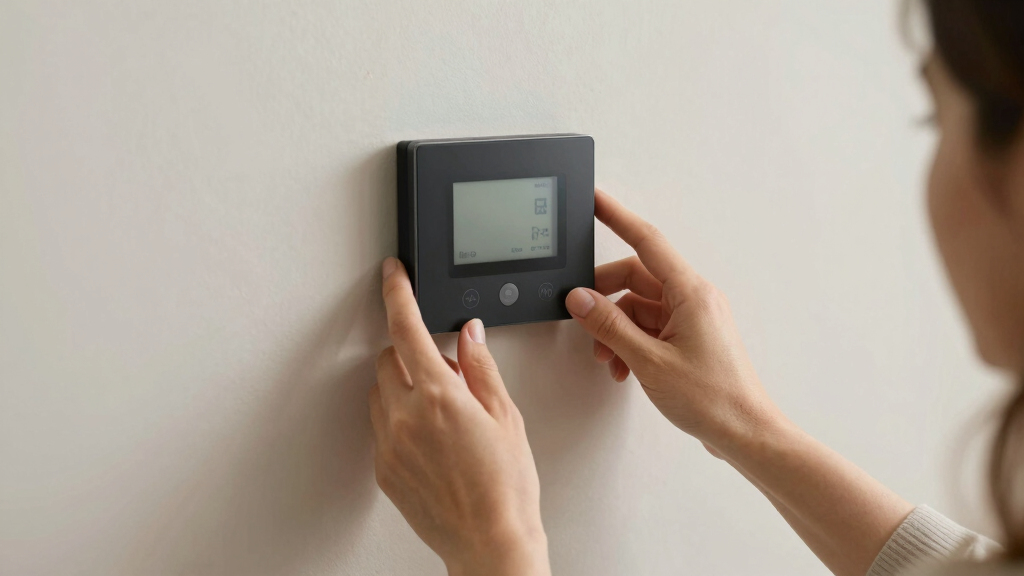

If you’re searching for the best smart thermostat, you’re likely looking for a device that offers reliable control, energy savings, and simple integration with your smart home. The Google Nest Thermostat stands out as the overall best choice thanks to its user-friendly design and seamless Google Assistant compatibility. The ecobee Smart Thermostat Premium makes a strong case for those prioritizing advanced features like air quality monitoring, while the Honeywell Home RTH9585WF excels for customizable programming and compatibility. Each of these options balances ease of use with smart features, but tradeoffs include price, compatibility, and installation complexity. Keep reading for a full breakdown of how to choose the right smart thermostat for your needs.
Key Takeaways
- The top models balance ease of installation with advanced smart features, making them suitable for both beginners and tech-savvy users.
- Compatibility with voice assistants like Alexa, Google Assistant, or Siri is a key factor influencing the best choice for your existing smart home setup.
- Higher-end thermostats often include additional sensors or air quality monitors, which can justify the premium price for health-conscious buyers.
- Price varies widely; value-focused options still deliver reliable scheduling and basic smart features, but premium picks offer more customization and integrations.
- Design matters—color displays and sleek interfaces enhance usability, but simpler models often provide better value for basic needs.




More Details on Our Top Picks
Google Nest Thermostat – Smart Wi-Fi Programmable Thermostat for Home – Snow
This model stands out for its seamless integration with Google Assistant and Alexa, making it a versatile choice for those already invested in smart home ecosystems. It offers impressive energy-saving features, supported by ENERGY STAR certification, and supports clean energy initiatives with Nest Renew. Compared to the Sensi Touch, it provides a more polished user interface and broader voice control options, though it may require compatibility checks for some HVAC systems. The absence of a lock feature could be a drawback for households with children or shared spaces. Overall, this pick makes the most sense for homeowners seeking a reliable, energy-efficient smart thermostat with broad voice support, even if some systems need additional wiring.
Pros:- Energy-efficient and ENERGY STAR certified
- Remote control via smartphone app
- Compatible with Google Assistant and Alexa
- Supports clean energy with Nest Renew
Cons:- Requires compatibility check for some HVAC systems
- No lock feature for temperature settings
Best for: Homeowners who want a highly compatible, voice-controlled smart thermostat that integrates with existing smart assistants and values energy savings.
Not ideal for: Users with older HVAC systems that require extensive wiring or those seeking a lock feature for temperature control.
- Connectivity Protocol:Wi-Fi
- Energy Star Certified:Yes
- Compatibility:Works without C wire in most homes; check online
- Control:Remote via app, voice control with Google Assistant and Alexa
- Features:HVAC monitoring, energy saving suggestions, Nest Renew support
Bottom line: This thermostat is ideal for those seeking a reliable, versatile, and energy-conscious smart device that fits seamlessly into a Google or Alexa ecosystem.
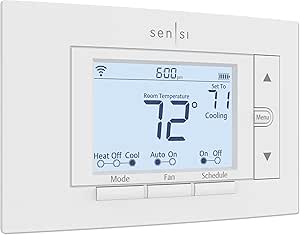
Sensi Smart Thermostat with Wi-Fi, Alexa Compatibility, and Energy Star Certification
This model makes the list for homeowners seeking an affordable, straightforward smart thermostat with proven energy savings of around 23%. Its easy DIY installation, guided by the app, makes it accessible for most users, especially compared to the more premium Sensi Touch. Its compatibility with Alexa and most HVAC systems offers broad usability, though it may require a C-wire in some setups. Advanced customization options are limited compared to more high-end models, but for those focused on basic remote control, usage reports, and efficiency, this is a solid choice. It’s particularly suited for budget-conscious users wanting a smooth, no-fuss upgrade to their home heating and cooling system.
Pros:- Easy DIY installation with guided app instructions
- Energy savings of approximately 23%
- Remote access and monitoring via mobile app
- Works with Alexa and other smart assistants
Cons:- May need a C-wire in some HVAC setups
- Limited advanced customization options
Best for: Homeowners seeking a budget-friendly, easy-to-install smart thermostat that delivers reliable energy savings.
Not ideal for: Users wanting extensive customization or advanced features beyond basic scheduling and monitoring.
- Connectivity:Wi-Fi
- Compatibility:Works with Alexa, most HVAC systems
- Certification:Energy Star
- Installation:Easy DIY, no common wire needed in most cases
- Features:Remote access, usage reports, maintenance alerts
Bottom line: This thermostat is a reliable, budget-friendly choice for homeowners who want simple installation and solid energy savings without complex features.
Sensi Touch Wi-Fi Smart Thermostat with Color Display – Black
This pick makes the list for its large, intuitive color touchscreen and modern design, which appeals to users who want a stylish, high-tech control panel. It offers easy installation, with compatibility for most HVAC systems requiring a C-wire, and provides useful energy-saving features like scheduling and usage reports. Compared to the more basic Sensi model, the Touch version emphasizes visual interface and user experience, though it is slightly more complex for those unfamiliar with smart home devices. Its sleek look fits well with contemporary décor, but the need for a C-wire can limit its appeal for older homes. It’s best suited for users who prioritize aesthetics and a premium interface.
Pros:- Large, intuitive color touchscreen display
- Easy DIY installation with step-by-step instructions
- Remote control via smartphone app
- Energy-saving scheduling and reports
Cons:- Requires a C-wire for installation
- Limited color options (black, white, silver)
Best for: Homeowners who want a visually appealing, easy-to-use touchscreen thermostat with advanced control features.
Not ideal for: Users with older HVAC systems without a C-wire or those seeking a minimalist, low-profile device.
- Model:ST75
- Color:Black
- Dimensions:5.625″ x 3.4″ x 1.17″
- Energy Star Certified:Yes
- Wi-Fi:Yes
- C-wire Required:Yes
Bottom line: This thermostat is ideal for those who want a stylish, user-friendly interface combined with reliable energy management, provided their system supports C-wire installation.
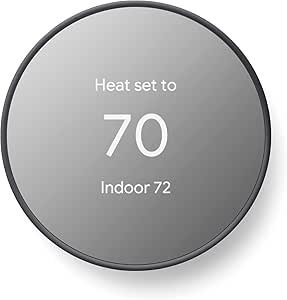
Google Nest Thermostat – Smart Thermostat for Home – Programmable Wi-Fi – Charcoal
This version of the Nest Thermostat makes the list for users who prefer a sleek, minimalist design with strong energy-saving tools. It offers comprehensive HVAC monitoring, remote control, and voice compatibility with Google Assistant, similar to the Snow version, but with a more neutral color that suits modern interiors. Its energy-efficient scheduling can help reduce utility bills, yet it may require additional wiring or accessories for some systems. The absence of a lock feature might be a concern for shared households or families with children. Compared with other budget options like the Sensi, it provides a more integrated ecosystem for Google-centric homes, but at a slightly higher price point.
Pros:- Energy-efficient with smart scheduling
- Remote control via app or voice commands
- HVAC monitoring and alerts
- Compatible with Google Assistant and Matter devices
Cons:- Requires Wi-Fi for full functionality
- May need additional wiring or accessories
Best for: Homeowners invested in Google or compatible ecosystems wanting a stylish, energy-efficient thermostat with HVAC monitoring.
Not ideal for: Users seeking a lock feature or those with older HVAC systems not compatible with this model.
- Connectivity:Wi-Fi 2.4 and 5 GHz, Bluetooth Low Energy
- Compatibility:Most homes without C wire; check online
- Features:Energy savings, HVAC monitoring, remote control, voice control
- Color:Charcoal
Bottom line: This thermostat is well-suited for Google ecosystem enthusiasts who want a sleek, energy-smart device with HVAC monitoring, provided their system is compatible.
Honeywell Home RTH9600WF Smart Color Thermostat, ENERGY STAR, Wi-Fi, Programmable, Touchscreen, Alexa Ready
The Honeywell Home RTH9600WF stands out for its high-definition color touchscreen that makes navigation intuitive, and its compatibility with multiple voice assistants including Alexa, Google Assistant, and Cortana. Compared to the ecobee Smart Thermostat Premium, it offers similar energy savings but lacks built-in occupancy sensing and air quality monitoring, which might be a drawback for tech enthusiasts seeking all-in-one smart home integration. Its requirement for a C-wire can be a hurdle for some installations, especially with older systems, but its compatibility with a wide range of heating setups makes it versatile. This pick makes the most sense for users who prioritize a customizable display and robust smart home compatibility without needing advanced sensors.Pros:- High-definition color touchscreen for easy controls
- Compatible with Alexa, Google Assistant, and Cortana
- Energy Star certified for efficiency
- Provides indoor/outdoor temperature and humidity info
Cons:- Requires C-wire for installation, which may involve additional setup
- Not compatible with electric baseboard heating
Best for: Homeowners looking for a reliable, color-display smart thermostat with broad voice assistant support and energy savings.
Not ideal for: Owners of electric baseboard heating systems or those without a C-wire, as it’s incompatible with electric baseboard heat and requires wired installation.
- Energy Star Certified:Yes
- Connectivity:Wi-Fi
- Display:High-definition color touchscreen
- Compatibility:Alexa, Google Assistant, Microsoft Cortana
- C-Wire Required:Yes
- System Compatibility:Forced air, hot water, steam, heat pumps with electric backup
Bottom line: Ideal for users seeking a versatile, well-integrated smart thermostat with a user-friendly display and broad voice control options.
Amazon Smart Thermostat – Save Money and Energy, Works with Alexa and Ring
The Amazon Smart Thermostat offers a straightforward upgrade from traditional thermostats, with a clear focus on ease of use and affordability. It’s particularly appealing for Amazon ecosystem users who want simple, voice-controlled comfort, but it falls behind the ecobee model by lacking advanced sensors like occupancy detection or air quality monitoring. Its installation process is streamlined with guided app setup, making it accessible for those with basic technical skills, but it only works within the Alexa and Ring environment, limiting flexibility for mixed smart home systems. This makes it a smart choice for budget-conscious homeowners who prioritize quick setup and voice control for standard heating and cooling needs.Pros:- Easy installation with guided setup via Alexa app
- Automates temperature adjustments for comfort and savings
- Remote control from anywhere using Alexa app
- Compatible with Alexa routines and voice commands
Cons:- Requires C-wire, which may complicate installation
- Limited to Alexa and Ring ecosystem, restricting integration
Best for: Budget-conscious Alexa users who want an easy-to-install, energy-saving thermostat without extra bells and whistles.
Not ideal for: Smart home enthusiasts seeking multi-platform voice control or advanced sensors, as it’s limited to Alexa and Ring ecosystems.
- Compatibility:Alexa, Ring
- C-wire required:Yes
- Energy Savings:Estimated $50 annually
- Technology:Honeywell Home Thermostat Technology
Bottom line: Best suited for Alexa fans seeking an affordable, easy-to-use thermostat that maximizes basic energy savings.
ecobee Smart Thermostat Premium with Smart Sensor and Air Quality Monitor – Programmable Wi-Fi Thermostat – Works with Siri, Alexa, Google Assistant
The ecobee Smart Thermostat Premium delivers a comprehensive smart heating and cooling experience, combining energy savings of up to 26% with advanced features like built-in air quality monitoring, occupancy sensing, and a SmartSensor for room-specific control. Unlike the Honeywell or Amazon options, its support for multiple voice assistants and smart home platforms makes it more flexible for diverse ecosystems, but its higher price point and additional subscription costs for certain features may deter budget-conscious buyers. The built-in air quality monitor and occupancy sensing are valuable for those seeking healthier indoor environments and precise control, but they come with increased complexity in setup. This model makes the most sense for tech-savvy users wanting a feature-rich, integrated smart home experience.Pros:- Up to 26% energy savings annually
- Built-in air quality monitor and occupancy sensing
- Supports Siri, Alexa, Google Assistant, and HomeKit
- Includes SmartSensor for targeted room control
Cons:- Higher cost compared to basic models
- Some features require additional subscriptions or hubs
Best for: Smart home enthusiasts seeking a feature-packed thermostat with air quality sensors and multi-platform voice support.
Not ideal for: Budget-conscious users or those without compatible smart home hubs, as the premium features entail higher costs and setup complexity.
- Compatibility:Siri, Alexa, Google Assistant, HomeKit, SmartThings
- Air Quality Monitor:Yes
- SmartSensor Included:Yes
- Energy Savings:Up to 26%
- Occupancy Sensing:Built-in radar technology
- Display:Large, vibrant interface
Bottom line: Best for users wanting an all-in-one, premium smart thermostat with health and energy benefits and broad voice assistant support.
Honeywell Home RTH9585WF1004 Wi-Fi Smart Color Thermostat, 7-Day Programmable, Touch Screen, Energy Star, Alexa Compatible
The Honeywell Home RTH9585WF offers flexible 7-day programming and a vibrant color touchscreen, making it ideal for households with varied schedules. Compared to the ecobee model, it emphasizes scheduling customization over integrated sensors, which can be advantageous for users who prefer manual control. Its compatibility with Alexa and Google Home enhances remote management, but the complexity of setting up detailed schedules might challenge non-technical users. For those who want to match their home decor with a customizable color display and plan detailed weekly routines, this model delivers tailored comfort and efficiency.Pros:- 7-day programmable schedule for tailored comfort
- Color touchscreen display for customization
- Supports energy rebates and demand response
- Remote control via Wi-Fi, compatible with Alexa and Google
Cons:- Requires C-wire, which can complicate installation
- Less focus on smart sensors for automatic adjustments
Best for: Homeowners who prioritize detailed weekly scheduling and a customizable display for energy management.
Not ideal for: Users seeking integrated air quality sensors or occupancy detection, as this model focuses more on manual scheduling.
- Model:RTH9585WF1004
- Color:Gray
- Programmable:7-day
- Display:Touch Screen
- Energy Star Certified:Yes
- Compatibility:Forced air, hot water, steam, heat pumps with electric backup
Bottom line: Best for users who want flexible, manual control over weekly heating and cooling routines with a colorful display.

How We Picked
Our evaluation focused on performance, ease of installation, compatibility, and value for money. We prioritized thermostats that offer robust Wi-Fi connectivity, intuitive interfaces, and broad voice assistant support. Battery life, app usability, and additional features such as sensors or display quality were also key considerations. The ranking reflects a balance between affordability and advanced functionality, aiming to serve different user needs—from budget-conscious buyers to those seeking premium features. Overall, these products stood out for their reliability, ease of use, and smart home integration.Factors to Consider When Choosing Best Smart Thermostat
Choosing the best smart thermostat involves considering several important factors that impact usability, compatibility, and long-term value. Beyond basic features, understanding how these devices interact with your existing system can prevent costly mistakes and ensure a smooth experience. The right thermostat should fit your home’s HVAC setup, your budget, and your preferred smart home ecosystem. Keep these key considerations in mind to make a more informed choice.Compatibility with Your HVAC System and Smart Home Ecosystem
Before selecting a smart thermostat, confirm it supports your HVAC system—whether it’s a traditional forced-air system, heat pump, or more complex setup. Compatibility with your existing smart home platform (Google Assistant, Alexa, Siri) is equally important to avoid frustration. Some thermostats, like ecobee or Honeywell models, support multiple assistants, providing flexibility and future-proofing your setup. Choosing a device incompatible with your system can lead to installation issues or limited functionality, so double-check specifications before purchasing.
Ease of Installation and User Interface
Many smart thermostats require wiring, so assessing your comfort level or hiring a professional might be necessary. Devices with straightforward installation processes save time and reduce frustration. User interfaces matter—touchscreens or color displays make setting adjustments easier, but simpler models can be just as effective for basic schedules. Remember, a complex interface might offer more options but can be overwhelming for some users. Consider your tech comfort level when choosing between feature-rich models and more streamlined options.
Energy Monitoring and Additional Sensors
Some thermostats include energy usage reporting or indoor sensors that help optimize comfort and efficiency. If saving money on energy bills is a priority, models like ecobee with smart sensors or Honeywell’s advanced options can provide more precise control. However, these features often come at a higher price and may require additional setup. Think about whether these extras are worth the investment based on your household’s energy consumption and comfort needs.
Price and Long-Term Value
Smart thermostats range from budget-friendly models to premium options with extensive features. While cheaper devices often cover core functionalities like scheduling and remote control, investing in a pricier model can offer better build quality, more integrations, and future firmware updates. Consider your budget alongside the features that truly matter to you. Sometimes, paying more upfront results in greater savings over time through improved energy management and added convenience.
Display Quality and Design
The aesthetic and usability of the display impact daily interactions. Color screens and sleek designs enhance the user experience, especially if you interact with the thermostat frequently. Conversely, basic models with simple displays may suffice if you only need remote control via an app. Think about whether visual appeal and ease of interaction influence your decision, especially if the thermostat will be a prominent feature in your home.
Frequently Asked Questions
Can I install a smart thermostat myself or should I hire a professional?
Many smart thermostats are designed for DIY installation, especially models with straightforward wiring and detailed instructions. However, some systems—particularly those with complex wiring or older HVAC setups—may benefit from professional installation. If you’re comfortable with basic electrical work and follow setup guides carefully, you might save money and time by installing it yourself. Otherwise, hiring a professional ensures proper setup and compatibility, reducing the risk of issues later on.
Will a smart thermostat work if I have a non-smart HVAC system?
Most smart thermostats are compatible with standard HVAC systems, but some older or specialized setups may require additional components or may not be compatible at all. Check your system’s wiring and specifications before purchasing. If your system isn’t compatible, you might need an adapter or consider upgrading your HVAC components. In some cases, a basic thermostat might be more suitable unless you plan to upgrade your entire system in the future.
Do smart thermostats save enough energy to justify their cost?
Smart thermostats are designed to optimize your heating and cooling schedules, which can lead to noticeable energy savings over time. The actual savings depend on your usage patterns, the efficiency of your HVAC system, and how well you utilize scheduling features. While the initial investment can be higher, many users see a return through lower energy bills within a year or two. Additionally, some models offer detailed energy reports that help you fine-tune your system for maximum savings.
Are smart thermostats secure to use with my Wi-Fi network?
When properly configured, smart thermostats are generally secure and use encryption to protect your data. It’s important to keep your device firmware updated and use strong, unique passwords for your Wi-Fi network. Avoid connecting devices to public or unsecured networks to minimize vulnerability. Manufacturers also release security patches to address known issues, so regular updates are essential for maintaining security.
How long do smart thermostats typically last?
Most smart thermostats are built to last around 10 years, similar to traditional thermostats. Their longevity depends on build quality, usage, and firmware updates. Like other electronic devices, they may eventually become outdated as technology advances or if hardware components fail. Regular software updates extend their usefulness, but replacing a thermostat after a decade can be a good way to ensure continued compatibility and security.
Conclusion
If you’re seeking the best overall smart thermostat, the Google Nest Thermostat offers a balance of ease of use, smart features, and reliable performance for most households. For those prioritizing advanced features and integration, the ecobee Smart Thermostat Premium is the top choice, especially if air quality monitoring is a priority. Budget-conscious buyers will appreciate the solid value of models like the Amazon Smart Thermostat, which covers essential smart features at a lower cost. Beginners or less tech-savvy users should favor models with simple interfaces, such as the Honeywell Home RTH9585WF, while homeowners with complex HVAC systems might need professional installation or more specialized models. Ultimately, your decision should align with your existing smart home ecosystem, budget, and specific comfort needs.