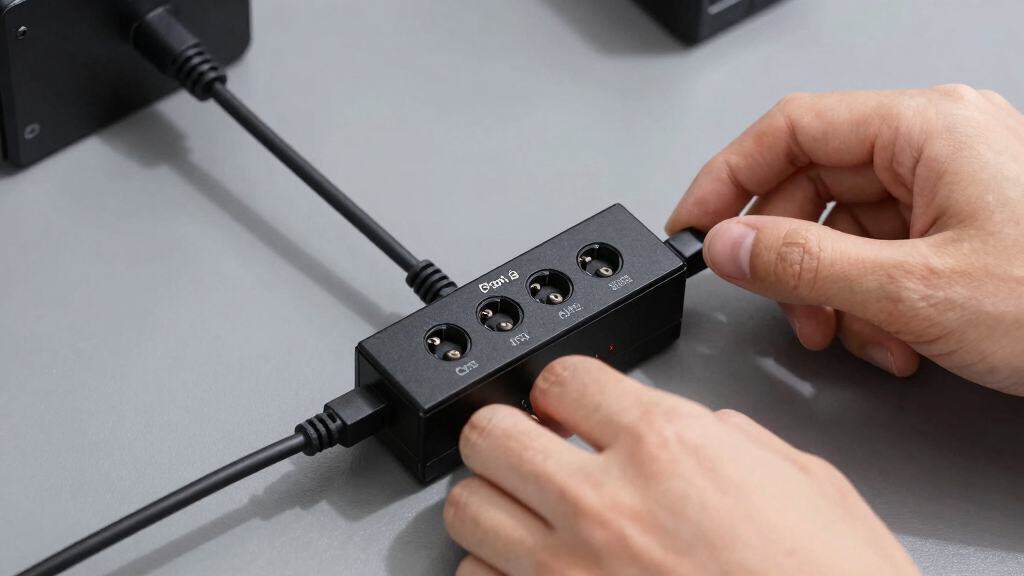

Choosing the best PoE switch for cameras involves balancing power, number of ports, and management features. The Reolink PoE Switch with 8 PoE ports stands out as the top overall pick thanks to its reliable performance and straightforward setup. The TP-Link TL-SG1218MP offers a broader port selection for larger systems, while the LINOVISION 8-Port Gigabit PoE Switch excels with its high PoE power output. These options reflect the main tradeoffs: more ports versus power capacity, and advanced features versus simplicity. Keep reading for a detailed breakdown of each model to find the best fit for your security needs.

Get home appliances delivered free — and shop member deals
- Fast, free delivery on millions of items
- Access to Prime Big Deal Days deals on October 6–7
- Prime Video, Amazon Music and more included
Complete the kit


Key Takeaways
- Top-performing switches balance port count with sufficient power output for multiple cameras.
- Managed switches offer advanced features but come at a higher price compared to unmanaged models.
- Power budget is critical; higher wattage allows more or higher-powered cameras to be connected simultaneously.
- Build quality and brand reputation influence long-term reliability, especially for professional setups.
- Ease of installation and user interface can significantly impact setup time and ongoing management.
| Reolink PoE Switch with 8 PoE and 2 Gigabit Uplink Ports |  | Best Overall for Small to Medium Camera Setups | Number of PoE Ports: 8 | Number of Uplink Ports: 2 | PoE Standard: IEEE802.3af/at | VIEW LATEST PRICE | See Our Full Breakdown |
| TP-Link TL-SG1005P 5-Port Gigabit PoE Switch with 4 PoE+ Ports |  | Best Compact Choice for Basic Camera Deployment | Number of Ports: 5 | PoE Ports: 4 | PoE Power Budget: 65W | VIEW LATEST PRICE | See Our Full Breakdown |
| TP-Link TL-SG1218MP 16-Port Gigabit PoE Switch |  | Best for Professional-Grade Surveillance Systems | Number of Ports: 18 | PoE Ports: 16 | PoE Power Budget: 250W | VIEW LATEST PRICE | See Our Full Breakdown |
| LINOVISION 8-Port Gigabit PoE Switch with 4 BT 90W PoE++ Ports |  | Best for High-Power Devices in Professional Installations | Number of Ports: 8 | PoE Ports: 4 BT 90W PoE++ ports, 4 PoE+ ports | PoE Power per Port: Up to 90W for ports 1-4 | VIEW LATEST PRICE | See Our Full Breakdown |
| UGREEN 10-Port Ethernet Switch with PoE+ and Uplink |  | Best for Versatile Deployment with Advanced Features | Number of Ports: 10 | PoE Ports: 8 PoE+ (802.3at/af) | Uplink Ports: 2 Gigabit | VIEW LATEST PRICE | See Our Full Breakdown |
| TP-Link TL-SF1005P 5-Port Fast Ethernet PoE Switch |  | Best Budget-Friendly PoE Switch for Small-Scale Cameras | Number of Ports: 5 | PoE Ports: 4 | PoE Power per Port: 30W | VIEW LATEST PRICE | See Our Full Breakdown |
| Reolink PoE Switch with 4 Ports and High-Speed Connectivity |  | Best for High-Speed, Long-Distance Camera Networks | Ports: 4 downlink, 1 uplink | Transmission Speed: 10/100/1000Mbps | PoE Standards: IEEE 802.3af/at | VIEW LATEST PRICE | See Our Full Breakdown |
| NETGEAR 5-Port PoE Gigabit Ethernet Unmanaged Switch (GS305P) |  | Best Compact Gigabit PoE Switch for Small Offices | Number of Ports: 5 | PoE Ports: 4 | Total Power Budget: 63W | VIEW LATEST PRICE | See Our Full Breakdown |
| 10 Port Full Gigabit PoE+ Switch with Rack Mount Ears |  | Best for Larger Camera Deployments in Office or Commercial Settings | Number of Ports: 10 | PoE Ports: 8 | Uplink Ports: 2 | VIEW LATEST PRICE | See Our Full Breakdown |
| poe switch for camera | Number of Ports | PoE Ports |
|---|---|---|
| Reolink PoE Switch with 8 PoE | — | — |
| TP-Link TL-SG1005P 5-Port Giga | 5 | 4 |
| TP-Link TL-SG1218MP 16-Port Gi | 18 | 16 |
| LINOVISION 8-Port Gigabit PoE | 8 | 4 BT 90W PoE++ ports, 4 PoE+ ports |
| UGREEN 10-Port Ethernet Switch | 10 | 8 PoE+ (802.3at/af) |
| TP-Link TL-SF1005P 5-Port Fast | 5 | 4 |
| Reolink PoE Switch with 4 Port | — | — |
| NETGEAR 5-Port PoE Gigabit Eth | 5 | 4 |
| 10 Port Full Gigabit PoE+ Swit | 10 | 8 |
More Details on Our Top Picks
Reolink PoE Switch with 8 PoE and 2 Gigabit Uplink Ports
The Reolink RLA-PS1 stands out for its straightforward plug-and-play setup, making it ideal for those new to PoE networking. Its 8 PoE ports and 120W power budget suffice for small to medium camera systems, especially when compared to the larger TP-Link TL-SG1218MP, which offers more ports but at a higher complexity and cost. This switch’s intelligent power management helps prevent overloads, a critical feature for beginners or less technical users. However, with only 8 PoE ports and no remote management, expanding beyond small setups or integrating with complex systems can be challenging. Best suited for users prioritizing ease of use over extensive scalability.
Pros:- Easy to set up and install, perfect for beginners
- Supports intelligent power management to prevent overloads
- Flexible connectivity for diverse network configurations
Cons:- Limited to 8 PoE devices, may need additional switches for larger systems
- No remote management capabilities, restricting scalability
Best for: Small businesses or home users needing a simple, reliable switch for up to 8 cameras
Not ideal for: Large-scale surveillance systems requiring more than 8 PoE devices or advanced management features
- Number of PoE Ports:8
- Number of Uplink Ports:2
- PoE Standard:IEEE802.3af/at
- Max Power per PoE Port:30W
- Total Power Budget:120W
- Supported Speeds:10/100/1000Mbps
Our verdict“This switch offers a straightforward, reliable option for small-scale camera networks without complex management needs.”
TP-Link TL-SG1005P 5-Port Gigabit PoE Switch with 4 PoE+ Ports
The TP-Link TL-SG1005P excels in environments where space and noise are considerations, thanks to its fanless, compact design. Its 4 PoE+ ports with a 65W power budget suit small camera setups or VoIP deployments, making it a solid choice over larger switches like the TP-Link TL-SG1218MP when extensive port counts aren’t needed. The plug-and-play nature and durable metal case make it a dependable, no-fuss option for small offices or home setups. However, its limited number of PoE+ ports and lack of remote management make it less suitable for expanding or more complex networks. This pick makes the most sense for users with modest PoE needs in tight spaces.
Pros:- Compact, space-saving design suitable for small spaces
- Fanless operation ensures silent running
- Sturdy metal construction for durability
Cons:- Limited to 4 PoE+ ports, restricting scalability
- Lacks remote management features for network control
Best for: Home users or small offices needing a compact, reliable PoE switch for 4 cameras or devices
Not ideal for: Growing surveillance systems or those requiring advanced network management features
- Number of Ports:5
- PoE Ports:4
- PoE Power Budget:65W
- Port Speed:Gigabit Ethernet
- Form Factor:Desktop
- Fanless:Yes
Our verdict“This switch is ideal for small setups where simplicity and quiet operation are priorities over expandability.”
TP-Link TL-SG1218MP 16-Port Gigabit PoE Switch
The TP-Link TL-SG1218MP offers a robust solution for larger, more demanding camera networks, with 16 PoE+ ports supporting up to 30W each. Its high-capacity 250W power budget and two SFP slots for fiber uplinks make it well-suited for high-performance environments, like multi-camera security systems. When compared to smaller switches like the Reolink PoE Switch, its extensive port count and high power capacity make it more versatile. The durable metal case and plug-and-play setup simplify deployment, but its higher power consumption and lack of advanced management features beyond QoS and IGMP Snooping could be limiting for some users. This switch is best for professional setups needing extensive PoE device support.
Pros:- Supports 16 PoE+ ports with high power per port
- Includes two SFP slots for flexible uplinks
- Durable metal housing for reliability
Cons:- Requires 240V power, may need adapters in some regions
- Limited management features beyond basic QoS and IGMP snooping
Best for: Security professionals or large business networks with many cameras and high data demands
Not ideal for: Small-scale systems or DIY users seeking a simple, budget-friendly option
- Number of Ports:18
- PoE Ports:16
- PoE Power Budget:250W
- Uplink Ports:2 Gigabit Non-PoE, 2 Combo SFP
- Maximum Power:296.3 watts
- Case Material:Metal
Our verdict“This switch caters to larger, professional surveillance networks demanding high power and extensive port support.”
LINOVISION 8-Port Gigabit PoE Switch with 4 BT 90W PoE++ Ports
The LINOVISION 8-Port Gigabit PoE Switch is designed for demanding setups, supporting four PoE++ ports delivering up to 90W each. Its redundant power inputs and SFP uplinks enhance reliability, making it suitable for high-power cameras and lighting in professional environments. Compared to smaller unmanaged switches like the TP-Link TL-SG1005P, its high power budget and industrial features make it a better fit for complex setups. However, as an unmanaged switch, it lacks advanced configuration options, and its higher cost and power requirements may limit use in smaller or budget-conscious installations. This switch makes sense for professional users needing high PoE power and redundancy.
Pros:- Supports high-power PoE++ ports up to 90W each
- Redundant power input for reliability
- Includes SFP uplinks for fiber connectivity
Cons:- Unmanaged, lacking detailed configuration options
- Higher cost and power consumption
Best for: Industrial or large-scale security installations with high-power PoE devices
Not ideal for: Small or residential setups where managing power and costs are less critical
- Number of Ports:8
- PoE Ports:4 BT 90W PoE++ ports, 4 PoE+ ports
- PoE Power per Port:Up to 90W for ports 1-4
- Total PoE Budget:120W (expandable to 240W)
- Uplink Ports:2 Gigabit SFP
- Color:Black
Our verdict“This switch is tailored for high-demand, professional environments with high-power PoE devices needing reliable redundancy.”
UGREEN 10-Port Ethernet Switch with PoE+ and Uplink
The UGREEN 10-Port Ethernet Switch shines with its mix of unmanaged simplicity and advanced features like VLAN and extend mode, making it more adaptable than basic unmanaged switches like the TP-Link TL-SG1005P. Its 8 PoE+ ports with 60W total budget handle cameras, IP phones, and access points efficiently, especially in environments needing segmentation or long-distance PoE wiring. Its auto-recovery feature adds reliability, but the limited power budget could restrict high-power devices, and being unmanaged means fewer customization options compared to managed switches. This switch suits users wanting a balance of ease, features, and flexibility in small to medium deployments.
Pros:- Supports 8 PoE+ ports with flexible operation modes
- Includes VLAN and extend mode for advanced deployment
- Auto-recovery ensures stable PoE operation
Cons:- Total power budget of 60W limits high-power device support
- Unmanaged, restricting advanced network control
Best for: Small to medium-sized networks requiring features like VLAN and extend mode for flexible camera and device deployment
Not ideal for: Large-scale or high-power systems that exceed 60W total PoE budget or need full management capabilities
- Number of Ports:10
- PoE Ports:8 PoE+ (802.3at/af)
- Uplink Ports:2 Gigabit
- Total Power Budget:60W
- Features:VLAN, Extend Mode, PoE Auto Recovery
- Color:Grey
Our verdict“This switch offers a solid mix of features for versatile camera deployments in small to medium networks needing some management flexibility.”
TP-Link TL-SF1005P 5-Port Fast Ethernet PoE Switch
This compact switch stands out for its straightforward setup and high power output, making it suitable for small surveillance systems. Compared with the NETGEAR GS305P, it provides similar PoE power but at a lower data speed, limited to 10/100 Mbps. While its durability and extended range mode are advantageous for outdoor or remote camera placements, the lack of gigabit speeds can bottleneck larger or more data-intensive setups. Its unmanaged nature simplifies installation, but it also means no advanced network controls are available. For those with modest needs, this switch offers reliable power delivery and ease of use, though it doesn’t support gigabit data transfer, which might be a concern for future-proofing.
Pros:- Easy plug-and-play setup with no configuration needed
- Supports high power PoE for multiple cameras simultaneously
- Durable metal enclosure suitable for varied environments
Cons:- Limited to 10/100 Mbps speeds, not gigabit
- No managed features for network control
- Speed drops to 10 Mbps in Extend Mode
Best for: Small business or home users seeking an affordable, straightforward PoE solution for a handful of cameras.
Not ideal for: Environments requiring gigabit speeds or more advanced network management, such as growing security systems or enterprise setups.
- Number of Ports:5
- PoE Ports:4
- PoE Power per Port:30W
- Total PoE Power Budget:67W
- Data Transmission Range (Extend Mode):250 meters
- Supported Standards:IEEE 802.3af/at
Our verdict“This switch suits small-scale camera setups where affordability and simplicity outweigh the need for gigabit speeds or advanced features.”
Reolink PoE Switch with 4 Ports and High-Speed Connectivity
This switch is well-suited for those needing gigabit speeds and extended PoE coverage, outperforming the TP-Link TL-SF1005P in data transfer capacity. Its support for IEEE 802.3af/at and smart power management ensures stability and compatibility with a range of cameras and access points. The fanless, durable design makes it ideal for silent operation in both home and office environments. While it supports long-distance PoE transmission up to 820 feet, it requires Cat5E or higher cables, adding a layer of compatibility consideration. Compared to unmanaged switches with lower power budgets, this model provides higher speed and a more reliable connection but at a slightly higher cost and complexity.
Pros:- Supports high-speed gigabit Ethernet connections
- Long-distance PoE extension up to 250 meters
- Fanless design for silent, reliable operation
Cons:- Requires Cat5E or higher cables for Extend Mode
- Limited to 4 PoE ports, less suited for larger setups
- No advanced configuration options
Best for: Users deploying gigabit cameras over longer distances who want quiet, reliable operation without complex setup.
Not ideal for: Small setups with only a few cameras or users needing managed features, as it offers limited configuration options.
- Ports:4 downlink, 1 uplink
- Transmission Speed:10/100/1000Mbps
- PoE Standards:IEEE 802.3af/at
- Power Budget:65W
- Extend Mode:Yes, up to 820 ft (250 meters)
- Design:Fanless, metal housing
Our verdict“This switch makes the most sense for users needing high-speed, long-distance PoE for multiple cameras in quieter, durable setups.”
NETGEAR 5-Port PoE Gigabit Ethernet Unmanaged Switch (GS305P)
The NETGEAR GS305P excels in providing gigabit speeds with a simple, compact design, making it an excellent choice for fast, small-scale camera networks. Its 4 PoE+ ports with a 63W total budget easily handle multiple high-power cameras, and the plug-and-play setup eliminates configuration hassles. Compared to the TP-Link TL-SF1005P, this model offers gigabit speeds, reducing bottlenecks in data-heavy environments. However, its unmanaged nature limits network control features, and the power budget may fall short for high-power or larger camera arrays. Its silent, energy-efficient operation makes it suitable for office spaces or home security setups where speed and simplicity are prioritized.
Pros:- Supports high-speed Gigabit Ethernet connections
- Easy plug-and-play setup with no configuration needed
- Compact, energy-efficient, and silent operation
Cons:- Limited to unmanaged switch features
- PoE power budget of 63W may be insufficient for many high-power devices
- Not suitable for large-scale, complex networks
Best for: Small offices or home security systems that require high-speed, reliable PoE connections without management complexity.
Not ideal for: Large, enterprise-grade networks or setups needing managed switches for detailed control and extensive device management.
- Number of Ports:5
- PoE Ports:4
- Total Power Budget:63W
- Ethernet Speed:Gigabit (1.0Gbps)
- Design:Fanless, compact metal
- Mounting Options:Desktop or wall-mount
Our verdict“This switch offers a strong balance of speed and simplicity, perfect for small office or home setups demanding gigabit performance.”
10 Port Full Gigabit PoE+ Switch with Rack Mount Ears
This 10-port switch stands out for its high capacity, with 8 PoE ports supporting up to 30W each and a total power budget of 120W, making it suitable for larger security setups. Its rack-mount design and sturdy metal housing enhance durability and professional installation. Compared to the 5-port options like the NETGEAR GS305P, it offers more PoE ports and higher power, catering to more extensive camera networks. The switch’s plug-and-play setup simplifies deployment, but it doesn’t support passive 24V PoE devices, limiting some camera compatibility. For users with multiple high-power cameras or needing more ports, this model strikes a good balance between capacity and ease of use.
Pros:- Supports up to 8 PoE ports with 30W per port
- Sturdy metal housing with rack-mount capability
- Automatic PoE detection and device protection
Cons:- Does not support passive 24V PoE devices
- Limited to 8 PoE ports, not suitable for very large setups
- Lack of advanced management features
Best for: Medium to large surveillance systems in offices or retail environments requiring multiple PoE cameras with high power needs.
Not ideal for: Home users or small setups with fewer cameras, as its capacity and size are unnecessary and costlier than needed.
- Number of Ports:10
- PoE Ports:8
- Uplink Ports:2
- PoE Power per Port:30W
- Total PoE Power Budget:120W
- Standard:IEEE 802.3af/at
Our verdict“This switch is well-suited for larger, high-power camera networks where capacity, durability, and straightforward setup matter most.”

How We Picked
I evaluated each PoE switch based on key factors that matter most to camera users: performance, power capacity, port versatility, build quality, and ease of use. Priority was given to models with sufficient wattage for multiple cameras, straightforward installation, and reliable brand reputation. I also considered value for money, ensuring each pick offers a clear advantage in its category. The ranking reflects a balance between features, performance, and price, helping users find options suited for both small and large surveillance systems.Factors to Consider When Choosing Best Poe Switch For Cameras
When selecting the best PoE switch for cameras, understanding your specific needs is essential. Different setups require different port numbers, power budgets, and management features. By focusing on these core factors, you can avoid common pitfalls like underpowered switches or overly complex options that don’t match your technical comfort level. Here are the main considerations to help guide your decision.Number of Ports
Assess how many cameras you plan to connect now and in the future. Overestimating port needs can lead to unnecessary expense, but underestimating may require a costly upgrade later. Most home or small business setups work well with 5 to 8 ports, but larger systems often need 16 or more. Consider future expansion to avoid replacing your switch prematurely.
Power Budget and PoE Standards
The total wattage the switch can deliver determines how many cameras and what types of PoE devices you can support. Higher budgets accommodate more or higher-powered cameras, such as PTZ or 4K models. Also, check whether the switch supports IEEE 802.3af (PoE) or IEEE 802.3at (PoE+), as the latter provides more power per port for demanding devices.
Managed vs. Unmanaged
Managed switches offer granular control over network traffic, VLANs, and security, which can be valuable in complex or professional environments. Unmanaged switches are simpler, plug-and-play options perfect for basic setups. Choosing between them depends on your technical skill and future plans for network management.
Build Quality and Reliability
A durable, well-made switch from a reputable brand reduces the risk of failure over time. Consider models with solid construction, good cooling, and reliable components—especially if your cameras are critical for security. Investing in quality can save costs in the long run through fewer replacements and repairs.
Ease of Installation and Management
Look for switches with straightforward setup, especially if you’re unfamiliar with network hardware. Features like plug-and-play operation, clear labeling, and simple management interfaces can make a big difference. For larger or more complex systems, a switch with web-based management and remote configuration can streamline ongoing maintenance.
Frequently Asked Questions
Can I connect non-PoE cameras to a PoE switch?
Yes, you can connect non-PoE cameras or devices to a PoE switch, but they will not receive power from the switch. You’ll need to supply power separately for those devices. Some switches have dedicated non-PoE ports, which can be useful if you have a mix of PoE and non-PoE equipment.
How do I know if a PoE switch can handle my cameras’ power requirements?
Check the total power budget of the switch and the power draw of each camera. Most cameras specify their required wattage; sum these amounts to ensure the switch’s total wattage is sufficient. Opting for a switch with a higher power budget than your current needs provides room for future expansion and higher-powered cameras.
Is a managed PoE switch worth the extra cost for home use?
For most home security systems, unmanaged switches are sufficient and more cost-effective. Managed switches offer advanced features like VLAN support and traffic monitoring, which are beneficial in complex setups or for professional applications. If you plan to expand or want more control, investing in a managed switch could be worthwhile.
What is the typical lifespan of a PoE switch?
With proper use and quality components, a PoE switch can last five to ten years. Regular maintenance, such as keeping vents clear and avoiding power surges with suitable protections, helps extend its lifespan. Choosing a well-reviewed, reputable brand also reduces the risk of early failure.
Should I prioritize port count or power capacity?
It depends on your setup’s scale and camera types. If you have many cameras or plan to expand, a higher port count is important. However, if you use high-power cameras or PTZ models, focus on a switch with a higher power budget. Ideally, find a balance that meets your current and future needs without paying for unnecessary features.
Conclusion
For small setups or those just starting out, the TP-Link TL-SG1005P offers a simple, affordable option with enough power for basic cameras. Larger or professional systems benefit from models like the TP-Link TL-SG1218MP for its extensive port count and higher power capacity. If you’re seeking a premium choice with advanced management, the LINOVISION 8-Port Gigabit PoE Switch is ideal. Beginners should focus on easy plug-and-play solutions, while experienced users might prioritize managed features for greater control. Ultimately, your choice depends on your current needs and future expansion plans, but the options listed here cover a broad range of scenarios to help you make an informed decision.
Fall yard work Picks
leaf blowers
As an affiliate, we earn on qualifying purchases.