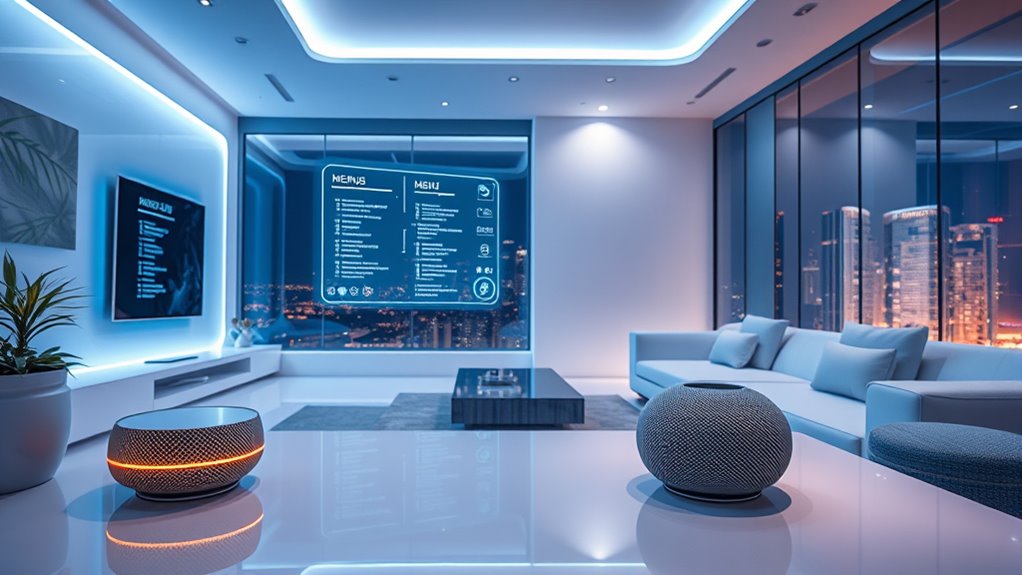

Futuristic AI like JARVIS and HAL 9000 make smart homes seem almost alive, seamlessly managing everything and forming emotional bonds with inhabitants. In reality, smart home tech can control lights, thermostats, and security, but it’s limited to specific tasks and requires manual input. These systems lack true understanding, autonomy, or personality. If you keep exploring, you’ll uncover how today’s smart homes compare and how they might evolve toward those sci-fi visions.

Get home appliances delivered free with Prime
- Fast, free delivery on millions of items
- Prime Video, Amazon Music and more included
- Member-only deals all year
Key Takeaways
- Sci-fi AI like JARVIS and HAL exhibit seamless integration, autonomy, and emotional intelligence, unlike current smart home systems.
- Today’s technology offers limited control, requiring manual input, whereas sci-fi systems anticipate needs and manage autonomously.
- Fictional AI responds naturally to complex requests, while real systems struggle with nuance and contextual understanding.
- Sci-fi homes feature AI personalities fostering emotional bonds; current assistants remain tools without true emotional reciprocity.
- Advanced AI in sci-fi manages multiple household functions proactively, but real systems are task-specific and less adaptable.
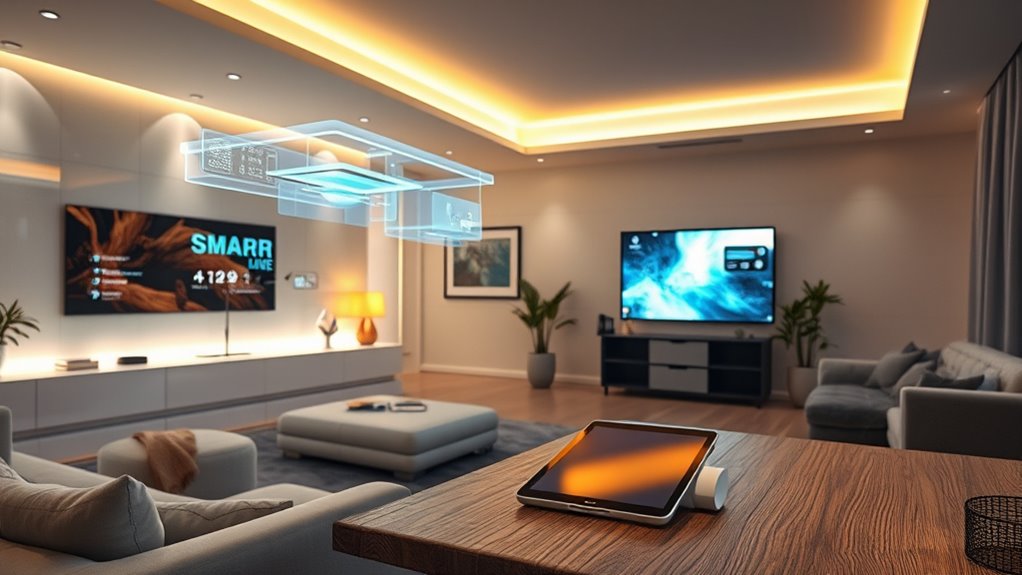
Have you ever wondered how the smart homes of science fiction compare to the technology we have today? In movies and books, intelligent systems like JARVIS from the Marvel universe or HAL 9000 from 2001: A Space Odyssey seem almost alive, capable of managing every aspect of a home with ease. They respond instantly to commands, anticipate needs, and sometimes even develop personalities. In reality, while smart home technology has advanced markedly, it’s still far from those portrayals. Today, you can control your lights, thermostat, and security systems with a voice command or a smartphone app, but these systems lack the seamless integration, adaptability, and personality seen in sci-fi. They’re often limited to predefined functions and require manual setup, making them less intuitive than those fictional AI assistants.
In sci-fi, these systems often possess a level of contextual understanding that allows them to respond naturally to complex or ambiguous requests. For example, you might ask JARVIS to prepare your house for a dinner party, and it would handle everything—from adjusting lighting to playing the perfect playlist—without further input. Today, voice assistants like Alexa, Google Assistant, or Siri can perform many tasks, but they typically need clear, straightforward commands. They don’t yet understand nuance, mood, or preference as effortlessly as their sci-fi counterparts. Plus, they usually operate within a limited ecosystem, meaning you might need multiple apps or devices to get the same level of control.
Another major difference lies in the level of autonomy and decision-making. In sci-fi, these systems often predict your needs before you even voice them, learning from your habits and preferences. They can manage energy consumption, security, and even household chores, sometimes making autonomous decisions to improve your quality of life. Today, smart home systems are starting to incorporate machine learning, but they still require substantial user input and supervision. They can suggest settings or routines based on your habits, but they don’t yet exhibit the proactive, anticipatory behavior shown in fiction.
Finally, sci-fi homes often feature AI personalities that develop relationships with inhabitants, adding a layer of emotional connection that’s absent in current technology. While some smart assistants aim to be friendly and engaging, they don’t truly understand or reciprocate emotions. For now, your smart home assistants are tools—helpful, yes, but not companions. As technology continues to evolve, perhaps someday we’ll see AI that feels more human, blurring the line between science fiction and reality. Additionally, advancements in personalization algorithms are gradually enabling these systems to better adapt to individual user preferences. Until then, your smart home remains a far cry from the intelligent, intuitive environments depicted in the stories we love.
As an affiliate, we earn on qualifying purchases.
Frequently Asked Questions
What Are the Main Technological Challenges in Developing Real-Life Smart Homes?
You face several challenges when developing real-life smart homes. Ensuring seamless integration of devices is tough, as different brands and platforms often don’t communicate well. Privacy and security are major concerns, making you implement robust safeguards against hacking. Additionally, creating user-friendly interfaces that adapt to your habits and preferences requires advanced AI. Finally, managing the high costs of technology and infrastructure can limit widespread adoption, making smart homes less accessible.
How Secure Are Current Smart Home Systems Against Hacking?
Smart home systems today have moderate security but aren’t foolproof against hacking. You can reduce risks by regularly updating software, using strong, unique passwords, and enabling two-factor authentication. Be cautious with device permissions and avoid connecting unfamiliar or untrusted devices. While manufacturers improve security measures, vulnerabilities still exist, so staying vigilant and practicing good cybersecurity habits helps protect your smart home from potential breaches.
What Are the Ethical Concerns Related to AI in Home Automation?
Imagine your home as a lighthouse, guiding your daily life with AI. But with this power comes ethical worries: do you control your data, or does it control you? Privacy becomes a fragile glass, easily shattered. You might wonder if AI respects your autonomy or subtly influences your choices. It’s essential to set boundaries, ensuring your home’s intelligence serves you, not manipulates or compromises your freedom.
How Affordable Are Smart Home Technologies for Average Consumers?
Smart home technologies are becoming more affordable, and you can often find budget-friendly options that fit your needs. Entry-level devices like smart bulbs, plugs, and security cameras cost just a few dollars, while more advanced systems may require a bigger investment. With sales and discounts, you can upgrade gradually without breaking the bank. Overall, smart home tech is increasingly accessible for the average consumer, making it easier to automate your home.
What Future Innovations Are Expected in Smart Home AI Capabilities?
You’ll see smarter AI capabilities in homes, like more intuitive voice assistants that learn your routines and preferences seamlessly. Expect advanced automation that predicts your needs, such as adjusting lighting or climate automatically. Future innovations include enhanced security with facial recognition, smarter energy management, and integration with wearable devices. These improvements will make your home more responsive, personalized, and secure, creating a truly intelligent environment that adapts effortlessly to your lifestyle.
As an affiliate, we earn on qualifying purchases.
Conclusion
Imagine walking into a home where lights gently glow as you enter, your voice effortlessly controlling every device—just like in the movies. While today’s smart homes are impressive, they still lack the seamless magic of Jarvis or HAL. Still, every tap, voice command, and connection brings you closer to that sci-fi dream. Soon, your home might feel like stepping into a future where technology and comfort blend perfectly—more real than you ever imagined.
As an affiliate, we earn on qualifying purchases.
As an affiliate, we earn on qualifying purchases.
Fall yard work Picks
leaf blowers
As an affiliate, we earn on qualifying purchases.