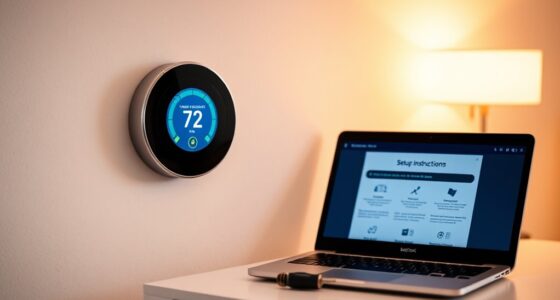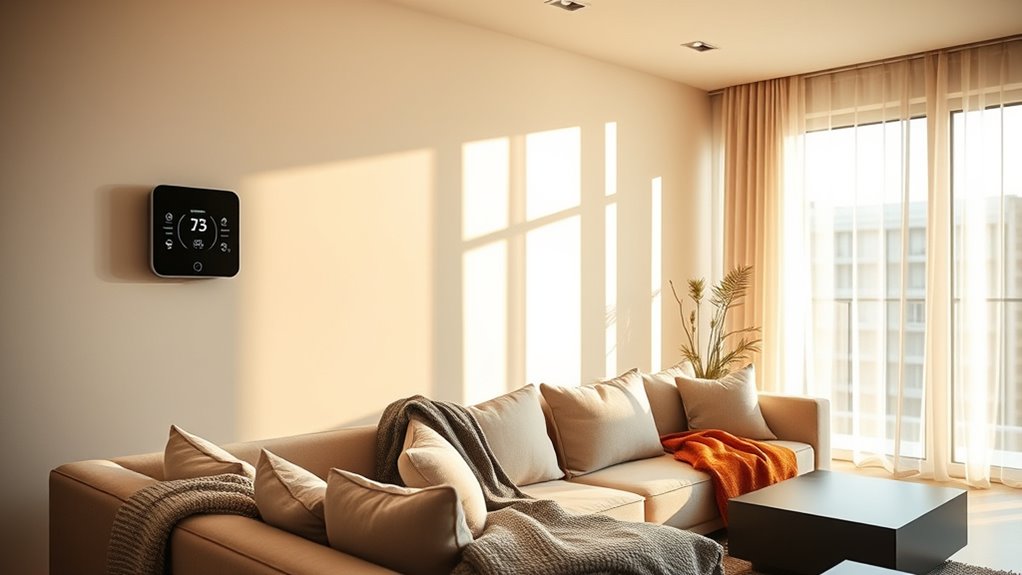

AI zoning helps you achieve perfect comfort by automatically adjusting temperatures in each room based on your habits and preferences. It uses smart sensors and machine learning to target specific areas, saving energy and lowering bills. You can customize settings for every space, and the system adapts over time for ideal performance. If you want to discover how to set up and maximize these features, there’s more to explore below.
Key Takeaways
- AI zoning automatically adjusts temperatures in each room based on occupancy and preferences for personalized comfort.
- Smart sensors gather real-time data on temperature, humidity, and occupancy to optimize climate control.
- Machine learning algorithms analyze data to recognize patterns, predict needs, and enhance energy efficiency.
- Installation involves wireless sensors and thermostats, with proper placement and calibration for reliable operation.
- Future systems will offer advanced learning capabilities, seamless smart home integration, and increased focus on user privacy.

Amazon Smart Thermostat – Save money and energy – Works with Alexa and Ring – C-wire required
Smart upgrade – Amazon Smart Thermostat is an easy way to switch from a traditional thermostat and help…
As an affiliate, we earn on qualifying purchases.
As an affiliate, we earn on qualifying purchases.
How AI Zoning Enhances Home Comfort and Efficiency
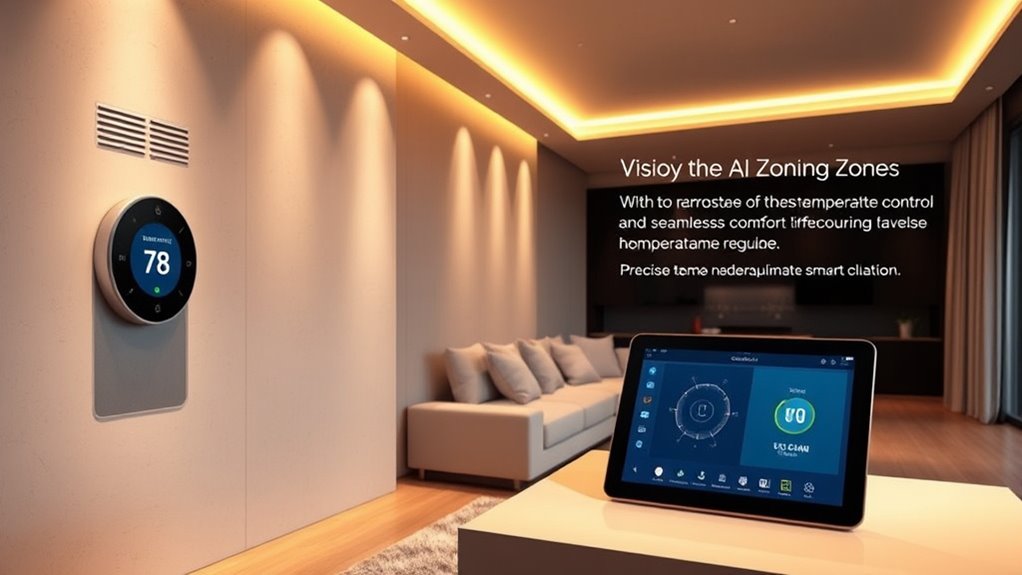
AI zoning improves home comfort and efficiency by automatically adjusting temperatures in different rooms based on your habits and preferences. With this technology, you can enjoy personalized comfort, ensuring each space is just right without wasting energy. By targeting specific areas, AI zoning reduces unnecessary heating or cooling, leading to significant energy conservation. You won’t have to manually change thermostats or heat empty rooms, which cuts down on energy bills and lowers your carbon footprint. This smart system learns your routines and adapts accordingly, making your home more comfortable and efficient. Additionally, integrating thermal behavior into your climate control allows for even more precise adjustments, optimizing energy use and comfort. Incorporating zone control technology can further enhance your system’s effectiveness. Understanding energy-efficient design principles can help you maximize the benefits of AI zoning. Utilizing smart sensors enables the system to respond more accurately to environmental changes, ensuring optimal performance. Moreover, employing predictive algorithms allows for anticipatory adjustments that further improve efficiency and comfort. As a result, you gain better control over your environment while saving energy, creating a more sustainable living space that aligns with your lifestyle and preferences.

Lennox Smart Room Sensor 22V25 Wireless Sensor for S40 Thermostat – Smart Climate Control,Algorithmic Precision, 70ft Range, Efficient Battery, LED, Manufacturer Warranty No Return, No Refund
compatible with Lennox S40 thermostat, Wireless sensor collects room temperature and occupancy status, transmitting data to the thermostat…
As an affiliate, we earn on qualifying purchases.
As an affiliate, we earn on qualifying purchases.
Key Technologies Behind Smart Climate Control
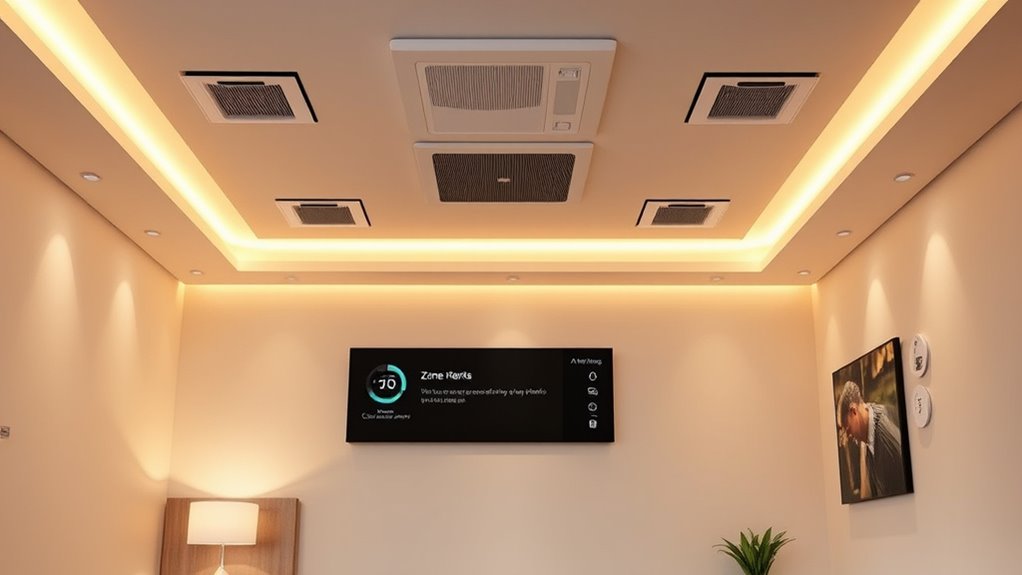
At the heart of smart climate control are advanced technologies that enable precise and adaptive temperature management. Smart sensors gather real-time data on room conditions, such as temperature, humidity, and occupancy, providing the foundation for effective adjustments. These sensors continuously monitor environment changes, allowing the system to respond instantly. Machine learning algorithms analyze this data, recognizing patterns and predicting future needs. This intelligence helps optimize heating and cooling, ensuring each room stays comfortable without wasting energy. This process is often supported by vetted wave and wind data to account for external environmental influences, further refining climate adjustments. By combining smart sensors with machine learning, your climate control system becomes more efficient and responsive over time. It learns your preferences and adapts automatically, delivering personalized comfort. Additionally, simple systems designed for easy setup and maintenance make it more accessible for homeowners to implement and sustain effective climate management. These technologies work together seamlessly to create a smart, energy-efficient home environment tailored to your lifestyle, leveraging natural integration within your existing home design. Incorporating regular updates and calibration further enhances system accuracy and performance over time, especially as environmental conditions or user preferences change, similar to how ear wax odor can vary based on hygiene practices.

ecobee Smart Thermostat Essential – Energy Star Certified programmable Wi-Fi Thermostat – Works with Siri, Alexa, and Google Assistant
Save up to 23% every year on heating and cooling costs, adjusts to your set schedule to save…
As an affiliate, we earn on qualifying purchases.
As an affiliate, we earn on qualifying purchases.
Customizing Your Environment: Features and Benefits
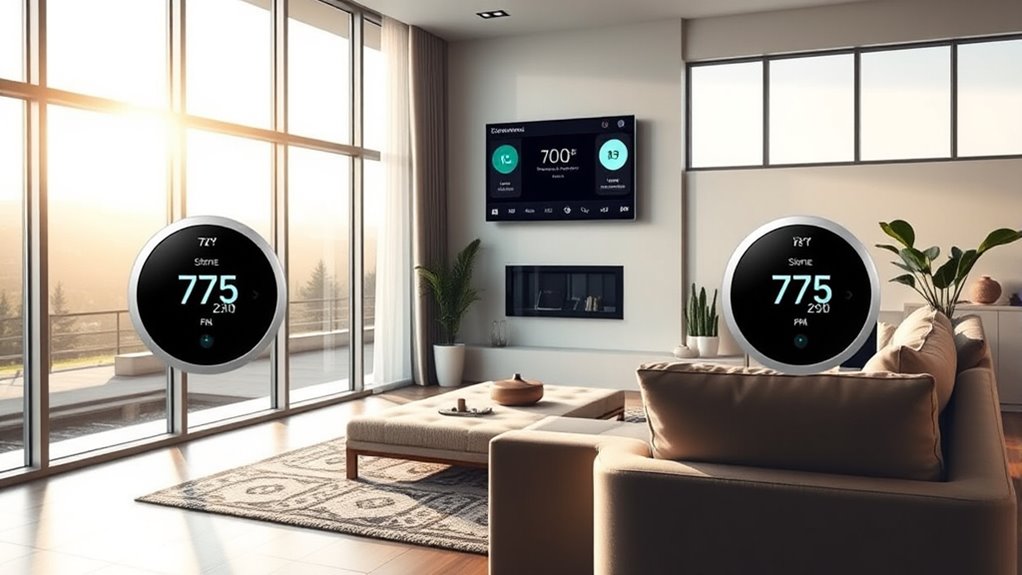
Customizing your environment allows you to tailor your home’s climate precisely to your preferences, enhancing comfort and efficiency. With personalized settings, you can adjust temperatures for each room based on usage, ensuring everyone feels comfortable. This targeted approach helps reduce energy waste by preventing unnecessary heating or cooling in unoccupied spaces. By fine-tuning your system to your schedule and needs, you benefit from energy savings while maintaining ideal comfort. Features like adjustable thermostats and zoning controls give you the flexibility to create the perfect environment in every room. Additionally, smart zoning technology enables your system to adapt automatically to changing conditions, further optimizing energy use and comfort. Incorporating local automation can enhance your system’s responsiveness and simplify management. Implementing energy-efficient design principles can further improve overall system performance and sustainability. Understanding system integration options allows you to streamline control and enhance user experience. Overall, customizing your climate not only boosts comfort but also promotes smarter energy use, helping you save money and reduce your carbon footprint.

SmartSign “Keep Doors Closed, Climate Controlled Room” Label | 7" x 10" Laminated Vinyl
DURABLE VINYL. Made of 4 mil thick, conformable vinyl and has an aggressive adhesive backing. Labels last up…
As an affiliate, we earn on qualifying purchases.
As an affiliate, we earn on qualifying purchases.
Installing and Setting Up AI Zoning Systems
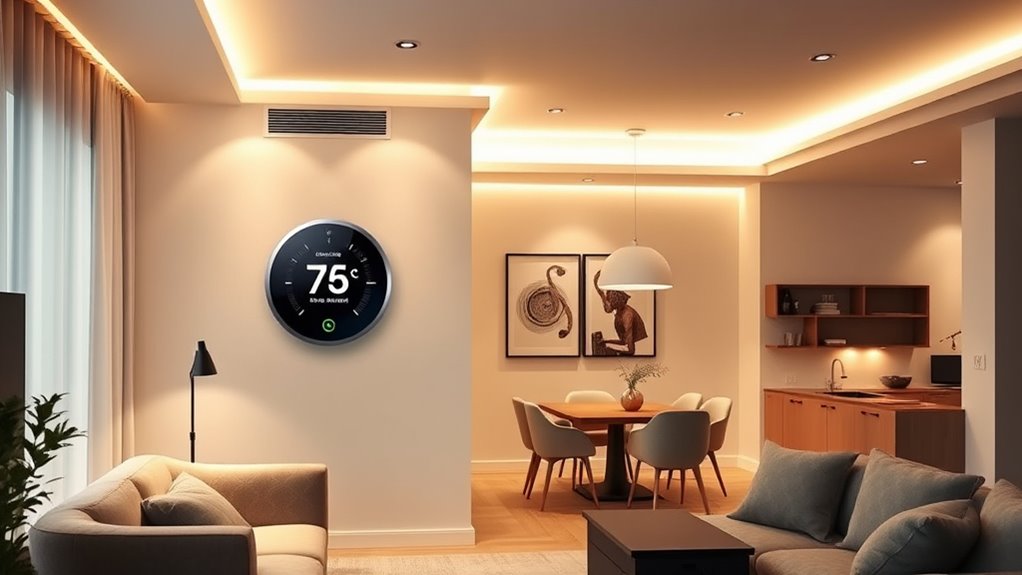
Setting up an AI zoning system involves installing smart thermostats and zoning sensors that communicate with each other. Begin by placing zoning sensors in each designated room to monitor temperature and occupancy accurately. These sensors connect wirelessly to your smart thermostats, which control your HVAC system. Next, follow the manufacturer’s instructions to connect the system to your home Wi-Fi and calibrate the sensors for peak performance. Confirm each sensor’s location provides reliable data, avoiding drafts or direct sunlight. Proper sensor placement is essential for optimal system performance, ensuring accurate temperature readings. Once installed, access the system’s app or panel to assign zones and customize temperature settings for each space. Proper setup guarantees your AI zoning system functions smoothly, delivering precise climate control tailored to each room’s needs. Additionally, familiarizing yourself with the history of smart climate control can help you optimize your system’s capabilities and ensure long-term efficiency. Understanding the evolution of home automation can also provide insights into integrating additional smart features for enhanced comfort and control.
Future Trends in Room-by-Room Climate Management
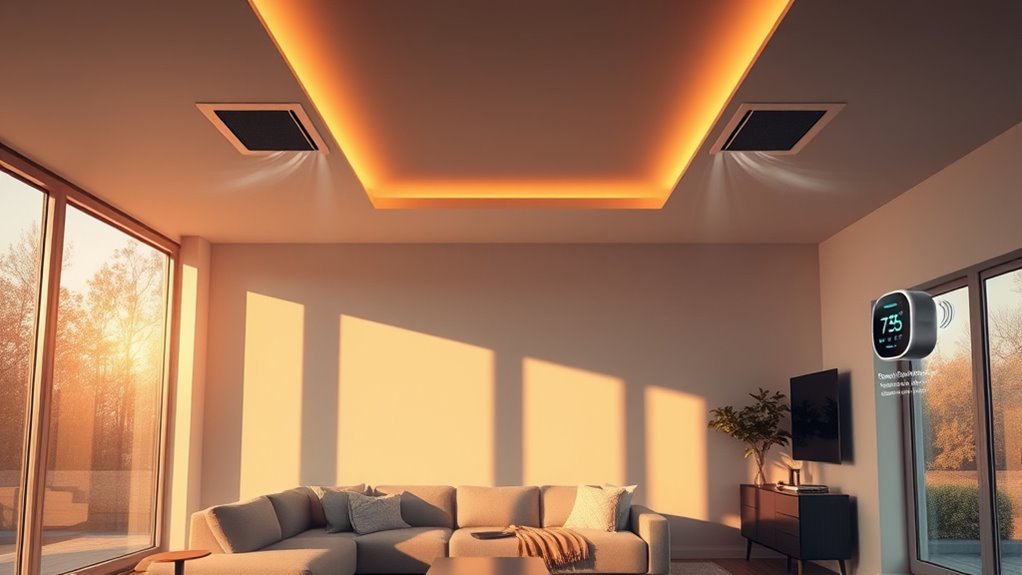
As technology advances, room-by-room climate management will become even smarter and more intuitive. Future trends include AI systems that optimize energy conservation by learning your habits and adjusting settings automatically. Enhanced sensors will provide real-time data, leading to more precise comfort control without wasting energy. Privacy concerns will drive innovations in user privacy, ensuring your personal data stays protected while still benefiting from personalized climate adjustments. Expect increased integration with smart home ecosystems, allowing seamless control via voice or apps. Additionally, adaptive algorithms will predict your needs, further reducing energy use and increasing comfort. These advancements will make climate management more efficient, secure, and user-friendly, transforming how you experience indoor comfort. Energy efficiency will be a key focus in developing sustainable indoor environments, leveraging smart technology to optimize performance and personalized climate control.
Frequently Asked Questions
How Does AI Zoning Adapt to Seasonal Weather Changes?
AI zoning adapts to seasonal weather changes by performing seasonal adjustments based on weather pattern analysis. You’ll notice it automatically adjusts temperature settings as seasons shift, ensuring your home remains comfortable. It learns from external weather data and your preferences, fine-tuning the climate for ideal comfort throughout the year. This proactive approach keeps your home cozy in winter and cool in summer, without you lifting a finger.
Can AI Zoning Integrate With Existing Smart Home Systems?
Did you know 85% of homeowners prefer integrated smart home systems? AI zoning easily integrates with your existing setup, enhancing comfort and energy efficiency. You can control your climate with voice commands through smart assistants or apps, making adjustments seamless. This compatibility means you don’t need to overhaul your system—just connect, customize, and enjoy tailored comfort throughout your home effortlessly.
What Privacy Concerns Are Associated With AI Climate Control?
You might worry about data privacy with AI climate control since it involves user monitoring to optimize comfort. Your data could be be gathered, stored, or shared unintentionally, raising concerns about who has access. To safeguard yourself, review privacy policies, ensure data encryption, and control what information is shared. Being aware of these privacy risks helps you enjoy smart climate control without compromising your personal information.
How Quickly Can AI Zoning Detect and Respond to Temperature Fluctuations?
AI zoning detects and responds to temperature fluctuations almost instantly, thanks to advanced sensor responsiveness. As soon as the system senses a change, it processes the data and adjusts the climate settings within seconds. Your response time to temperature shifts is quick, ensuring consistent comfort. This rapid detection and adjustment keep each room at your preferred temperature, eliminating delays and maintaining a perfect indoor environment effortlessly.
Does AI Zoning Require Professional Maintenance or Updates?
Oh, sure, AI zoning might seem like magic, but it still needs some TLC. You won’t need a full-time technician, but maintenance requirements include occasional software updates and system checks. These updates keep your setup running smoothly and guarantee maximum comfort. Luckily, most updates are straightforward, often automatic, or easily handled by a professional if needed. So, while it’s low-maintenance, a little upkeep keeps everything running perfectly.
Conclusion
With AI zoning, you’ll experience a level of home comfort that’s practically supernatural, transforming your space into a perfect oasis tailored precisely to your needs. Say goodbye to uneven temperatures and sky-high energy bills—this technology makes your home smarter, more efficient, and incredibly cozy. Once you see how seamlessly it adapts to your lifestyle, you’ll realize it’s not just an upgrade, but a revolution in home comfort that feels like magic.