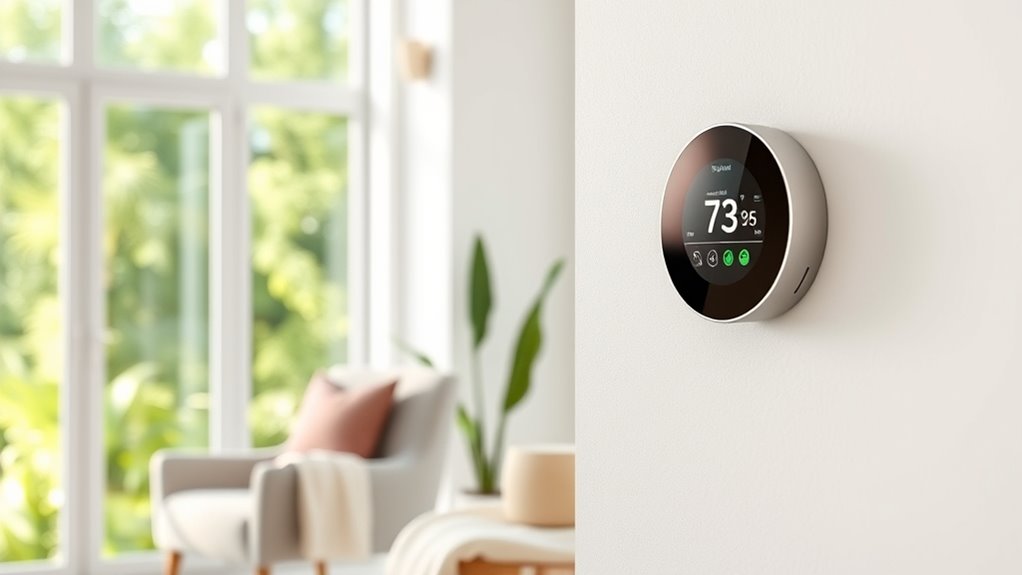

To save money with an AI-powered smart thermostat, set your home to comfortable temperatures when you’re active and lower them when you’re away or sleeping. Use schedules, automation, and occupancy data to optimize settings, and connect the device with weather information for proactive adjustments. Keep an eye on energy reports and fine-tune your system over time. Stay tuned to discover more ways to maximize your savings and comfort effectively.
Key Takeaways
- Utilize AI learning algorithms to optimize daily schedules, reducing energy use during unoccupied periods.
- Set personalized temperature targets and automate adjustments based on occupancy and weather forecasts.
- Leverage real-time weather data for proactive pre-cooling or pre-heating, minimizing waste.
- Perform regular energy audits and fine-tune settings to eliminate inefficiencies and enhance savings.
- Integrate smart thermostats with home automation for remote control and continuous optimization.

Amazon Smart Thermostat – Save money and energy – Works with Alexa and Ring – C-wire required
An Alexa thermostat – Amazon Smart Thermostat is an easy way to switch from a traditional thermostats for…
As an affiliate, we earn on qualifying purchases.
As an affiliate, we earn on qualifying purchases.
Understanding How AI-Enabled Thermostats Work
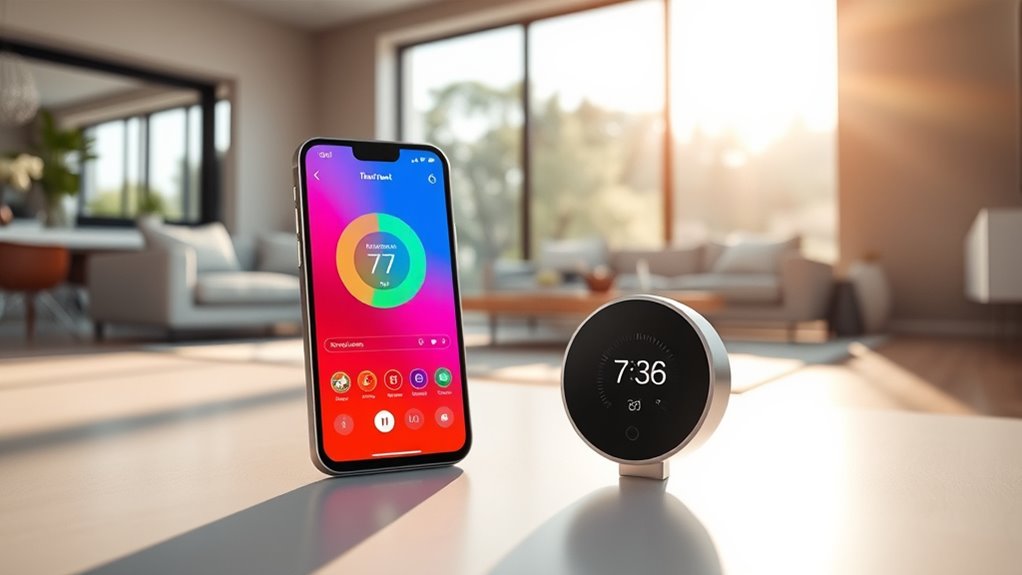
AI-enabled thermostats work by learning your daily habits and adjusting the temperature automatically to optimize comfort and energy savings. You can control your thermostat using voice control, making it easy to change settings without interrupting your day. Over time, the thermostat analyzes data to create personalized schedules, ensuring your home stays comfortable while reducing unnecessary energy use. It also provides detailed energy reports, so you can see how much energy you’re saving and identify patterns that may help you cut costs further. This intelligent system adapts to your lifestyle, making adjustments based on your preferences and behavior. The connected appliances and insightful energy reports make managing your home’s temperature more intuitive, efficient, and cost-effective. Additionally, some smart thermostats utilize local automation to coordinate with other smart home devices, enhancing overall energy management. By integrating these smart home technologies, you can further optimize your energy consumption and savings. Moreover, many of these thermostats include learning algorithms that improve their efficiency over time by constantly refining their adjustments based on your routines. Incorporating advanced sensor technology can further enhance the accuracy of temperature adjustments, leading to even greater energy efficiency.
Amazon Smart Thermostat – Save money and energy – Works with Alexa and Ring – C-wire required
An Alexa thermostat – Amazon Smart Thermostat is an easy way to switch from a traditional thermostats for…
As an affiliate, we earn on qualifying purchases.
As an affiliate, we earn on qualifying purchases.
Setting Up Your Smart Thermostat for Maximum Savings
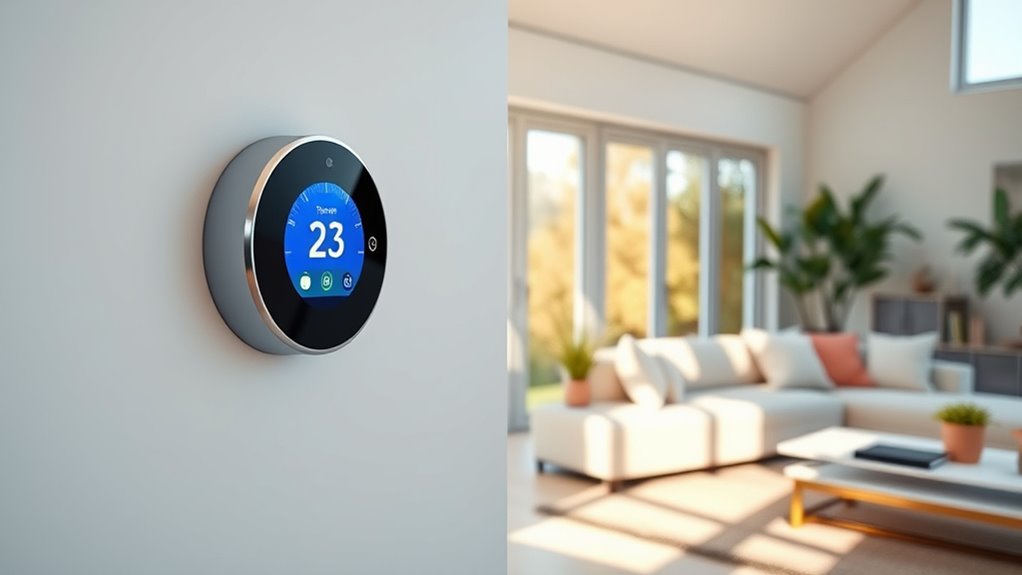
To maximize your savings, start by setting your thermostat to the optimal temperature when you’re home and comfortable. Use scheduling and automation features to adjust temperatures automatically during different times of the day or when you’re away. These simple steps can substantially reduce energy use without sacrificing comfort. Incorporating energy-efficient cloud solutions can further optimize your home energy management systems for better savings. Additionally, understanding Youngster Choice can help you make informed decisions about your energy consumption habits. Being aware of smart home integration can also enhance your ability to monitor and control energy usage remotely, leading to greater efficiency and advanced energy analytics. Embracing personalized energy insights can empower you to fine-tune your thermostat settings for optimal savings and comfort.
Optimal Temperature Settings
Adjusting your smart thermostat to the right temperature can considerably reduce your energy bills. For ideal comfort and savings, set your thermostat to about 78°F (26°C) when you’re home and active, and lower it to around 65-68°F (18-20°C) at night or when you’re away. This balance helps with humidity control and maintains good air quality. Use your smart system’s features to fine-tune these settings based on your daily routine. To ensure safety and efficiency, consider transfer switch and fuel‑storage considerations when integrating new systems. Understanding deep-sky imaging principles can inspire similar energy management in managing your home’s energy systems for optimal efficiency. Additionally, tailoring your temperature settings to your home’s insulation can further enhance energy savings and comfort.
Scheduling and Automation
Setting up your smart thermostat with customized schedules and automation can maximize your energy savings without sacrificing comfort. Start by conducting an energy auditing of your home to identify peak usage times and areas where energy is wasted. Use this data to tailor your thermostat’s schedule around your daily routines and user preferences. Automate temperature adjustments to lower settings during work hours or when you’re asleep, and raise them when you’re home and active. Many smart thermostats learn your habits over time, optimizing your schedule automatically. This adaptive learning feature helps your system adjust more precisely to your lifestyle, enhancing efficiency. Additionally, understanding home energy management principles can help you further optimize your energy use. Recognizing the impact of ear wax odor and other household smells can also inform your home’s maintenance and air quality improvements, indirectly contributing to overall efficiency. Proper scheduling and automation help you save money while maintaining a comfortable environment tailored to your lifestyle.

Sensi Smart Thermostat, Wi-Fi, DIY, Alexa, Energy Star Certified, ST55
PRIVACY PROTECTION*: Sensi won’t sell your personal information to third parties
As an affiliate, we earn on qualifying purchases.
As an affiliate, we earn on qualifying purchases.
Leveraging Learning Algorithms to Optimize Heating and Cooling
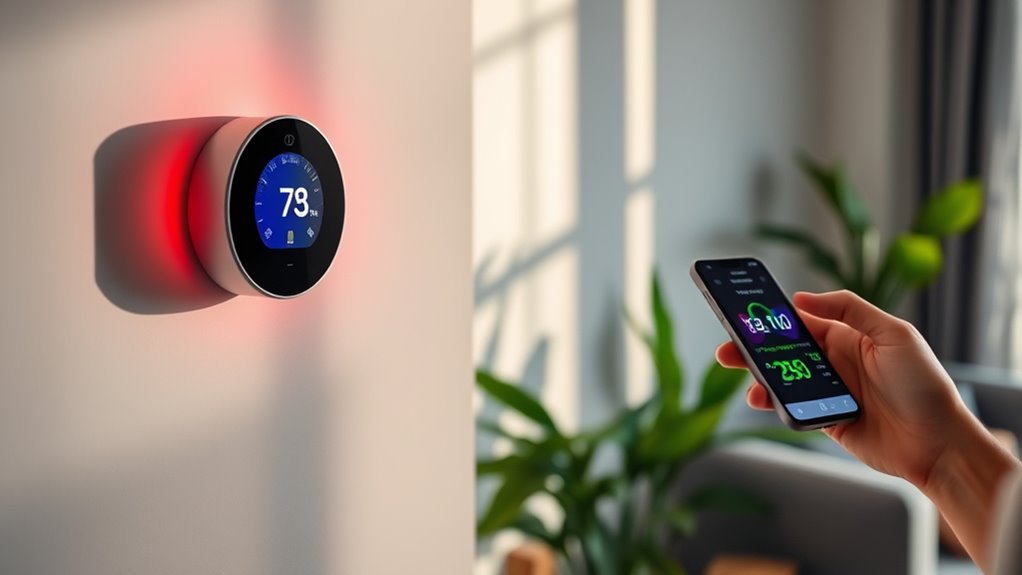
Learning algorithms can automatically adjust your thermostat for maximum efficiency by predicting your heating and cooling needs. They track your habits to make adaptive temperature changes that save energy and money. With predictive energy consumption, you’ll use less when you’re away or asleep, optimizing your comfort and costs. Additionally, home energy management systems can integrate these algorithms to provide comprehensive control over your entire household’s power usage. These systems can also integrate with smart devices, enabling seamless adjustments across various appliances for enhanced energy savings. Recent AI discoveries in energy management demonstrate the potential for even more precise and intelligent control systems that can anticipate your needs before you even realize them. By incorporating machine learning algorithms, these systems can continuously improve their accuracy and efficiency over time.
Adaptive Temperature Adjustments
Since temperatures can vary unpredictably throughout the day, relying on traditional thermostats often leads to wasted energy and higher bills. Adaptive temperature adjustments use learning algorithms to analyze your habits, adjusting your heating and cooling in real-time for ideal comfort and efficiency. To maximize these benefits, consider conducting energy audits to identify areas where insulation upgrades can prevent heat loss or gain. Better insulation allows the thermostat’s algorithms to make more precise adjustments, reducing unnecessary energy use. Additionally, building envelope improvements can significantly enhance the effectiveness of your adaptive system by minimizing heat transfer. By continuously learning your schedule and preferences, the system minimizes wasted cycles, saving you money. Thermostat algorithms play a crucial role in optimizing your HVAC system’s performance. This dynamic approach ensures your home remains comfortable without overworking your HVAC system, translating into lower energy bills and a more sustainable household.
Predictive Energy Consumption
Have you ever wondered how AI can predict your home’s energy needs before you even realize it? With advanced energy forecasting, your smart thermostat uses learning algorithms to analyze past consumption patterns and external factors like weather and occupancy. This consumption modeling enables the system to anticipate when your heating or cooling will be most needed, optimizing energy use proactively. By accurately projecting energy demand, your thermostat adjusts settings ahead of time, reducing waste and lowering bills. This predictive approach ensures comfort while avoiding unnecessary heating or cooling when you’re away or asleep. Over time, the system learns your habits, becoming more precise and efficient. Harnessing AI for energy forecasting transforms your thermostat into a proactive tool that saves money and enhances comfort seamlessly.
Sensi Smart Thermostat, Wi-Fi, DIY, Alexa, Energy Star Certified, ST55
PRIVACY PROTECTION*: Sensi won’t sell your personal information to third parties
As an affiliate, we earn on qualifying purchases.
As an affiliate, we earn on qualifying purchases.
Utilizing Weather Data to Adjust Home Climate Control
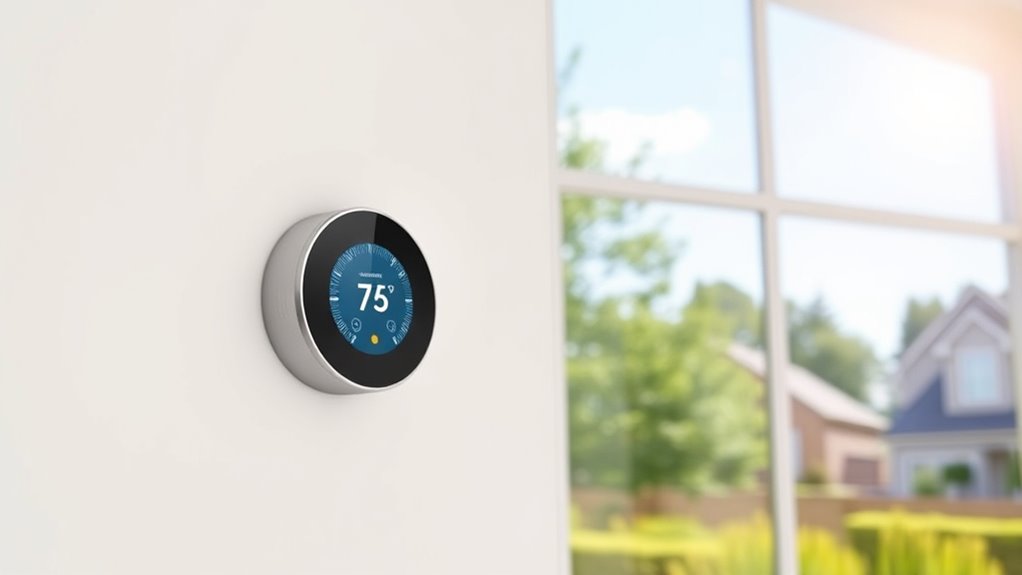
By leveraging real-time weather data, you can optimize your home’s climate control systems to save money and increase comfort. This approach allows your smart thermostat to respond dynamically to outdoor conditions.
Using real-time weather data helps optimize your home climate control for comfort and savings.
- Adjust temperature settings based on forecasted temperatures, reducing energy use during mild weather.
- Use humidity control features to prevent excess moisture or dryness, improving air quality.
- Sync your system with weather alerts to pre-cool or pre-heat your home ahead of storms or temperature swings.
- Minimize unnecessary heating or cooling during high humidity days, maintaining comfort without waste.
Creating Efficient Schedules and Occupancy Patterns
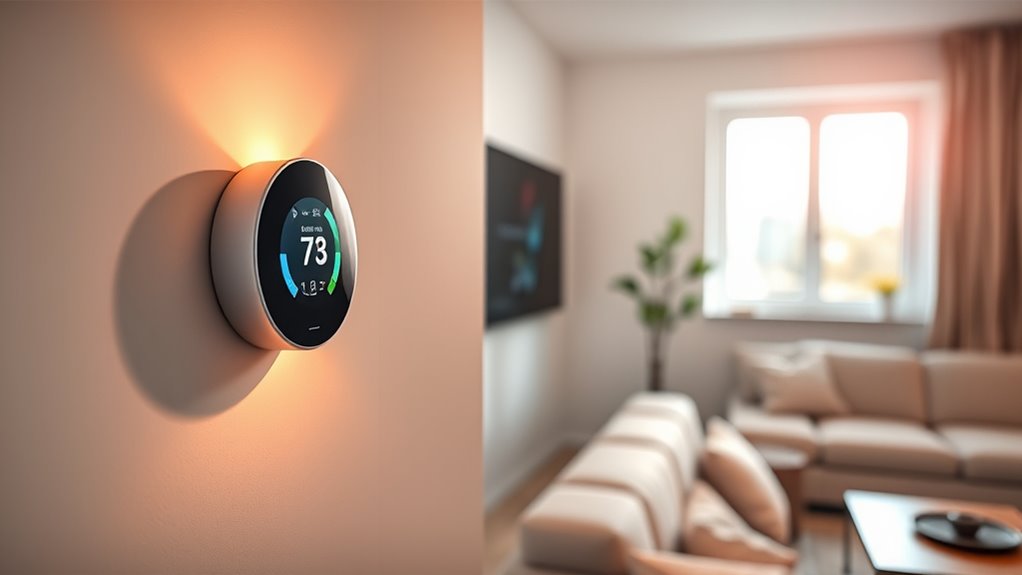
Optimizing your home’s climate control extends beyond reacting to weather conditions; it also involves creating smart schedules that match your occupancy patterns. Conducting energy audits helps identify areas where your home loses heat or cool air, guiding insulation improvements that keep your space more efficient. Once your home is better insulated, you can set your smart thermostat to adjust temperatures based on when you’re home or away. For example, program it to lower heating or cooling during work hours and boost comfort when you return. Consistent scheduling prevents unnecessary energy use and ensures comfort when needed. By aligning your thermostat settings with your routines and making insulation upgrades, you maximize energy savings and reduce your bills without sacrificing comfort.
Monitoring and Fine-Tuning for Continued Cost Efficiency
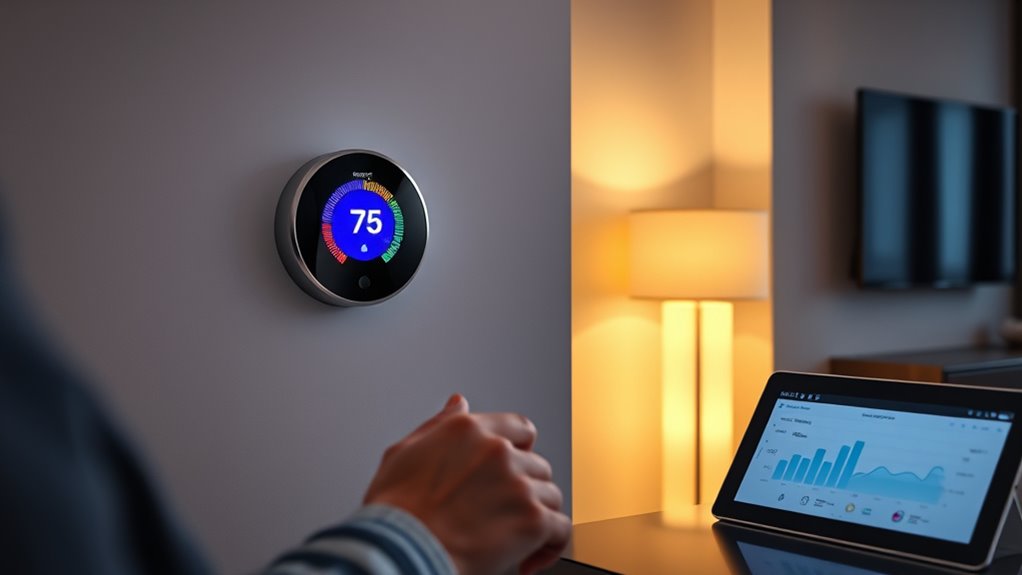
To maintain your home’s energy efficiency over time, it’s essential to regularly monitor your system’s performance and make adjustments as needed. Start by conducting energy audits to identify inefficiencies. Next, gather user feedback to understand how your current settings feel. Then, use your smart thermostat’s data to spot patterns and anomalies. Finally, fine-tune your schedule and temperature settings based on this information. This ongoing process helps guarantee your system remains optimized for cost savings. Regularly reviewing energy audits highlights areas for improvement, while user feedback provides practical insights. Combining these strategies keeps your thermostat working efficiently and prevents energy waste, ultimately lowering your bills and maintaining comfort over the long term.
Frequently Asked Questions
How Secure Are Ai-Enabled Thermostats Against Hacking?
AI-enabled thermostats are generally secure, but cybersecurity concerns remain. You should ensure your device has strong, unique passwords and keep firmware updated to protect against hacking. Be aware of data privacy issues, as these thermostats collect and store your usage data. Regularly reviewing privacy settings and choosing reputable brands helps safeguard your information. While no device is entirely hack-proof, taking these precautions markedly reduces your risk.
Can Smart Thermostats Integrate With Existing Home Automation Systems?
Yes, smart thermostats can typically integrate with your existing home automation systems. You might face some integration challenges, especially if your setup is complex or uses older technology. However, many thermostats offer customization options, allowing you to tailor the system to your needs. Compatibility varies, so it’s prudent to check the thermostat’s specifications and ensure it supports your current automation platform for seamless integration.
What Is the Typical Return on Investment Timeframe?
You’ll see your investment payoff in as little as a year, making the ROI timeline incredibly quick! Most smart thermostats deliver savings that far outweigh their initial cost within 12 to 18 months. This means you start saving almost immediately, turning your smart device into a money-saving powerhouse. With such a fast ROI timeline, investing in a smart thermostat is one of the smartest financial decisions you can make for your home.
Are There Compatible Models for Older Heating and Cooling Systems?
Yes, there are compatible models for older heating and cooling systems. Compatibility concerns can arise, but many smart thermostats offer retrofit options that work with legacy systems. You should check the model’s specifications and consult with a professional if you’re unsure. This way, you can upgrade your system smoothly, ensuring energy savings without needing a full system replacement. Retrofit options make it easier for you to enjoy smart features.
How Do AI Thermostats Handle Power Outages or Connectivity Issues?
Did you know that over 80% of AI thermostats have backup power options? When power outages happen, your thermostat switches to backup power, ensuring continuous control. If connectivity issues occur, most AI thermostats automatically attempt connectivity recovery, reconnecting once the network is restored. This way, you won’t experience temperature disruptions, and your energy savings stay intact even during outages or connectivity problems.
Conclusion
By harnessing AI-enabled thermostats, you can save up to 10-12% on your energy bills annually. These smart devices learn your habits, adjust settings based on weather data, and optimize schedules for maximum efficiency. With continuous monitoring and fine-tuning, you guarantee ongoing savings. Embrace these strategies, and you’ll not only cut costs but also contribute to a more sustainable home. Smart thermostats truly make energy savings simple and effective.