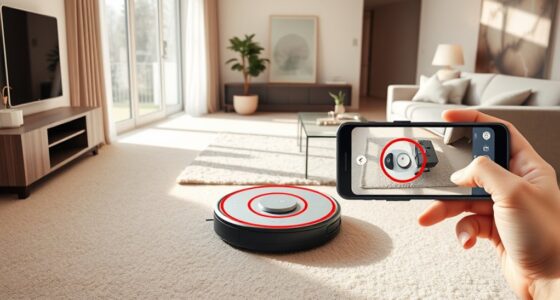
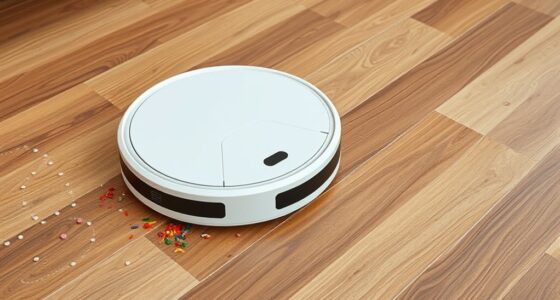
Smart pool cleaners with AI make pool maintenance effortless and efficient. They navigate your pool intelligently, detect debris, and even monitor water chemistry to optimize cleaning cycles automatically. With remote control options, scheduling, and adaptive algorithms, you don’t have to lift a finger. These advanced devices reduce manual effort, save energy, and help keep your pool pristine. Keep exploring to discover how these innovative systems can transform your pool care routine.
Key Takeaways
- AI-enabled pool cleaners navigate efficiently, adapt routes, and target debris automatically, reducing manual effort and cleaning time.
- Advanced sensors and imaging allow smart cleaners to detect debris precisely and optimize cleaning paths.
- Remote control via smartphone apps enables hands-free management, scheduling, and real-time monitoring from anywhere.
- Automated debris detection and adaptive algorithms enhance cleaning accuracy, ensuring thorough maintenance with minimal user intervention.
- Leading models from top brands offer intelligent features that promote eco-friendly, cost-effective, and consistent pool upkeep.
How AI Enhances Pool Cleaning Efficiency

AI substantially boosts pool cleaning efficiency by enabling robots to navigate more intelligently and adapt to changing conditions. This means your smart cleaner can adjust its route based on water circulation patterns, ensuring thorough coverage. By continuously monitoring water chemistry, the robot identifies areas with higher debris or algae buildup, focusing cleaning efforts where needed most. Improved navigation prevents missed spots and reduces cleaning time, while adaptive algorithms optimize movement, conserving energy. As a result, your pool stays cleaner longer, with less manual intervention. AI-driven systems also help maintain proper water circulation by targeting trouble spots, promoting balanced water chemistry. Advanced navigation enables the robot to operate more effectively in complex pool shapes and layouts. Additionally, real-time data analysis allows the system to make instant adjustments, further enhancing cleaning performance. Incorporating sensor technology ensures the robot can better detect debris and water quality issues, leading to more precise cleaning. Overall, AI makes your pool cleaner smarter, more responsive, and more efficient, saving you time and effort while keeping your pool pristine. Leveraging machine learning algorithms enhances the robot’s ability to adapt to different pool environments, ensuring optimal cleaning results.
Features to Look for in Smart Pool Cleaners

When choosing a smart pool cleaner, look for features like intelligent navigation systems that help it cover your pool efficiently. Automated debris detection guarantees it picks up dirt without missing spots or wasting energy. Remote control capabilities give you the convenience to manage your cleaner from anywhere, making maintenance simple and hassle‑free. Additionally, navigation and mapping features can optimize cleaning routes and adapt to pool layouts for thorough coverage. Incorporating smart algorithms can further enhance the cleaner’s ability to adapt to different pool shapes and conditions, ensuring a more effective cleaning process. Moreover, advanced sensors can improve the cleaner’s responsiveness to changing pool environments, providing a more comprehensive cleaning experience, supported by AI-driven adjustments that fine-tune performance based on real-time data. Utilizing machine learning enables the system to improve its efficiency over time through accumulated data analysis.
Intelligent Navigation Systems
An intelligent navigation system is essential for guaranteeing your smart pool cleaner covers the entire pool efficiently. It uses robotic navigation to map out the pool’s layout, preventing missed spots. Obstacle avoidance allows the cleaner to detect and navigate around obstacles such as ladders or toys, reducing the risk of damage. Look for features that enable the cleaner to plan ideal routes, saving time and energy. A good navigation system adapts to different pool shapes and sizes, providing thorough coverage. Advanced models can even remember previous cleaning patterns for future sessions. This technology ensures your pool stays pristine without manual intervention. European cloud innovation plays a vital role in developing these advanced, energy-efficient navigation systems, supporting technological advancements that make smart pool cleaners more reliable and efficient.
Automated Debris Detection
Automated debris detection is a crucial feature to look for in smart pool cleaners because it guarantees your device can identify and remove debris efficiently without manual oversight. This technology relies on advanced robotic algorithms and sensor integration to distinguish debris from clean water and navigate around obstacles. When debris is detected, the cleaner adjusts its path to target the area, saving time and energy. Features like multi-sensor systems enable precise debris recognition and collection, making maintenance effortless. Here’s what to contemplate:
| Feature | Benefit | Example |
|---|---|---|
| Robotic algorithms | Optimizes debris removal paths | Adaptive cleaning patterns |
| Sensor integration | Accurate debris detection | Proximity and optical sensors |
| Debris targeting | Efficient cleaning of clutter | Selective debris collection |
Remote Control Capabilities
Building on advanced debris detection, remote control capabilities give you the power to manage your pool cleaner effortlessly from a distance. With reliable app connectivity, you can start, stop, or pause cleaning sessions anytime, anywhere. This feature allows you to customize cleaning routes or target specific areas without physically handling the device. Some smart pool cleaners offer real-time status updates through their app, keeping you informed about cleaning progress or issues. You can also schedule cleaning sessions in advance, ensuring your pool stays pristine with minimal effort. Features to look for include:
- Easy-to-use remote control via smartphone app
- Customizable cleaning schedules
- Real-time status notifications
- Ability to manually override or pause cleaning remotely
Wireless connectivity is essential for seamless remote operation and real-time communication with your pool cleaner.
Top AI-Powered Pool Cleaners on the Market
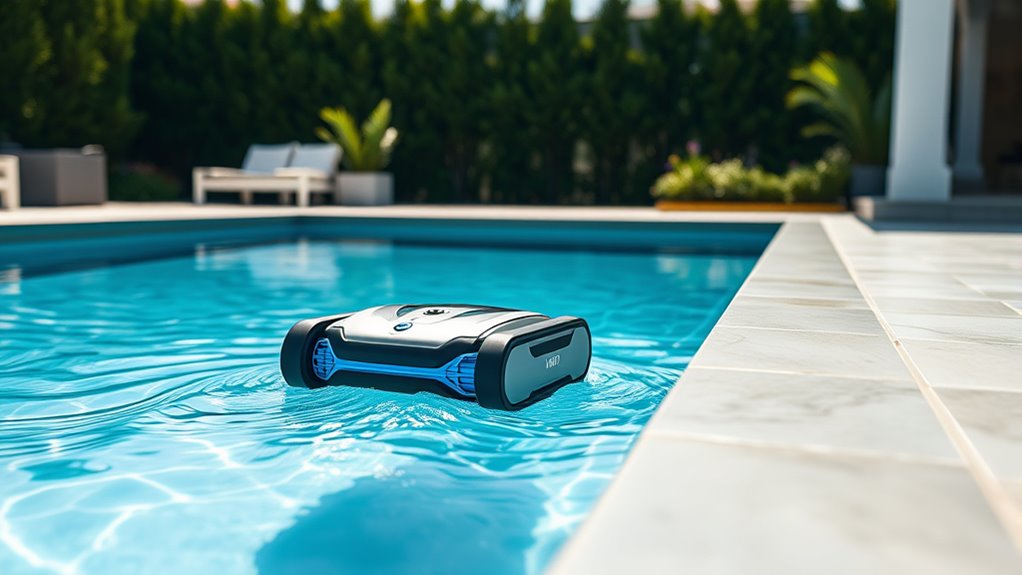
You want a pool cleaner that works smarter, not harder, and AI features make that possible. Top models and brands now incorporate advanced technology to optimize cleaning patterns and adapt to your pool’s needs. Let’s explore the best options available today that combine power, efficiency, and smart technology. Incorporating safe operating procedures and user-friendly interfaces, these cleaners ensure both effective maintenance and peace of mind. Additionally, many models include automatic navigation, allowing the cleaner to efficiently cover every inch of your pool without manual intervention. Modern AI-driven cleaners also utilize adaptive algorithms to learn and improve their cleaning routes over time, enhancing overall performance and reliability. This integration of smart technology ensures continuous optimization for a more thorough and effortless clean. Furthermore, these systems often feature real-time monitoring, providing instant feedback and status updates for better management of your pool’s maintenance routine.
AI Features Enhancing Cleaning
AI features substantially elevate the cleaning capabilities of modern pool cleaners by enabling smarter navigation, obstacle avoidance, and efficient dirt detection. These advancements rely on robotic sensors and AI algorithms that allow the cleaner to adapt to your pool’s unique shape and conditions. With AI at the core, your pool cleaner can map out the area more effectively, ensuring no spot is missed. It can identify and avoid obstacles like pool toys or steps, reducing the risk of entanglement or damage. Additionally, AI enhances dirt detection, so the cleaner focuses on dirtier areas for a more thorough clean. This smart integration results in faster, more efficient maintenance, giving you a pristine pool with minimal effort. Proper installation and wiring basics are crucial to ensure these advanced features operate safely and effectively, as they form the foundation for reliable AI-powered performance. Electrical safety is especially important given the aquatic environment and the sophisticated electronics involved. Incorporating machine learning enables these devices to improve their performance over time by analyzing cleaning patterns and pool conditions. The integration of adaptive algorithms further refines the cleaning process by allowing the device to learn and optimize its routes based on past performances.
Top Models and Brands
Many of today’s top pool cleaner brands have integrated advanced AI features to deliver superior cleaning performance. Brands like Dolphin, Polaris, and Hayward now offer models equipped with smart navigation and adaptive algorithms that optimize coverage, ensuring your pool stays spotless while maintaining pool safety. These AI-powered cleaners analyze water chemistry data to adjust their cleaning cycles, preventing imbalances that could harm your pool’s surfaces or equipment. Top models such as Dolphin’s Premier and Polaris’ F9450 incorporate sensors that detect debris and adjust suction accordingly. Their intelligent systems reduce the risk of tangling and missed spots, making maintenance easier and more efficient. Additionally, sensor‑based navigation and imaging‑scale considerations in these cleaners help enhance their ability to map and clean pools thoroughly. With these brands leading the market, you can trust AI-driven technology to keep your pool clean, safe, and balanced with minimal effort.
Benefits of Automated Pool Maintenance
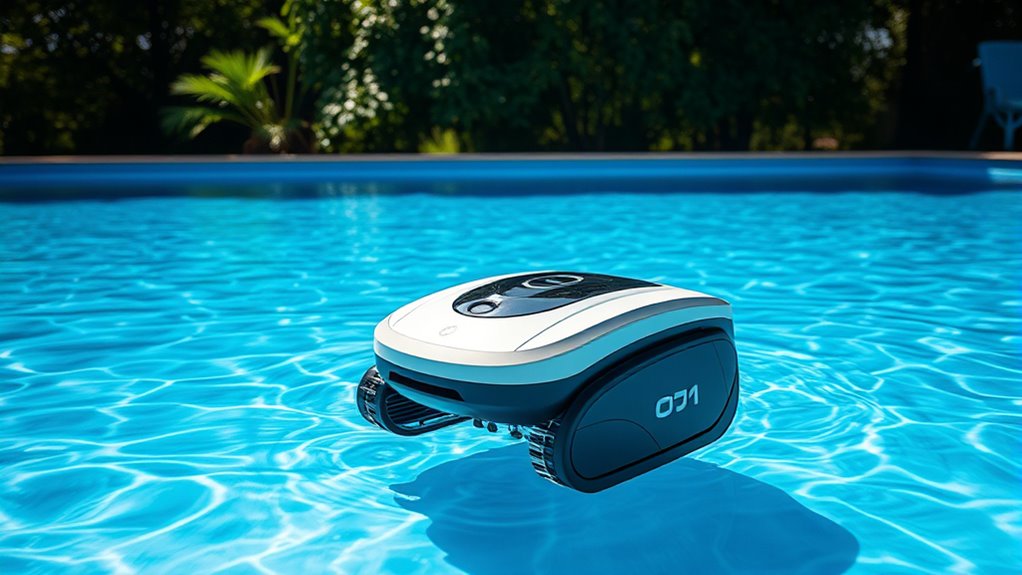
Automated pool maintenance offers numerous benefits that simplify keeping your pool clean and healthy. It reduces your effort and guarantees consistent cleanliness, saving you time. These systems optimize energy savings by operating during off-peak hours and adjusting cleaning cycles based on pool usage. They also promote water conservation by detecting leaks early and minimizing unnecessary water loss. Additionally, automation improves water quality through precise chemical balancing, reducing the need for manual adjustments. With AI-powered cleaners, you enjoy a more eco-friendly and cost-effective way to maintain your pool, giving you peace of mind.
- Consistent cleaning without manual effort
- Lower energy costs with smart scheduling
- Early leak detection and water savings
- Better chemical balance for healthier water
Setting Up and Programming Your AI Pool Cleaner
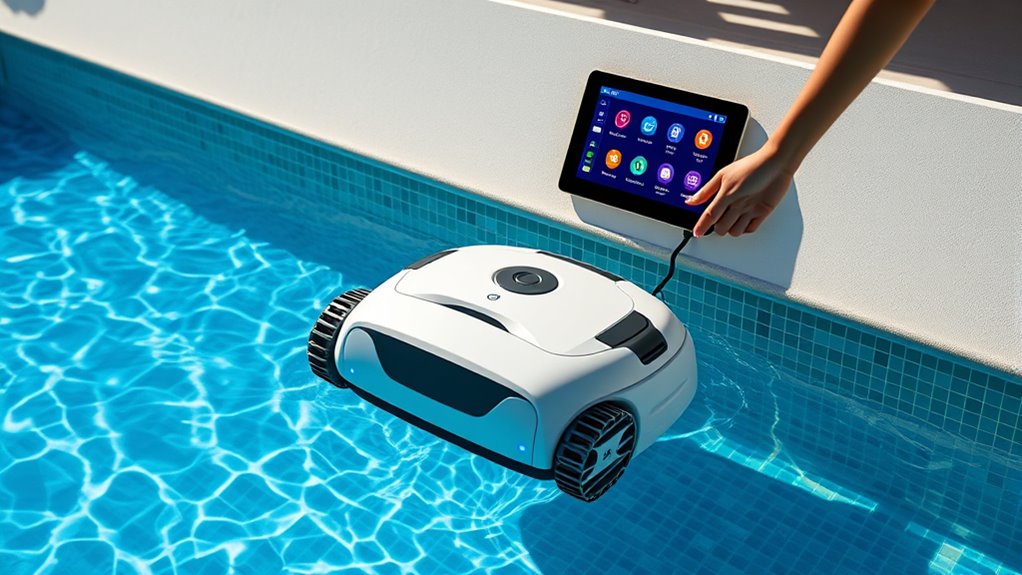
Getting your AI pool cleaner set up and programmed correctly guarantees it operates efficiently and keeps your pool spotless. Begin by installing the device according to the manufacturer’s instructions, ensuring it’s connected to your Wi-Fi. Use the companion app to set cleaning schedules that suit your pool’s needs. Adjust the water temperature settings if your cleaner has sensors, so it optimizes cleaning based on water conditions. Monitor the pool chemical levels through the app, as some models adapt their cleaning patterns based on chemical balance. Make sure the water temperature is within the recommended range for your device to function properly. Proper setup and programming help your AI cleaner target areas effectively, conserve energy, and reduce manual intervention, leaving your pool consistently clean and inviting.
Maintaining and Troubleshooting Smart Pool Devices
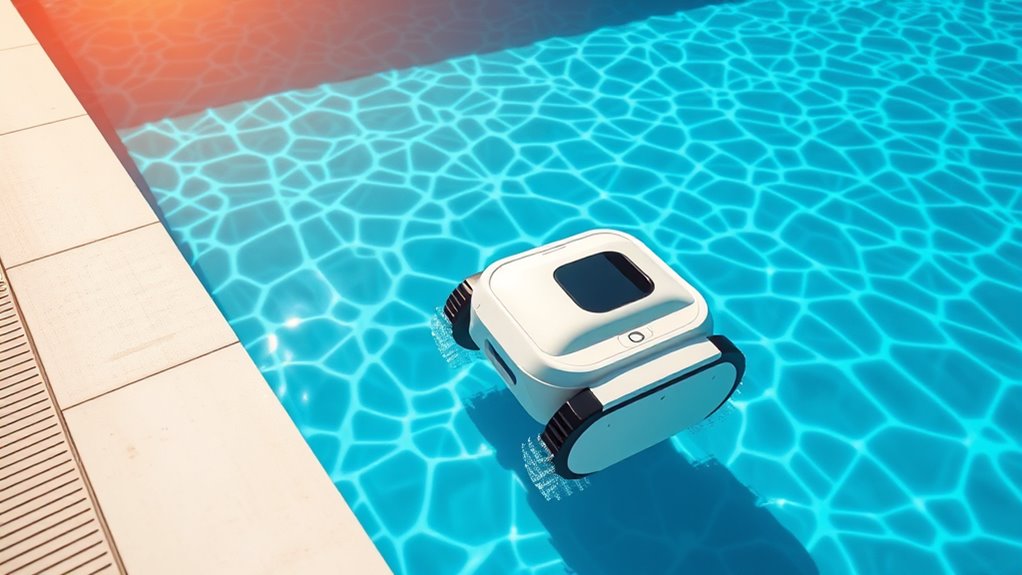
Ever wonder why your smart pool cleaner isn’t performing as expected? Troubleshooting starts with checking basic issues. First, confirm your pool chemistry is balanced; imbalanced chemicals can affect the cleaner’s movement and effectiveness. Second, verify the water temperature; extreme temperatures may hinder the device’s sensors and motor function. Third, inspect the brushes and suction paths for debris or blockages that could impair operation. Lastly, review the device’s connectivity and software updates to guarantee peak performance. Regular maintenance, like cleaning filters and sensors, helps prevent problems. If issues persist, consult the manufacturer’s troubleshooting guide or contact support. Properly maintaining your smart pool cleaner ensures it runs smoothly and extends its lifespan, keeping your pool pristine with minimal effort.
Environmental Benefits of Using AI Pool Cleaners
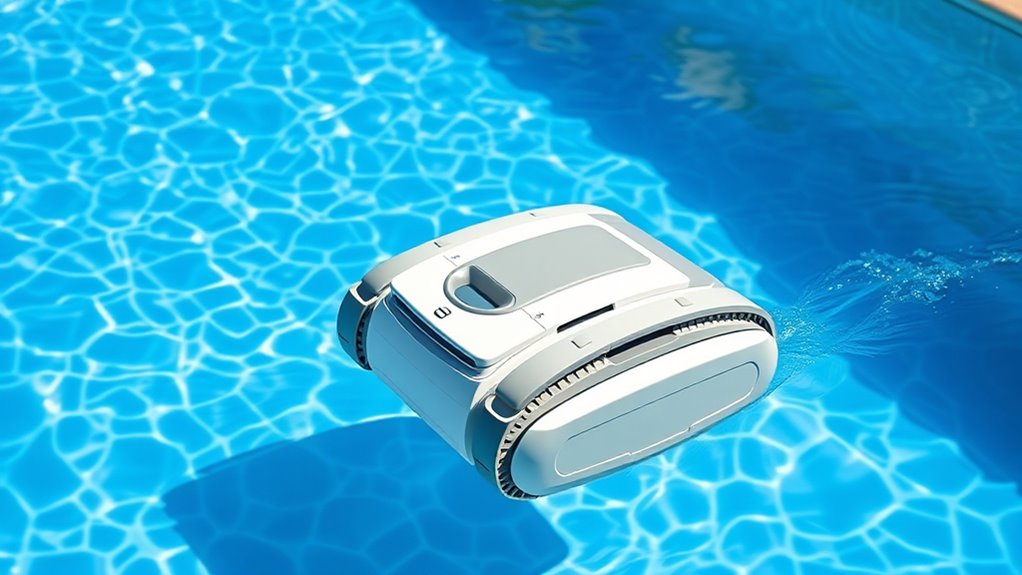
AI pool cleaners substantially reduce environmental impact by optimizing water and energy use. They minimize water waste through precise cleaning cycles, supporting water conservation efforts. Additionally, these cleaners often incorporate eco friendly materials, decreasing reliance on plastics and harmful substances. This not only benefits the environment but also extends the device’s lifespan.
Here’s a quick overview:
| Benefit | How It Helps | Key Features |
|---|---|---|
| Water conservation | Reduces unnecessary water use | Smart sensors for precise cleaning |
| Eco friendly materials | Less plastic waste | Durable, sustainable components |
| Energy efficiency | Lowers power consumption | AI algorithms optimize operation |
| Reduced chemical use | Less chemical runoff | Efficient debris removal |
Using AI pool cleaners supports greener, more sustainable pool maintenance.
Future Trends in Pool Cleaning Technology

As technology advances, future pool cleaning systems are expected to become smarter, more autonomous, and environmentally friendly. Robotic technology will play a central role, enabling cleaners to navigate complex pool shapes efficiently. Water purification will improve through integrated filtration and chemical management, ensuring cleaner water with less effort. Future systems may incorporate AI to optimize cleaning paths and detect specific contaminants in real-time. Enhanced sensors will better monitor water quality, alerting you to maintenance needs automatically. Eco-friendly designs will reduce energy consumption and minimize chemical use, supporting sustainable pool maintenance. These innovations will make your pool cleaner more effective and hands-off, providing you with pristine water and less hassle.
Future pool cleaners will be smarter, eco-friendly, and fully autonomous, ensuring pristine water with minimal effort.
- Advanced robotic navigation and obstacle avoidance
- AI-driven water quality monitoring
- Solar-powered or energy-efficient designs
- Integrated water purification systems
Frequently Asked Questions
How Long Do AI Pool Cleaners Typically Last?
AI pool cleaners typically last around 3 to 5 years, depending on usage and maintenance. The battery lifespan usually ranges from 1 to 2 years, so you might need to replace it more frequently. Regularly cleaning filters and following manufacturer guidelines can extend the replacement frequency, ensuring your device stays efficient. With proper care, your AI pool cleaner can serve you well for several seasons, making pool maintenance hassle-free.
Are AI Pool Cleaners Safe for All Types of Pools?
AI pool cleaners are generally safe for all types of pools, but you should always prioritize pool safety and maintain proper chemical balance. These cleaners adapt to different surfaces and pool materials, reducing the risk of damage. Make sure to check manufacturer guidelines for specific pool types, and regularly test your water chemistry to prevent issues. Proper maintenance guarantees your AI cleaner works efficiently and keeps your pool safe and clean.
Do AI Pool Cleaners Require Wi-Fi Connectivity?
Yes, AI pool cleaners typically require Wi-Fi connectivity to operate at their full potential. Without it, you miss out on remote control features, real-time updates, and advanced scheduling. Imagine managing your pool with a tap or voice command—it’s almost magical! To enjoy these perks, make certain your cleaner has Wi-Fi compatibility, so you can effortlessly control and monitor your pool from anywhere, anytime.
Can AI Pool Cleaners Handle Heavy Debris?
Yes, AI pool cleaners can handle heavy debris thanks to advanced debris detection features. They identify and adapt to different debris types, ensuring thorough cleaning. Plus, their smart navigation optimizes power efficiency, so they use less energy even when tackling stubborn debris. With these capabilities, you get a more effective, hands-off pool cleaning experience, saving you time and effort while keeping your pool pristine.
What Is the Average Maintenance Cost for AI Pool Cleaners?
Getting a clear picture of AI pool cleaner costs is like finding a needle in a haystack, but generally, you can expect to spend between $300 and $1,200 annually on maintenance. Cost comparison shows these devices save money over time, and user testimonials highlight their convenience and efficiency. Regular filter replacements and software updates are key expenses, but overall, they’re a worthwhile investment for hands-off pool upkeep.
Conclusion
With AI-powered pool cleaners, you can cut down cleaning time by up to 50%, making maintenance effortless. Imagine a spotless pool without lifting a finger—it’s possible with the latest smart technology. As more homeowners adopt these devices, the industry is expected to grow considerably, highlighting their rising popularity. Embracing AI pool cleaners means saving time, reducing environmental impact, and enjoying crystal-clear water year-round—all with minimal effort on your part.