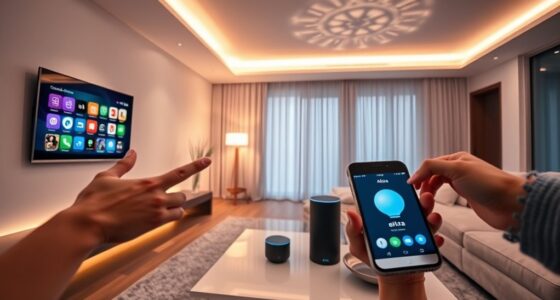

Living in a bilingual smart home, your voice assistant smoothly switches between languages, recognizing commands seamlessly and responding naturally. It can handle code-switching within a single command, like “Play música,” and even adapt to your preferred language over time. Advanced NLP allows it to understand context and tone, making interactions effortless. If you’re curious how these systems create such intuitive experiences, keep exploring how technology bridges language barriers daily.
Key Takeaways
- Bilingual voice assistants seamlessly switch between languages within single commands for natural communication.
- Advanced NLP enables real-time recognition of language changes and complex multi-language commands.
- They learn user preferences and adapt to preferred language modes over time for personalized interactions.
- Responses are delivered in the user’s chosen language, enhancing understanding and accessibility.
- Multilingual AI creates a more intuitive, culturally rich smart home environment that simplifies daily routines.
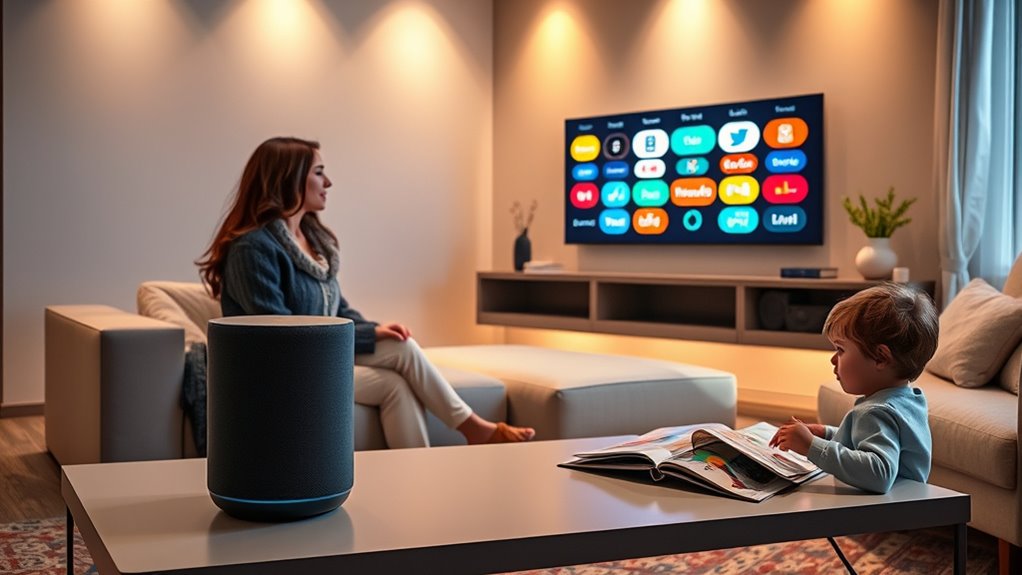
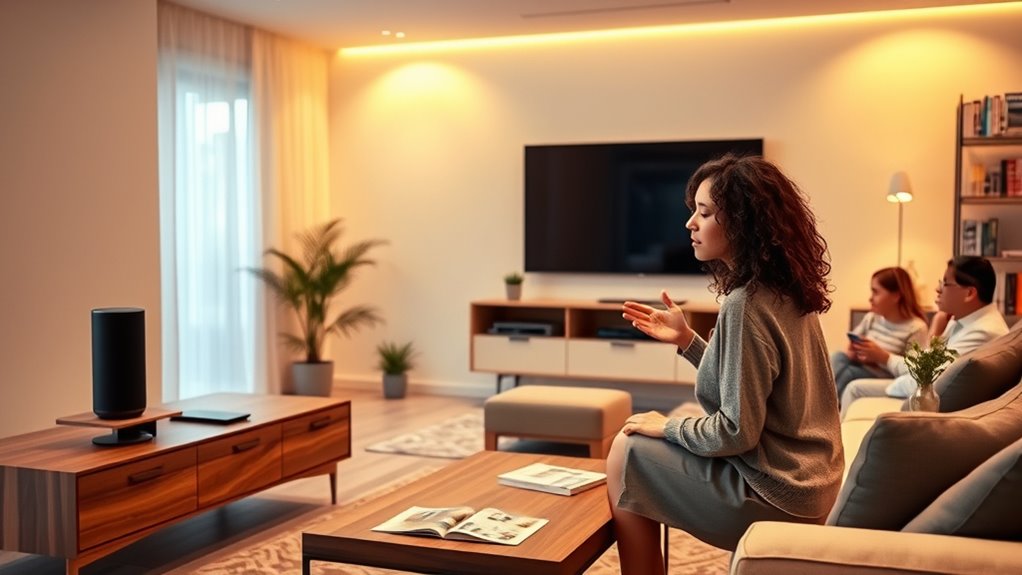
Imagine a home where your smart devices seamlessly understand and respond in two languages, making daily routines smoother and more personalized. With a bilingual voice assistant, you can effortlessly switch between languages or even speak both at the same time, creating a natural and intuitive experience. This setup is especially useful if you share your home with family members who speak different languages or if you’re learning a new language yourself. Your voice assistant adapts to your linguistic preferences, allowing you to communicate in the language that feels most comfortable at any given moment. It’s like having a personal translator that’s always ready to help.
Handling multiple languages isn’t just about understanding words; it’s about recognizing context, tone, and switch points. Your voice assistant uses advanced natural language processing to differentiate between languages, even within a single command. For example, if you say, “Turn on the lights in the living room,” it responds instantly. But if you say, “Enciende las luces en la sala,” it recognizes the switch to Spanish and executes the command just as smoothly. When you combine languages in a single sentence—say, “Play some música,”—the assistant detects the switch and responds appropriately. This capability creates a more natural flow of conversation, mirroring how people speak in multilingual households.
Your voice assistant recognizes language switches seamlessly within a single command.
Moreover, your voice assistant learns your preferred language combinations over time. If you often switch between English and French, it begins to anticipate that pattern, making the experience even more fluid. You don’t need to manually change settings each time; the system adapts automatically. This personalization extends to voice recognition, so it can distinguish your voice from others, even if multiple family members speak different languages. That way, your assistant responds accurately to your commands, ensuring privacy and precision.
In addition to understanding commands, a bilingual smart home can provide tailored responses in the desired language. When you ask about the weather, for instance, it delivers updates in your chosen language, making information more accessible. It can also announce reminders, upcoming appointments, or play music with titles and lyrics in either language, enriching your cultural experience. The technology is designed to be intuitive, so you rarely need to think about switching languages—your home adapts naturally to your conversation style.
Furthermore, the integration of multilingual AI enhances the home’s ability to handle complex language patterns, making the system smarter and more adaptable. This bilingual functionality not only enhances convenience but also fosters a deeper connection with your home environment. It reflects the way many people live and communicate daily, blending languages effortlessly. With a smart home that understands two languages, you gain a level of comfort and personalization that feels truly futuristic. Your home becomes more than just a space—it becomes a responsive, multilingual partner that makes everyday life easier and more enjoyable.
Frequently Asked Questions
How Do Voice Assistants Distinguish Between Languages Automatically?
Voice assistants automatically distinguish between languages by analyzing your speech patterns and detecting language-specific cues. They use advanced algorithms to recognize accents, pronunciation, and vocabulary. When you speak, the system compares these signals to its language database, switching seamlessly if it detects a different language. This process happens in real-time, allowing you to switch languages effortlessly without manual adjustments, making your bilingual interactions smooth and natural.
Can Voice Assistants Learn New Languages Over Time?
You can’t teach an old dog new tricks, but voice assistants can learn new languages over time. As you interact with them, they adapt and improve their understanding of unfamiliar words and phrases. Regular use helps your assistant recognize accents and slang better. While the process isn’t instant, consistent communication allows your device to become more proficient in languages you introduce, making your smart home more personalized and efficient.
What Privacy Concerns Arise With Bilingual Voice Recognition?
You might worry about privacy when using bilingual voice recognition because these systems constantly listen for commands, capturing sensitive conversations in multiple languages. Your data could be stored, analyzed, or shared without your full awareness, raising concerns about unauthorized access or misuse. It’s essential to understand your device’s privacy policies, use strong security settings, and regularly review permissions to keep your personal information safe.
Are There Limitations on the Number of Languages Supported?
Most voice assistants support a few languages, but there are limitations on how many they can handle simultaneously. Typically, you can switch between two or three languages easily, but supporting many more can cause performance issues or confusion. Manufacturers are continually improving this feature, yet you might find that the system works best with a limited set of languages at once. Keep an eye on updates for expanded multilingual support.
How Do Voice Assistants Handle Slang or Regional Dialects?
Voice assistants often struggle with slang and regional dialects, but they improve through machine learning and user feedback. When you speak casually or use local slang, they analyze your speech patterns and adapt over time. However, some slang or dialects may still be misunderstood, especially if they’re less common. To get the best results, try to speak clearly and use more standard language when giving commands.
Conclusion
Living in a bilingual smart home boosts your brain, broadens your boundaries, and beautifully bridges bilingual barriers. As voice assistants seamlessly switch between languages, you stay smooth, savvy, and superbly synchronized with your space. Embrace this effortless evolution, where technology and talk tie together, transforming your everyday environment into an engaging, enjoyable experience. With witty words and welcoming whispers, your bilingual home becomes a bold, brilliant blend of brains and bytes.