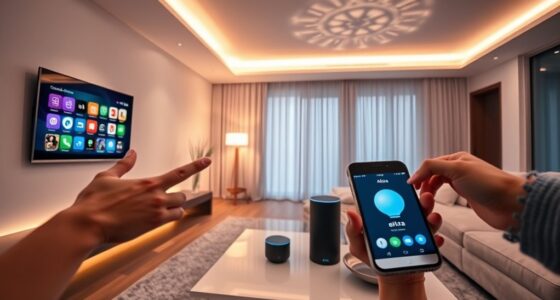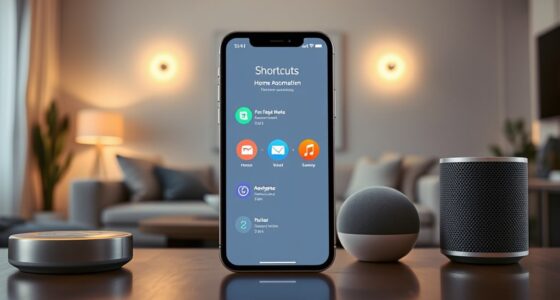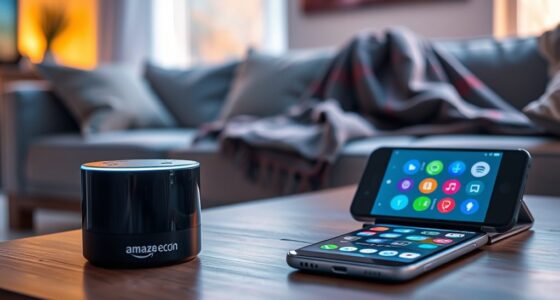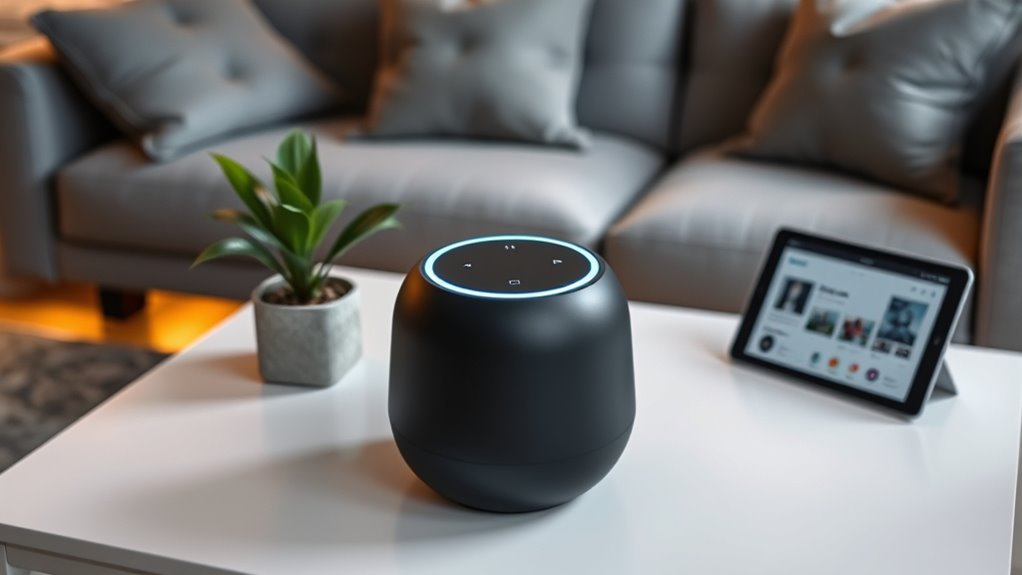

When choosing a smart speaker, consider which AI assistant fits your ecosystem—Alexa, Google Assistant, or Siri—as each works best with specific devices and services. Think about compatibility with your smart home gadgets, your sound quality needs, and design preferences to match your space. Privacy features like mute buttons also matter for peace of mind. If you explore further, you’ll find helpful tips to select the perfect hub for your smart home setup.
Key Takeaways
- Consider your preferred ecosystem (Amazon, Google, Apple) for better device compatibility and integration.
- Evaluate smart home device compatibility to ensure seamless voice control and future upgrade options.
- Prioritize sound quality and streaming support if media playback is important in your home.
- Choose a size and design that fits your space and aesthetic preferences for optimal placement.
- Review privacy features like mute buttons and data security measures to protect your personal information.
Smart Speaker Buying Guide
Choosing the right smart speaker can considerably enhance your home’s connectivity and convenience. With so many options available, it’s essential to identify which features matter most to you, ensuring you select a device that seamlessly fits into your lifestyle. Consider how you plan to use your smart speaker—whether it’s for controlling smart home devices, playing music, setting reminders, or answering questions. This clarity will guide your decision, helping you prioritize features like sound quality, compatibility, and voice recognition.
Start by evaluating the virtual assistant each device offers. Popular choices include Alexa, Google Assistant, and Siri. Each has its strengths: Alexa integrates well with Amazon services and a wide range of smart home products; Google Assistant excels at search accuracy and contextual understanding; Siri works smoothly within Apple’s ecosystem. Think about which ecosystem you’re already invested in or prefer, as this affects how well your smart speaker will integrate with other gadgets and apps you use daily.
Next, assess compatibility with your existing smart home devices. If you already own smart lights, thermostats, or security cameras, check whether your preferred speaker supports those brands. Compatibility ensures you can control everything effortlessly with voice commands, creating a truly integrated smart home experience. If you’re new to smart home tech, consider a device that offers broad compatibility or ecosystem flexibility, so you won’t be limited in future upgrades.
Sound quality is another essential factor. If you plan to use your smart speaker primarily for music or media, prioritize models with robust audio performance. Look for features like high-quality drivers, adjustable EQ, and support for streaming services you use, such as Spotify or Apple Music. Conversely, if your main focus is voice commands and automation, sound quality might be less critical, and you can opt for a more budget-friendly option.
Size and design also matter, especially if you want your speaker to blend seamlessly into your living space. Some models are sleek and compact, perfect for bedrooms or small areas, while others are larger and suited for living rooms or entertainment centers. Consider where you’ll place your device and how it’ll complement your decor.
Finally, pay attention to privacy features and controls. Decide whether you’re comfortable with always-listening microphones or if you prefer devices with mute buttons or privacy shutters. Ensuring your comfort with how your data is handled is essential, especially with always-on devices. Additionally, innovative European cloud servers are increasingly being used to enhance data security and privacy in smart home devices.
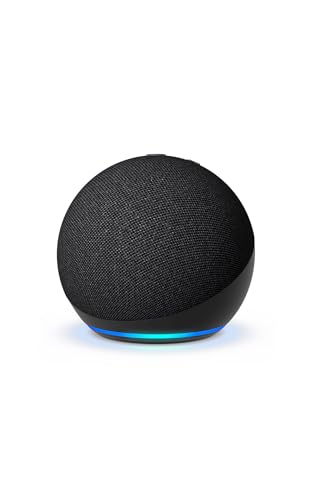
Amazon Echo Dot (newest model) – Vibrant sounding speaker, Designed for Alexa+, Great for bedrooms, dining rooms and offices, Charcoal
Your favorite music and content – Play music, audiobooks, and podcasts from Amazon Music, Apple Music, Spotify and…
As an affiliate, we earn on qualifying purchases.
As an affiliate, we earn on qualifying purchases.
Frequently Asked Questions
Can I Connect Multiple Smart Speakers for Synchronized Audio?
Yes, you can connect multiple smart speakers for synchronized audio. Many brands, like Amazon Echo and Google Nest, support multi-room audio, allowing you to play the same music across various devices simultaneously. You’ll need to set up the speakers within their respective apps and create a multi-room group. Once done, you can enjoy seamless, synchronized sound throughout your home, enhancing your listening experience effortlessly.
How Secure Are Smart Speakers Against Hacking and Unauthorized Access?
Smart speakers have improved security, but they can still be vulnerable to hacking if not properly protected. You should regularly update firmware, use strong, unique passwords, and enable two-factor authentication when available. Be cautious about what personal info you share and review privacy settings. By taking these precautions, you can reduce the risk of unauthorized access and keep your smart speaker more secure.
Do Smart Speakers Support Multiple Users With Personalized Settings?
Imagine your smart speaker as a lively host at a party, welcoming multiple guests with personalized greetings. Yes, many smart speakers support multiple users, allowing each person to have their own voice profile and tailored settings. This way, your device can differentiate between family members, providing customized responses, playlists, or reminders. It’s like having a personal assistant who recognizes your voice and adjusts their service just for you.
What Is the Typical Lifespan of a Smart Speaker?
Smart speakers typically last around 3 to 5 years, but their lifespan depends on usage and build quality. You might find that software updates extend their usefulness, while frequent physical wear can cause issues sooner. To get the most out of your device, keep it clean, update it regularly, and handle it carefully. When performance declines or hardware breaks, replacing it guarantees you stay connected and enjoy the latest features.
Can Smart Speakers Operate Effectively Without an Internet Connection?
Smart speakers struggle to stay sharp without a steady internet connection. They rely on the cloud to process your commands, access information, and control smart devices. Without Wi-Fi, their functionality falters—limiting voice commands, smart home control, and updates. If you want a versatile, voice-activated device, you’ll need a reliable internet connection. Otherwise, your smart speaker’s skills will stall, and its smartness will seemingly disappear.

Google Audio Bluetooth Speaker – Wireless Music Streaming, Powerful Sound, Assistant Built-in, Wi-Fi and Bluetooth Connectivity, Smart Home Control, Stereo Pairing – Chalk
Google Audio Bluetooth Speaker Wireless Music Streaming – Chalk
As an affiliate, we earn on qualifying purchases.
As an affiliate, we earn on qualifying purchases.
Conclusion
Ready to choose your perfect smart speaker? Remember, over 70% of smart home setups now include an AI assistant hub, making daily tasks easier and more connected. Consider your needs, compatibility, and budget to find the best fit. With the right choice, you’ll enjoy seamless control and smarter living. Don’t wait—your connected home experience is just a smart speaker away!

Apple – HomePod mini – Blue
Rich, 360-Degree Sound – Delivers deep bass and crisp high frequencies for immersive audio in any room.
As an affiliate, we earn on qualifying purchases.
As an affiliate, we earn on qualifying purchases.

EMEET USB Speakerphone, M1A Zoom Certified AI Mics 360°Voice Pickup USB Type C-A Plug&Play Computer Speakers with Microphone, Fast Mute Noise Reduction Echo Cancellation for 5-8 People for Zoom Teams
Officially Recognized Voice Tech – ZOOM has recognized EMEET OfficeCore M1A USB speakerphone as its compatible voice partner…
As an affiliate, we earn on qualifying purchases.
As an affiliate, we earn on qualifying purchases.