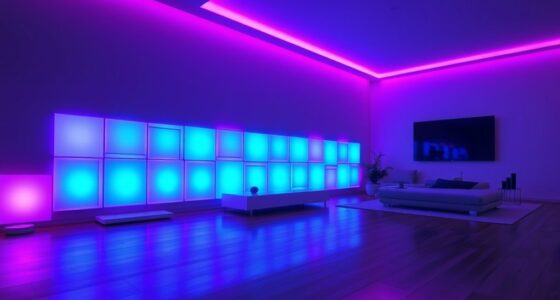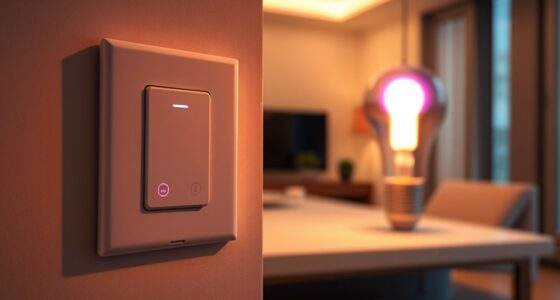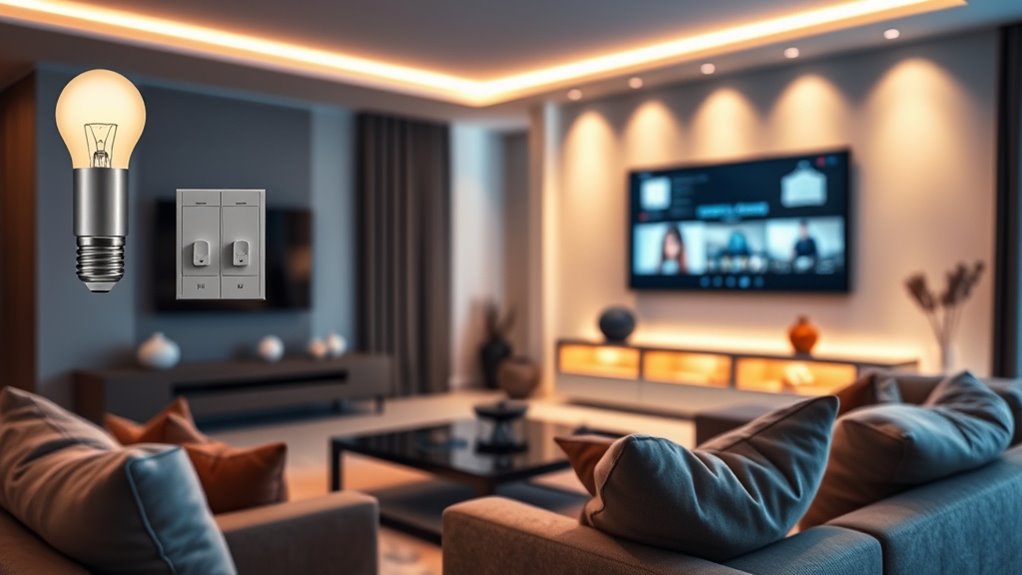

When choosing smart lighting, consider your budget, tech comfort, and the level of control you want. Smart bulbs are easy and affordable for basic remote control and color options. Smart switches let you control multiple fixtures and maintain your existing look, ideal for larger spaces. Full systems offer advanced automation for a personalized experience but require more setup. To find the best fit for your home, explore the details that follow and make an informed choice.
Key Takeaways
- Choose smart bulbs for quick, affordable upgrades and individual lighting control, ideal for small spaces or budget-conscious users.
- Opt for smart switches to control existing fixtures, automate entire rooms, and maintain your wall switch aesthetics.
- Consider full smart lighting systems for comprehensive automation, multi-room syncing, and advanced scene customization.
- Assess your technical comfort, budget, and desired control level to select the most suitable lighting upgrade.
- Balance installation complexity and features to find an option that enhances convenience, efficiency, and home integration.
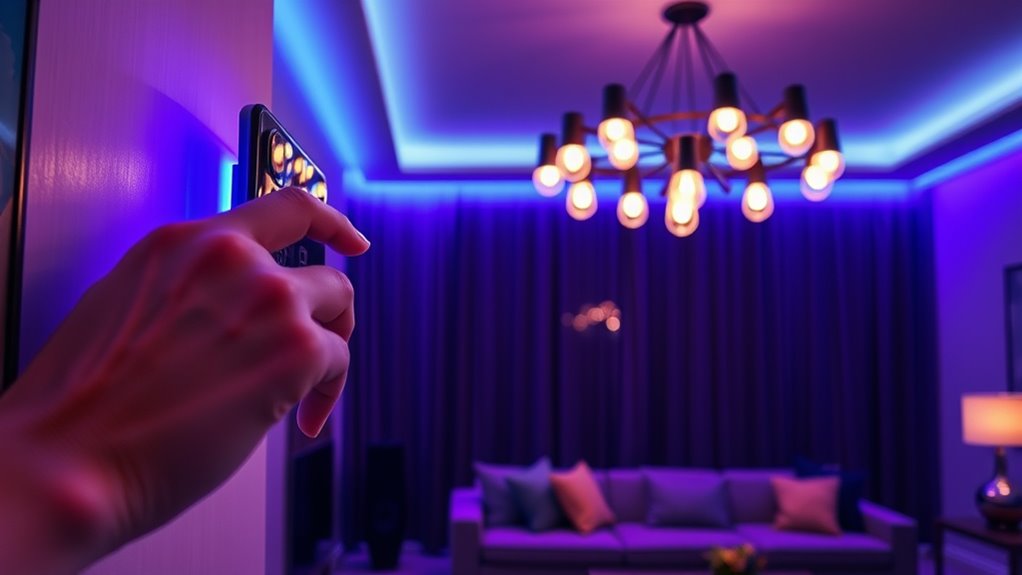
Are you ready to upgrade your home with smarter, more efficient lighting? If so, you’re about to discover the key differences between bulbs, switches, and entire systems, helping you make the best choice for your needs. Each option offers unique benefits and suits different lifestyles and budgets. Understanding these distinctions will empower you to create a lighting setup that’s both functional and modern.
Starting with smart bulbs, these are the simplest way to introduce intelligent lighting into your home. You replace your existing bulbs with Wi-Fi or Bluetooth-enabled versions that can be controlled via smartphone apps or voice commands. Smart bulbs are perfect if you want to add remote control, dimming, or color-changing features without extensive rewiring. They’re affordable and easy to install—just screw them in like regular bulbs. However, their functionality is limited to the individual bulbs, so managing multiple bulbs can become cumbersome if you have a large space. Still, they’re a great entry point into smart lighting, especially if you’re looking for quick, budget-friendly upgrades.
Smart bulbs are an easy, affordable way to add remote control and color options without rewiring.
Next, consider smart switches. These replace your standard wall switches and give you control over your existing bulbs, whether they’re traditional or smart. Smart switches are ideal if you want to automate entire rooms or set schedules without replacing every bulb. They also enable you to control multiple fixtures from a single switch, making them more efficient for larger spaces. Plus, they preserve the look of your existing switches, which can be appealing if you prefer a consistent aesthetic. Installing smart switches requires some wiring knowledge, and in some cases, you might need professional help. But once installed, they offer seamless control via apps, voice commands, or automation scenes, making your lighting more integrated and convenient.
Finally, full smart lighting systems provide the most inclusive solution. These systems include smart hubs, sensors, and coordinated lighting fixtures that work together to create a fully automated environment. They allow for advanced features like motion detection, scene setting, and multi-room synchronization. With a system, you can customize lighting scenarios for different times of day, security, or entertainment. Setting up a whole system usually involves more planning and investment, but the payoff is a highly personalized, intuitive lighting experience that can greatly boost your home’s convenience and energy efficiency. Additionally, advancements in projector technology demonstrate the importance of integrated systems for creating immersive environments.
Choosing between bulbs, switches, or systems depends on your budget, technical comfort, and how integrated you want your lighting to be. If you’re just starting out, smart bulbs are a simple way to dip your toes into smart home tech. If you want more control over entire rooms and prefer to keep your current fixtures, smart switches are a smart upgrade. For those seeking a fully automated, interconnected environment, a thorough smart lighting system is the ultimate choice. Whichever route you choose, you’re taking a step toward a smarter, more efficient home.
As an affiliate, we earn on qualifying purchases.
Frequently Asked Questions
Can Smart Lighting Reduce My Energy Bills Significantly?
Yes, smart lighting can considerably reduce your energy bills. By allowing you to automate and control your lights remotely, you avoid unnecessary usage and guarantee lights are off when not needed. Features like dimming and scheduling help you save energy and extend bulb life. Plus, smart systems can integrate with other smart home devices, optimizing overall energy efficiency and lowering your monthly costs.
Are Smart Lighting Systems Compatible With All Home Automation Platforms?
Think of smart lighting systems as universal translators in your home’s language. They’re designed to be compatible with many popular home automation platforms, like Alexa, Google Home, and Apple HomeKit. However, not all systems play nice together, so you should verify compatibility before you buy. By choosing a system that communicates well with your existing devices, you ensure seamless control and a smarter, more connected home experience.
How Secure Are Smart Lighting Networks From Hacking?
Smart lighting networks can be quite secure, but they’re not foolproof. You should use strong, unique passwords and keep firmware updated to protect against hacking. Avoid connecting devices to unsecured Wi-Fi networks, and enable any available security features like two-factor authentication. Regularly monitor your network activity for unusual activity. Staying vigilant and maintaining good security practices helps keep your smart lighting system safe from potential threats.
Do Smart Bulbs Require Professional Installation or Can I Do It Myself?
You can install smart bulbs yourself, and it’s usually straightforward. Most smart bulbs screw into standard light sockets and come with clear instructions. You’ll need to connect them to your Wi-Fi network using a smartphone app, but no special tools or professional help are typically required. Just turn off the power, screw in the bulb, turn the power back on, and follow the app setup steps to get started easily.
What Is the Typical Lifespan of Smart Light Bulbs Compared to Traditional Bulbs?
Smart light bulbs typically shine on longer than traditional bulbs, lasting around 15,000 to 25,000 hours, like a reliable friend who sticks around. In contrast, standard bulbs usually flicker out after about 1,000 hours. Your smart bulb’s extended lifespan means fewer replacements and more time enjoying the ambiance. So, you get more glow for your buck, letting your smart lighting system brighten your life without the constant worry of burnout.
As an affiliate, we earn on qualifying purchases.
Conclusion
Now that you’ve navigated the world of smart lighting, think of it as choosing the perfect brush for your masterpiece. Whether you opt for bulbs that dance with color, switches that orchestrate your ambiance, or entire systems that paint your home in convenience, each choice adds a stroke of brilliance. Embrace the glow, and let your space shine brighter—your smart lighting journey is the palette, and you’re the artist crafting a luminous masterpiece.
As an affiliate, we earn on qualifying purchases.

Linkind Matter Smart Plug, Work with Apple Home, Alexa, Siri, Google Home
- Easy Setup with Matter: Control via major smart home platforms
- Offline Device Communication: Operate without internet via LAN
- Remote Control Access: Manage devices from anywhere
As an affiliate, we earn on qualifying purchases.
As an affiliate, we earn on qualifying purchases.