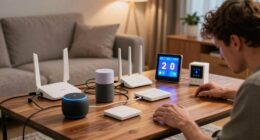

To fix flickering, start by replacing low-quality bulbs with compatible smart options and check your wiring for loose connections. For delays and disconnections, make certain your hub and devices have the latest firmware, place your router and hub centrally, and reduce network congestion. Upgrading your Wi-Fi setup can also improve response times. Keep an eye on environmental factors and device placement; staying proactive helps guarantee smooth smart lighting performance with fewer issues down the line.
Key Takeaways
- Replace incompatible or low-quality bulbs with smart lighting designed for stability.
- Ensure your Wi-Fi network is strong and optimize router placement near smart devices.
- Update firmware of smart lights and hubs to the latest versions for improved performance.
- Check and tighten wiring connections and replace incompatible dimmers to prevent flickering.
- Restart or reset smart devices and hubs regularly to refresh connections and resolve delays or disconnects.
Diagnosing Common Causes of Flickering and How to Fix Them
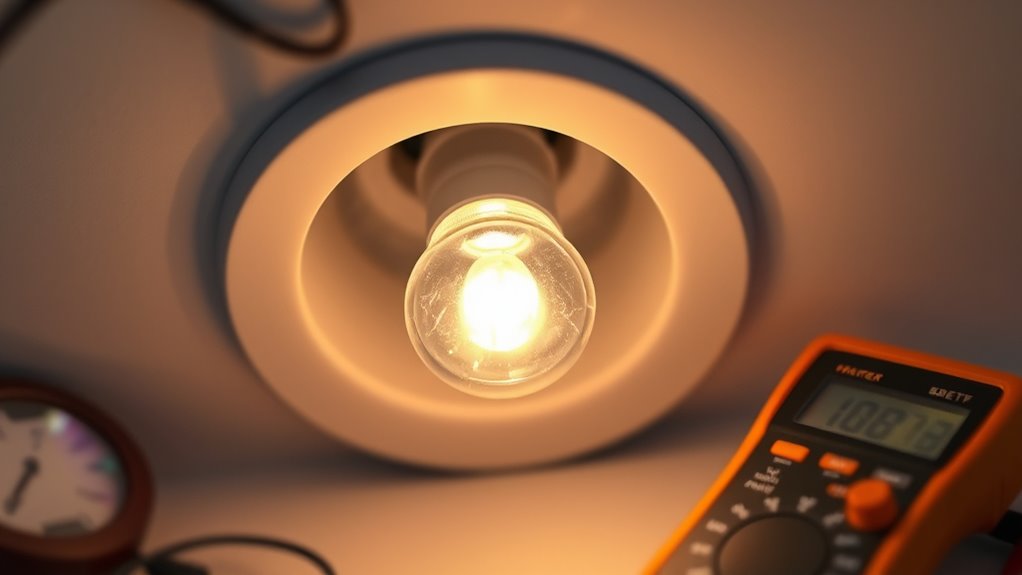
Flickering smart lights can be frustrating, but understanding the common causes makes troubleshooting easier. One major factor is bulb quality; cheap or incompatible bulbs often flicker due to poor manufacturing or improper connection. Check if your bulbs are designed for smart lighting systems and replace any that seem low-quality. Power fluctuations also frequently cause flickering, especially if your electrical supply isn’t stable. Sudden surges or drops in voltage can disrupt the light’s operation. To fix this, consider using a voltage stabilizer or ensuring your circuit isn’t overloaded. Sometimes, flickering isn’t due to the bulb or power supply but loose wiring or incompatible dimmers. Identifying these issues quickly helps restore steady, flicker-free lighting, saving you time and frustration. Additionally, natural lighting conditions can sometimes exaggerate flickering effects, making it appear more frequent than it actually is. Being aware of electrical stability can help you better diagnose underlying issues and prevent future flickering problems, especially when considering the impact of power quality on smart device performance. Moreover, ensuring that your smart hub or controller is functioning correctly can prevent connectivity-related flickering or delays.
Addressing Response Delays and Improving Smart Light Performance
When your smart lights respond slowly or lag behind your commands, it can be frustrating, but there are straightforward steps to improve their performance. First, verify your device and smart lights are on the latest firmware—updates can boost response times and energy efficiency. Reduce network congestion by disconnecting unused devices, which helps improve communication between your voice control system and lights. Placing your router closer to your smart bulbs can also reduce delays. Additionally, some systems allow you to adjust the sensitivity of voice control commands, making interactions more immediate. Improving response times not only enhances your experience but also conserves energy, since quicker reactions mean less energy wasted. Regularly monitoring your network performance can help identify and resolve issues that cause delays, ensuring your smart lighting system performs reliably and efficiently. Also, consider implementing local automation routines that process commands directly within your home network to reduce reliance on cloud servers and minimize lag. Enhancing your home network infrastructure can further optimize overall smart device responsiveness and stability, especially when using dedicated smart home hubs designed for better communication. Additionally, optimizing wireless signal strength can significantly improve device responsiveness by reducing interference and ensuring stable connections.

Bluevua Official RO100ROPOT 4-Pack Replacement Filter Set
- Complete Filtration Set: Includes PP, CTO, PCF, and RO membrane
- Easy, Tool-Free Replacement: Replace filters quickly without tools or water shutoff
- Long-Lasting Filters: Filters last up to one year; RO membrane up to two years
As an affiliate, we earn on qualifying purchases.
Restoring Connectivity: Tips for Resolving Disconnections in Smart Lighting Systems
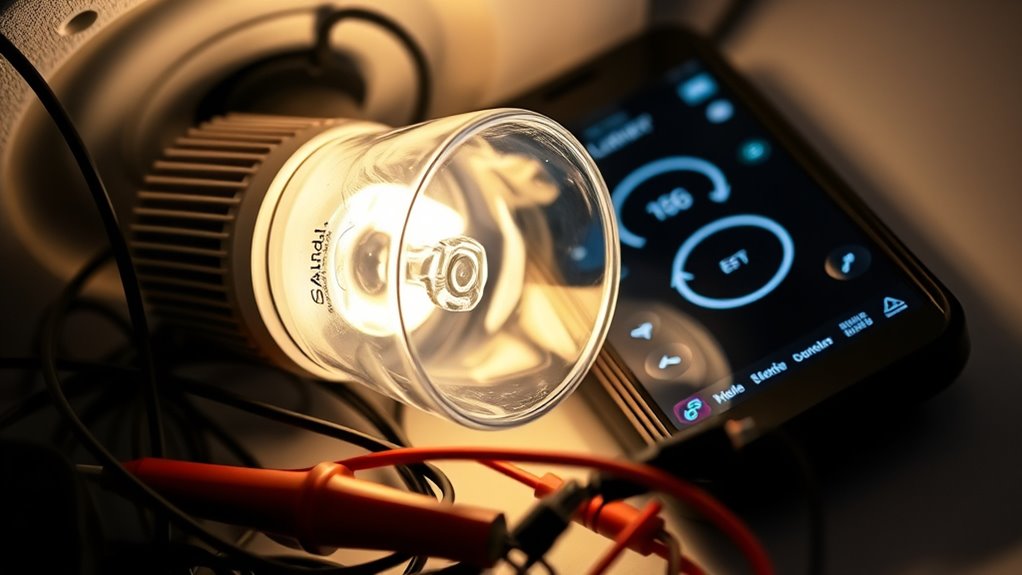
Disconnections in your smart lighting system can disrupt your experience, but you can often restore connectivity with a few practical steps. First, check your smart hub placement—ensure it’s centrally located and away from obstructions or electronic interference, which can weaken signals. If disconnections persist, verify that your hub’s firmware is up to date; manufacturers often release updates that improve stability and fix bugs. Restart your hub and smart lights to refresh the connection. Also, consider resetting affected devices if needed. Keep your Wi-Fi network strong by reducing congestion or upgrading your router if necessary. Additionally, understanding the thermal behavior of your devices can help identify if overheating might be causing connectivity issues. Proper device cooling can prevent overheating and improve overall system stability. Monitoring your network’s signal strength can also help you identify weak spots that might be causing disconnections. Regularly checking your router placement and optimizing it can further enhance the connection reliability. Being aware of the electromagnetic interference that can affect wireless signals is crucial for maintaining a stable system. These simple adjustments can considerably improve connection reliability and help keep your smart lighting system functioning smoothly.
Frequently Asked Questions
Can Firmware Updates Cause Smart Lights to Flicker or Disconnect?
Yes, firmware glitches during updates can cause smart lights to flicker or disconnect. When you schedule updates, there’s a risk that incomplete or faulty firmware installation might disrupt the light’s stability. To prevent this, make certain your device has a stable power source and follow proper update procedures. Avoid interrupting updates, and if issues happen, try restarting the lights or reinstalling the firmware to fix the glitches.
Do Incompatible Bulbs or Fixtures Affect Smart Light Performance?
Incompatible bulbs or fixtures can be like mismatched puzzle pieces, causing your smart lights to flicker or perform poorly. If the bulb isn’t compatible with your smart system or the fixture doesn’t support smart features, it can lead to connectivity issues or delays. Always check bulb compatibility and fixture compatibility before installing smart lights. Ensuring they match will help your smart lighting system work smoothly and reliably.
How Does Wi-Fi Congestion Impact Smart Light Reliability?
Wi-Fi congestion and interference can seriously impact your smart light’s reliability. When multiple devices use the same network, it creates network congestion, causing delays or flickering. Wi-Fi interference from other electronics or neighboring networks can disrupt the signal, making your smart lights disconnect or respond slowly. To improve performance, reduce network traffic, switch to a less congested Wi-Fi channel, or upgrade your router to guarantee a stronger, more stable connection.
Can Environmental Factors Like Temperature Influence Smart Light Issues?
Sure, your smart lights are probably plotting a rebellion, but environmental interference and temperature effects can really mess with them. Extreme cold or heat can cause signals to weaken or hardware to misbehave, making your lights flicker or disconnect. So, instead of blaming your Wi-Fi, consider if the environment’s playing a sneaky role. Keep your smart lights in a stable, moderate climate, and they’ll glow happily without fuss.
Are There Security Concerns Related to Smart Light Connectivity?
Yes, there are security concerns with smart light connectivity. You should be aware of privacy risks, as hackers can potentially access your smart lighting system and snoop on your activities. These devices often have hacking vulnerabilities if not properly secured, such as weak passwords or outdated firmware. To protect yourself, update your device firmware regularly, use strong, unique passwords, and enable any available security features to minimize these risks.
Conclusion
By mastering minor troubleshooting tips, you can swiftly solve smart lighting snafus. From flickering fixes to flawless connectivity, taking proactive steps keeps your system shining seamlessly. Stay savvy, stay swift, and let your smart lights serve you smoothly without setbacks or surprises. With a little patience and persistence, you’ll power through problems, ensuring your lighting’s brilliance remains bright and beautiful, all while boosting your confidence in conquering tech troubles with clarity and control.