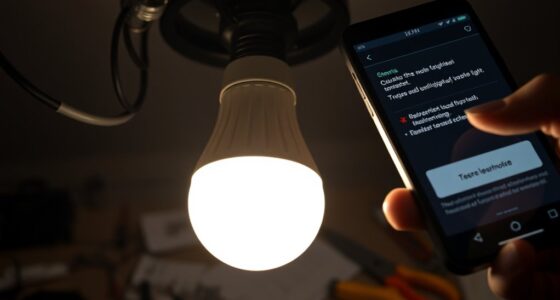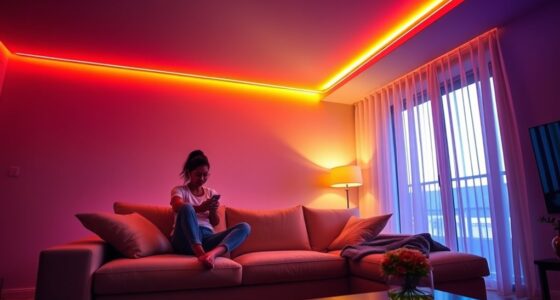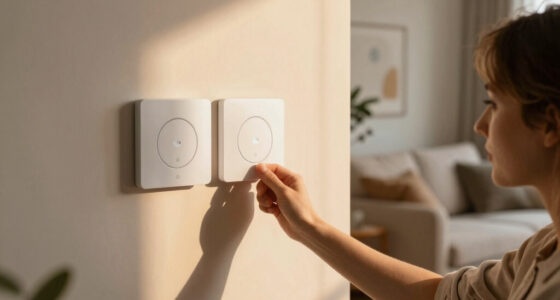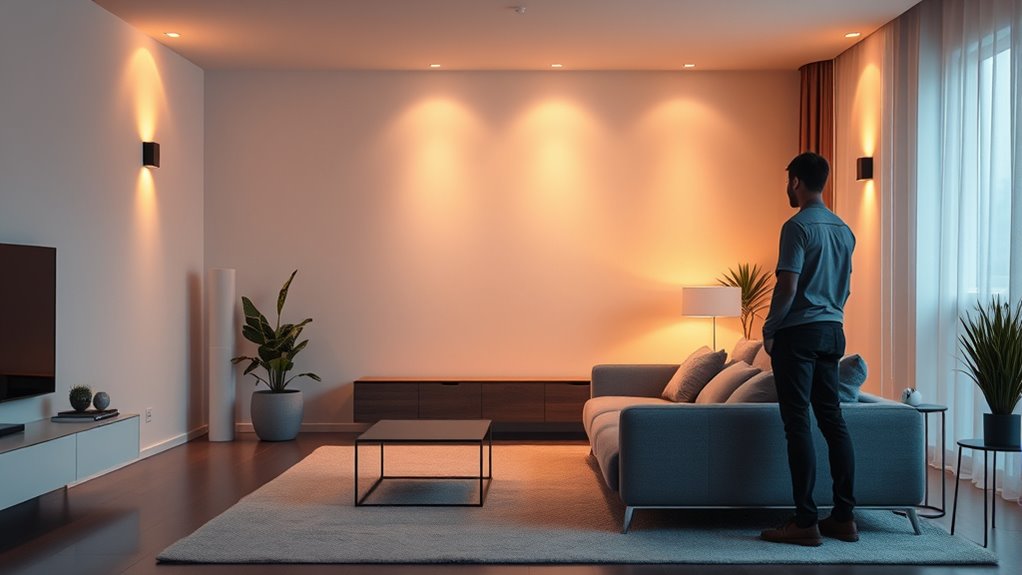

Smart lights learn your routine by using sensors that detect natural light, movement, and occupancy. They collect data on when you wake up, work, relax, or sleep, and adjust brightness and color to suit your habits. Machine learning algorithms analyze this information over time, customizing lighting to your preferences and routines, often incorporating your feedback. If you keep exploring, you’ll discover how these systems continuously evolve to create a personalized, energy-efficient environment just for you.

Get home appliances delivered free with Prime
- Fast, free delivery on millions of items
- Prime Video, Amazon Music and more included
- Member-only deals all year
Key Takeaways
- Smart lights collect data from sensors detecting natural light, motion, and occupancy to understand usage patterns.
- They use machine learning algorithms to analyze routine data and adapt lighting schedules accordingly.
- User feedback and manual adjustments refine the system’s understanding of personal preferences over time.
- Adaptive lighting learns daily activity times, adjusting brightness and color temperature to match habits.
- Continuous data collection and analysis enable smart lights to predict and seamlessly respond to routines.
As an affiliate, we earn on qualifying purchases.
The Basics of Adaptive Lighting Technology
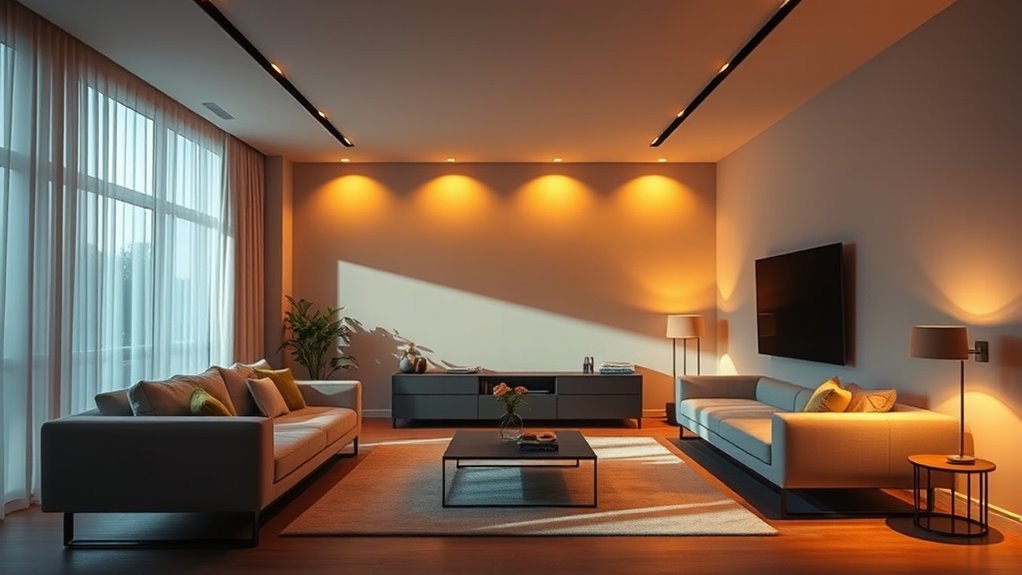
Adaptive lighting technology automatically adjusts the brightness and direction of lights based on real-time conditions, helping to improve visibility and save energy. This innovation transforms lighting design by enabling lights to respond dynamically to your environment, enhancing both functionality and aesthetic appeal. With adaptive lighting, your space becomes more visually appealing as light levels are optimized for different times of day or activities. It allows you to create the perfect ambiance without manual adjustments, seamlessly blending form and function. By intelligently controlling light intensity and angles, adaptive lighting helps highlight architectural features, artworks, or cozy corners, elevating your space’s look. Additionally, adaptive lighting can incorporate smart control systems, allowing for seamless integration with other home automation devices and further customization. This technology not only improves usability but also adds a modern, stylish touch that aligns with your design goals. For example, thermal behavior understanding can optimize energy use while maintaining consistent illumination levels, ensuring efficiency and comfort. Incorporating energy-efficient components enhances the overall sustainability of adaptive lighting systems, reducing environmental impact. Furthermore, integrating sensor technology enables the system to respond even more precisely to environmental changes, improving overall performance and user experience. Moreover, ongoing advancements in machine learning are making adaptive lighting systems smarter and more intuitive over time.
home automation smart lighting system
As an affiliate, we earn on qualifying purchases.
As an affiliate, we earn on qualifying purchases.
Sensors and Data Collection in Smart Lighting Systems

How do smart lighting systems know when to adjust? They rely on sensors that collect data about your environment, primarily through light sensor calibration to guarantee accurate readings. These sensors detect changes in natural light, motion, and occupancy, helping the system determine when to brighten, dim, or turn off lights. The data collected is sent to the system’s algorithms, which learn your routines over time. Additionally, some systems incorporate reliable backup power solutions to ensure continuous operation during outages. These backup systems are essential for maintaining smart system reliability and user convenience. Moreover, understanding how sensor calibration works can help optimize your system’s responsiveness and accuracy. However, data privacy concerns arise because these devices gather personal information about your habits and daily patterns. Manufacturers often implement security measures, but it’s crucial to review privacy policies and settings. Understanding how sensors work and how your data is used helps you make informed decisions about your smart lighting system’s operation and privacy.
As an affiliate, we earn on qualifying purchases.
Analyzing Your Daily Routines and Preferences

Analyzing your daily routines and preferences, smart lighting systems can personalize their adjustments to better suit your lifestyle. They track when you wake up, work, relax, or go to bed, enabling them to set the ideal lighting color for each activity. For example, cooler tones might activate during your morning routine, while warmer hues create a cozy atmosphere in the evening. Voice control also plays a key role, allowing you to effortlessly change lighting settings or request specific lighting colors without needing to open an app or adjust switches. As your routines become clearer, the system adapts, providing a seamless experience that makes your environment more comfortable and intuitive. Connected lighting systems can also learn from your habits over time, continuously enhancing their performance. This learning capability allows the system to anticipate your needs and adjust settings proactively, ensuring a truly personalized environment. Additionally, these systems often incorporate adaptive lighting features that adjust based on environmental factors like time of day or natural light levels, further refining the user experience. The integration of AI-powered data analytics helps optimize lighting schedules and energy efficiency, making your home smarter and more responsive. By integrating smart home systems with your lighting, the overall environment becomes more responsive and efficient, enhancing your daily comfort. This personalized approach guarantees your lighting enhances your daily activities without extra effort.
color temperature adjustable smart lights
As an affiliate, we earn on qualifying purchases.
As an affiliate, we earn on qualifying purchases.
Machine Learning Algorithms Powering Personalization

Machine learning algorithms are at the core of personalization in smart lighting systems, continuously analyzing your behavior to deliver tailored lighting adjustments. These algorithms process data about your daily routines, preferences, and habits, enabling the system to adapt in real-time. They optimize settings like color temperature to match your activities, whether you prefer warm tones in the evening or cooler light during work hours. Additionally, they adjust mood settings to create the ideal atmosphere, whether for relaxation, focus, or social gatherings. By learning your patterns, the algorithms ensure your lighting feels intuitive and personalized, enhancing comfort and ambiance. These systems often incorporate user feedback to further refine their performance, ensuring the lighting adapts more accurately over time. Incorporating adaptive learning techniques allows these systems to improve their predictions as they gather more data, making your smart lights smarter over time, effortlessly aligning with your lifestyle without requiring manual adjustments. Moreover, data privacy measures are crucial to protect your personal information as these systems become increasingly sophisticated. Implementing security protocols can help safeguard your data from unauthorized access, maintaining your privacy. Advanced sensor technology also plays a role in detecting your presence and adjusting lighting accordingly, further enhancing the system’s responsiveness.
How Smart Lights Detect Your Movement and Presence

Smart lighting systems use a variety of sensors to detect your presence and movements, allowing them to respond automatically. Motion detection sensors identify movement within a room, turning lights on or off as needed. Presence sensors, often using infrared or ultrasonic technology, detect whether someone is present even if they’re stationary. When you enter a space, these sensors immediately recognize your presence, triggering the lights to turn on or adjust accordingly. They work silently in the background, ensuring your environment is always appropriately lit without manual control. This seamless detection enhances comfort and energy efficiency. By accurately sensing motion and presence, smart lights can provide illumination exactly when you need it, making your daily routines smoother and more intuitive. Additionally, these sensors often utilize advanced technology to improve detection accuracy and responsiveness, aligning with industry standards for reliability and performance. Reliable sensors help ensure that your lighting responds promptly and correctly, further enhancing the smart lighting experience.
Creating Customized Lighting Schedules

Creating customized lighting schedules allows you to tailor your home’s illumination to fit your daily routines and preferences. You can set specific times for your lights to turn on or off, adjust lighting color to match different activities, and create a comfortable atmosphere throughout the day. By scheduling lighting, you guarantee your lights are used efficiently, which can extend bulb lifespan and reduce energy costs. Choosing the right lighting color for different times can enhance mood and productivity, while also minimizing unnecessary use. Smart lights let you program these schedules easily via apps, giving you control over your environment without manual adjustments. This level of customization helps you create a consistent, personalized ambiance that adapts seamlessly to your lifestyle.
The Role of User Feedback in Refining Settings

Have you ever noticed how your lighting preferences evolve over time? User feedback plays a vital role in refining your smart lighting settings. When you manually adjust the brightness or color, you’re providing valuable input that helps the system learn your preferences. Over time, this feedback allows the system to adapt more accurately to your habits. Here’s how user preferences influence adjustments:
| User Feedback Type | Effect on Settings |
|---|---|
| Manual adjustment | Fine-tunes brightness and color |
| Routine changes | Updates schedules and scenes |
| Explicit preferences | Prioritizes specific settings |
| Ignoring suggestions | Maintains current setup |
Your active input ensures your lighting remains comfortable and personalized, making your environment more intuitive. Cookies help analyze your interactions, which can further improve the system’s responsiveness. Understanding adaptive learning processes can also shed light on how your preferences are continually refined, especially through user feedback mechanisms. These mechanisms are essential for creating a truly personalized lighting experience.
Benefits of Routine-Adaptive Lighting for Comfort and Energy Savings

Routine-adaptive lighting can make your home more comfortable by automatically adjusting to your daily habits. It also helps you save energy by reducing unnecessary usage, lowering your bills. Plus, you get a personalized lighting experience that fits your preferences without any extra effort.
Enhanced Home Comfort
By adjusting lighting based on your daily routines, you can substantially boost home comfort while saving energy. Adaptive lighting tailors color temperature and ambient brightness to match your activities and mood, creating a cozy environment. This means your lights can soften in the evening for relaxation or brighten during the day for productivity. The benefits include:
- Consistent comfort by maintaining ideal lighting conditions
- Reduced eye strain through optimized ambient brightness
- Enhanced mood with warmer or cooler color temperatures
- Energy savings by avoiding unnecessary lighting usage
With smart lights learning your preferences, your home adapts seamlessly, providing a more comfortable and inviting atmosphere while also conserving energy. The right lighting settings make your space feel just right, anytime.
Reduced Energy Consumption
Implementing adaptive lighting that responds to your daily routines can considerably cut down on energy waste. By adjusting brightness levels based on your activity, you avoid leaving lights on unnecessarily. Smart lights can also modify color temperature, shifting to warmer tones in the evening to save energy and promote relaxation. This not only reduces electricity consumption but also enhances your home’s aesthetic design, creating a cozy atmosphere without excess power use. Routine-aware lighting ensures you’re only using what’s needed, avoiding over-illumination. As a result, you benefit from lower energy bills and a smaller carbon footprint. The combination of adaptive brightness and optimized color temperature makes your home more energy-efficient while maintaining a beautiful, functional environment.
Personalized Lighting Experience
Personalized lighting transforms your living space into a comfortable haven by automatically adjusting to your daily habits. This tailored approach enhances your lighting design, creating the right ambiance at the right time. You’ll benefit from a more relaxing environment and improved mood through thoughtful use of color psychology, which influences how you feel in different settings. Routine-adaptive lighting also helps save energy by reducing unnecessary brightness. To maximize benefits, consider:
- Customizing brightness levels to match activities
- Using warm tones in the evening for relaxation
- Incorporating cooler shades during work hours for focus
- Scheduling lighting changes aligned with your daily routine
This seamless adjustment boosts comfort and efficiency, making your home smarter and more personalized.
Integrating Smart Lights With Other Home Automation Devices
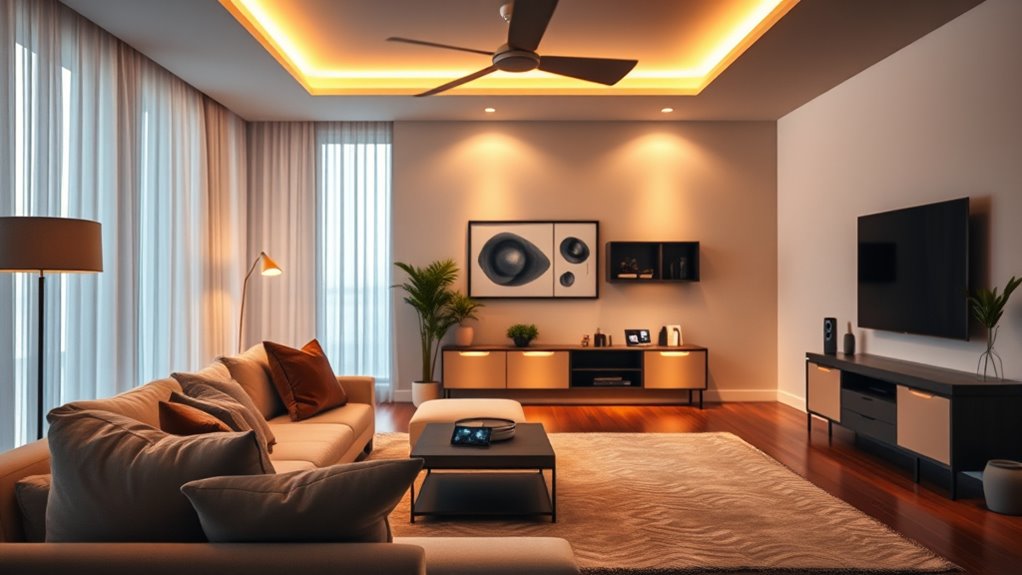
Integrating smart lights with other home automation devices creates a seamless and efficient living environment. By connecting your lights with voice control systems, you can effortlessly adjust lighting settings with simple commands, enhancing convenience. For example, saying “dim the living room lights” or “set the bedroom lights to blue” instantly updates your environment. Color customization plays a key role in this integration, allowing you to personalize your space to match your mood or activity. When paired with smart thermostats or security systems, your lighting adapts automatically—brightening when you arrive home or dimming at bedtime. This interconnected setup streamlines your daily routines, reduces manual adjustments, and creates a cohesive, intelligent home that responds intuitively to your needs.
Future Trends in Adaptive Lighting Innovation
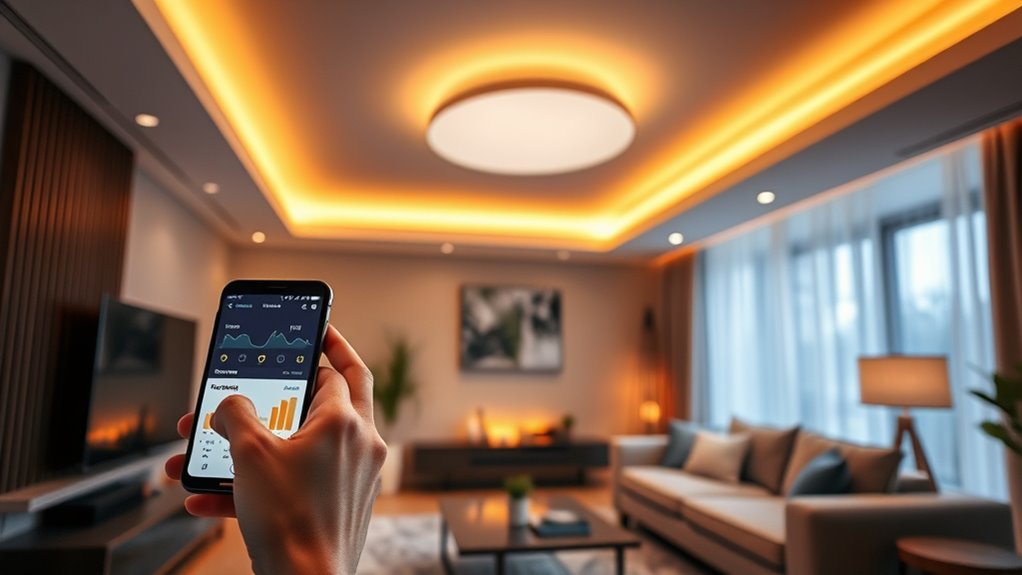
As technology continues to advance, adaptive lighting systems are poised to become even smarter and more intuitive. Future trends include:
- Enhanced voice control that allows seamless adjustments without lifting a finger, making interactions more natural.
- Integration of aesthetic design, enabling lights to complement and elevate your home’s decor.
- Use of AI to predict your lighting needs based on habits, mood, and time of day.
- smarter customization options, allowing you to set personalized scenes and lighting profiles effortlessly.
These innovations will make your lighting experience more effortless, stylish, and responsive, creating a truly intelligent home environment tailored to your preferences.
Frequently Asked Questions
Can Adaptive Lighting Systems Function Without an Internet Connection?
Yes, adaptive lighting systems can function without an internet connection through offline functionality and local control. When you’re offline, these systems still adjust your lights based on pre-set routines or sensor inputs stored locally. You won’t need internet access, so your lighting remains responsive to your habits and preferences. This setup guarantees continuous control and automation, even when your Wi-Fi or network connection is temporarily unavailable.
How Secure Is the Data Collected by Smart Lighting Systems?
You might wonder how secure your data is with smart lighting systems. Generally, these systems use data encryption to protect your information, reducing privacy concerns. However, it’s crucial to stay aware of potential vulnerabilities, especially if the manufacturer’s security practices are weak. To keep your data safe, choose reputable brands, regularly update your system, and review privacy policies. This way, you can enjoy smart lighting without compromising your privacy.
Do Adaptive Lights Work Effectively in Multi-User Households?
You might find adaptive lights work surprisingly well in multi-user households, but it’s not always smooth sailing. Multi-user challenges can make it tricky to keep personalized settings accurate for everyone. However, many smart lighting systems learn individual routines over time, adjusting accordingly. With a little patience, your smart lights can balance everyone’s preferences, making your home feel just right without constant adjustments. It’s a game changer when everyone’s needs are considered.
Can I Manually Override or Customize Adaptive Lighting Settings?
Yes, you can manually override or customize adaptive lighting settings. Most smart lighting systems let you do this through their app or voice commands, giving you control over brightness and color preferences. This manual customization allows you to tailor the lighting to your needs, even if the system is learning your routine. You can easily switch between automatic adaptive modes and your preferred manual settings whenever you want for a personalized experience.
How Do Smart Lights Learn New Routines Over Time?
Smart lights learn new routines over time through machine learning algorithms that analyze your usage patterns. As you turn lights on or off at different times or adjust brightness, the system detects these changes and adjusts automatically. Over time, routine adaptation becomes more accurate, allowing your smart lights to anticipate your needs better. This continuous learning ensures your lighting experience stays personalized and convenient without manual input.
Conclusion
You might worry that smart lights invade your privacy, but they actually learn your routines to make your life easier and more comfortable. By adapting to your habits, they save energy without sacrificing convenience. With ongoing innovations, future models will become even smarter and more intuitive. So, instead of feeling monitored, think of these lights as personalized assistants that enhance your daily experience while respecting your privacy. Embrace the future of lighting—you’ll wonder how you ever lived without it.
Cold & flu season Picks
humidifiers
As an affiliate, we earn on qualifying purchases.