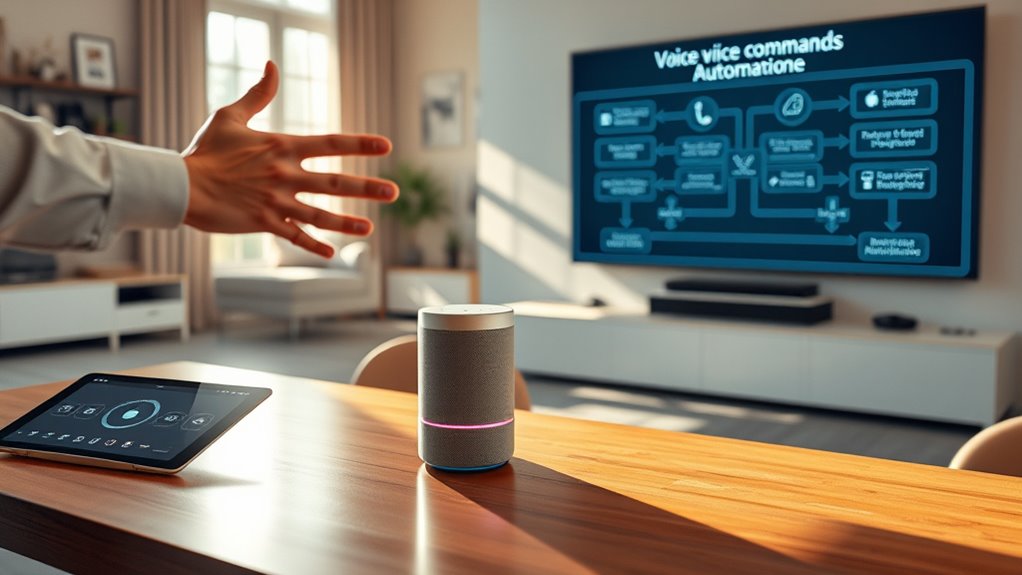

Use voice control when you need quick, immediate responses for tasks like adjusting lights, setting reminders, or checking the weather. Let AI handle automation silently for routine or repetitive activities such as organizing emails or syncing files, especially when privacy is a concern. Recognize situations where manual intervention is best, like correcting errors. Understanding when to speak or let AI work silently enhances your smart experience—stay tuned for more insights on making the right choice.
Key Takeaways
- Use voice control for quick, immediate responses like setting reminders or adjusting settings during urgent moments.
- Rely on automation for routine tasks such as syncing data or managing background processes silently.
- Choose voice commands when situational awareness or emotional cues are critical for appropriate responses.
- Let AI handle automation when privacy or data security is a concern, reducing unnecessary data transmission.
- Balance voice and automation based on task complexity, privacy needs, and the desired level of user engagement.
Understanding the Core Differences Between Voice Control and Automation
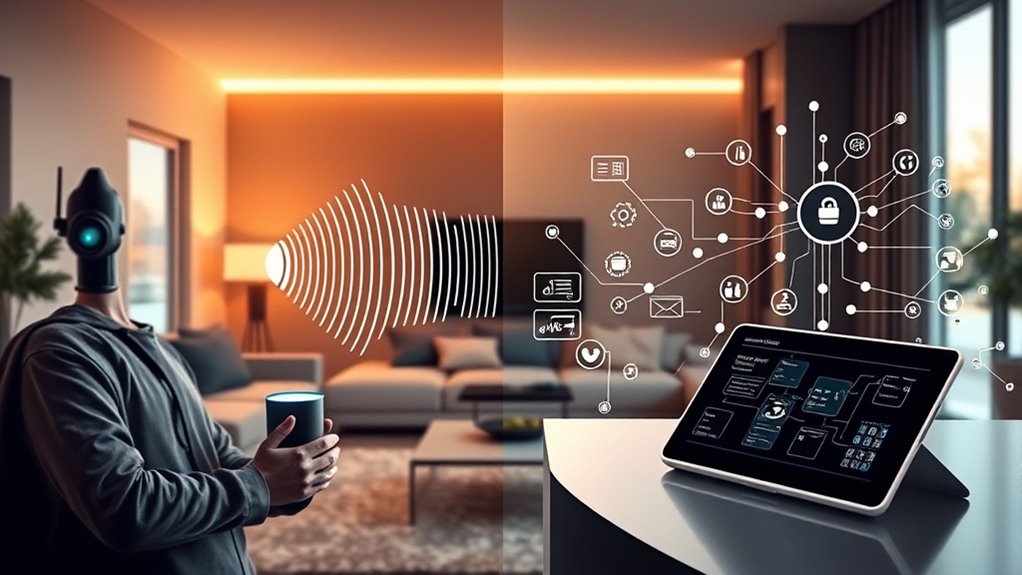
While both voice control and automation aim to simplify your daily routines, they serve different functions. Voice control lets you interact directly with devices through spoken commands, providing immediate feedback and requiring minimal hardware setup. It’s ideal for quick tasks like adjusting lights or playing music. Automation, on the other hand, involves pre-programmed sequences or rules that run in the background without your direct input. It often requires hardware integration across multiple devices and platforms. Personalization plays a key role here, as automation can be tailored to your habits, making routines seamless. Smart home automation systems enable you to create complex routines that adapt over time based on usage patterns. This integration often relies on cloud-based services to manage data securely and efficiently. Voice control offers instant interaction, while automation creates ongoing, hands-free convenience. Understanding these core differences helps you decide when to speak up or let AI handle tasks silently. Innovative European Cloud Servers enable secure and efficient management of automation systems, ensuring seamless integration and sustainability.
When Immediate Response Is Necessary: Speaking up for Quick Results
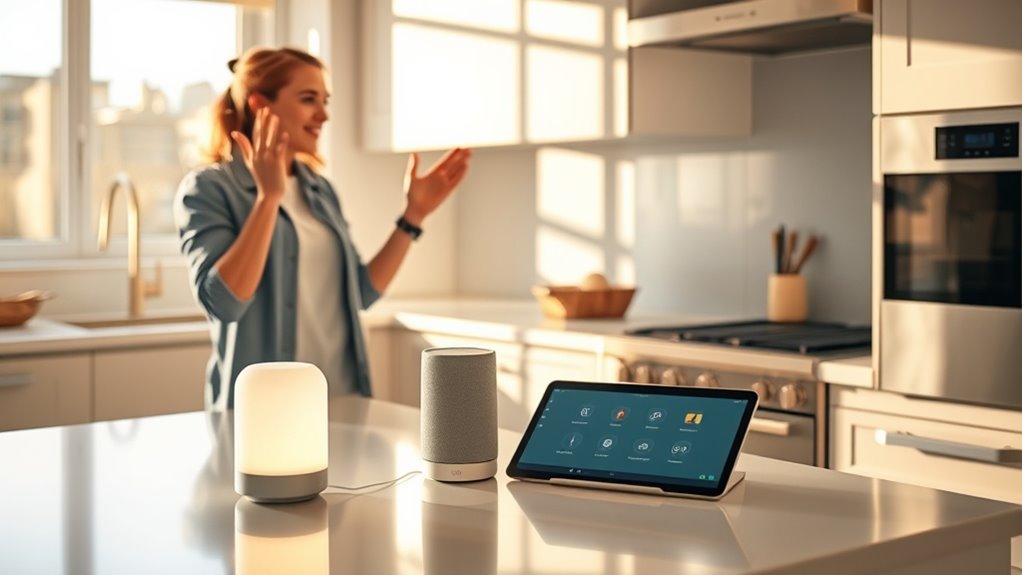
When you need a quick response, speaking up with voice control is often the fastest way to get results. It quickly interprets context cues and aligns with your user preferences, delivering instant feedback. This approach shines in urgent situations where timing matters. For example, consider the table below, which highlights different scenarios:
| Situation | Response Method | Why |
|---|---|---|
| Emergency alert sound | Voice control | Immediate action needed |
| Adjusting thermostat | Voice control | Fast, hands-free |
| Setting reminders | Voice control | Quick, natural flow |
| Playing music | Voice control | Immediate playback |
| Checking weather | Voice control | Fast info retrieval |
In these cases, speaking up guarantees you get quick results tailored to your preferences and the context cues at play. Additionally, voice control is especially effective when rapid response times are essential to ensure safety and efficiency. Moreover, integrating smart appliances with voice commands can further streamline your kitchen tasks, making automation even more seamless. Recognizing the importance of home automation can help you decide when voice commands are the most practical solution versus when to rely on more comprehensive systems.
Tasks Best Managed Silently: Letting AI Work Behind the Scenes

In situations where immediate responses aren’t critical, letting AI work silently in the background can be highly effective. This approach promotes silent efficiency, allowing your devices to handle routine tasks without interrupting your focus. Background management is ideal for tasks like organizing emails, updating data, or syncing files, freeing you from manual oversight. By trusting AI to manage these processes quietly, you reduce distractions and improve overall productivity. This seamless integration ensures that essential functions happen smoothly without requiring your input or voice commands. Silent efficiency keeps your workflow streamlined, letting you concentrate on more strategic or creative tasks. When immediate action isn’t needed, leveraging AI’s background management capabilities saves time and preserves your mental bandwidth. Additionally, integrating smart home devices for silent control enhances comfort and convenience without added noise or disruption.
The Role of Context in Choosing When to Speak or Let AI Handle It

You need to take into account the situation before deciding whether to speak or let AI act automatically. Your awareness of the context helps prevent misunderstandings and ensures the right actions are taken. Keep privacy and security in mind, as some tasks require discretion and careful handling. Considering Free Floating environments can also influence how automation and voice commands are best utilized in your backyard or outdoor spaces.
Situational Awareness Matters
Understanding the context of a situation is essential in deciding whether to speak a command or let AI handle a task automatically. Your emotional intelligence helps you gauge the urgency or sensitivity of a moment, influencing whether you should intervene verbally or trust automation. Recognizing subtle cues, like tone or environment, guides your choice, ensuring you act appropriately. Ethical implications also come into play—sometimes, speaking might disrupt others or breach trust, so automatic responses are better. Being aware of these nuances increases your situational awareness, helping you avoid unnecessary interruptions or misjudgments. Additionally, understanding filtration and pump protection can influence decisions in technical scenarios, emphasizing the importance of context-aware actions. Recognizing environmental cues can further refine your judgment, making your responses more effective. By considering the environment and emotional context, you make smarter decisions about when to speak and when to let AI handle tasks seamlessly. This balance enhances overall interaction and respects the complexities of human-centered scenarios. Paying attention to water safety measures in specific settings can also impact whether verbal instructions are necessary or if automated alerts suffice. Moreover, incorporating sensor feedback helps in assessing real-time conditions, enabling more accurate responses in dynamic situations.
Privacy and Security Considerations
Deciding whether to speak a command or let AI handle a task hinges heavily on privacy and security considerations, especially in sensitive environments. Voice data can contain personal information, making it vital to evaluate the risk of exposing private details. If you’re in a confidential setting, speaking aloud might compromise personal privacy or sensitive data. Conversely, letting AI handle tasks silently reduces voice data transmission, minimizing security threats. Consider the environment’s level of confidentiality before activating voice control. You should also understand how your device manages voice data—whether it’s stored, analyzed locally, or sent to the cloud. Ultimately, balancing convenience with the need to protect personal privacy and guarantee security helps you decide when it’s safe to speak or let AI handle the task silently.
User Experience: Balancing Convenience and Efficiency

While voice control and automation can greatly streamline daily tasks, finding the right balance between convenience and efficiency is essential for a positive user experience. When you rely too heavily on automation, you might sacrifice multitasking efficiency, making it harder to manage multiple tasks simultaneously. Conversely, overusing voice commands can diminish emotional engagement, leaving interactions feeling impersonal or frustrating. Striking this balance means choosing when to speak and when to let the system handle tasks automatically. You want effortless convenience without sacrificing your ability to stay engaged and in control. By adjusting your approach based on the complexity of the task, you enhance overall efficiency while maintaining a satisfying, human-centered experience. Recognizing how technology integration influences daily routines can help tailor your use of voice and automation. This balance directly impacts how well home systems are incorporated into your daily routine, ensuring they support your lifestyle without becoming intrusive or cumbersome. Additionally, understanding automation limitations can prevent frustration and help you optimize your interactions with these systems. Being aware of technology limitations can help prevent disappointment when certain tasks require manual intervention. Considering user preferences can further personalize your experience, making automation more adaptable to individual needs.
Privacy Considerations When Using Voice Commands and Automation

When you use voice commands and automation, your data faces potential security risks if not properly protected. You also need to be aware of how much consent and permission you’ve given for your information to be collected and shared. Understanding these privacy aspects helps you make safer choices about using these technologies.
Data Security Risks
Have you ever considered the privacy risks associated with voice commands and automation? Your data could be vulnerable if not properly safeguarded. Sensitive information transmitted via voice or automated systems might be intercepted or misused without strong security measures. Implementing data encryption ensures your data remains confidential, even if it’s intercepted. Access controls restrict unauthorized users from accessing your devices or information, reducing potential breaches. Vetted security practices are essential to maintain trust and protect personal information in smart environments. Additionally, understanding the horsepower of electric dirt bikes can inform safer usage and installation of security systems on such devices. Being aware of the security vulnerabilities associated with connected devices helps in making informed decisions about safeguarding your smart environment. Recognizing the importance of privacy policies can further enhance your understanding of how your data is managed and protected.
Consent and Permission
Using voice commands and automation systems requires your explicit consent and permission to access personal data. You should be aware of the ethical implications involved, especially regarding privacy. These systems often collect sensitive information, and your emotional intelligence plays a role in understanding how much data you’re comfortable sharing. It’s essential to review permission settings and understand what data is being accessed and stored. Giving consent without fully understanding the implications can lead to privacy breaches or misuse of information. Always ask yourself if you trust the device or service to handle your data ethically. Respecting your own boundaries and ensuring transparent data practices helps maintain your privacy and fosters responsible use of voice commands and automation. Additionally, understanding the Gold IRA markets can help you make informed decisions about your investments and data security.
Troubleshooting and Limitations: Knowing When to Take Control
While voice control and automation systems are designed to simplify your tasks, they can sometimes encounter issues that require manual intervention. When errors happen, effective error handling is vital to prevent user frustration. Recognize when the system isn’t responding correctly or misinterprets commands, and don’t hesitate to take control. Relying solely on automation can lead to confusion or mistakes, especially if the system’s limitations aren’t clear. Knowing when to step in helps avoid prolonged delays and reduces user frustration. Sometimes, a quick manual adjustment or direct input is faster and more reliable than troubleshooting through the system. By understanding these limitations, you ensure smoother interactions and prevent setbacks caused by overdependence on voice control or automation.
Future Trends: How Voice and Automation Are Evolving Together
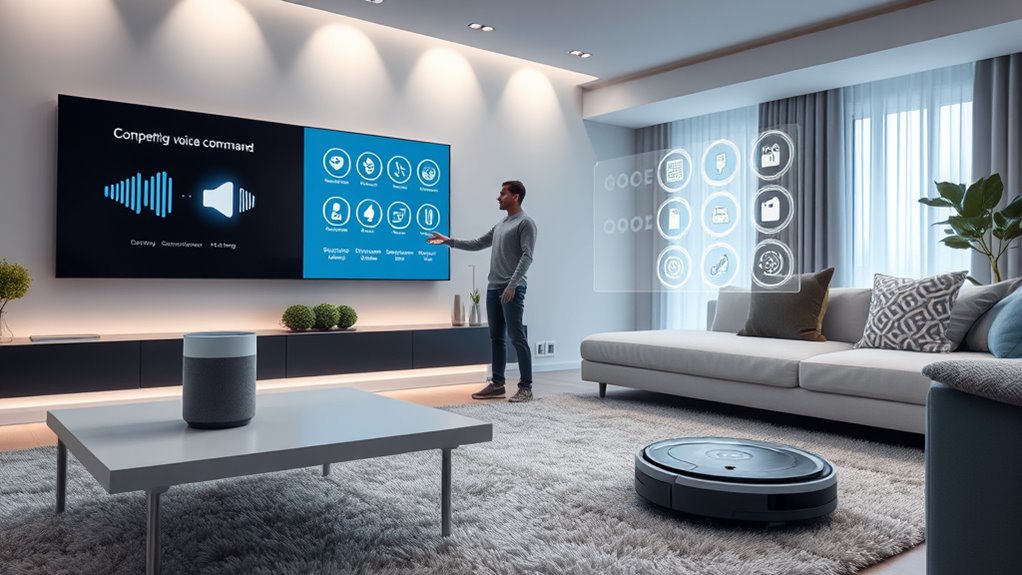
As technology advances, voice control and automation are increasingly converging to create more seamless and intelligent systems. This evolution enhances emotional intelligence, allowing devices to interpret your tone and mood, leading to more natural interactions. Future systems will also excel at creative problem solving, adapting to complex situations effortlessly. Here’s how these trends shape the future:
| Trend | Impact | Example |
|---|---|---|
| Emotional Intelligence | Better understanding of user needs | Smart assistants sensing frustration |
| Creative Problem Solving | Handling unexpected issues | AI resolving unique home problems |
| Integration | Seamless voice and automation | Unified smart home control |
| Personalization | Tailored experiences | Custom routines based on habits |
| Learning Capabilities | Continuous improvement | Devices evolving with use |
| Context Awareness | More accurate responses based on environment | Devices adjusting to surroundings |
You’re set to experience smarter, more intuitive systems that blend voice and automation seamlessly.
Frequently Asked Questions
How Do Voice Control and Automation Impact Daily Productivity?
Voice control and automation boost your personal productivity by streamlining digital routines. When you speak commands, you quickly access information or control devices, saving time and effort. Automation handles repetitive tasks, freeing you to focus on higher-priority work. Together, they make your daily routine more efficient, reducing distractions and increasing overall effectiveness. Embracing both helps you stay organized and accomplish more with less stress.
What Are the Security Risks Associated With Voice Commands?
You need to be aware that voice commands can pose security risks like hacking vulnerabilities, which might expose your personal data. Privacy concerns also arise because voice assistants often record and store your conversations, sometimes without your knowledge. To stay protected, regularly update device software, use strong passwords, and review privacy settings. Limit sensitive commands and avoid sharing confidential info through voice to minimize these risks.
Can Automation Replace All Manual Tasks Effectively?
Like a modern-day alchemist, you might think automation can replace all manual labor effectively. While it streamlines routine tasks and reduces errors, it can’t handle every nuance or adapt to unexpected changes. Relying too much on automation increases technological dependency, risking efficiency if systems fail. So, you should balance automation with manual effort, recognizing that some tasks still require human judgment and flexibility for ideal results.
How Do User Preferences Influence Voice Versus Automation Choices?
Your personalization preferences and user comfort heavily influence whether you choose voice control or automation. If you prefer hands-free, immediate responses, voice commands suit you best. However, if you value seamless, background operations, automation might be more suitable. Your habits and comfort levels guide your choice, making it essential to customize settings for maximum convenience. Ultimately, aligning technology with your preferences ensures a smoother, more satisfying experience.
What Are the Costs Involved in Implementing These Technologies?
The costs involved in implementing voice control and automation depend on your specific needs. You should conduct a thorough cost analysis to understand implementation expenses, including hardware, software, and ongoing maintenance. Voice control systems might have lower initial costs but could incur higher long-term expenses due to voice recognition upgrades. Automation tools often require significant upfront investment but can reduce operational costs over time, making your decision more financially justified.
Conclusion
Knowing when to speak up or let AI handle tasks can transform your daily routines, making you more efficient and in control. Mastering this balance isn’t just a small skill—it’s the secret weapon in a world increasingly driven by smart technology. When you choose wisely, you.activate the true power of voice control and automation, turning what once seemed like science fiction into your everyday superpower. Embrace it, and watch your productivity soar beyond the stars.