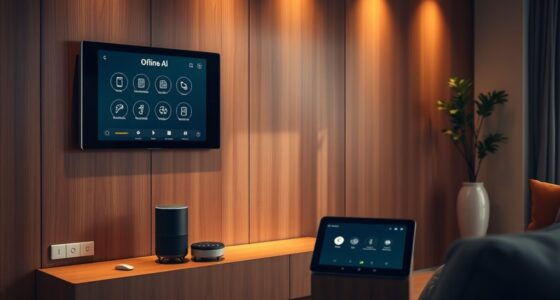

Voice assistants like Alexa can enhance your home’s security with features like sound detection, alerts, and smart device control. They can complement traditional security systems by automating responses like lighting or locking doors, but they shouldn’t be relied on alone. While convenient for quick commands, they have limitations and privacy concerns. For a well-rounded approach, combining Alexa Guard with other security measures works best. Keep exploring to discover how to maximize your home’s safety effectively.

Get home appliances delivered free with Prime
- Fast, free delivery on millions of items
- Prime Video, Amazon Music and more included
- Member-only deals all year
Key Takeaways
- Alexa Guard detects sounds like glass breaking and smoke alarms, providing alerts, but isn’t a complete security solution.
- It can integrate with smart home devices to automate responses, enhancing safety but not replacing traditional security systems.
- Voice commands allow controlling locks, cameras, and alarms, offering convenience but limited active deterrence.
- It has privacy concerns due to continuous listening and lacks features like motion detection found in dedicated security systems.
- Combining Alexa Guard with traditional security measures creates a layered, more effective home protection strategy.
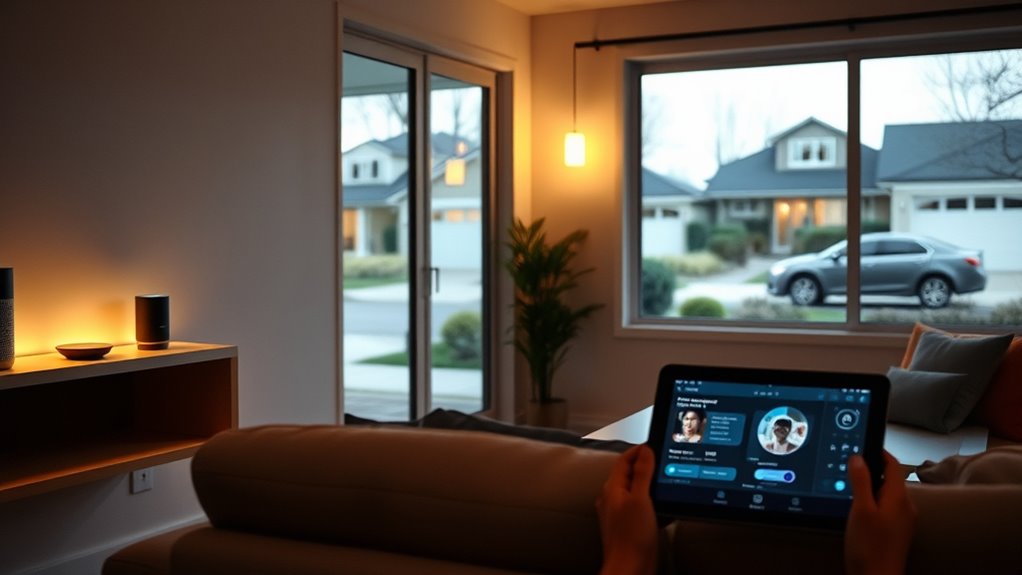
Smart home security has become more accessible and effective with features like Alexa Guard, which helps protect your home by detecting sounds like glass breaking and smoke alarms. This feature leverages the microphones on your Echo devices to listen for suspicious noises and alert you promptly. When Alexa Guard detects the sound of shattering glass or a smoke alarm, it sends an alert to your phone, allowing you to respond quickly, whether that means checking your security cameras or calling emergency services. It’s a simple yet powerful way to add a layer of protection without the need for traditional alarm systems. Plus, Alexa Guard integrates smoothly with other smart home devices, enabling you to automate responses, like turning on lights if a window breaks or activating smart locks if you suspect an intruder. The ease of setup and user-friendly interface make it an attractive choice for those seeking a DIY security solution. Additionally, integrating ventilation considerations can help improve the overall safety and comfort of your smart home environment.
Beyond Alexa Guard, voice assistants like Amazon Alexa are increasingly being used to enhance home security in other ways. You can use voice commands to lock or deactivate smart locks, check security camera feeds, or even control your alarm system if you have compatible devices. This hands-free approach allows you to manage your home’s security without fumbling with multiple apps or physical keys, providing convenience and peace of mind. For example, you could say, “Alexa, lock the front door,” or “Show me the backyard camera,” and get immediate responses. This seamless integration makes it easier to stay on top of your home’s safety, especially when you’re busy or away.
However, it’s important to recognize the limitations of using voice assistants as security systems. They’re not a replacement for dedicated security devices like motion detectors, door sensors, or professional alarm systems. While Alexa Guard offers valuable alerts for specific sounds, it doesn’t provide exhaustive coverage or deter intruders actively. Also, privacy concerns exist because microphones are constantly listening, which may make some users uneasy. To maximize security, it’s best to combine voice assistant features with traditional security measures. This layered approach guarantees that if one system is compromised or fails, others are still working to protect your home.
Alexa Guard compatible security cameras
As an affiliate, we earn on qualifying purchases.
As an affiliate, we earn on qualifying purchases.
Frequently Asked Questions
How Secure Is My Data When Using Voice Assistant Security Features?
Your data’s security depends on the voice assistant’s encryption and privacy settings. When you enable security features, your device encrypts your voice commands and sensitive information to protect against hackers. However, it is crucial to regularly review privacy controls, disable features you don’t use, and keep your device’s software up to date. Staying vigilant helps guarantee your data remains private and secure while benefiting from voice assistant security features.
Can Voice Assistants Detect Intruders Without an Internet Connection?
No, voice assistants can’t detect intruders without an internet connection. They rely on cloud-based services to process sound and recognize unusual activity. Without internet, these devices lose their ability to analyze audio or send alerts. You might still get basic functions like turning on lights or playing music, but for security features like intruder detection, a stable internet connection is crucial to guarantee your system works effectively.
What Are the Privacy Implications of Using Alexa as a Security System?
Using Alexa as a security system raises privacy concerns because it constantly listens for alerts and records audio, potentially capturing sensitive conversations. You might worry about data breaches or unauthorized access to your recordings. While Amazon encrypts data and offers controls to delete recordings, you should be cautious. Regularly review privacy settings, disable voice recordings if uncomfortable, and be aware of the potential for your data to be accessed or shared.
Are There Any Legal Restrictions on Recording Sounds for Security Purposes?
Yes, there are legal restrictions on recording sounds for security purposes. You need to be aware of wiretapping laws that vary by state or country. Generally, you must obtain consent from at least one party involved in the conversation, especially in states with one-party consent laws. Failing to follow these rules can lead to legal penalties, so always check local regulations before recording sounds using your security system.
How Effective Are Voice Assistants at Differentiating Between Family Members and Intruders?
You’re unlikely to find a voice assistant that perfectly differentiates between family members and intruders. For example, a family might set up personalized voice profiles, but an intruder mimicking a familiar voice could still bypass the system. While these devices can recognize familiar voices with some accuracy, their effectiveness varies, and they shouldn’t replace traditional security methods. Always combine technology with physical security for the best protection.
smart locks for Alexa integration
As an affiliate, we earn on qualifying purchases.
As an affiliate, we earn on qualifying purchases.
Conclusion
As you explore the world of voice assistants, imagine them as vigilant guardians quietly watching over your home, like a lighthouse guiding ships safely through the night. While Alexa Guard and similar features offer a glimpse of this future, they’re just the beginning. With innovation and your cautious eye, these digital sentinels could become the steady heartbeat of your security, turning your house into a fortress with a whisper and a voice.
home security sound detection devices
As an affiliate, we earn on qualifying purchases.
As an affiliate, we earn on qualifying purchases.
As an affiliate, we earn on qualifying purchases.
NFL season / tailgating Picks
team gear
As an affiliate, we earn on qualifying purchases.