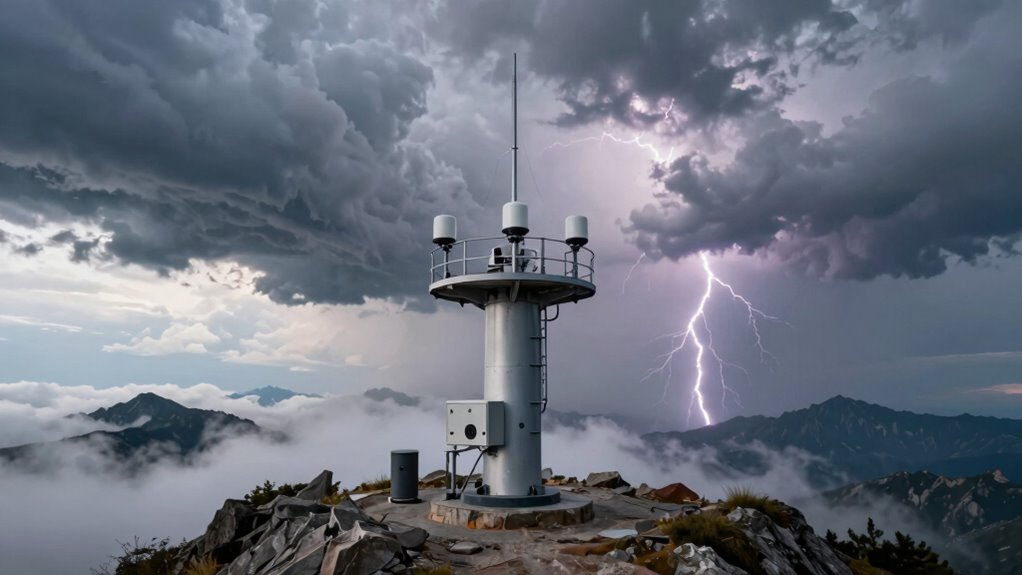

Weather data forms the backbone of AI climate automation by enabling smarter energy management, disaster prediction, and infrastructure resilience. Accurate, real-time weather information helps you optimize renewable energy sources like solar and wind, preventing reliance on fossil fuels. It also improves AI’s ability to forecast extreme weather events early, allowing quicker responses. By enhancing data quality and granularity, you can make proactive decisions to adapt to climate challenges more effectively. There’s much more to uncover about how this essential data drives climate solutions.

Get home appliances delivered free with Prime
- Fast, free delivery on millions of items
- Prime Video, Amazon Music and more included
- Member-only deals all year
Key Takeaways
- Weather data enables AI to optimize renewable energy use and ensure grid stability through real-time analysis of weather patterns.
- Accurate weather forecasts improve disaster prediction and enable timely response to extreme events.
- High-quality, granular weather data enhances the precision of climate models and targeted emergency planning.
- AI utilizes weather insights for infrastructure resilience and operational adjustments during weather variability.
- Continuous improvements in weather data collection support proactive climate automation and community resilience efforts.

Weather data plays an essential role in shaping how AI systems automate climate management today. When you harness accurate and real-time weather information, you enable smarter decision-making that benefits both energy systems and disaster preparedness. For instance, AI algorithms analyze weather patterns to optimize renewable integration, ensuring that solar and wind power contribute efficiently to the grid. By predicting fluctuations in sunlight or wind speed, these systems adjust energy storage and distribution, reducing reliance on fossil fuels and promoting cleaner energy sources. This seamless integration of renewables depends heavily on high-quality weather data, allowing you to maximize renewable energy output while maintaining grid stability.
Furthermore, weather data empowers AI to forecast extreme events with greater precision. Disaster prediction becomes more accurate as machine learning models analyze historical and current weather patterns to identify early warning signs of hurricanes, floods, or heatwaves. With this capability, you can take proactive measures, such as issuing timely evacuations or deploying emergency resources, potentially saving lives and minimizing property damage. AI-driven disaster prediction relies on detailed weather information gathered from satellites, sensors, and weather stations, which feeds into complex models that detect subtle changes signaling an impending crisis. Additionally, advanced data acquisition techniques contribute to the continuous improvement of weather datasets, enhancing prediction accuracy and response times. Incorporating real-time data collection** further ensures that AI systems remain responsive to dynamic weather conditions, improving overall prediction reliability. As the quality and granularity of weather data improve, so does the precision of AI-driven forecasts, enabling more targeted and effective responses. The integration of climate data analysis** helps refine predictive models, making them more adaptable to changing climate patterns.
Your ability to respond swiftly and effectively hinges on the quality of weather data integrated into these AI systems. Accurate forecasts allow you to plan infrastructure resilience strategies, adjust operational procedures, and allocate resources efficiently. For example, in managing energy grids, AI can forecast periods of low renewable generation caused by weather variability and suggest alternative power sources or demand-side management strategies. These insights help you reduce outages and maintain stability during unpredictable weather events. Similarly, in disaster scenarios, early alerts based on weather predictions enable you to activate emergency protocols well before conditions worsen.
In addition, high-quality weather data enhances the accuracy of machine learning models used in climate automation, ensuring more reliable predictions and responses. In essence, weather data acts as the backbone of AI-driven climate automation. It provides the critical input needed for renewable integration efforts and disaster prediction models, guiding you toward more sustainable and resilient communities. As technology advances, the accuracy and granularity of weather data will improve, further enhancing your capacity to adapt to climate challenges. By continuously refining data collection and analysis methods, you can stay ahead of weather-related risks, ensuring a safer environment and a more efficient energy future. Your proactive approach, fueled by precise weather insights, ultimately helps create a climate-conscious society capable of mitigating the impacts of a changing world.
As an affiliate, we earn on qualifying purchases.
Frequently Asked Questions
How Accurate Is Weather Data for Long-Term Climate Predictions?
Weather data’s accuracy for long-term climate predictions depends on how well you incorporate historical trends and data calibration. While short-term forecasts are quite precise, long-term predictions are more uncertain, especially if data isn’t properly calibrated to account for changing climate patterns. You can improve accuracy by continuously updating models with recent data and analyzing historical trends to identify shifts, helping your predictions become more reliable over time.
What Are the Challenges in Integrating Weather Data With AI Systems?
You face challenges in integrating weather data with AI systems, balancing precision and consistency. Sensor calibration is vital to guarantee data accuracy, while data standardization helps merge diverse sources seamlessly. The juxtaposition of raw, uncalibrated data against standardized, calibrated inputs highlights the complexity. Overcoming these hurdles requires meticulous calibration and uniform data formats, enabling AI to interpret weather patterns effectively and inform climate automation strategies reliably.
How Does Weather Data Impact Renewable Energy Management?
Weather data crucially impacts renewable energy management by enabling accurate weather forecasting, which helps you predict energy production. You can optimize resource allocation and maintenance schedules accordingly. Data calibration ensures these forecasts stay precise, accounting for local variations and sensor errors. By integrating calibrated weather data into AI systems, you improve decision-making, reduce downtime, and maximize energy efficiency, making your renewable energy operations more reliable and sustainable.
Can Weather Data Help Predict Extreme Climate Events More Effectively?
A stitch in time saves nine, and weather data can help you predict extreme climate events more effectively. By analyzing data from weather sensors, you improve your ability to anticipate sudden storms or heatwaves. Reliable data is essential; if you trust your sources, you’ll make better decisions. Enhanced data reliability means more accurate predictions, giving you the edge to prepare and respond swiftly to climate extremes.
What Are the Privacy Concerns Related to Weather Data Collection?
You might worry about privacy concerns when collecting weather data, especially if personal information is involved. To address this, data anonymization guarantees individual identities stay protected. Additionally, implementing clear consent mechanisms allows you to inform users about data collection and obtain their approval. These steps help balance valuable weather insights with privacy rights, fostering trust and responsible data handling in climate automation efforts.
As an affiliate, we earn on qualifying purchases.
Conclusion
By harnessing weather data, you can discover the full potential of AI climate automation, turning complex patterns into clear, actionable insights. Think of weather data as the compass guiding your AI ship through turbulent climate seas—without it, you risk losing your way. With accurate data fueling your systems, you become better equipped to predict, adapt, and thrive amid changing conditions. In this journey, weather data is your lighthouse, illuminating the path toward a smarter, more resilient future.
As an affiliate, we earn on qualifying purchases.
As an affiliate, we earn on qualifying purchases.
NFL season / tailgating Picks
team gear
As an affiliate, we earn on qualifying purchases.