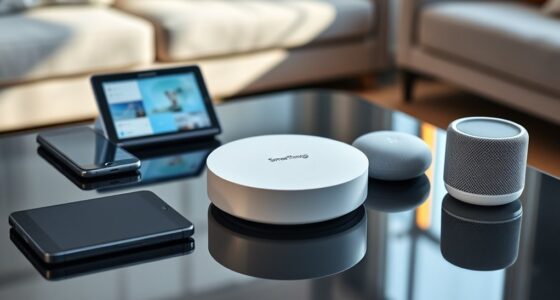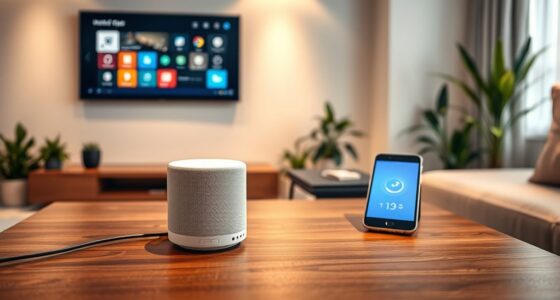

To update your smart home device firmware, first check for updates through the device’s app or manufacturer’s website. Enable automatic updates if available, or manually download the correct firmware version and follow the manufacturer’s instructions carefully. Connect your device as needed and install the update to guarantee it’s secure and functioning at its best. Staying proactive with firmware maintenance helps prevent issues—continue with us to discover more tips for seamless updates.
Key Takeaways
- Use dedicated apps or manufacturer websites to check for available firmware updates.
- Follow manufacturer instructions carefully to download and install firmware updates correctly.
- Enable automatic updates if supported, and schedule regular manual checks for new firmware.
- Connect devices to your computer via USB or Ethernet as recommended during manual updates.
- Regularly perform firmware maintenance to enhance security, performance, and device compatibility.

Keeping your smart home devices up to date is essential for ensuring they function smoothly and securely. Firmware updates fix bugs, improve performance, add new features, and patch security vulnerabilities that could be exploited by hackers. Ignoring these updates can leave your devices vulnerable and may cause them to malfunction or become incompatible with other smart home components. Staying current with firmware versions is a simple yet critical step in maintaining a safe and efficient smart home system.
Regularly updating your smart home devices ensures optimal security and performance.
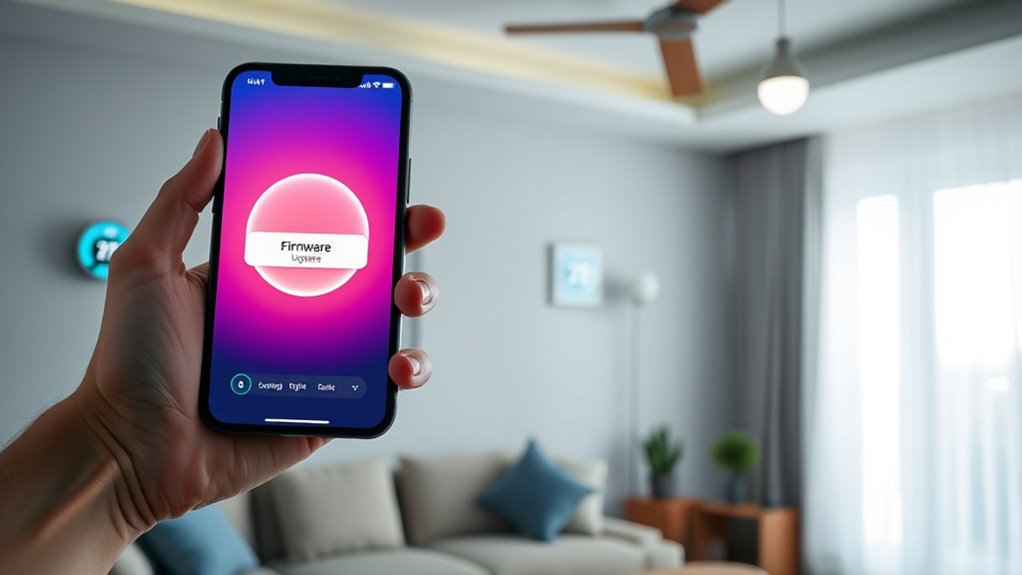
To get started, check if your device has a dedicated app or a web portal. Most smart home manufacturers provide a mobile app that allows you to manage and update your devices easily. Open the app and navigate to the device or device management section. Many apps will automatically notify you when a firmware update is available, but it’s a good habit to check manually from time to time. Look for a “Firmware Update” or “Device Update” option within the app’s menu. If an update is available, follow the prompts to download and install it. These updates often take only a few minutes, so it’s best to do them when you don’t need immediate access to the device.
If your device doesn’t have an app or you prefer a more direct approach, visit the manufacturer’s website. Many companies provide instructions or downloadable firmware files for manual updates. Before proceeding, make sure you download the correct firmware version specific to your device model. Carefully read any instructions provided, as improper installation can cause issues or brick the device. Connect your device to your computer using the recommended method—often via USB or Ethernet—and follow the manufacturer’s instructions to upload the firmware. This process can vary considerably between devices, so paying close attention to the instructions is essential.
Some smart home devices, like routers or hubs, may also support automatic firmware updates. If your device has this feature, enable it to guarantee you’re always running the latest version without manual intervention. Regularly checking for updates, even if automatic updates are enabled, guarantees that you won’t miss any critical patches or features. As a best practice, schedule a monthly or quarterly check to keep everything current.
In addition, consider setting aside time to update your entire smart home ecosystem periodically. Firmware updates are a key part of maintaining security, performance, and compatibility. By staying proactive and attentive to these updates, you help safeguard your home and keep your smart devices operating at their best. Regular firmware maintenance ensures ongoing device security and optimal function.
smart home device firmware updater
As an affiliate, we earn on qualifying purchases.
As an affiliate, we earn on qualifying purchases.
Frequently Asked Questions
Can I Update Firmware Without an Internet Connection?
Yes, you can update firmware without an internet connection if you have the update file saved locally. Typically, you download the firmware on another device with internet access, transfer it via USB or SD card, and then install it on your smart device. Make sure to follow the manufacturer’s instructions carefully to avoid any issues. Keep in mind, though, that some updates may still require an internet connection for activation or verification.
How Long Does a Typical Firmware Update Take?
A typical firmware update usually takes just a few minutes, but it can sometimes stretch to 15 or 20 minutes if it’s a major upgrade. You might feel like it’s taking forever, but don’t worry — it’s worth the wait! Make sure your device stays plugged in and connected to the internet. Rushing during an update can cause problems, so patience is key to keeping your smart home running smoothly.
Will Updating Firmware Erase My Device Settings?
Updating your device’s firmware usually doesn’t erase your settings, but it can sometimes reset certain preferences or configurations. To be safe, back up your settings if possible before updating. During the process, avoid unplugging or turning off the device. Once the update finishes, check your preferences and reconfigure any settings if needed. Most updates aim to improve performance without affecting user data, but caution helps prevent surprises.
Is There a Risk of Bricking My Device During Update?
You’re walking a tightrope, but with careful steps, you won’t fall. The risk of bricking your device during an update is low if you follow manufacturer instructions precisely. Avoid interruptions like power outages or disconnecting Wi-Fi mid-update. Keeping your device plugged in and ensuring a stable connection acts as your safety net. Most updates are like a gentle tide—gradual and safe when handled carefully.
How Often Should I Check for Firmware Updates?
You should check for firmware updates at least once a month to guarantee your smart home devices stay secure and run smoothly. Regular updates fix bugs, improve performance, and add new features. Keep an eye on the manufacturer’s app or website for notifications. If you notice issues or vulnerabilities, check more frequently. Staying proactive helps prevent problems and keeps your devices functioning at their best.
USB firmware update tool for smart devices
As an affiliate, we earn on qualifying purchases.
As an affiliate, we earn on qualifying purchases.
Conclusion
Now that you know how to update your smart home devices, imagine them all feeling spry and rejuvenated, like tiny robots hitting the gym. No more sluggish lights or unresponsive thermostats—just a harmonious, tech-powered symphony. So go ahead, press that update button and let your gadgets shed their digital wrinkles. Before long, your smart home will be so up-to-date, it might just start giving you advice on how to live your best life.

Kasa Smart Plug HS103P2, Smart Home Wi-Fi Outlet Works with Alexa, Echo, Google Home & IFTTT, No Hub Required, Remote Control,15 Amp,UL Certified, (Pack of 2) White
Voice Control: Add voice control to any outlet. Enjoy the hands-free convenience of controlling any home electronic appliances…
As an affiliate, we earn on qualifying purchases.
As an affiliate, we earn on qualifying purchases.

Linkind Matter Smart Plug, Work with Apple Home, Siri, Alexa, Google, SmartThings, Smart Home Smart Outlet Timer 15A/1800W, APP Remote Control & Schedule, 2.4G Wi-Fi Only, 4 Pack
【Easy Setup, One Control】With Matter, Skip the step of downloading and registering multiple manufacturers' apps every time you…
As an affiliate, we earn on qualifying purchases.
As an affiliate, we earn on qualifying purchases.