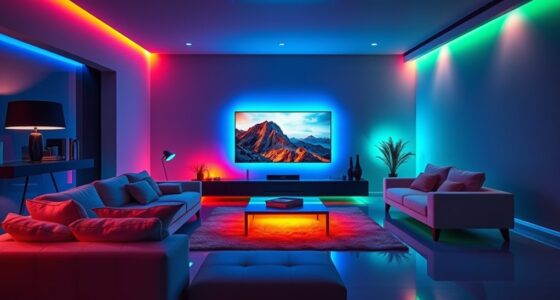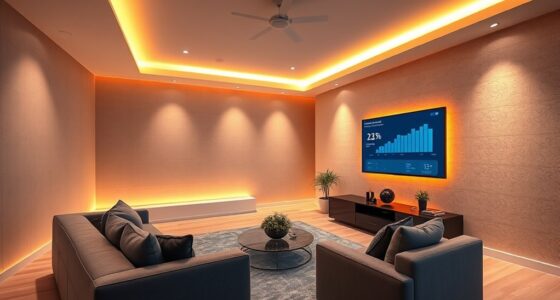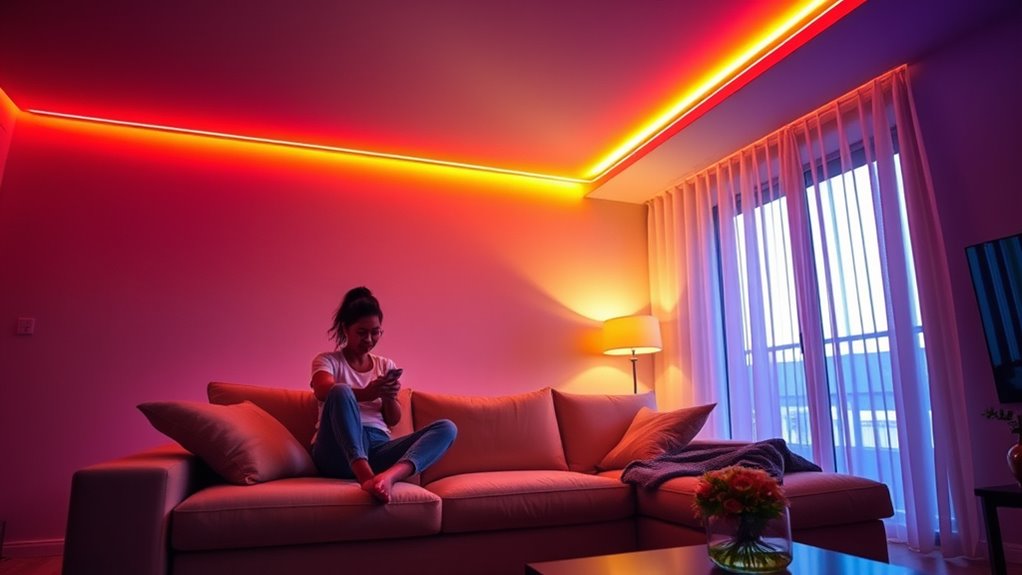

You can upgrade your home’s lights on a budget by choosing affordable smart bulbs that fit existing fixtures, especially ENERGY STAR-certified options for savings. Reuse vintage fixtures or transform old lamps with smart bulbs for easy upgrades. Use free apps to create custom scenes and adjust brightness or color, and add DIY diffusers or covers to soften lighting. For more tips on building a stylish, budget-friendly smart home, keep exploring ways to expand and maintain your system effectively.
Key Takeaways
- Reuse vintage fixtures and lamps with smart bulbs or adapters for cost-effective upgrades.
- Add DIY diffusers using materials like frosted acrylic or fabric to soften harsh LED light.
- Use free apps or voice assistants to create custom lighting scenes and automate ambiance.
- Install affordable, energy-efficient smart bulbs compatible with existing fixtures for easy upgrades.
- Regularly update firmware and maintain the system to ensure security, performance, and compatibility.

Sylvania WiFi LED Smart A19 Light Bulb, 7.5W Efficient with Filament, for Alexa/Google Assistant, Energy Star, Clear, 2700K, Soft White – 1 Pack (75797)
Designer Lighting: This clear A19 filament smart bulb emits a soft color of 2700K. Easily create the perfect…
As an affiliate, we earn on qualifying purchases.
As an affiliate, we earn on qualifying purchases.
Choosing Affordable Smart Lighting Devices
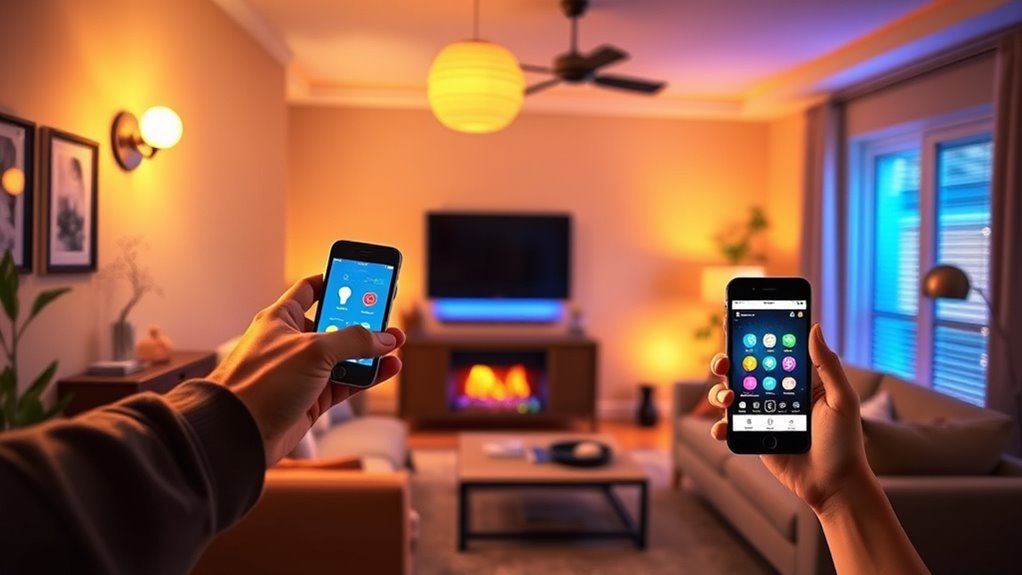
When choosing affordable smart lighting devices, it’s important to prioritize features that fit your needs without overspending. Focus on energy efficiency, as it helps save money on your electricity bill and reduces environmental impact. Look for bulbs and fixtures with good energy ratings, like ENERGY STAR-certified options, to maximize savings. Comparing brands can help you find reliable devices that offer quality at a lower price point. Read reviews and check for compatibility with your existing smart home system to ensure smooth integration. Don’t just choose the cheapest option—balance affordability with durability and functionality. By doing thorough brand comparisons, you’ll identify smart lighting solutions that meet your budget and performance expectations, making your home both smarter and more efficient. Additionally, understanding the color temperature of your lighting can significantly impact the ambiance and functionality of your space. Incorporating energy-efficient technology is also essential in creating a sustainable and cost-effective smart lighting setup. Knowing about smart home ecosystem compatibility can help you select devices that integrate seamlessly with your existing systems for a cohesive smart home experience. Exploring lighting control options can also enhance convenience and customization in your lighting setup. Being aware of vetted wave and wind sources can further ensure your smart lighting system remains reliable and protected from environmental factors.

COB LED Strip Lights 12V,6-in-1 Door Sensor Control Under Cabinet Lighting Kit with 60W Adapter 6.56Ft Flexible LED Tape Light for DIY Wardrobe, Shoe Racks, Display Cabinets, Kitchen Cabinets
✔️【High Density COB LED Strip】:320pcs LEDs per meter, dense number of lamp beads, providing uniform and bright warm…
As an affiliate, we earn on qualifying purchases.
As an affiliate, we earn on qualifying purchases.
Reusing and Repurposing Existing Fixtures

Have you considered reusing or repurposing your existing fixtures to upgrade your smart lighting? Vintage fixtures can add character and charm while saving you money. You might transform an old chandelier into a smart-ready centerpiece by installing smart bulbs or adapters. Repurposed lamps are another budget-friendly option; for example, a vintage desk lamp can be fitted with a smart bulb socket, turning it into a convenient smart light. This approach not only reduces waste but also allows you to maintain your home’s unique style. By creatively repurposing fixtures, you avoid the cost of new installations and give your lighting a personalized touch. With some basic tools and smart bulbs, your existing fixtures become functional, modern, and smart-powered. Additionally, ensuring proper heat distribution and compatibility can help prolong the lifespan of your upgraded lighting setup. Choosing fixtures made from durable materials can further enhance longevity and safety, which is especially important for long-term safety and maintenance. Incorporating knowledge from Gold IRA markets can inspire creative ideas for upcycling and customizing fixtures to reflect your personal style.
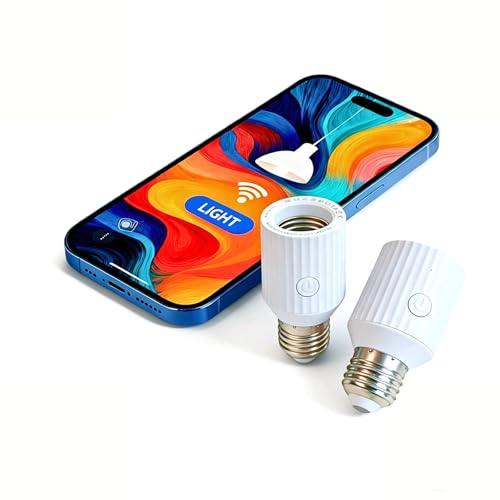
LoraTap Smart Wi-Fi Light Bulb Socket Adapter, Voice for Alexa/Google, Smart Life App Group & Timer, 60W Max, Incandescent Compatible, E26/E27, 2 Pack
Voice Control: Works with Amazon Alexa (Echo/Dot/Tap) and Google Assistant. Say “Alexa, turn on the lamp” for hands-free…
As an affiliate, we earn on qualifying purchases.
As an affiliate, we earn on qualifying purchases.
Installing Smart Bulbs in Your Current Fixtures
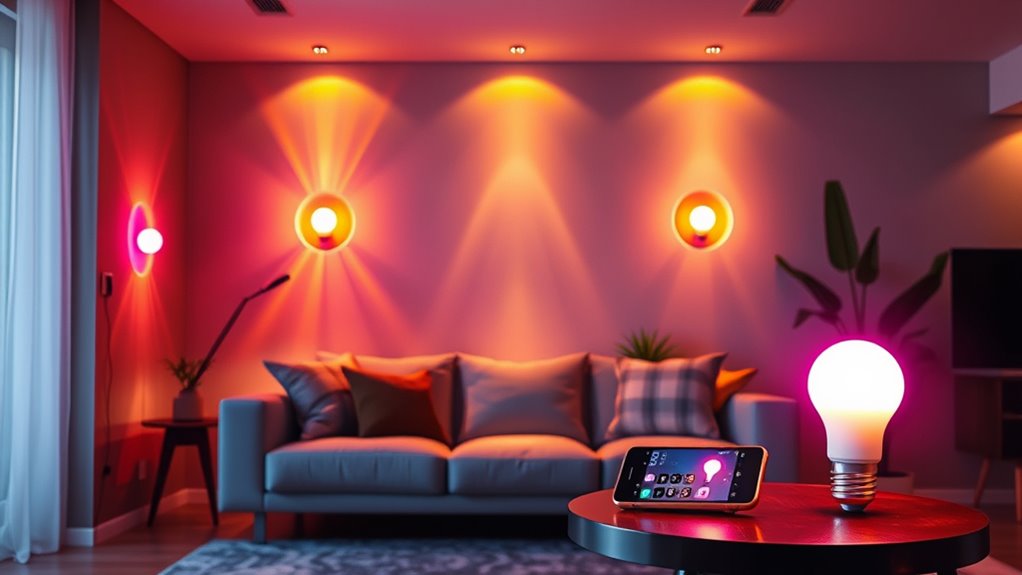
Installing smart bulbs directly into your existing fixtures offers a simple way to upgrade your lighting without extensive rewiring or new installations. Before purchasing, check fixture compatibility to verify the bulb fits and works properly. Many smart bulbs are designed to replace standard incandescent or LED bulbs, fitting standard sockets like E26 or E27. When choosing bulbs, consider the adjustable color temperature, which lets you customize your lighting from warm to cool tones, enhancing ambiance or productivity. Some smart bulbs also support dimming, giving you even more control. Installing is typically straightforward: turn off the power, remove your current bulb, and screw in the smart bulb. Once installed, connect the bulb to your Wi-Fi or hub, and you’re set to control your lighting remotely or with voice commands. fixture compatibility is essential to ensure your smart bulb will work correctly with your existing fixtures. Additionally, verifying the smart bulb’s wireless standards helps ensure reliable connectivity and seamless control.
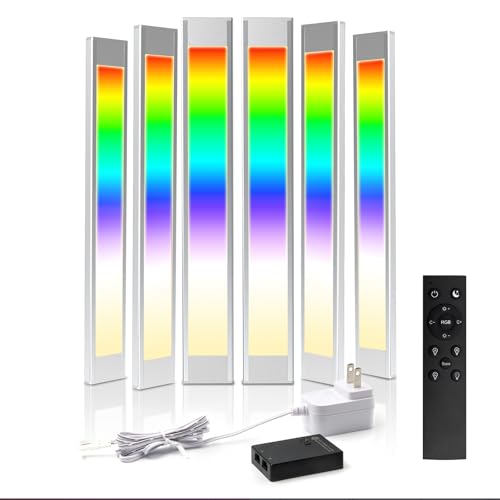
VST 6Pack RGB Under Cabinet Lighting with Adjustable White Light, Ultra-Thin LED Light Bars, APP & Voice Control (Alexa/Google), Remote & Button Control, Linkable Lights for Kitchen Cabinets, Shelves
【RGB Color Mode + Adjustable White Light for Any Mood or Task】Switch freely between vibrant RGB colors and…
As an affiliate, we earn on qualifying purchases.
As an affiliate, we earn on qualifying purchases.
Creating Custom Lighting Scenes With Free Apps
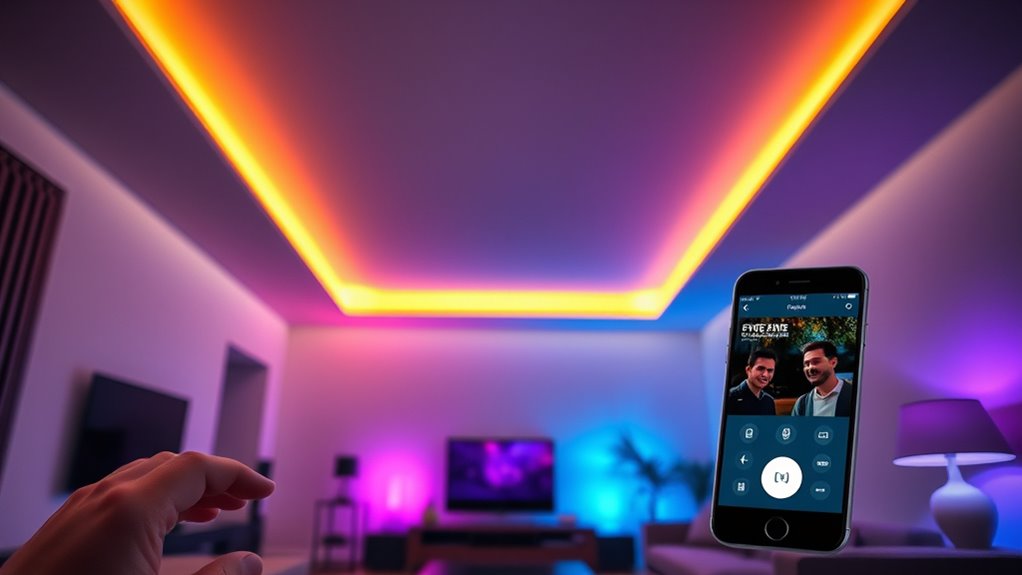
Creating custom lighting scenes with free apps allows you to easily tailor your smart lighting to suit different moods and activities. With these apps, you can set specific brightness levels, colors, and schedules for each scene, all accessible through an intuitive interface. Many free apps also support voice control, so you can activate your favorite lighting scenes hands-free, enhancing convenience. Additionally, some apps include energy monitoring features, giving you insights into your power consumption and helping you save on energy costs. You can create scenes for movie nights, relaxing evenings, or bright mornings, and switch between them effortlessly. This customization makes your smart lighting more functional and personalized, all without spending extra money on paid software. User privacy considerations are also integrated into many apps, ensuring your data remains protected while you enjoy your customized lighting experience. Moreover, understanding smart home integration can help you maximize the potential of your lighting setup for a more seamless experience. For example, many apps support automation features, enabling your lights to respond automatically to your daily routines or external conditions, such as circadian rhythms, to promote better sleep patterns. Exploring compatibility options can further enhance your smart home ecosystem by connecting multiple devices for unified control.
Enhancing Ambiance With DIY Light Diffusers and Covers

Adding DIY light diffusers and covers can substantially enhance the ambiance of your smart lighting setup. You can create soft, inviting light by using materials like frosted acrylic or fabric to cover your LED panel or fiber optic displays. These covers diffuse harsh light, making your space feel warmer and more inviting. For example, a simple paper lantern can transform a bright LED panel into a gentle glow. Or, you might craft a custom cover from translucent plastic to soften fiber optic lighting, creating a starry effect. You could also repurpose a lampshade to diffuse light from an LED panel, adding depth and warmth. Incorporating lighting customization options allows you to tailor the mood precisely to your preference, helping you achieve a more personalized lighting environment. Utilizing DIY lighting solutions enables you to experiment with different materials and designs, further enhancing your space’s ambiance without breaking the bank.
Tips for Maintaining and Expanding Your Budget Smart System

To keep your smart lighting system running smoothly, make sure you regularly update the firmware and apps. This not only improves performance but also keeps your system secure. You can expand your setup easily by integrating new devices as your needs grow. Ensuring compatibility with your existing networking hardware will help prevent connectivity issues and optimize system performance. Additionally, considering home energy management strategies can help you maximize efficiency and integrate your lighting with other smart devices for a seamless experience. Being aware of battery reconditioning techniques can also be beneficial if you rely on portable or backup power sources for your smart home devices. Incorporating system safety checks can further prevent potential hazards and extend the lifespan of your smart lighting system. Regularly performing power system maintenance can help identify issues early and ensure your entire setup remains reliable.
Regular System Updates
How often should you check for updates to keep your smart lighting system running smoothly? Regularly updating your firmware ensures your lighting automation stays secure and efficient. Staying current allows new features and improvements to enhance performance.
To maintain your system effectively, consider:
- Scheduling firmware updates monthly to fix bugs and improve stability
- Checking app notifications for alerts about new updates
- Ensuring your device’s firmware is compatible with your existing setup before expanding
Updates often include security patches and functionality enhancements, keeping your smart system reliable. Keeping firmware current also prevents compatibility issues when adding new devices. By staying on top of updates, you maximize your lighting automation’s potential and extend the system’s lifespan.
Integrate Additional Devices
Expanding your budget smart lighting system can be straightforward if you choose compatible devices and plan carefully. To enhance convenience, look for smart bulbs or switches that support voice control through Alexa, Google Assistant, or Siri. This allows you to control your lights hands-free and integrate them seamlessly into your daily routines. Additionally, consider devices with energy monitoring features; they help you track power consumption and identify ways to save on energy costs. When adding new components, make sure they’re compatible with your existing system to avoid connectivity issues. Regularly updating your device firmware can improve performance and security. By thoughtfully integrating voice control options and energy monitoring devices, you can maintain a flexible, efficient, and budget-friendly smart lighting setup that grows with your needs.
Frequently Asked Questions
How Do Smart Lighting Systems Impact Home Energy Consumption Long-Term?
Smart lighting systems can considerably reduce your long-term energy consumption by automatically adjusting brightness and scheduling lighting times, leading to energy savings. This not only lowers your utility bills but also lessens your environmental impact by reducing unnecessary energy use. As you optimize your system, you’ll notice sustainable benefits, making your home more eco-friendly while enjoying the convenience of modern lighting technology.
Are There Safety Concerns When Reusing Old Fixtures for Smart Bulbs?
Reusing old fixtures for smart bulbs can pose safety concerns if you don’t check fixture safety and electrical compatibility first. Make certain the fixture’s wiring and socket are in good condition and compatible with smart bulbs’ wattage and size. If the fixture is damaged or outdated, it’s safer to replace it. Always consult an electrician if you’re unsure, to prevent electrical hazards and ensure your smart lighting setup is safe.
Can DIY Smart Lighting Be Integrated With Existing Home Automation Systems?
Yes, you can integrate DIY smart lighting with your existing home automation system. Just make certain the smart bulbs or switches you choose are wireless compatible with your system, whether it’s Zigbee, Z-Wave, or Wi-Fi. Check the compatibility before buying, and follow the manufacturer’s instructions for seamless system integration. This way, you’ll enjoy centralized control and automation without needing a complete system overhaul.
What Are Cost-Effective Ways to Troubleshoot Smart Lighting Connectivity Issues?
You can troubleshoot smart lighting connectivity issues cost-effectively by first checking for Wi-Fi interference from other devices or thick walls blocking signals. Move your router closer to the lights or use signal boosting devices like range extenders. Restart your router and smart bulbs regularly to improve connection stability. Updating firmware and ensuring your home Wi-Fi network is secure can also help maintain a reliable connection, saving you money and frustration.
How Can I Ensure My DIY Smart Lighting Setup Remains Secure From Hacking?
Think of your smart lighting system as a castle; you’re the guardian. To keep hackers at bay, enable strong encryption protocols and update firmware regularly. Set strict access controls, like a moat around your castle, allowing only trusted devices. Change default passwords to unique, complex ones, and turn on two-factor authentication if available. These steps fortify your setup, ensuring only you hold the key to your illuminated kingdom.
Conclusion
By choosing affordable smart devices, reusing what you already have, and getting creative with DIY solutions, you can transform your home’s lighting without breaking the bank. As you experiment with apps and custom scenes, you’ll find your space becoming more inviting and personalized. It’s almost serendipitous how small tweaks and clever hacks can make a big difference. With a little effort and imagination, your smart lighting upgrade becomes a satisfying, budget-friendly journey—illuminating your home and your mood.