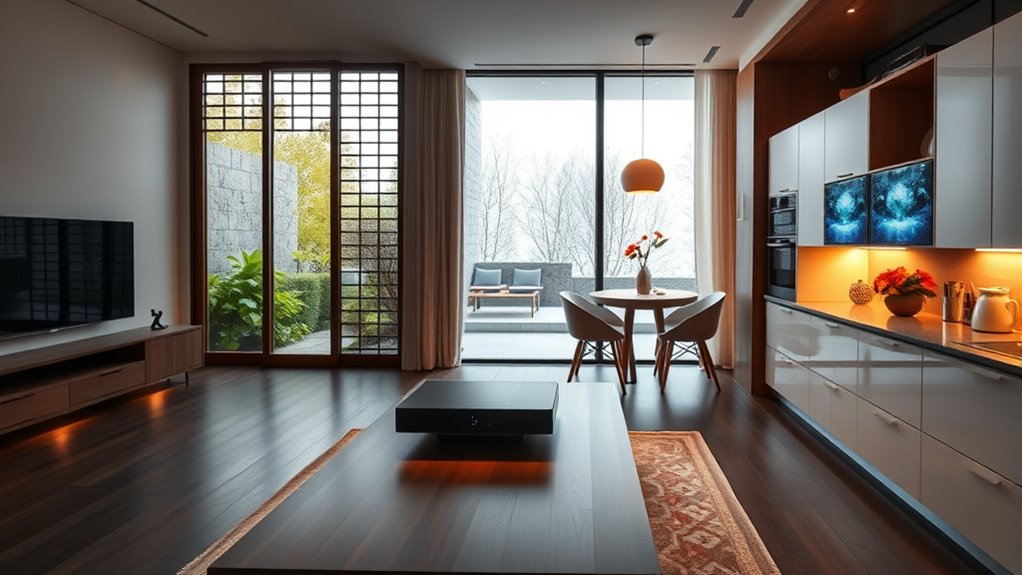

Around the world, smart homes are designed to fit regional cultures and needs. In Japan, you’ll find homes focused on automation and space efficiency, with hidden systems and voice control. Scandinavian countries prioritize energy-saving features and eco-friendly materials. In the US and Canada, security and entertainment take center stage, with advanced surveillance and integrated media systems. Each region adapts smart home tech to local values, making each home unique—keep exploring to discover more about these global differences.

Get home appliances delivered free with Prime
- Fast, free delivery on millions of items
- Prime Video, Amazon Music and more included
- Member-only deals all year
Key Takeaways
- Japan emphasizes automation and space efficiency, integrating hidden systems and voice control for a futuristic environment.
- Scandinavian countries prioritize energy efficiency, sustainability, and eco-friendly features like renewable energy integration and smart heating.
- The US and Canada focus on security, surveillance, and entertainment, with smart locks, cameras, and voice-controlled media systems.
- Regional adaptations reflect cultural values and infrastructure, tailoring features to local priorities like safety, energy, or space optimization.
- Despite regional differences, smart homes worldwide aim to enhance convenience, safety, and seamless device integration for a futuristic lifestyle.
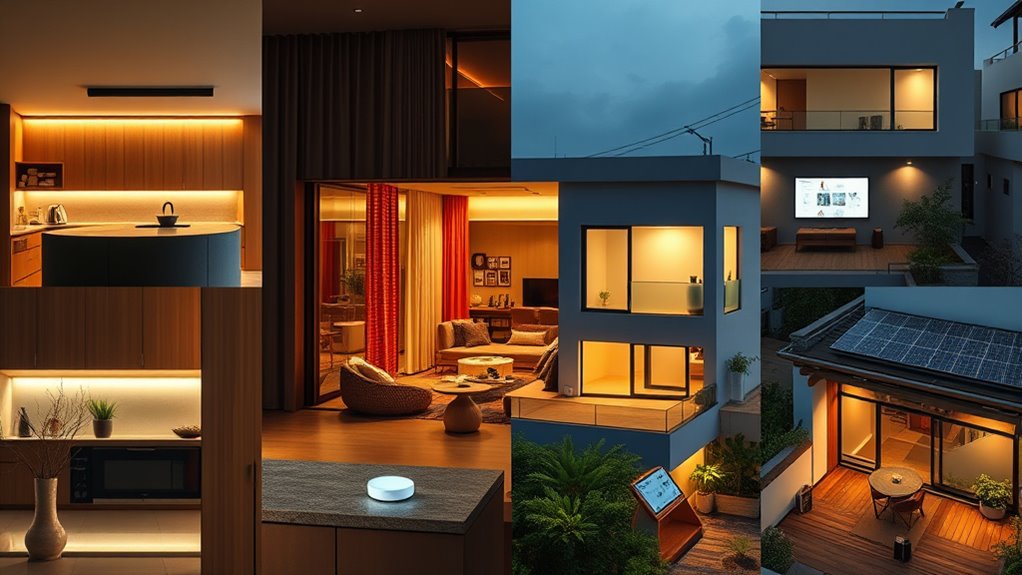
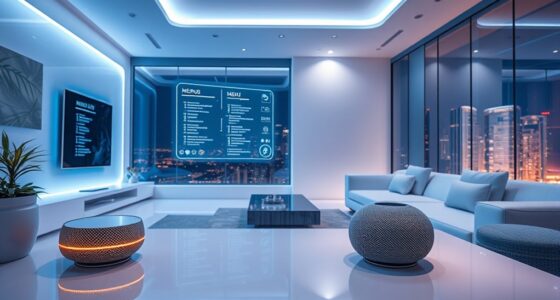
Have you ever wondered how smart homes are transforming daily living around the globe? In many countries, smart homes are evolving uniquely, shaped by local culture, infrastructure, and technological access. For example, in Japan, smart homes emphasize automation and space efficiency. Compact living spaces mean that you’ll find integrated systems that maximize every square inch, like hidden speakers and fold-away appliances, making your home more functional without sacrificing style. Voice assistants are common, allowing you to control lighting, climate, and appliances with simple commands, which is especially helpful in smaller homes where convenience is key. The focus here is on seamless integration, so your home feels both futuristic and efficient. Additionally, the adoption of European cloud servers enhances the security and reliability of these smart home systems, ensuring your data stays protected.
Smart homes in Japan focus on automation, space efficiency, and seamless integration for a stylish, futuristic living experience
In contrast, in Scandinavian countries like Sweden and Denmark, smart homes often prioritize energy efficiency and sustainability. You might notice that your smart home systems are heavily integrated with renewable energy sources and smart heating solutions. You could find that your home automatically adjusts temperatures based on your routines, reducing energy waste. Smart sensors monitor indoor air quality and humidity, ensuring a healthier living environment. These homes often feature sleek, minimalist designs, with technology subtly embedded into everyday objects, so you’re encouraged to live sustainably without feeling overwhelmed by tech. The emphasis is on creating a comfortable, eco-friendly space that aligns with environmental values.
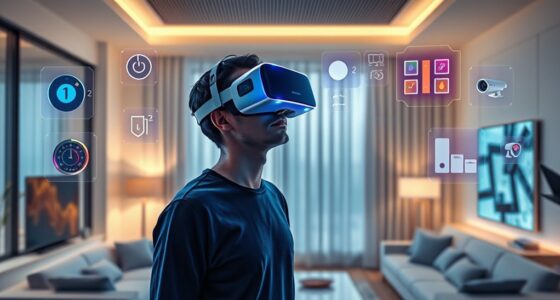
Moving to the United States and Canada, smart homes tend to focus on security and entertainment. You’ll find advanced surveillance systems, smart locks, and doorbell cameras that provide peace of mind. You can monitor your home remotely, receive alerts if anything unusual happens, and even grant access to visitors from your phone. Entertainment options are also a priority, with integrated lighting, surround sound systems, and voice-controlled streaming devices that turn your living room into a personal theater. These homes often feature a centralized hub where you can manage all your devices effortlessly, making daily routines more convenient and connected. The goal here is to enhance safety and leisure, creating a personalized, high-tech sanctuary.
Across different regions, the common thread is that smart homes adapt to local needs, but the core idea remains the same: making your life easier, safer, and more efficient. Whether it’s through automation, sustainability, or security, smart homes around the world are changing how you live, one innovative feature at a time. Each region’s approach reflects its unique priorities, but ultimately, they all aim to transform your daily routines into more seamless, comfortable experiences.
Japanese smart home automation systems
As an affiliate, we earn on qualifying purchases.
As an affiliate, we earn on qualifying purchases.
Frequently Asked Questions
How Do Smart Home Regulations Vary Across Different Countries?
Smart home regulations vary widely across countries. You’ll find strict privacy laws in the EU that limit data sharing, while the US emphasizes cybersecurity standards for connected devices. In some nations, government approvals are needed for new tech, whereas others have more relaxed rules. You must stay informed about local regulations to make sure your smart home complies, especially when installing new devices or sharing data internationally.
What Are the Cultural Preferences Influencing Smart Home Features Worldwide?
You prioritize features that reflect your cultural values, whether that’s privacy, security, or energy efficiency. In some countries, you might focus on advanced automation and luxury, while in others, affordability and practicality matter most. Your preferences are shaped by local customs, traditions, and societal norms, influencing which smart home technologies you adopt. Cultural attitudes toward technology and privacy directly impact the types of smart features you find most appealing.
How Do Global Energy Policies Impact Smart Home Technology Adoption?
Global energy policies act like a compass, guiding how quickly you adopt smart home tech. When policies promote renewable energy and energy efficiency, you’re more likely to see incentives and regulations that encourage smart device use. Conversely, strict regulations or high energy costs can slow adoption. By aligning with these policies, you can save money and reduce your environmental impact, making your smart home smarter and more sustainable.
What Are the Common Security Concerns for Smart Homes Internationally?
You should be aware that common security concerns for smart homes internationally include unauthorized access, data breaches, and hacking. Cybercriminals often target connected devices like cameras, locks, and thermostats. To protect yourself, make sure your devices have strong, unique passwords, keep firmware updated, and use secure Wi-Fi networks. Being vigilant about privacy settings and regularly monitoring device activity helps safeguard your smart home from potential threats.
How Does Internet Infrastructure Affect Smart Home Connectivity Globally?
Did you know that over 87% of households in developed countries have high-speed internet, which notably boosts smart home connectivity? Without reliable internet infrastructure, your smart devices may experience lag or dropouts, limiting their effectiveness. In regions with slower or unstable connections, smart homes can’t function seamlessly, making you more vulnerable to security risks or inconveniences. So, strong, consistent internet is essential for a fully integrated, efficient smart home experience worldwide.
energy-efficient smart heating Scandinavian homes
As an affiliate, we earn on qualifying purchases.
As an affiliate, we earn on qualifying purchases.
Conclusion
Imagine stepping into a smart home that feels like a global village—each device a different language, yet all working together seamlessly. Just like a well-orchestrated symphony, smart homes around the world blend local culture with cutting-edge tech, creating personalized comfort no matter where you are. As you travel or settle in somewhere new, these homes adapt to your needs, proving that, no matter the country, technology can turn any house into a truly intelligent home.
smart security cameras for US homes
As an affiliate, we earn on qualifying purchases.
As an affiliate, we earn on qualifying purchases.
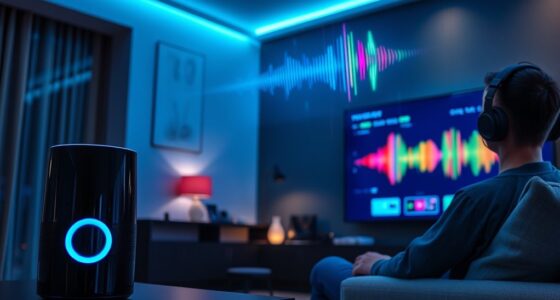
voice-controlled media systems for smart homes
As an affiliate, we earn on qualifying purchases.
As an affiliate, we earn on qualifying purchases.
Cold & flu season Picks
humidifiers
As an affiliate, we earn on qualifying purchases.