For most households, I’d start with the ecobee Smart Thermostat Enhanced, which balances scheduling, remote control, and comfort features; the Amazon Smart Thermostat is a simpler alternative, while the ecobee Smart Thermostat Premium suits buyers who want a richer sensor-based setup. The main choice is between a straightforward thermostat that covers everyday scheduling and a more capable system with added sensors or integrations. HVAC compatibility matters just as much: some models need a C-wire or work only with specific system types. Read on for my full comparison of 15 smart thermostats for home use, including which buyers should skip each option.

Get home appliances delivered free with Prime
- Fast, free delivery on millions of items
- Prime Video, Amazon Music and more included
- Member-only deals all year
Complete the kit


Key Takeaways
- ecobee Smart Thermostat Enhanced leads the lineup for buyers seeking a balance of everyday control and added comfort features, while the Premium model is the step-up pick for a more sensor-focused setup.
- Amazon Smart Thermostat and ecobee Smart Thermostat Essential are simpler choices for buyers who prefer core smart scheduling over a more elaborate feature set.
- The Sensi ST55 and Sensi Lite ST25 make DIY installation and app-based control central to their appeal, but buyers still need to check wiring and HVAC compatibility.
- The two Google Nest Thermostat listings differ by finish, not by their stated core product identity; choose between Snow and Charcoal based on room style rather than assuming a feature difference.
- The Amazon two-pack is the lineup’s multi-zone-oriented option, while color touchscreen amazon.com/dp/B08J4C8871?tag=theintellihome-20&ascsubtag=dc-1247680″ target=”_blank” rel=”nofollow sponsored noopener”>amazon.com/dp/B0DSGGCGG4?tag=theintellihome-20&ascsubtag=dc-1247680″ target=”_blank” rel=”nofollow sponsored noopener”>Honeywell models and the Vine large-knob model prioritize distinct interfaces over the simplest, smallest setup.
| Sensi Smart Thermostat, Wi-Fi, DIY, Alexa, Energy Star Certified, ST55 |  | Best Overall for DIY Flexibility | Model: ST55 | Connectivity: Wi-Fi | Supported systems: Air conditioner, boiler, furnace, and heat pump | VIEW LATEST PRICE | See Our Full Breakdown |
| Sensi Lite Smart Thermostat, WiFi, Alexa, DIY, Energy Star Certified, ST25 | 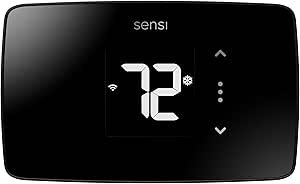 | Best Value for Straightforward Scheduling | Model: ST25 | Connectivity: Wi-Fi | Supported systems: Air conditioner, boiler, furnace, and heat pump | VIEW LATEST PRICE | See Our Full Breakdown |
| Vine Smart Thermostat with Large Knob, WiFi, Nightlight, Compatible with Alexa & Google Assistant |  | Best for Hands-On Controls | Connectivity: Wi-Fi | Supported systems: Air conditioner, furnace, and heat pump | Smart-home compatibility: Amazon Alexa and Google Assistant | VIEW LATEST PRICE | See Our Full Breakdown |
| ecobee Smart Thermostat Enhanced, Programmable Wi-Fi Thermostat |  | Best for Occupancy-Based Comfort | Connectivity: Wi-Fi | Supported systems: Air conditioner, boiler, furnace, heat pump, and humidifier | Smart-home compatibility: Amazon Alexa, Apple HomeKit, Google Assistant, and Siri | VIEW LATEST PRICE | See Our Full Breakdown |
| Honeywell Home X2S Smart Wi-Fi Thermostat, White |  | Best for Matter Smart-Home Integration | Connectivity: Wi-Fi and Matter | Listed system use: Heat pump | Smart-home compatibility: Amazon Alexa, Google Assistant, and Apple HomeKit | VIEW LATEST PRICE | See Our Full Breakdown |
| Amazon Smart Thermostat |  | Best for Alexa Homes | Dimensions: 3.56 x 3.56 x 0.84 in | Weight: 3.86 oz | HVAC compatibility: Most 24V HVAC systems | VIEW LATEST PRICE | See Our Full Breakdown |
| Honeywell Home T5 Smart Wi-Fi Thermostat |  | Best for Geofencing | System uses: Air conditioner, furnace, and heat pump | Power: 24V; C-wire adapter needed for some systems | Connectivity: Wi-Fi | VIEW LATEST PRICE | See Our Full Breakdown |
| Google Nest Thermostat – Smart Wi-Fi Programmable Thermostat for Home – Snow |  | Best for HVAC Monitoring | System use: Heating and cooling; heat pump use listed | Power: Battery powered; some systems may need a C-wire or power accessory | Connectivity: Wi-Fi | VIEW LATEST PRICE | See Our Full Breakdown |
| Amazon Smart Thermostat – Pack of 2 | | Best for Multi-Zone Alexa Homes | Pack size: 2 thermostats | Wiring: C-wire required | Smart-home compatibility: Alexa and Ring | VIEW LATEST PRICE | See Our Full Breakdown |
| WiFi Smart Thermostat for Single-Stage Heating and Cooling, APP Remote Control, 7-Day Programmable, C-Wire Required |  | Best for Basic Single-Stage Systems | HVAC compatibility: Conventional single-stage 1 heat / 1 cool systems | Supported fuel types: Gas, oil, and electric | Wiring: C-wire required; RH, RC, W, Y, G, C terminals | VIEW LATEST PRICE | See Our Full Breakdown |
| Honeywell Home RTH9600WF Smart Color Thermostat |  | Best for Customizable On-Wall Controls | Connectivity: Wi-Fi | Display: LCD color touchscreen | Voice and platform compatibility: Amazon Alexa, Google Assistant, Android, iOS, and IFTTT | VIEW LATEST PRICE | See Our Full Breakdown |
| ecobee Smart Thermostat Premium |  | Best Premium Room-by-Room Comfort | Room sensing: SmartSensor included | Air-quality monitoring: Built-in monitor | Voice assistants: Siri and Alexa built in | VIEW LATEST PRICE | See Our Full Breakdown |
| Google Nest Thermostat – Charcoal | 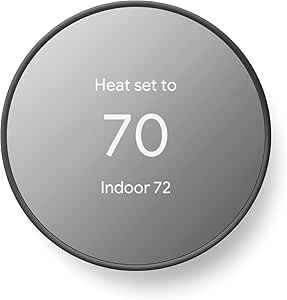 | Best for Automatic Away Adjustments | Connectivity: Wi-Fi and Bluetooth | Display: 2-inch LCD | Control: Google Home app, remote control, and compatible voice control | VIEW LATEST PRICE | See Our Full Breakdown |
| Honeywell Home RTH9585WF1004 Wi-Fi Smart Color Thermostat |  | Best for Seven-Day Scheduling | Connectivity: Wi-Fi | Display: LED customizable color touchscreen | Programming: 7-day programmable | VIEW LATEST PRICE | See Our Full Breakdown |
| ecobee Smart Thermostat Essential |  | Best Value ecobee Entry Point | Connectivity: Wi-Fi | Display: 3.74-inch LCD touchscreen | Smart-home compatibility: Apple HomeKit, Google Assistant, and Alexa | VIEW LATEST PRICE | See Our Full Breakdown |
| smart thermostats for home | Display | Power | Connectivity | Mounting |
|---|---|---|---|---|
| Sensi Smart Thermostat | 5-inch LED | 24 VAC; two included AA batteries | Wi-Fi | Wall mount |
| Sensi Lite Smart Thermostat | LCD | Battery or C-wire; two included AAA batteries | Wi-Fi | — |
| Vine Smart Thermostat with Lar | 3.5-inch LCD touchscreen | Hardwired; C-wire required | Wi-Fi | Wall mount |
| ecobee Smart Thermostat Enhanc | 4-inch LCD | 24 volts; corded electric | Wi-Fi | Wall mount |
| Honeywell Home X2S Smart Wi-Fi | LCD | Corded electric; C-wire required | Wi-Fi and Matter | — |
| Amazon Smart Thermostat | — | — | — | — |
| Honeywell Home T5 Smart Wi-Fi | 4.95-inch LCD | 24V; C-wire adapter needed for some systems | Wi-Fi | Wall mount |
| Google Nest Thermostat | LCD, 1.07-inch screen | Battery powered; some systems may need a C-wire or power accessory | Wi-Fi | — |
| Amazon Smart Thermostat | — | — | — | — |
| WiFi Smart Thermostat for Sing | Backlit LCD | 24V AC, corded electric | — | — |
| Honeywell Home RTH9600WF Smart | LCD color touchscreen | 24 volts; C-wire required | Wi-Fi | Wall mount |
| ecobee Smart Thermostat Premiu | — | — | — | — |
| Google Nest Thermostat | 2-inch LCD | Battery powered; two included batteries | Wi-Fi and Bluetooth | Wall mount |
| Honeywell Home RTH9585WF1004 W | LED customizable color touchscreen | AC; C-wire required | Wi-Fi | Wall mount |
| ecobee Smart Thermostat Essent | 3.74-inch LCD touchscreen | Battery powered; optional Power Extender Kit listed for homes without a C-wire | Wi-Fi | Wall mount |
More Details on Our Top Picks
Sensi Smart Thermostat, Wi-Fi, DIY, Alexa, Energy Star Certified, ST55
I’d put the Sensi ST55 first for households that want app-based control without committing to a more elaborate smart-home setup. Its guided DIY installation, programmable schedules, usage reports, and maintenance alerts cover the essentials of managing home heating and cooling, while support for Alexa, Google Assistant, Apple HomeKit, SmartThings, and Vera gives it broader platform reach than the Sensi Lite ST25. That flexibility makes it a stronger fit for homes with mixed smart devices. The tradeoff is that it still depends on Wi-Fi for remote features, and installation may take patience if your wiring or HVAC setup is unfamiliar. Unlike the dial-focused Vine thermostat, this Sensi emphasizes app and voice control over a prominent physical knob. I’d choose it for practical connected control rather than a display-led experience.
Pros:- App-guided DIY installation is designed to make setup more approachable.
- Works with Alexa, Google Assistant, Apple HomeKit, SmartThings, and Vera.
- Usage reports and maintenance alerts help track HVAC operation and filter needs.
- Supports programmable schedules and remote app control.
Cons:- Remote features depend on a working Wi-Fi connection.
- Installation can be challenging for buyers unfamiliar with thermostat wiring.
- Its LED display and app-centered controls offer less of a large-screen interface than some alternatives.
Best for: Homeowners who want a DIY-friendly programmable thermostat with broad voice-assistant and smart-home compatibility.
Not ideal for: Buyers who need remote control during Wi-Fi outages or want a large physical dial for everyday adjustments.
- Model:ST55
- Connectivity:Wi-Fi
- Supported systems:Air conditioner, boiler, furnace, and heat pump
- Smart-home compatibility:Amazon Alexa, Apple HomeKit, Google Assistant, SmartThings, and Vera
- Control methods:App, touch, and voice
- Display:5-inch LED
- Power:24 VAC; two included AA batteries
- Mounting:Wall mount
Our verdict“Choose the ST55 if you want a broadly compatible DIY thermostat with useful reports and scheduling, and can handle its Wi-Fi and wiring requirements.”
Sensi Lite Smart Thermostat, WiFi, Alexa, DIY, Energy Star Certified, ST25
The Sensi Lite ST25 pares smart control down to the basics: app access, programmable schedules, and voice-assistant support, with a built-in level to help with installation. Its stated ability to work without a C-wire in most homes gives it an advantage over the Honeywell Home X2S, which requires one, though the ST25 description also notes that some systems may need a C-wire. I’d treat that as a wiring compatibility check, not a guarantee. Compared with the fuller-featured Sensi ST55, this model has a narrower listed platform set and fewer highlighted reporting features, but its simpler approach suits buyers who mainly want dependable scheduling and remote adjustment. Wi-Fi is still needed for connected control, and setup or connectivity snags are possible. The built-in level and guided instructions make it a sensible starting point for a first smart thermostat.
Pros:- Built-in level and step-by-step guidance support DIY installation.
- Can operate without a C-wire in most homes, according to the product description.
- Offers app control, programmable schedules, and voice control.
- Compatible with Alexa, Google Assistant, and SmartThings.
Cons:- Some HVAC setups may still require a C-wire, so wiring compatibility needs checking.
- Remote app functions rely on Wi-Fi.
- Its listed smart-home compatibility is narrower than the Sensi ST55.
Best for: First-time smart-thermostat buyers who want app scheduling and Alexa or Google Assistant control, especially in a home that may not have a C-wire.
Not ideal for: Households that need Apple HomeKit support, broad smart-home platform compatibility, or confidence that their particular HVAC wiring will work without a C-wire.
- Model:ST25
- Connectivity:Wi-Fi
- Supported systems:Air conditioner, boiler, furnace, and heat pump
- Smart-home compatibility:Amazon Alexa, Google Assistant, and SmartThings
- Control methods:App, touch, and voice
- Display:LCD
- Power:Battery or C-wire; two included AAA batteries
- Warranty:3 years
Our verdict“Pick the ST25 for basic scheduling and app control with a potentially easier wiring fit, after checking compatibility with your HVAC system.”
Vine Smart Thermostat with Large Knob, WiFi, Nightlight, Compatible with Alexa & Google Assistant
The Vine stands apart from the Sensi ST55 and ST25 by making the wall control itself a central feature: a large physical dial sits alongside a 3.5-inch touchscreen, so adjusting the temperature does not have to start with a phone or voice command. Its dimmable nightlight can also make the display easier to find after dark. App control, scheduling, geofencing, and auto-away add connected convenience, but this model is a more specific fit than the Sensi options: it is listed for 24V AC systems and requires a C-wire. That narrows its appeal for homes with unusual wiring or incompatible heating equipment. I’d favor it over the app-first Sensi Lite when several people want direct, visible controls; I’d skip it if installation flexibility or wide platform support matters more than the dial.
Pros:- Large physical dial provides a direct alternative to app-only adjustment.
- 3.5-inch touchscreen pairs with the dial for on-device control.
- Dimmable nightlight can help locate and use the thermostat in a dark room.
- Includes app and voice control plus scheduling and auto-away features.
Cons:- Requires a C-wire for installation.
- Compatibility is limited to specified 24V AC systems, so buyers should check their HVAC setup.
- Its listed voice support centers on Alexa and Google Assistant rather than the broader platform range of the Sensi ST55.
Best for: Households that prefer adjusting temperature at the wall and want a prominent dial, touchscreen, and nightlight alongside app control.
Not ideal for: Owners of systems outside the listed 24V AC compatibility or homes without a C-wire who want to avoid wiring changes.
- Connectivity:Wi-Fi
- Supported systems:Air conditioner, furnace, and heat pump
- Smart-home compatibility:Amazon Alexa and Google Assistant
- Control methods:Touchpad, app, remote, and voice
- Display:3.5-inch LCD touchscreen
- Power:Hardwired; C-wire required
- Additional controls:Large knob, lockable controls, and dimmable nightlight
- Mounting:Wall mount
Our verdict“Choose the Vine if you want a physical dial and illuminated touchscreen, provided your 24V system has compatible wiring.”
ecobee Smart Thermostat Enhanced, Programmable Wi-Fi Thermostat
The ecobee Smart Thermostat Enhanced is the strongest fit here for buyers who want the thermostat to adjust around household occupancy and preferences, rather than relying only on a fixed schedule. That makes it a more comfort-focused choice than the Sensi ST55, whose listed strengths center on DIY setup, reports, and broad platform compatibility. ecobee also works with Alexa, Siri, and Google Assistant and supports several HVAC types, including humidifiers. The tradeoff is that room-specific comfort may require separately purchased SmartSensors, so the thermostat alone may not address temperature differences between rooms. Its Wi-Fi-connected features also depend on network access, and setup may feel more involved than the basic Sensi Lite. I’d choose it for adaptive control and ecosystem integration, not for the simplest possible installation or an all-in-one multiroom package.
Pros:- Automatic adjustments can respond to occupancy and household preferences.
- Supports Alexa, Siri, and Google Assistant, plus Apple HomeKit.
- Listed compatibility includes air conditioners, boilers, furnaces, heat pumps, and humidifiers.
- App control enables remote adjustments and programming.
Cons:- SmartSensors are sold separately for room-specific comfort.
- Remote features require Wi-Fi.
- Setup may be more involved than the straightforward Sensi Lite approach.
Best for: Households seeking occupancy-aware temperature adjustments and voice-assistant compatibility across a range of HVAC equipment.
Not ideal for: Buyers who want room-by-room sensing included in the box, a low-complexity setup, or remote control without Wi-Fi.
- Connectivity:Wi-Fi
- Supported systems:Air conditioner, boiler, furnace, heat pump, and humidifier
- Smart-home compatibility:Amazon Alexa, Apple HomeKit, Google Assistant, and Siri
- Control method:App control
- Display:4-inch LCD
- Power:24 volts; corded electric
- Mounting:Wall mount
- Warranty:3 years
Our verdict“Choose the ecobee Enhanced for occupancy-aware comfort and broad assistant support, while budgeting for separate sensors if you need room-level control.”
Honeywell Home X2S Smart Wi-Fi Thermostat, White
The Honeywell Home X2S earns a distinct place for buyers building a connected home around Matter. It combines Wi-Fi with compatibility for Alexa, Google Assistant, and Apple HomeKit, while flexible scheduling, auto-away, and humidity monitoring cover useful everyday thermostat tasks. Compared with the ecobee Smart Thermostat Enhanced, which emphasizes occupancy-based adjustments, the X2S’s clearer draw is platform integration and straightforward scheduling. Its limitations matter: the product data lists heat-pump use and warns that it does not support electric baseboard heat, so buyers should verify their system rather than assume broad HVAC compatibility. It also requires a C-wire and has no built-in battery backup, leaving it less flexible than the Sensi Lite for some wiring situations. I’d shortlist it for a Matter-enabled home with compatible wiring, not as a universal replacement.
Pros:- Matter and Wi-Fi support enable integration with multiple smart-home platforms.
- Works with Alexa, Google Assistant, and Apple HomeKit.
- Flexible scheduling and auto-away can reduce unnecessary heating or cooling.
- Includes humidity, filter, and low-battery indicators.
Cons:- Requires a C-wire.
- Not compatible with electric baseboard heat, and system compatibility should be confirmed.
- No built-in battery backup, so a power outage may interrupt operation.
Best for: Smart-home users with a compatible heat-pump setup who want Matter-supported integration across Apple HomeKit, Alexa, or Google Assistant.
Not ideal for: Homes with electric baseboard heating, no available C-wire, or a need for thermostat operation through a power outage.
- Connectivity:Wi-Fi and Matter
- Listed system use:Heat pump
- Smart-home compatibility:Amazon Alexa, Google Assistant, and Apple HomeKit
- Control methods:App and buttons
- Display:LCD
- Power:Corded electric; C-wire required
- Features:Programmable scheduling, auto-away, humidity monitoring, and filter indicator
- Warranty:2 years
Our verdict“Choose the X2S if your HVAC system is compatible and Matter integration is a priority; skip it if you lack a C-wire or use electric baseboard heat.”
Amazon Smart Thermostat
The Amazon Smart Thermostat is a strong fit for homes already organized around Alexa or Ring: its app-guided installation, scheduling, presence-based adjustments, and remote controls connect thermostat routines with that ecosystem. Compared with the Google Nest Thermostat, it puts its clearest advantage in Alexa and Ring integration rather than Google Home features and HVAC monitoring. ENERGY STAR certification and an energy dashboard make it easier to track routine changes, while humidity sensing and vacation mode add practical control beyond a basic schedule.
The tradeoff is a fairly specific setup: it needs a C-wire or power adapter and connects only to 2.4 GHz Wi-Fi. It also has no built-in microphone, so voice commands require a separate Alexa device. I would choose it for Alexa households, but look at the Honeywell Home T5 if geofencing across a wider mix of smart-home platforms matters more.
Pros:- Guided installation through the Alexa app supports a DIY setup.
- Alexa and Ring integration can connect temperature routines with existing smart-home devices.
- Schedules, presence-based adjustments, and vacation mode support automated energy management.
- Humidity sensing and an energy dashboard add useful home and usage information.
Cons:- Requires a C-wire or a compatible power adapter.
- Works with 2.4 GHz Wi-Fi, not 5 GHz-only networks.
- No built-in microphone; voice control depends on a separate compatible device.
Best for: Households with Alexa or Ring devices that want app-guided installation, schedules, and remote HVAC control.
Not ideal for: Homes without a C-wire or power-adapter option, 5 GHz-only networks, or buyers who want voice control directly from the thermostat.
- Dimensions:3.56 x 3.56 x 0.84 in
- Weight:3.86 oz
- HVAC compatibility:Most 24V HVAC systems
- Wiring:C-wire required; power adapter may be used
- Wi-Fi:2.4 GHz, 802.11 b/g/n
- Certifications:ENERGY STAR, ECOLOGO Gold
- On-device controls:3 touch buttons
- Additional features:Indoor humidity sensing, schedules, emergency heat, vacation mode, energy dashboard, automatic air-filter ordering
Our verdict“Choose this thermostat if Alexa and Ring are already central to your home and your HVAC wiring includes a C-wire or supports an adapter.”
Honeywell Home T5 Smart Wi-Fi Thermostat
The Honeywell Home T5 earns its place for buyers who want the thermostat to respond to household comings and goings. Its geofencing and Auto-Away features can adjust heating or cooling when residents leave, which is a different approach from relying mainly on a fixed weekly schedule. Compared with the Amazon Smart Thermostat, the T5 lists support for Alexa, Google Assistant, and Apple HomeKit, giving it broader platform flexibility for homes with mixed devices.
The LCD touchscreen, fan control, vacation mode, and auto changeover make everyday adjustments straightforward. The tradeoff is that it remains a Wi-Fi-dependent thermostat, and some installations need a C-wire power adapter. It is also a poor fit for heating-only oil furnace systems without a C-wire. I would pick it over the Google Nest Thermostat when location-based scheduling and listed HomeKit support matter more than Google’s HVAC monitoring features.
Pros:- Geofencing and Auto-Away can adjust settings when household members leave.
- Lists compatibility with Alexa, Google Assistant, and Apple HomeKit.
- Touchscreen, fan control, and auto changeover support convenient day-to-day adjustments.
- Scheduling and vacation mode help manage heating and cooling when routines change.
Cons:- Some systems require a C-wire power adapter.
- Not suited to heating-only oil furnace systems without a C-wire.
- Remote and smart features depend on Wi-Fi and internet access.
Best for: Households with changing schedules that want geofencing and compatibility with Alexa, Google Assistant, or Apple HomeKit.
Not ideal for: Owners of heating-only oil furnaces without a C-wire, or buyers who need thermostat control to keep working without internet access.
- System uses:Air conditioner, furnace, and heat pump
- Power:24V; C-wire adapter needed for some systems
- Connectivity:Wi-Fi
- Controller compatibility:Amazon Alexa, Android, Apple HomeKit, Google Assistant, iOS
- Display:4.95-inch LCD
- Controls:Touchpad
- Features:Geofencing, Auto-Away, programmable schedules, vacation mode, fan control, auto changeover
- Mounting:Wall mount
Our verdict“Choose the T5 if geofencing and support for several major smart-home platforms matter more than built-in HVAC monitoring.”
Google Nest Thermostat – Smart Wi-Fi Programmable Thermostat for Home – Snow
The Google Nest Thermostat stands out for combining away-based temperature adjustments with HVAC monitoring and system alerts. Those notifications can flag possible equipment issues, giving it a useful layer beyond the schedule and app control offered by the Amazon Smart Thermostat. It also works with Google Assistant and Alexa, so buyers do not have to use only Google’s voice platform.
This model makes sense for someone who wants a connected thermostat that can surface potential heating or cooling concerns as well as handle remote adjustments. The alerts are informational, not a substitute for a technician’s diagnosis, and some systems need a C-wire or power accessory. Its listed display is compact, so buyers who want a larger, more direct touchscreen may prefer the Honeywell Home T5. Voice control also depends on a compatible device and reliable internet; the thermostat itself should not be mistaken for a standalone voice speaker.
Pros:- HVAC monitoring can notify owners about potential system issues.
- Remote controls and away-based adjustments support convenient temperature management.
- Compatible with Google Assistant and Alexa.
- Designed for straightforward installation and app setup.
Cons:- Some HVAC systems require a C-wire or power accessory.
- System alerts are informational and do not replace professional diagnosis.
- Voice control relies on a compatible device and stable internet connection.
Best for: Google Home households that want remote temperature control, away adjustments, and alerts about possible HVAC issues.
Not ideal for: Buyers seeking a large touchscreen, guaranteed compatibility without checking wiring, or professional-grade HVAC diagnostics from app alerts.
- System use:Heating and cooling; heat pump use listed
- Power:Battery powered; some systems may need a C-wire or power accessory
- Connectivity:Wi-Fi
- Controller compatibility:Amazon Alexa, Google Assistant, Android, iOS, Nest
- Display:LCD, 1.07-inch screen
- Controls:Button and voice
- Features:Programmable settings, remote control, away adjustments, HVAC monitoring
- Voltage:24V
Our verdict“Choose the Nest if HVAC alerts and away adjustments are more useful to you than the T5’s geofencing and larger listed display.”
Amazon Smart Thermostat – Pack of 2
This two-thermostat pack is aimed at homes with two separately controlled HVAC zones, where one device cannot manage both areas. It brings the Amazon Smart Thermostat’s app-guided DIY setup, schedules, and Alexa and Ring compatibility to both zones. Compared with buying a single Amazon Smart Thermostat, the pack is the more direct option for households that need two compatible thermostats; compared with the Honeywell Home T5, it is less about geofencing and broad listed platform support and more about covering two locations within Alexa’s ecosystem.
The key limitation is wiring: the product data specifies a C-wire for installation, and both thermostats need compatible HVAC connections. The description also calls out compatible smart-home devices, so this is not a compelling choice for households outside the Alexa or Ring setup. I would skip it for a single-zone home or if either thermostat location lacks the required wiring.
Pros:- Includes two thermostats for separate compatible zones.
- App-guided DIY installation supports setup without a dedicated installer.
- Alexa and Ring compatibility fits homes already using those devices.
- Custom schedules and routines support automated temperature control.
Cons:- Requires a C-wire at each installation location.
- Best suited to homes with compatible Alexa or Ring devices.
- The supplied product data does not detail broader HVAC compatibility or network specifications.
Best for: Owners of two-zone homes with C-wire connections at both thermostat locations who use Alexa or Ring.
Not ideal for: Single-zone households, homes lacking C-wires at either location, or buyers seeking broader platform flexibility such as the T5 lists.
- Pack size:2 thermostats
- Wiring:C-wire required
- Smart-home compatibility:Alexa and Ring
- Installation:DIY with app guidance
- Controls:Remote control and customizable schedules
- Automation:Temperature- and presence-based adjustments
Our verdict“Choose this two-pack only if you need thermostats for two compatible zones and have C-wire connections in both locations.”
WiFi Smart Thermostat for Single-Stage Heating and Cooling, APP Remote Control, 7-Day Programmable, C-Wire Required
This Wi-Fi thermostat is a straightforward choice for a home with a conventional single-stage, 1 heat/1 cool system and a C-wire already in place. Its app control and seven-day schedule let owners adjust temperatures away from home and set different routines across the week. Unlike the Google Nest Thermostat, the supplied features do not include HVAC monitoring or broad voice-assistant compatibility, so its appeal is a simpler set of scheduling and remote-control functions rather than a wider smart-home experience.
The clear limitation is system fit: it is not listed for multi-stage equipment, and its 2.4 GHz-only Wi-Fi rules out networks that use only 5 GHz. The backlit LCD provides a local readout, while the stated temperature control accuracy is within 2°F. I would choose it for compatible, uncomplicated HVAC—not for a home that needs geofencing like the Honeywell Home T5 or support for more complex heating and cooling equipment.
Pros:- Seven-day programming supports different schedules for each day of the week.
- Mobile-app control allows remote temperature adjustments.
- Backlit LCD makes local readings easier to see.
- Stated temperature regulation accuracy is within 2°F.
Cons:- Limited to conventional single-stage 1 heat/1 cool systems.
- Requires a C-wire for installation.
- Connects only to 2.4 GHz Wi-Fi.
Best for: Homeowners with a conventional 1 heat/1 cool system, an available C-wire, and a preference for app control plus weekly scheduling.
Not ideal for: Homes with multi-stage HVAC, no C-wire, or 5 GHz-only Wi-Fi, and buyers who want geofencing or listed voice-assistant integration.
- HVAC compatibility:Conventional single-stage 1 heat / 1 cool systems
- Supported fuel types:Gas, oil, and electric
- Wiring:C-wire required; RH, RC, W, Y, G, C terminals
- Wi-Fi:2.4 GHz only; not compatible with 5 GHz networks
- Display:Backlit LCD
- Power:24V AC, corded electric
- Scheduling:7-day programmable
- Temperature control:Stated accuracy within 2°F
- Dimensions:0.98 x 4.72 x 3.86 in
Our verdict“Choose this model for a compatible single-stage system when you want app access and weekly scheduling without the broader features of the Nest or T5.”
Honeywell Home RTH9600WF Smart Color Thermostat
The RTH9600WF is a good fit if you want a color touchscreen that puts scheduling and temperature adjustments on the wall, rather than relying mainly on an app. Its Smart Response feature adapts heating and cooling timing to your comfort settings, while Wi-Fi adds remote control and Alexa and Google Assistant support. Compared with the Google Nest Thermostat, this Honeywell gives you a more information-rich, customizable display; Nest is a simpler choice for people who prefer automatic away adjustments and a pared-back interface. The tradeoff is installation flexibility: this model requires a C-wire and does not support electric baseboard heat. I’d check system compatibility before choosing it, particularly in older homes, where wiring and HVAC type can make setup less straightforward.
Pros:- Customizable color touchscreen makes schedules and settings easy to view at the thermostat.
- Wi-Fi app access allows remote temperature adjustments.
- Works with Alexa, Google Assistant, and other listed smart home platforms.
- Smart Response adjusts heating and cooling timing around comfort preferences.
Cons:- Requires a C-wire, which can rule it out or add installation work in some homes.
- Not compatible with 120–240-volt electric baseboard heating.
- System compatibility checks can make setup less straightforward.
Best for: Homeowners with compatible 24-volt heating and cooling systems who want a customizable touchscreen and frequent on-device control.
Not ideal for: Homes with electric baseboard heat or no available C-wire, and buyers who want the simplest possible installation.
- Connectivity:Wi-Fi
- Display:LCD color touchscreen
- Voice and platform compatibility:Amazon Alexa, Google Assistant, Android, iOS, and IFTTT
- Power:24 volts; C-wire required
- Mounting:Wall mount
- System compatibility:Most heat/cool oil furnace systems; not 120–240-volt electric baseboard heat
- Dimensions:1 × 4.75 × 3.5 inches
Our verdict“Choose the RTH9600WF if your HVAC system has a C-wire and you value a customizable touchscreen more than a streamlined setup.”
ecobee Smart Thermostat Premium
The ecobee Smart Thermostat Premium is the most feature-rich pick here for households where one thermostat reading does not reflect comfort across the whole home. Included SmartSensor support helps address room-to-room temperature differences, while built-in air-quality monitoring adds information beyond basic heating and cooling control. That broader approach sets it apart from the Honeywell Home RTH9585WF1004, which emphasizes a customizable thermostat display and programming rather than room sensing and indoor-air data. Siri and Alexa are built in, but the Siri setup depends on an Apple home hub, and some security features require a subscription. Those dependencies make this a more involved smart-home choice than the ecobee Smart Thermostat Essential. I’d choose Premium for its extra sensing and monitoring, not if a straightforward thermostat is the main goal.
Pros:- SmartSensor support helps account for temperature differences between rooms.
- Built-in air-quality monitor adds indoor environment information.
- Siri and Alexa are built into the thermostat.
- Listed as compatible with 95% of HVAC systems and includes a three-year warranty.
Cons:- Some security features require a subscription.
- Siri functionality requires an Apple home hub.
- Its additional smart-home features may be unnecessary for buyers who only need scheduling and remote control.
Best for: Households with uneven temperatures between rooms that want room sensing, indoor air-quality monitoring, and built-in voice control.
Not ideal for: Buyers seeking a simple thermostat without subscription-based security features or Apple hub requirements for Siri.
- Room sensing:SmartSensor included
- Air-quality monitoring:Built-in monitor
- Voice assistants:Siri and Alexa built in
- HVAC compatibility:Compatible with 95% of HVAC systems
- Energy savings claim:Up to 26% on energy bills
- Warranty:3 years
Our verdict“Pick the ecobee Premium if room-level comfort and air-quality monitoring justify its extra smart-home setup requirements.”
Google Nest Thermostat – Charcoal
The charcoal Nest is the clearest choice in this group for people who want a simple smart thermostat that adjusts when the home is empty. It can change settings automatically when you’re away and lets you control heating and cooling through the Google Home app. Compared with the Honeywell Home RTH9600WF, Nest offers a less customizable, smaller display but puts more emphasis on automatic away behavior and straightforward remote control. Its 2-inch LCD and voice-control support suit buyers who prefer a restrained interface over the Honeywell’s prominent color touchscreen. The tradeoff is that full functionality depends on stable Wi-Fi, some HVAC systems may need extra wiring or accessories, and voice control needs a compatible device. I’d shortlist it for a connected home that values automatic adjustments over detailed on-screen controls.
Pros:- Automatically adjusts settings when the home is unoccupied.
- Remote control is available through the Google Home app.
- Supports heating and cooling, including listed heat-pump use.
- Compact 2-inch display keeps the interface relatively unobtrusive.
Cons:- Full smart functionality depends on a stable Wi-Fi connection.
- Some HVAC systems may need additional wiring or accessories.
- Voice control requires a compatible device.
Best for: Google Home households that want app control and automatic temperature adjustments when nobody is home.
Not ideal for: Buyers who want a large customizable touchscreen, lack reliable Wi-Fi, or have an HVAC system that needs wiring changes they do not want to make.
- Connectivity:Wi-Fi and Bluetooth
- Display:2-inch LCD
- Control:Google Home app, remote control, and compatible voice control
- Temperature control:Heating and cooling
- Listed use:Heat pump
- Power:Battery powered; two included batteries
- Mounting:Wall mount
- Finish:Charcoal
Our verdict“Choose the charcoal Nest if automatic away adjustments and Google Home app control matter more than a large, customizable display.”
Honeywell Home RTH9585WF1004 Wi-Fi Smart Color Thermostat
The RTH9585WF1004 suits buyers who want hands-on weekly programming, energy reports, and a customizable color touchscreen. Its seven-day schedule gives households with different weekday and weekend routines more control than a thermostat centered on automatic away behavior, such as the Google Nest Thermostat. The Honeywell also supports app and voice control, so manual programming does not mean giving up remote access. Compared with the RTH9600WF, it occupies similar territory: both offer a color touchscreen and Smart Response, so the choice should hinge on system fit and the precise model’s compatibility rather than expecting a major difference in everyday use. This unit requires a C-wire and is not compatible with electric baseboard heat or heating-only oil systems, narrowing its appeal for some homes.
Pros:- Seven-day programming accommodates different schedules across the week.
- Customizable color touchscreen provides direct on-device control.
- Energy reports and tips help owners review household usage.
- App and voice control add remote access beyond the wall display.
Cons:- Requires a C-wire for installation.
- Not compatible with electric baseboard heat.
- Does not work with heating-only oil systems.
Best for: Households with regular but varied weekly routines that want seven-day programming, energy reports, and on-wall controls.
Not ideal for: Homes without a C-wire, electric baseboard systems, or heating-only oil systems.
- Connectivity:Wi-Fi
- Display:LED customizable color touchscreen
- Programming:7-day programmable
- Temperature control:Heating and cooling
- Power:AC; C-wire required
- Mounting:Wall mount
- Listed use:Furnace temperature control
- Finish:Gray
Our verdict“Choose this Honeywell if you want detailed weekly scheduling and energy reports and your HVAC system meets its wiring and compatibility requirements.”
ecobee Smart Thermostat Essential
The ecobee Smart Thermostat Essential brings the basics most households want—Wi-Fi, automatic scheduling, Auto-Away, and major smart-home compatibility—without the Premium model’s built-in air-quality monitoring and voice assistants. That makes it a more focused choice than the ecobee Smart Thermostat Premium: choose Essential for routine temperature control, and step up only if room sensing, monitoring, or built-in voice features matter to you. It supports Apple HomeKit, Google Assistant, and Alexa, and its 3.74-inch touchscreen gives you a practical on-device control option. DIY installation is presented as a strength, but homes without a C-wire may need the separately sold Power Extender Kit; SmartSensor is also an optional purchase. I’d favor this model for buyers who want ecobee’s connected features without paying for extras they may not use.
Pros:- Auto-Scheduling and Auto-Away support routine-based temperature adjustments.
- Works with Apple HomeKit, Google Assistant, and Alexa.
- 3.74-inch color touchscreen provides direct control at the thermostat.
- Optional Power Extender Kit can support installation in homes without a C-wire.
Cons:- Power Extender Kit is sold separately for homes lacking a C-wire.
- SmartSensor is an additional accessory rather than an included room-sensing feature.
- Does not list the Premium model’s built-in air-quality monitor or voice assistants.
Best for: DIY-minded buyers who want app scheduling and broad smart-home compatibility but do not need built-in air-quality monitoring or voice assistants.
Not ideal for: Households seeking included room sensors, built-in Siri or Alexa, or a solution that needs no extra hardware in a home without a C-wire.
- Connectivity:Wi-Fi
- Display:3.74-inch LCD touchscreen
- Smart-home compatibility:Apple HomeKit, Google Assistant, and Alexa
- Scheduling features:Auto-Scheduling and Auto-Away
- Power:Battery powered; optional Power Extender Kit listed for homes without a C-wire
- Mounting:Wall mount
- Finish:White matte
- Warranty:Product warranty details available on the manufacturer website
Our verdict“Choose the ecobee Essential for core scheduling and smart-home control, but opt for Premium if you need included room sensing or air-quality features.”
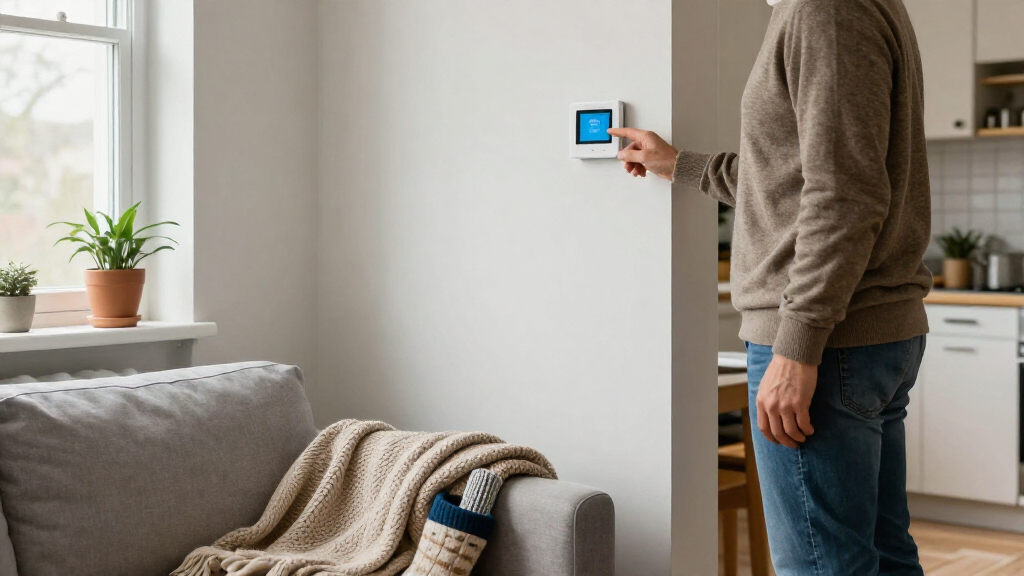
How We Picked
I ranked these thermostats by how well they match common home needs: reliable scheduling and remote control, clear everyday operation, compatibility information, and features that can improve comfort across rooms. I also looked at the likely setup burden, including whether a listing specifies a C-wire requirement or a system limitation, and whether a model adds sensors, voice assistant support, or a more involved display.
The order favors versatile choices that suit a broad range of households before products aimed at a particular interface, ecosystem, or installation scenario. A premium feature set does not automatically earn a higher position if many buyers may not need it; likewise, a simple thermostat can be a strong fit when ease of use matters more than added controls. Product listings vary in the detail they provide, so I’d verify wiring and HVAC compatibility with the manufacturer’s compatibility guidance before buying.
| smart thermostats for home | Connectivity |
|---|---|
| Sensi Smart Thermostat | Wi-Fi |
| Sensi Lite Smart Thermostat | Wi-Fi |
| Vine Smart Thermostat with Lar | Wi-Fi |
| ecobee Smart Thermostat Enhanc | Wi-Fi |
| Honeywell Home X2S Smart Wi-Fi | Wi-Fi and Matter |
| Amazon Smart Thermostat | — |
| Honeywell Home T5 Smart Wi-Fi | Wi-Fi |
| Google Nest Thermostat | Wi-Fi |
| Amazon Smart Thermostat | — |
| WiFi Smart Thermostat for Sing | — |
| Honeywell Home RTH9600WF Smart | Wi-Fi |
| ecobee Smart Thermostat Premiu | — |
| Google Nest Thermostat | Wi-Fi and Bluetooth |
| Honeywell Home RTH9585WF1004 W | Wi-Fi |
| ecobee Smart Thermostat Essent | Wi-Fi |
Factors to Consider When Choosing Smart Thermostats For Home
Before choosing a model, I’d match the thermostat to the home’s HVAC equipment and the people who will use it. A smart feature only helps if installation is feasible and the controls make sense day to day.
Check HVAC Compatibility Before Comparing Features
Start with the heating and cooling equipment, not the app or display. Thermostats can differ in support for conventional systems, heat pumps, multi-stage equipment, and other configurations, so a model suited to one home may not suit another. A listing that names a specific system limitation deserves extra attention; the single-stage Wi-Fi model here, for example, is not a universal replacement. Check the wire labels at the existing thermostat and use the manufacturer’s compatibility checker before ordering. If the wiring is unclear or the system is unusual, ask an HVAC professional rather than guessing from the number of wires. This step can prevent buying a thermostat that cannot control the equipment you have.
Treat C-Wire Support as an Installation Question
A C-wire supplies continuous power to many smart thermostats, but homes do not all have one at the thermostat location. Some products in this roundup explicitly require one, so that requirement can rule them out before feature comparisons begin. Do not assume an unused wire is a C-wire; check its connection at both ends or consult an installer. Some systems and thermostat packages provide alternate power options, but availability and compatibility vary by model. If you want a DIY installation, favor a product whose wiring requirements you can confirm in advance. Paying for professional installation may make sense when wiring changes are needed or the system controls more than heating and cooling.
Decide Whether Room Sensors Solve a Real Problem
A thermostat’s built-in temperature reading may not reflect the rooms where people spend time, especially in a home with uneven sun exposure or multiple floors. Remote sensors can help a system respond to conditions away from the hallway where the thermostat sits, but they add setup and placement decisions. Think about whether the discomfort is localized or affects the whole home before paying for a sensor-focused model. Sensors do not correct poor insulation, blocked vents, or an improperly balanced HVAC system. If temperature differences are minor, a schedule adjustment may be enough. If bedrooms or living spaces repeatedly feel unlike the thermostat area, sensor support may be more useful than a more decorative screen.
Choose Controls That Fit the Household
App control is useful when the person changing the schedule is comfortable using a phone, but it is not the only way a thermostat should work. Consider whether household members need a physical knob, a touchscreen, or simple on-device controls for everyday adjustments. The Vine model’s large knob and Honeywell’s color touchscreen options show how much the interface can shape the experience. Voice assistant support can add convenience, though it is most useful when the household already uses that assistant. A sleek interface should not outweigh readable controls or clear scheduling. If several people share control, look for a setup that everyone can understand without relying on one person to manage the app.
Match the Smart Features to Your Existing Ecosystem
Thermostats can connect with voice assistants and other smart-home devices, but compatibility names alone do not guarantee that every automation will work as expected. Check which assistant and app features are supported in your region and whether household members use different platforms. A more integrated model can reduce the need to switch between apps, while a simpler option may be preferable if you only want remote temperature changes and scheduling. Consider what you actually want automated: adjusting the temperature by voice is a different need from coordinating several devices or sensors. Avoid paying attention to a long feature list unless those functions solve a daily task. A thermostat that fits your existing setup is often easier to manage than one that adds another disconnected app.
Think Through Multi-Thermostat Homes and Ongoing Setup
Homes with separate heating zones may need more than one thermostat, but a multi-pack is not automatically the right answer. Confirm how many independent zones the HVAC system has and whether each thermostat can control the equipment assigned to it. The Amazon two-pack may suit buyers equipping more than one compatible location, while a single thermostat is more appropriate for a one-zone home. Also account for account setup, Wi-Fi coverage, and who will maintain schedules after installation. More devices can offer room-by-room control, but they also create more points to configure and troubleshoot. Buy for the system’s actual zones rather than the number of rooms in the house.
Frequently Asked Questions
How do I know whether a smart thermostat will work with my HVAC system?
Identify the system type and the terminals used by your current thermostat, then check those details against the replacement model’s compatibility tool. The number of wires alone is not a reliable compatibility test, since wire functions and HVAC configurations vary. Pay particular attention to heat pumps, multi-stage systems, and listings that specify single-stage operation or a C-wire requirement. If you cannot identify the terminals confidently, take clear photos and ask the manufacturer or an HVAC technician for guidance. Confirm compatibility before buying rather than relying on a general claim that a thermostat works with most homes.
Can I install a smart thermostat if my home has no C-wire?
Possibly, but the answer depends on the thermostat and the HVAC equipment. Some models require a C-wire, while others may support an approved power adapter or another manufacturer-specified method. Do not use an improvised wiring workaround, since incorrect connections can affect the thermostat or HVAC controls. Check the installation guide for the exact model and verify that any alternative power method is supported for your system. If the thermostat explicitly requires a C-wire and none is available, choose another compatible model or ask an installer about adding one.
Is a thermostat with room sensors worth choosing over a basic smart model?
Room sensors can be helpful when the thermostat’s location does not reflect the comfort of bedrooms or living areas. They are less useful if temperatures are already even throughout the home or if the main issue is poor airflow or insulation. Before choosing a sensor-enabled option, decide which rooms should guide heating or cooling and check how the system uses sensor readings. Sensors add setup, placement, and possible battery maintenance, so they are not a free upgrade in convenience. For a home with recurring room-to-room temperature differences, they may address a problem that scheduling alone cannot.
Should I buy a two-pack if my home has several rooms?
Buy a two-pack only if the home has separate compatible zones that need independent thermostat control. Several rooms on one HVAC zone usually do not call for several thermostats; adding one per room can create control conflicts or fail to work with the system. Check the zoning layout and confirm each thermostat’s role with the HVAC documentation or installer. If the goal is to address uneven temperatures within one zone, a compatible sensor system may be a better fit. A multi-pack is most useful when it matches the equipment’s existing zone structure.
What should I prioritize if I want a smart thermostat that is easy for everyone at home to use?
Focus on clear physical controls, readable displays, and a straightforward way to change temperature without needing to learn every app feature. A large knob or direct touchscreen can help household members who do not want to rely on voice control or a phone. Also check whether schedules are easy to understand and whether multiple people can access the app if they want remote control. Avoid choosing solely by the number of smart-home integrations if the main users value simple adjustments. The best interface is the one the household can operate comfortably after installation.
Conclusion
For the broadest mix of everyday control and added comfort features, I’d choose the ecobee Smart Thermostat Enhanced as best overall. The Amazon Smart Thermostat is my best-value-style pick for buyers who want a simpler smart setup, while the ecobee Smart Thermostat Premium is the best premium fit for households drawn to sensor-based comfort and a richer feature set. For beginners who want DIY-oriented options, I’d compare the Sensi ST55 and Sensi Lite ST25, then confirm wiring before choosing. The Vine large-knob model suits buyers who prefer a prominent physical control, and the Amazon two-pack makes sense for compatible homes with multiple zones. I’d make the final choice only after checking HVAC compatibility, wiring, and who will use the controls every day.
Halloween Picks
halloween
As an affiliate, we earn on qualifying purchases.