
TL;DR
Ring founder Jamie Siminoff announced that the $249.99 Ring Drone Cam is scheduled to ship in the U.S. on Jan. 27, 2027. The indoor camera can fly to check locations after sensor alerts, but its short battery life and dependence on an internet connection raise questions about how well it can replace fixed cameras or respond during outages.
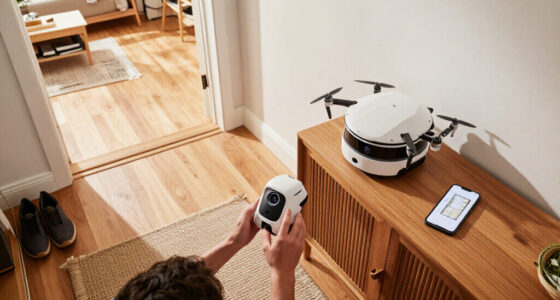
Ring plans to begin shipping its $249.99 Drone Cam, an indoor flying security camera, in the United States on Jan. 27, 2027, founder Jamie Siminoff said at a launch event in New York City this week. The device can respond to alerts from Ring sensors by flying to preset locations and sending a live view or recording to the Ring app, offering a mobile alternative to cameras fixed in one place.

Get home appliances delivered free with Prime
- Fast, free delivery on millions of items
- Prime Video, Amazon Music and more included
- Member-only deals all year
The Drone Cam can launch after a Ring sensor detects motion, an opening door, a water leak or an alarm. Users can also schedule patrols or send the drone out on demand. It follows routes set up in the Ring app, and Ring says it can move around obstacles along those routes. Its camera records at 2K resolution with a 148-degree field of view; movement lets it view different directions around a room.
Ring says the device weighs 165 grams and can fly for five to eight minutes per charge. Recharging takes about eight minutes for each minute of flight, meaning a five-minute flight would require roughly 40 minutes on its dock. The Verge reported seeing the drone take off, hover and follow a planned route during a one-minute demonstration. It did not test the drone navigating around unexpected obstacles.
Ring says the camera is covered while docked and records only in flight. The company also says footage is encrypted with its TAKE system, which rotates encryption keys every five minutes and deletes Ring’s copies after 24 hours. Ring says cloud processing remains part of functions such as smart alerts and AI video search. The Drone Cam is intended for indoor use only.
Could Ring’s AI Drone Camera Change Home Security?
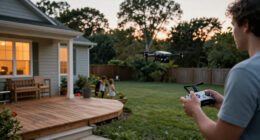
Ring’s indoor drone can fly to check sensor alerts from different parts of a home. Its short flights and reliance on Wi-Fi leave its value as a security camera unproven.
How the mobile camera works
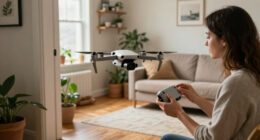
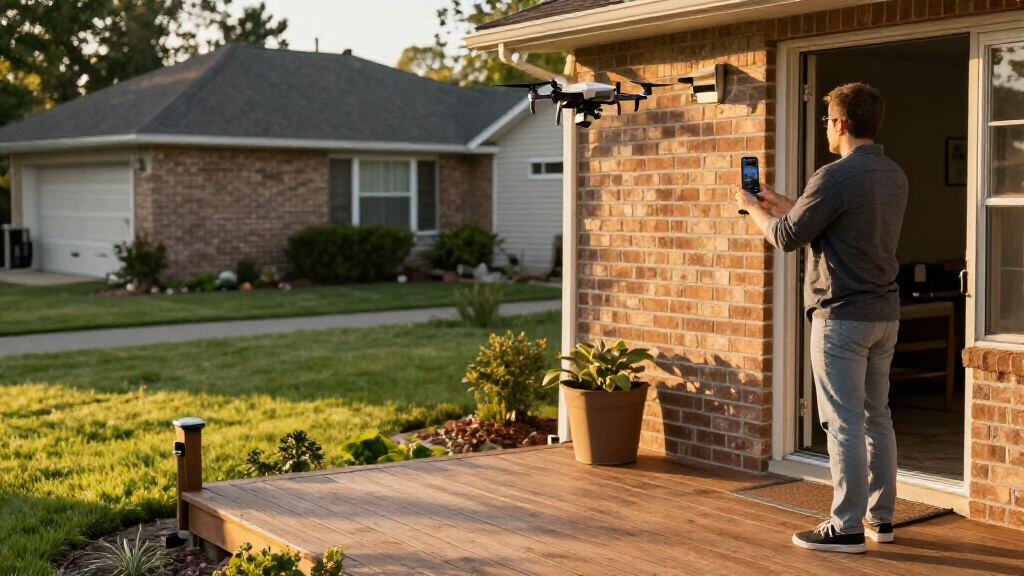
The drone responds to compatible Ring sensor alerts or can patrol on a schedule or on demand.
Motion, an opening door, a water leak or an alarm can trigger a flight.
The Ring app sets its route; Ring says it can move around obstacles along it.
The camera sends a live view or recording to the Ring app.
A mobile view, with limits
The flight time points to quick incident checks, not continuous room monitoring.
- Checks rooms without a permanently installed camera.
- Can view different directions as it moves.
- Records only while flying, according to Ring.
- Can it reach the right place reliably in varied homes?
- Can it handle clutter, pets or unexpected obstacles?
- Can it provide useful coverage between long recharge periods?
Wi-Fi is part of the security picture
AI Pilot navigation depends on an internet connection and cloud processing.
Claims still need home testing
The demonstration covered a short flight on a simple route, not a full range of real home conditions.
| What Ring says | What remains untested |
|---|---|
| It can navigate programmed routes and move around obstacles. | Performance with changing rooms, clutter, stairs or pets. |
| Footage is encrypted; Ring says its copies are deleted after 24 hours. | Independent verification and all cloud processing conditions. |
| It can cover more of a home with fewer cameras. | Whether mobile coverage can supplement or replace fixed cameras. |
A Mobile View, With Battery Limits
A camera that can travel to the location of a sensor alert could help users check an incident in rooms without a permanently installed camera. Ring presents the Drone Cam as a way to cover more of a home with fewer cameras, while keeping the view available through its existing app. Whether it can actually replace several stationary cameras is unproven.
The stated flight time points to a different role from continuous surveillance: the drone appears better suited to short check-ins than extended monitoring. Its lengthy recharge interval also means it may not be ready for repeated flights in quick succession. For households weighing the device against fixed cameras, the practical value will depend on how reliably it reaches the right place and whether the live view is useful when an alert occurs.
Navigation also depends on Ring’s AI Pilot system and an internet connection. Ring says the drone cannot continue its patrol without Wi-Fi and will land instead. That makes connectivity a potential weak point for a security device, particularly during a network outage or disruption.
Products Worth Considering

Samsung Odyssey G9 QD-OLED 49 Dual QHD Curved Gaming Monitor

Logitech MX Mechanical Wireless Illuminated Keyboard, Clicky Switches

Bose TV Speaker Compact Soundbar with Bluetooth and HDMI-ARC, Black
As an affiliate, we earn on qualifying purchases.
From Always Home to AI Pilot
The announcement follows Ring’s 2020 unveiling of the Always Home Cam, an earlier flying camera concept. The new model is a substantially smaller design, according to The Verge’s account of the launch. Siminoff said Ring had been developing a drone since 2016 and had come close to shipping two earlier models before restarting development about a year ago.
Siminoff said the company chose a simpler drone design and shifted much of its processing to the cloud to make autonomous flight practical at a price below $250. Ring calls the system AI Pilot: it uses the camera, vision models, sensors and cloud processing to map a home and navigate along user-programmed routes. Siminoff described it as “like an AI agent that’s controlling the robot.” The company announced a separate Ring Rover Cam for businesses at the same event; the Rover is a $999.99 robot and is not the home drone.
““Truly, it’s like an AI agent that’s controlling the robot.””
— Jamie Siminoff, Ring founder
Flight Reliability Still Untested
The Jan. 27, 2027 date is a planned release, not evidence that the device has shipped. The source does not provide independent testing of battery life, image quality, privacy protections or performance in varied homes. The Verge’s hands-on test covered a short flight on a simple living-room route, not stairs, clutter, pets or unexpected movement.
Ring says the drone can fly up stairs, use LED spotlights in the dark and avoid obstacles on its programmed routes, but those capabilities were not demonstrated at the event described in the source. It remains unclear how it will respond when a room changes, an obstacle blocks its route, or a pet reacts to the flying camera. The source also does not specify whether users need a Ring subscription to access particular video or AI features, or how the product will function if cloud services are unavailable beyond landing.
Ring says its encryption setup limits Amazon’s access to footage, but the account does not independently verify the system or explain all the conditions around cloud processing. The company’s privacy and security claims should be distinguished from demonstrated performance.
Launch Date and Home Testing
Ring says the Drone Cam is scheduled to ship in the U.S. on Jan. 27, 2027, for $249.99. The next meaningful test will be whether retail units deliver the announced flight time and navigate reliably in homes with different layouts, lighting and obstacles.
Prospective buyers will also need details about any subscription requirements, the availability of features during internet outages, and the conditions under which footage is processed or retained. Ring’s launch materials describe the product’s intended operation, but the source does not give answers to all of those questions. Independent testing after release should clarify whether its mobile coverage is useful enough to supplement or replace fixed cameras.
Key Questions
When will the Ring Drone Cam be available?
Ring says it will ship in the United States on Jan. 27, 2027. That is the announced schedule; the device had not yet shipped at the time of the announcement.
How much does the Ring Drone Cam cost?
Ring founder Jamie Siminoff announced a price of $249.99.
How does the drone respond to a security alert?
Ring says alerts from compatible sensors—such as motion, a door opening, a water leak or an alarm—can trigger the drone to fly along a route set in the Ring app. It can then livestream or record through the app.
How long can it fly before recharging?
Ring claims a flight time of five to eight minutes per charge. The company says charging takes about eight minutes for each minute of flight, so a five-minute flight would take roughly 40 minutes to recharge.
Does the Drone Cam work without Wi-Fi?
According to the source, the drone relies on an internet connection for AI Pilot navigation. Ring says that without Wi-Fi it can only land; its behavior during other service interruptions has not been detailed.
Source: theverge.com