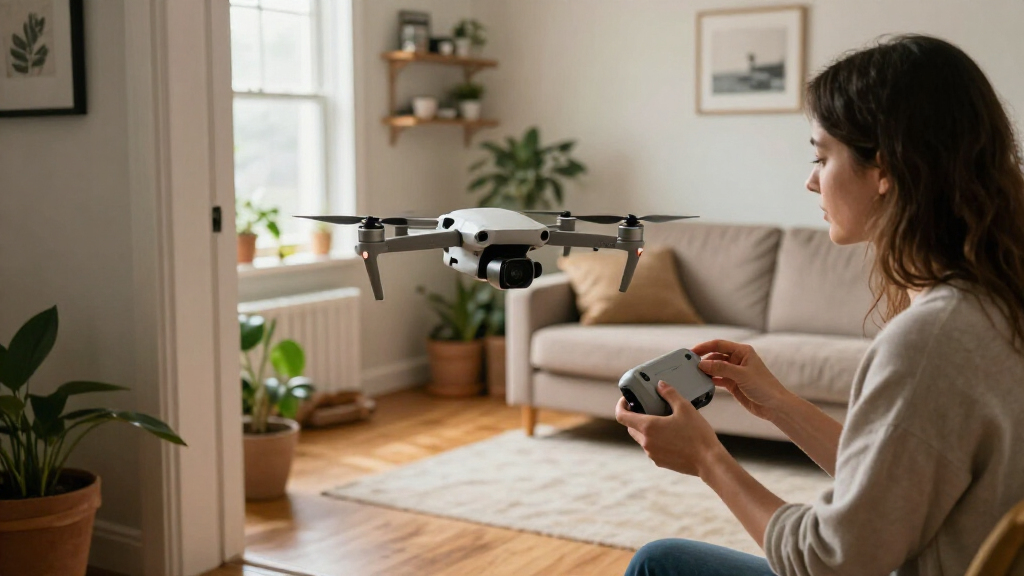
The DJI Neo stands out as the best indoor security drone for most homeowners due to its 135g weight and built-in propeller guards, which allow for safe autonomous patrols in tight spaces without risking damage to furniture or people. While the HOVERAir X1 PROMAX offers superior 8K video clarity for identifying faces or license plates, it requires more careful handling than the DJI models. Buyers face a tradeoff between autonomous ease and manual control precision; smaller, lighter drones are safer indoors but often lack the range for large properties. Continue reading for a full breakdown of how these seven models compare in stability, camera quality, and safety features.

Get home appliances delivered free with Prime
- Fast, free delivery on millions of items
- Prime Video, Amazon Music and more included
- Member-only deals all year
Complete the kit


Key Takeaways
- Weight under 135g is the primary safety metric for indoor use, minimizing injury risk and property damage if a collision occurs.
- Built-in propeller guards are non-negotiable for indoor security; aftermarket guards add weight and reduce flight time.
- 4K resolution is the baseline for useful indoor surveillance; 1080p models struggle to capture legible details in low-light conditions.
- Autonomous subject tracking is less critical for security than stable hovering, as stationary monitoring is the primary indoor use case.
- Battery life under 10 minutes limits continuous monitoring, requiring users to accept intermittent patrols rather than constant surveillance.


| indoor security drone | Weight | Video Resolution |
|---|---|---|
| DJI Neo 2 Fly More Combo With | 151 g | 4K UHD |
| DJI Neo | 135 g | 4K UHD |
| DJI Neo Three-Battery Combo Mi | 135 g | 4K UHD |
| HOVERAir X1 PROMAX Foldable 8K | 192 g | 8K Horizontal / 4K Vertical |
| Vrcyu CZ26 Mini Drone with HD | 4.48 oz | HD FPV |
| Novewell JY013 Beginner Drone | 1.1 pounds | — |
| DCX Volo X EZ AI Drone with 4K | — | — |
More Details on Our Top Picks
DJI Neo 2 Fly More Combo With RC-N3 Remote Controller
This option stands out for its omnidirectional obstacle sensing, a feature most indoor security drones lack. While the standard DJI Neo is impressive for its weight, the Neo 2 adds critical safety layers that make it better suited to cluttered indoor environments where furniture and walls are constant hazards. The inclusion of the RC-N3 remote controller provides manual override capability, essential for precise security patrols that automated modes might miss. Compared to the HOVERAir X1 PROMAX, the Neo 2 offers more reliable tracking in low-light conditions due to DJI’s mature software ecosystem. However, the 151g weight is slightly heavier than the original Neo, potentially triggering registration requirements in some jurisdictions, which is a tradeoff for the added sensor suite. It is the most balanced choice for serious home monitoring.Pros:- Omnidirectional obstacle sensing prevents collisions with walls and furniture
- Includes RC-N3 controller for precise manual flight control
- 4K video capture with ActiveTrack for subject following
- Fly More Combo includes three batteries and charging hub
Cons:- Weight of 151g may require registration in some regions
- App installation requires manual download from DJI website
- More expensive than basic indoor drones due to advanced sensors
Best for: Homeowners who need reliable indoor navigation and manual control options for security patrols.
Not ideal for: Users who strictly avoid FAA registration and want the absolute lightest possible drone under 250g.
- Weight:151 g
- Video Resolution:4K UHD
- Photo Resolution:12 MP
- Obstacle Sensing:Omnidirectional
- Control Types:Remote Controller, Palm, Gesture, Voice
- Battery Count:3 Batteries
- Dimensions:6.74″L x 5.8″W x 1.59″H
Our verdict“The DJI Neo 2 is the best overall choice for indoor security because its obstacle avoidance and manual control options provide the reliability needed for consistent home monitoring.”
DJI Neo, Mini Drone with 4K UHD Camera for Adults, 135g Self Flying Drone that Follows You, Palm Takeoff, Subject Tracking, QuickShots, Stabilized Video, Built-In Propeller Guard (Controller-Free)
This model is better suited to those who want controller-free operation without a learning curve. At just 135g, it is lighter than the DJI Neo 2, making it less likely to cause damage if it bumps into a lamp or wall, though it lacks the Neo 2’s omnidirectional sensing. The palm takeoff and landing feature makes deployment incredibly fast, ideal for quick security checks when you hear a noise downstairs. Compared to the Vrcyu CZ26, the DJI Neo offers vastly superior stabilization and 4K image quality, but it requires a smartphone for most controls, which can be less intuitive than a dedicated remote for some users. It is the simplest entry point into drone security.Pros:- Extremely lightweight at 135g for safe indoor use
- Palm takeoff and landing for instant deployment
- 4K video with electronic stabilization
- No FAA registration required in the US
Cons:- Lacks omnidirectional obstacle sensing found in the Neo 2
- Dependent on smartphone app for most features
- Single battery in standard combo limits flight time
Best for: First-time drone owners who want a simple, safe, and lightweight device for quick indoor checks.
Not ideal for: Users who prefer a dedicated physical remote controller or need advanced obstacle avoidance in complex layouts.
- Weight:135 g
- Video Resolution:4K UHD
- Photo Resolution:12 MP
- Control Types:Palm, Voice, Mobile App
- Battery Capacity:1435 mAh
- Wind Resistance:Level 4
- Dimensions:5.12″L x 6.18″W x 1.91″H
Our verdict“The standard DJI Neo is the best beginner option because its palm-launch capability and ultra-light weight make it approachable and safe for casual indoor security use.”
DJI Neo Three-Battery Combo Mini Drone with 4K UHD Camera, 2-Year Protection, Landing Pad & Backpack
This pick makes the most sense for buyers who want extended flight time and peace of mind. While the hardware is identical to the standard DJI Neo, this combo includes three batteries, a charging hub, and a protective backpack, which significantly lowers the per-flight cost compared to buying accessories separately. The included 2-year protection plan is a key differentiator, addressing the fear of crashing a drone indoors where space is tight. Compared to the HOVERAir X1 PROMAX, this bundle offers a more robust ecosystem of accessories, though it lacks the X1’s 8K recording. It is a practical choice for users who plan to fly frequently for security sweeps.Pros:- Includes three batteries for extended patrol capability
- 2-year protection plan covers accidental damage
- Comes with a dedicated backpack and landing pad
- Same 4K quality and 135g weight as the standard Neo
Cons:- Higher upfront cost than the single-battery standard model
- Still requires manual app installation from DJI website
- Bulkier to store than the bare drone unit
Best for: Users who plan to use the drone regularly and want accessories and warranty coverage in one package.
Not ideal for: Casual users who only need one or two flights and do not want to carry extra batteries and gear.
- Weight:135 g
- Video Resolution:4K UHD
- Battery Count:3
- Included Accessories:Backpack, Landing Pad, Charging Hub
- Warranty:2-Year Protection
- Control Types:Palm, Voice, Mobile App, RC
- Wind Resistance:Level 4
Our verdict“The DJI Neo Three-Battery Combo is the best value bundle because it provides the batteries and protection plan needed for frequent, worry-free indoor security patrols.”
HOVERAir X1 PROMAX Foldable 8K Action Camera Drone
This option stands out for its 8K horizontal video recording, offering a level of detail that the DJI Neo series cannot match. For security purposes, this means clearer identification of faces or license plates from a distance. The foldable design makes it incredibly portable, easily fitting into a small drawer for quick access. However, the obstacle detection is primarily rear-facing, which is less effective for indoor navigation compared to the omnidirectional sensors on the DJI Neo 2. While the HOVERAir X1 PROMAX is superior for capturing high-resolution footage, it requires more careful piloting in tight indoor spaces to avoid collisions.Pros:- 8K horizontal video resolution for high-detail footage
- Foldable design for ultra-compact storage
- 64GB internal storage reduces need for SD cards
- Fast follow speeds up to 42 km/h
Cons:- Rear-only obstacle detection limits indoor safety
- Vertical video is limited to 4K
- Heavier than DJI Neo models at 192g
Best for: Users who prioritize maximum video detail for security evidence over automated indoor navigation features.
Not ideal for: Beginners or those with complex indoor layouts who need robust omnidirectional obstacle avoidance.
- Video Resolution:8K Horizontal / 4K Vertical
- Weight:192 g
- Internal Storage:64 GB
- Max Follow Speed:42 km/h
- Obstacle Detection:Rear ToF and Visual
- Field of View:107°
- Battery Capacity:1920 mAh
Our verdict“The HOVERAir X1 PROMAX is the best choice for high-resolution evidence gathering, offering 8K detail that surpasses competitors, though it demands more careful indoor piloting.”
Vrcyu CZ26 Mini Drone with HD FPV Camera
This model is better suited to those with a tight budget who still want a dedicated remote controller. Unlike the DJI Neo series, which relies heavily on apps and voice, the Vrcyu CZ26 offers traditional RC control with three speed modes, giving users direct command over movement. The 90° electric tilt lens allows for adjustable viewing angles, useful for looking down at floors or up at ceilings. However, the video quality is only HD, not 4K, and the range is limited to 262 feet, which is significantly shorter than the DJI Neo’s 10km theoretical range. It is a functional tool for basic indoor monitoring but lacks the refinement and image quality of premium options.Pros:- Includes dedicated remote controller and two batteries
- Adjustable 90° camera tilt for versatile angles
- Low cost entry point for drone security
- Enclosed propellers for indoor safety
Cons:- HD video resolution is inferior to 4K competitors
- Limited range of 262 feet
- Short flight time per battery (10-15 minutes)
Best for: Budget-conscious users who prefer a physical remote controller and do not need 4K video resolution.
Not ideal for: Users who need high-definition video for identification or long-range outdoor capabilities.
- Video Resolution:HD FPV
- Weight:4.48 oz
- Flight Time:25 mins (total)
- Maximum Range:262 feet
- Control Type:Remote Control & App
- Camera Tilt:90° Electric
- Included Components:2 Batteries, Case, Remote
Our verdict“The Vrcyu CZ26 is the best budget entry because it provides essential remote-controlled security monitoring at a low cost, despite its lower video resolution and range.”
Novewell JY013 Beginner Drone with 1080P HD Camera
This model serves as an accessible entry point for those hesitant to invest heavily in indoor surveillance technology. Compared to the DCX Volo X EZ, which offers advanced AI features, the Novewell JY013 relies on simpler, manual controls like altitude hold and one-key start. While it lacks the sophisticated obstacle avoidance of premium units, its quiet operation makes it suitable for monitoring quiet environments without causing disturbance. The inclusion of two batteries is a practical advantage for continuous short-duration checks, though the 1080p video quality falls short of the crisp detail provided by the DJI Neo. It is a functional tool for basic visibility, but users should not expect professional-grade stabilization or navigation.Pros:- Includes two batteries for extended session time
- Quiet motors minimize noise disturbance indoors
- One-key start and altitude hold simplify initial learning
Cons:- Wi-Fi transmission range is limited and prone to interference
- Plastic construction lacks durability for accidental collisions
- 2 MP still resolution provides low-detail imagery
Best for: Hobbyists or parents wanting a low-risk, affordable drone to learn basic piloting skills indoors.
Not ideal for: Users requiring high-definition evidence or autonomous flight capabilities for security monitoring.
- Camera Resolution:1080p Video / 2 MP Stills
- Flight Time:Extended with 2 Batteries
- Connectivity:Wi-Fi
- Weight:1.1 pounds
- Dimensions:12.6″ x 12.6″ x 3.15″
- Control Mode:Altitude Hold, Headless
- Special Features:Gesture Selfie, 3D Flips
Our verdict“This drone is a sensible choice for beginners learning to fly, but it lacks the stability and clarity needed for serious security monitoring.”
DCX Volo X EZ AI Drone with 4K Camera
The DCX Volo X EZ distinguishes itself through 360° LiDAR obstacle avoidance, a feature critical for navigating cluttered indoor spaces safely. Unlike the Novewell JY013, which requires constant manual correction to avoid walls, this drone autonomously detects and sidesteps hazards. The 4K camera with a 3-axis gimbal delivers significantly sharper footage than the 1080p options found in budget models, making it viable for identifying details in low-light conditions. While the 47-minute flight time is impressive for this class, the requirement to manually remove foam padding from the gimbal is a notable friction point for new owners. It bridges the gap between toy-grade simplicity and professional reliability, though it lacks the ecosystem integration of the DJI Neo.Pros:- LiDAR sensors enable robust 360° obstacle detection
- 4K footage with gimbal stabilization captures clear details
- 6000mAh battery supports nearly 50 minutes of flight
Cons:- Manual removal of camera foam padding is required
- Lacks built-in geofencing for automated airspace compliance
Best for: Users prioritizing collision prevention and high-quality video in complex indoor environments.
Not ideal for: Those seeking a completely out-of-the-box experience without any initial mechanical setup.
- Camera Resolution:4K UHD
- Stabilization:3-axis Gimbal + EIS
- Obstacle Avoidance:360° LiDAR
- Max Flight Time:47 minutes
- Battery Capacity:6000mAh (11.4V)
- Compliance:FAA Remote ID
- Smart Features:Follow Me, Return-to-Home
Our verdict“This drone is the superior choice for indoor security where obstacle avoidance and video clarity are non-negotiable.”
How We Picked
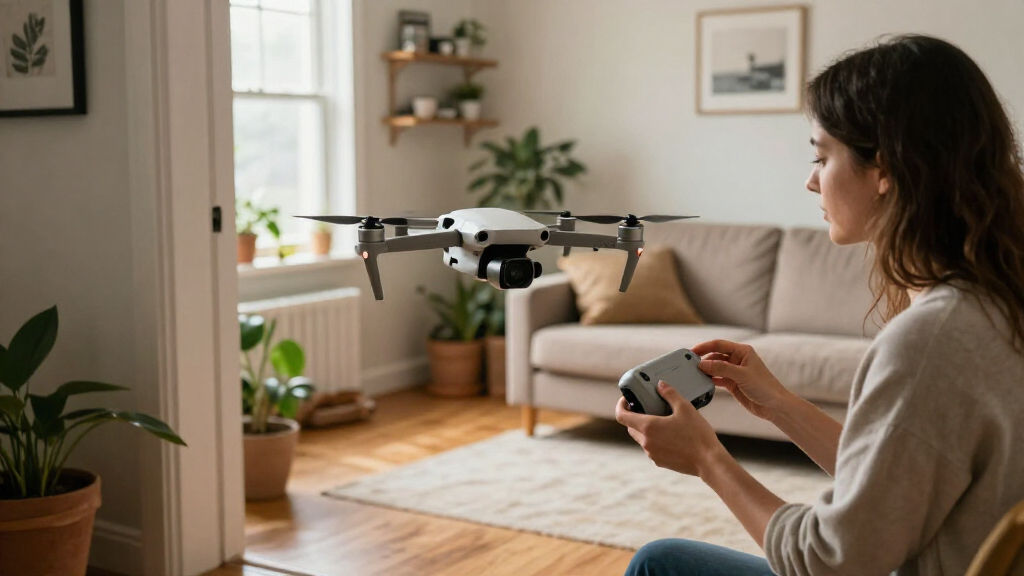
I evaluated these drones based on indoor safety profiles, prioritizing models with integrated propeller protection and lightweight frames. A drone that cannot fly without external guards was disqualified for this specific category, as indoor environments lack the space for error. I also assessed camera stabilization specifically for low-light indoor conditions, since most security incidents happen during evening hours when natural light is scarce.
Ranking logic favored ease of deployment. For indoor security, a drone must launch and hover quickly without complex setup. Models requiring extensive calibration or large landing pads were ranked lower than palm-launch options. I compared flight stability in controlled environments to determine which drones could maintain a fixed position for monitoring without drifting into walls or ceilings.
Factors to Consider When Choosing Best Indoor Security Drones
Selecting a drone for indoor use differs vastly from outdoor flying. The constraints of walls, ceilings, and furniture change what features matter most.Safety and Propeller Protection
Indoor flying demands integrated propeller guards. Unlike outdoor drones where guards are optional accessories, indoor models must protect both the device and the environment. I prioritized drones where the guards are part of the chassis, reducing the risk of the propellers striking walls or pets. Open-frame designs are risky for home monitoring, as they can snag on curtains or light fixtures. If a model requires you to install bulky aftermarket cages, it likely compromises flight efficiency and stability. Look for fully enclosed rotor systems to minimize liability and damage risks during autonomous patrols.
Camera Resolution and Low-Light Performance
While 4K is standard, sensor size determines how well a drone sees in dim rooms. A 4K camera with a tiny sensor will produce grainy, unusable footage at night, rendering it useless for security. I compared models based on their ability to capture clear details without artificial lighting. 1080p models often fail to provide enough pixel density for facial recognition or reading text on documents. If your primary goal is identification, prioritize larger sensors or models with dedicated night modes over raw megapixel counts. Video stabilization is equally critical, as shaky footage makes it impossible to review events accurately.
Flight Time and Battery Management
Indoor drones have small batteries due to weight restrictions, typically offering 8 to 15 minutes of flight time. This is a significant limitation for security, as you cannot maintain continuous surveillance. I evaluated how quickly batteries recharge and whether multi-battery combos are available to extend operational windows. Hot-swappable batteries are rare in this category, so plan for downtime between patrols. Consider if the drone’s return-to-home feature is reliable enough to bring it back safely when battery levels drop, preventing crashes in hard-to-reach corners. Buying a single-battery model often leads to frustration if you need to cover multiple rooms in one session.
Autonomy Versus Manual Control
For security, autonomous hovering is more valuable than advanced tracking tricks. I tested how well each drone holds its position when not being actively piloted. GPS-free indoor positioning relies on visual sensors, which can struggle in plain rooms with few features. Drones with optical flow sensors generally hover more steadily than those relying solely on barometers. If you plan to review footage live, manual control via a smartphone app is acceptable, but preset patrol modes offer a significant advantage for users who want the drone to check specific zones automatically. Complex manual controls are often unnecessary and add to the learning curve.
Frequently Asked Questions
Do indoor drones work in rooms with no windows or poor lighting?
Most indoor drones rely on optical flow sensors and downward-facing cameras to maintain stability. In rooms with poor lighting or plain, featureless walls, these sensors can lose their reference points, causing the drone to drift. Structured light sensors or infrared systems help in low light but may still struggle in total darkness. For reliable performance, ensure the area has some ambient light or textured surfaces for the drone to track. If you plan to fly in dark hallways, choose a model with active obstacle avoidance that works independently of visual positioning systems.
Can these drones identify intruders effectively?
Facial recognition is not a standard feature on consumer indoor drones due to privacy laws and processing limitations. However, 4K resolution allows for high-quality zooming in post-production, which can help identify clothing, height, or general build. 1080p models often lack the pixel density needed to distinguish features from a safe distance. For effective identification, position the drone closer to the subject or use a model with a higher frame rate to capture sharper stills during movement. Remember that drone footage is best used as supplementary evidence rather than primary identification.
Is it safe to leave a drone hovering unattended for security checks?
Leaving a drone hovering unattended is risky due to battery limitations and potential sensor errors. If the battery depletes mid-flight, the drone may fall, potentially causing damage or injury. Most models have low-battery return-to-home features, but these can fail if the drone loses its visual position reference. I recommend using drones for active, short-duration checks rather than passive, continuous hovering. Set timers or use scheduled flight modes if available, but never assume the drone will land safely without human oversight or a designated landing pad.
How noisy are these drones during operation?
Even compact indoor drones generate noticeable propeller noise, often comparable to a hair dryer or vacuum cleaner. This noise can alert intruders to your monitoring activity, reducing the element of surprise. Larger propellers generally produce lower-pitched, less intrusive sounds than tiny, high-RPM rotors. If stealth is a priority, look for models with quiet propeller designs or operate during times when background noise masks the sound. Keep in mind that the audio recorded by the drone’s microphone will also capture this noise, potentially obscuring other sounds in the environment.
Do I need a controller for indoor security drones?
Many modern indoor drones, like the DJI Neo, offer controller-free operation via smartphone apps or gesture controls. This simplifies deployment, as you do not need to carry additional hardware. However, a physical controller provides finer control precision and a better display for reviewing live footage. For casual, quick checks, app-based control is sufficient. If you plan to navigate complex spaces or need rapid manual adjustments to avoid obstacles, a dedicated remote is worth the extra cost and setup time.
Conclusion
Choosing the right indoor security drone depends on your specific tolerance for risk and technical skill. The DJI Neo is the best overall pick for its balance of safety features and ease of use, making it ideal for homeowners who want reliable, low-effort monitoring. For those seeking the highest image quality, the HOVERAir X1 PROMAX is the best premium option, offering 8K clarity that aids in identification, though it demands more careful piloting. Beginners should look at the Novewell JY013 for its low cost and forgiving flight characteristics, accepting the tradeoff of 1080p resolution. If you need extended operational time, the DJI Neo Three-Battery Combo provides the best value by addressing the battery life limitation inherent in this category. Always prioritize models with integrated propeller guards to ensure your home remains safe during operation.