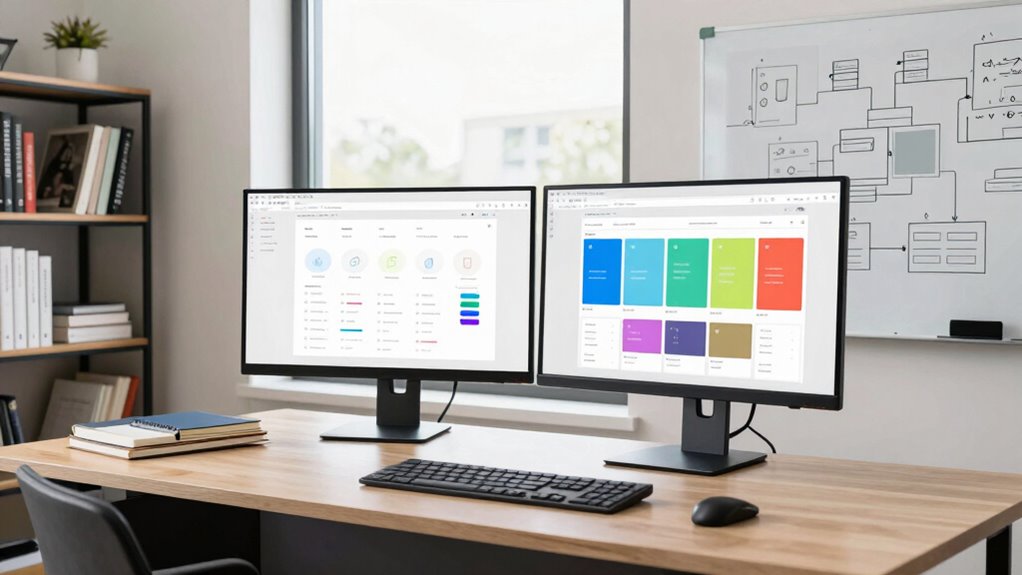

To support roundups and support content effectively, you should create a clear, logical site structure with a well-defined hierarchy that groups related topics together. Use intuitive labels and organize navigation to mirror this hierarchy, making it easy for visitors to find what they need. Connect your content with internal links, guiding users naturally from overviews to detailed support pages. If you keep exploring, you’ll discover how to optimize your site for both users and search engines.
Key Takeaways
- Organize roundups and support content within a clear hierarchy for easy navigation and relevance.
- Use intuitive labels and menu organization that reflect the site’s content structure.
- Link related articles and support pages to enhance discoverability and authority.
- Prioritize support content in the site architecture for quick access and SEO benefits.
- Design a logical flow from broad overviews to detailed support, aiding user journey and search indexing.

Are you struggling to organize your website for better navigation and SEO performance? If so, focusing on your site structure is essential. A well-designed site structure supports roundups and support content by establishing a clear content hierarchy and guaranteeing navigation clarity. When visitors land on your site, they should immediately understand where to find the information they’re after, and search engines should easily crawl and index your pages. To achieve this, start by creating a logical content hierarchy that groups related topics together. Think of your website as a tree, with broad categories branching into more specific subcategories. This structure helps both users and search engines understand the relationship between different pieces of content, making your site more organized and accessible.
Navigation clarity is equally important. When your site’s layout is intuitive, users won’t get lost trying to find a specific roundup or support article. Use clear labels for menu items and organize your navigation in a way that reflects your content hierarchy. For example, if you have a roundup of the best tools in your niche, make it easy to find under a main category like “Resources” or “Guides.” Supporting content, such as detailed articles that back up your roundups, should be linked logically within this structure. This interconnectedness not only improves user experience but also helps search engines understand the importance and relevance of each piece. Having a well-structured content hierarchy ensures that your site’s structure effectively supports both users and search engines in navigating and indexing your content. Incorporating a comprehensive internal linking strategy further enhances this organization by guiding visitors and search engines through related pages seamlessly.
Linking structure plays a significant role in reinforcing your content hierarchy. When you link from broad categories down to more specific support pages, you’re creating a web of interconnected content that boosts SEO. For instance, a thorough roundup page should link to detailed articles on individual tools, and those articles should, in turn, link back to the roundup. This bidirectional linking reinforces the relevance of each piece and helps search engines crawl your site more efficiently. Additionally, integrating site architecture principles into your strategy can improve overall navigability and indexing. A well-thought-out site architecture also ensures your support content is easily discoverable and appropriately prioritized within your website. Remember, supporting content exists to add depth and authority to your roundups, so your site structure should facilitate seamless navigation between these related pages. Additionally, considering SEO best practices in your linking strategy can further improve your site’s visibility and ranking.
Ultimately, your goal is to craft a site structure that naturally guides visitors from general overview pages to detailed support content, all while making it easy for search engines to index your site effectively. By focusing on a strong content hierarchy and navigation clarity, you ensure your site isn’t just well-organized — it’s optimized for both user experience and SEO success.
website navigation menu organizer
As an affiliate, we earn on qualifying purchases.
As an affiliate, we earn on qualifying purchases.
Frequently Asked Questions
How Does Site Structure Influence User Engagement With Roundups?
Your site structure directly impacts user engagement with roundups by creating a clear content hierarchy and guiding the user journey smoothly. When roundups are easily accessible through logical categories and strategic placement, visitors can find related content effortlessly. This encourages them to explore more, stay longer, and engage deeper. A well-organized site guarantees users quickly understand where to find upcoming or related roundups, boosting their overall interaction and satisfaction.
What Are Common Mistakes in Structuring Roundup Content?
A common mistake in structuring roundup content is poor keyword placement, which makes it hard for search engines to find relevant information. Additionally, neglecting content hierarchy can confuse users, causing them to struggle maneuvering your roundup. You should organize topics logically, prioritize key points, and place keywords strategically throughout headings and sections. This helps both users and search engines understand your content, increasing engagement and visibility.
How Can Internal Linking Improve Roundup Visibility?
Did you know that properly optimized internal linking can boost your roundup content’s visibility by up to 40%? You improve this by focusing on keyword optimization and clear content categorization. Linking related articles helps search engines understand your site’s structure, making your roundups easier to find. Plus, it guides visitors seamlessly through your content, increasing engagement and the chances of your roundup ranking higher in search results.
What Role Does Site Navigation Play in Supporting Roundup Content?
Your site navigation plays a crucial role in supporting roundup content by creating a clear navigation hierarchy and intuitive menu design. When you organize content logically, users find roundups easily, boosting engagement. Effective menu design guides visitors to related articles and categories, increasing visibility. By prioritizing a well-structured navigation hierarchy, you guarantee your roundup content is accessible, encouraging longer visits and better internal linking opportunities that enhance overall site performance.
How Should Site Structure Adapt for Different Content Types?
You should adapt your site structure by implementing clear content categorization, which helps users navigate different content types easily. Use consistent design elements across pages to reinforce familiarity and trust. For roundups and support content, create dedicated sections or hubs that group similar topics, making it easy for visitors to find related information. This approach improves user experience and encourages deeper engagement with your site’s diverse content.
internal linking plugin for WordPress
As an affiliate, we earn on qualifying purchases.
As an affiliate, we earn on qualifying purchases.
Conclusion
By designing your site structure thoughtfully, you guarantee that roundups and support content seamlessly bolster each other, creating a cohesive experience for visitors. When everything is in its right place, users can effortlessly find what they need and stay engaged. Remember, a well-structured site isn’t just about aesthetics—it’s about making navigation second nature. If you want your content to truly shine, set the stage properly; otherwise, you might be chasing your tail.
site structure optimization tools
As an affiliate, we earn on qualifying purchases.
As an affiliate, we earn on qualifying purchases.
As an affiliate, we earn on qualifying purchases.