If your De’Longhi espresso machine is making excessive noise during grinding, it can be disruptive and indicate a potential issue. Fortunately, most grinder noise problems are fixable with simple troubleshooting steps. This guide will walk you through the common causes and safe, effective solutions to restore quiet operation and optimal performance.

Get home appliances delivered free — and shop member deals
- Fast, free delivery on millions of items
- Access to Prime Big Deal Days deals on October 6–7
- Prime Video, Amazon Music and more included
Key Takeaways
| Common Cause | Worn or jammed grinder parts can cause noise. |
| Regular Maintenance | Cleaning and descaling prevent buildup that leads to noise. |
| Proper Use | Using the correct grind setting reduces strain on the grinder. |
| Troubleshooting Steps | Step-by-step fixes can resolve most noise issues. |
Identify the Source of the Noise
First, determine if the noise occurs during grinding, brewing, or when the machine is idle. Grinding noise specifically indicates an issue with the burr grinder, such as jammed particles or worn components.
Step 1: Turn Off and Unplug the Machine
- Power off the espresso machine and unplug it from the outlet to ensure safety.
- Allow the machine to cool if recently used.
Step 2: Access the Grinder
- Open the bean hopper with care, following your model’s manual.
- Remove the hopper and any accessible burrs or grinders as instructed.
Step 3: Clean and Clear Jammed Particles
- Use a soft brush or a dry cloth to clean dust and residual coffee grounds from the burrs and surrounding areas.
- If you find jammed particles, gently dislodge them with a plastic tool or brush—avoid metal tools to prevent damage.
Step 4: Check and Replace Worn Parts
If grinding noise persists, inspect the burrs for wear or damage. Replace worn burrs with genuine De’Longhi parts, if necessary.
Step 5: Perform Regular Descaling
Mineral deposits can cause grinding issues. Use a descaling solution, such as the De’Longhi EcoDecalk Descaler, following the manufacturer’s instructions to keep your machine in top shape.
The Products in This Guide
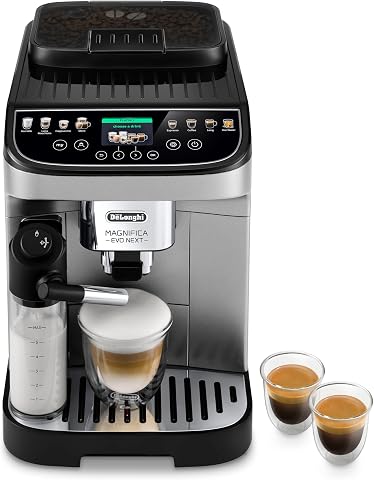
De’Longhi Magnifica Evo Next Fully Automatic Espresso Ma
- ✔ Color: Stainless Steel
- ✔ Power: 1450 Watts
- ✔ Warranty: 1 year

De’Longhi Replacement Water Filter
- ✔ Filter Life: Approx. 2 months
- ✔ Ease of Use: Very simple to replace
- ✔ Effectiveness: Improves water quality
De’Longhi Magnifica Evo Next Fully Automatic Espresso Ma
The De’Longhi Magnifica Evo Next offers 13 grind settings, a built-in grinder, and a milk frother, making it a top choice for espresso lovers. Its precision and ease of use help minimize grinding noise and improve overall performance.
Pros:
- 13 grind settings for variety
- Built-in grinder with consistent dosing
- User-friendly interface
- Automatic milk frother
Cons:
- Can be noisy if not maintained
- Requires regular cleaning
- Price may be high for some
Best for: Home baristas seeking convenience and quality
Not ideal for: Those looking for a silent grinder or minimal maintenance
Bottom line: A top-tier espresso machine that combines convenience with excellent brewing quality.
De’Longhi Replacement Water Filter
Using the De’Longhi Replacement Water Filter can significantly reduce mineral deposits and lime scale buildup, which are common causes of grinder noise and machine issues. It’s a simple upgrade that enhances performance and taste.
Pros:
- Improves water taste
- Reduces lime scale
- Easy to install
- Extends machine lifespan
Cons:
- Additional cost
- Needs replacement every 2 months
- Specific to certain models
Best for: Maintaining optimal water quality and preventing noise
Not ideal for: If your water is already soft or filtered externally
Bottom line: A small but impactful upgrade to keep your machine quiet and efficient.
Frequently Asked Questions
Why is my De’Longhi grinder making loud noises?
Loud grinding can be caused by worn burrs, jammed particles, or mineral buildup. Regular cleaning and maintenance help reduce noise.
How often should I clean the grinder?
It’s recommended to clean the grinder monthly and descale the machine every 2-3 months, depending on usage and water hardness.
Can I fix grinder noise myself?
Yes, with proper cleaning, checking for jammed particles, and replacing worn burrs if needed, you can often resolve noise issues yourself safely.
When should I replace the burrs?
Burrs typically last about 300-500 pounds of coffee. If you notice inconsistent grind size or increased noise despite cleaning, consider replacing them.
Keep Your Espresso Quiet and Delicious
Addressing grinder noise in your De’Longhi espresso machine is often straightforward with regular cleaning and maintenance. By following these steps, you can enjoy quieter operation and consistently great coffee. Remember, proactive care not only reduces noise but also extends the lifespan of your machine.
Affiliate disclosure: As an Amazon Associate we earn from qualifying purchases. Prices and availability are accurate as of the time of publishing.
Cold & flu season Picks
humidifiers
As an affiliate, we earn on qualifying purchases.