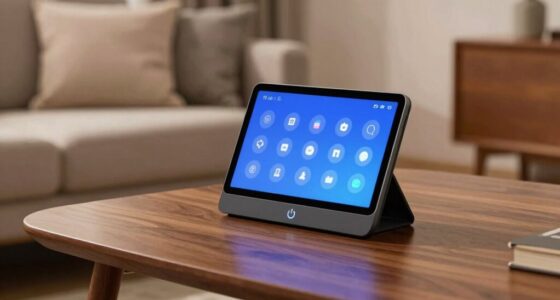
Backup power keeps your essential smart home devices, like security cameras, locks, and thermostats, running during outages, ensuring safety and convenience at all times. It prevents devices from becoming useless or unsafe when power fails, maintaining home security, temperature control, and connectivity. This backup solution extends battery lifespan and reduces wear on your devices, saving money long-term. To learn more about how backup power can make your smart home more resilient, keep exploring.
Key Takeaways
- Maintains operation of security, lighting, and climate control systems during power outages for safety and convenience.
- Extends device battery life by preventing frequent drain and ensuring continuous functionality.
- Ensures critical safety systems, like heating and emergency lighting, remain active in emergencies.
- Uses eco-friendly backup options like solar power to support sustainable and reliable energy supply.
- Protects home investments by keeping smart systems operational, enhancing home security and control during outages.
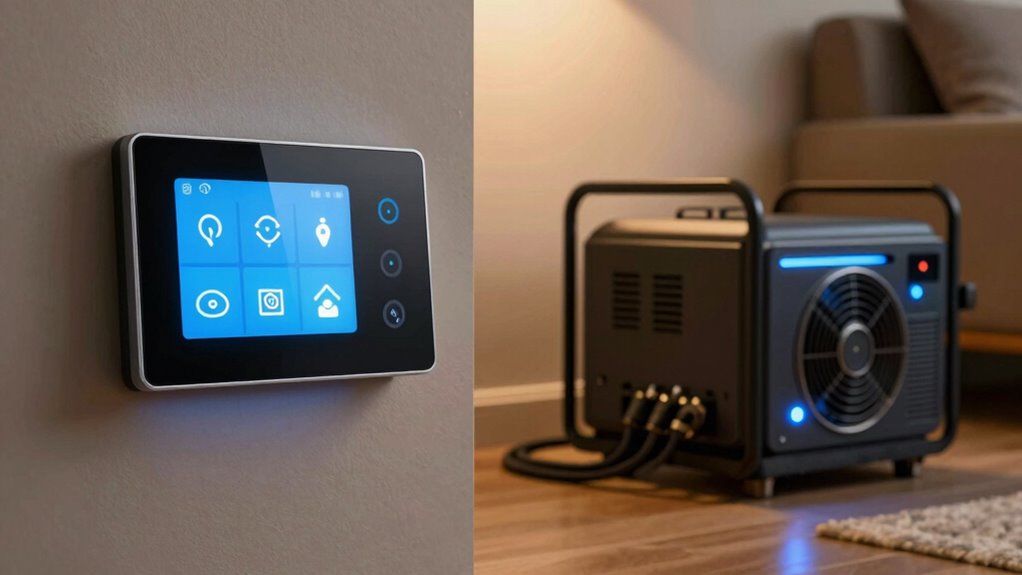
In today’s interconnected world, your smart home relies heavily on consistent power to keep everything running smoothly. When the power goes out unexpectedly, your smart systems—like security cameras, smart locks, thermostats, and lighting—can become useless or even pose safety risks. That’s where backup power comes in, ensuring your key smart home systems stay operational when the grid fails. By investing in a reliable backup power solution, you’re not just maintaining convenience; you’re also enhancing your power outage preparedness. This preparedness means you can keep your home secure, temperature-controlled, and connected, no matter what’s happening outside.
One of the main benefits of backup power is that it extends the battery lifespan of your systems’ power sources. Instead of your smart devices shutting down after a brief outage, a backup power system kicks in seamlessly, preventing frequent drain on your main batteries and prolonging their lifespan. This not only saves you money over time but also reduces the need for constant replacements. Plus, it ensures your devices remain functional longer, providing peace of mind during extended outages. This durability is crucial because, in a power outage, every moment counts—your security cameras can continue recording, and your smart locks can keep intruders out.
Backup power extends device battery life, ensuring continuous security and smart home functionality during outages.
Having backup power also means your home’s critical systems stay active during emergencies, which is essential for safety and convenience. Imagine a winter storm knocking out power overnight; with backup power, your heating system continues to operate, preventing pipes from freezing and keeping your family comfortable. During a blackout, you can still control your lighting remotely, reducing the risk of accidents or intruder alerts. When you’re prepared, you avoid the chaos and potential danger of a powerless home. Plus, if you experience frequent outages, a backup power system becomes a smart investment, making your home more resilient and reducing stress during those inconvenient moments. Additionally, understanding the importance of biodiversity and sustainable practices can influence your choice of backup solutions, such as solar-powered systems, which align with eco-friendly living. Utilizing renewable energy sources like solar can also reduce your carbon footprint and contribute to a more sustainable lifestyle.
Ultimately, backup power isn’t just about maintaining comfort—it’s about smartly safeguarding your home and its vital systems. It ensures your smart home remains useful, reliable, and secure, even when the grid fails. By considering the impact on battery lifespan and your overall power outage preparedness, you’re making a proactive choice that protects your investment and enhances your quality of life. With the right backup power solution, you stay connected, safe, and in control, no matter what disruptions may come your way. For example, choosing solar-powered backup systems can provide a sustainable and eco-friendly solution that reduces reliance on traditional energy sources.
As an affiliate, we earn on qualifying purchases.
Frequently Asked Questions
How Long Can Backup Power Sustain Smart Home Systems During an Outage?
During a power outage, your smart home systems can be sustained for several hours, depending on battery capacity and power management. Larger batteries provide longer backup times, while efficient power management conserves energy, extending the system’s operation. You might get anywhere from a few hours to over a day of backup power, ensuring your security, lighting, and other essential smart home functions stay active until power is restored.
What Types of Backup Power Sources Are Most Effective for Smart Homes?
You should consider battery capacity and power source types when choosing backup power for your smart home. Lithium-ion batteries are highly effective due to their durability and high energy density, providing longer backup times. Generators offer a reliable power source type, especially for extended outages. Combining these options guarantees your smart systems stay operational, with batteries handling short-term needs and generators covering longer power disruptions, keeping your home safe and connected.
Does Backup Power Affect the Lifespan of Smart Home Devices?
Think of backup power as a shield protecting your smart home devices from the storm of power fluctuations. While it guarantees power stability, frequent outages and constant charging can accelerate battery degradation, subtly wearing down your devices over time. This means your devices might not last as long, like a well-loved book losing pages. To prolong their lifespan, use backup power judiciously and maintain your systems properly.
How Much Does Installing Backup Power Typically Cost?
Installing backup power typically costs between $1,000 and $3,000, depending on your system’s size and type. You should consider cost considerations like purchasing the generator or uninterruptible power supply (UPS), along with installation challenges such as space requirements and electrical work. While upfront costs can be substantial, backup power guarantees your smart home remains functional during outages, offering peace of mind and continuous operation for essential systems.
Are There Safety Concerns With Using Backup Power in Smart Homes?
Safety stands paramount when using backup power in smart homes. You should prioritize generator safety by ensuring proper ventilation and regular inspections. Battery maintenance is essential to prevent malfunctions or hazards like leaks or fires. Always follow manufacturer instructions, avoid overloading systems, and consider professional installation. By practicing prudent precautions, you can confidently enjoy continuous power without compromising safety or security in your smart home.
solar backup generator for smart home
As an affiliate, we earn on qualifying purchases.
As an affiliate, we earn on qualifying purchases.
Conclusion
Think of your smart home as a delicate dance, where every system needs steady footing. When power fails, backup power acts like a trusted partner, keeping your security, lighting, and climate control in step. Without it, your home is like a dancer losing rhythm—vulnerable and out of sync. Investing in backup power guarantees your smart home keeps moving smoothly, even when the lights go out, so you stay secure and comfortable no matter what.
uninterruptible power supply for security cameras
As an affiliate, we earn on qualifying purchases.
As an affiliate, we earn on qualifying purchases.
As an affiliate, we earn on qualifying purchases.