Smart speakers listen continuously for wake words, collecting voice data, personal info, and usage logs to function effectively. This constant listening can lead to accidental recordings, data breaches, or data sharing with third parties, raising privacy concerns. While these devices are designed with privacy features like encryption and user controls, risks remain. To find out how you can better protect your privacy and understand ongoing research in privacy tech, keep exploring further.

Get home appliances delivered free with Prime
- Fast, free delivery on millions of items
- Prime Video, Amazon Music and more included
- Member-only deals all year
Key Takeaways
- Smart speakers continuously listen for wake words, which may lead to inadvertent recordings or eavesdropping.
- Voice data, personal information, and usage logs are stored on servers, raising privacy concerns.
- Data transmission can be vulnerable if encryption is imperfect, risking sensitive information exposure.
- Users can control privacy by reviewing settings, deleting stored recordings, and muting devices when unused.
- Advances in privacy tech aim to enhance security, transparency, and user control over voice assistant data.
privacy screen protector for smart speakers
As an affiliate, we earn on qualifying purchases.
As an affiliate, we earn on qualifying purchases.
How Do Smart Speakers Work?
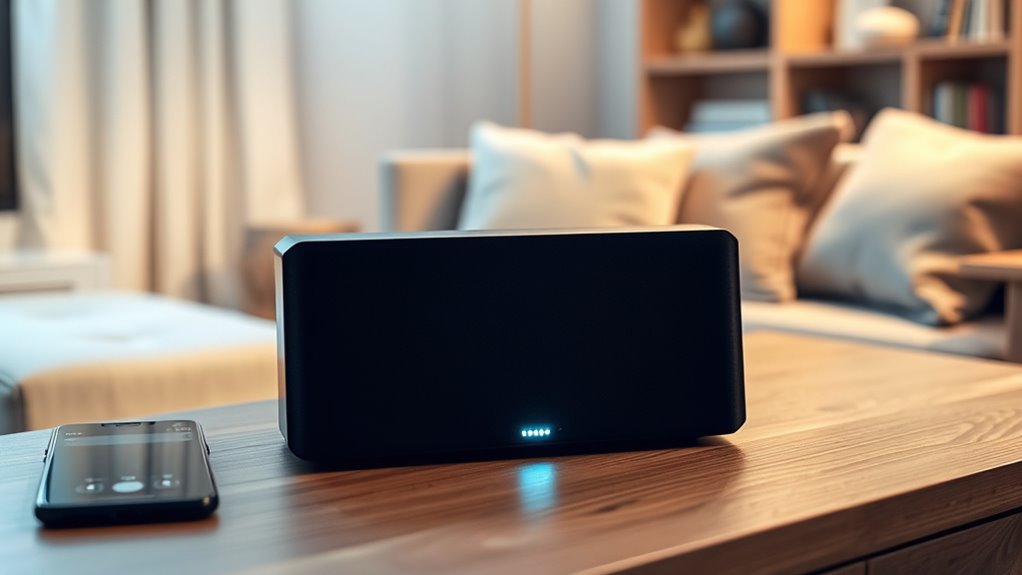
Smart speakers work by listening for voice commands through built-in microphones that are always active. When you speak, the device uses voice recognition technology to analyze your words and understand your intent. This process happens almost instantly, allowing the speaker to respond or perform tasks like playing music, setting reminders, or controlling smart home devices. Device integration is key here, as smart speakers connect seamlessly with other gadgets and services, making your commands more effective. The microphones continuously listen for a wake word or phrase, activating the speaker only when detected. This constant listening is essential for prompt responses, but it also raises questions about privacy. By understanding how voice recognition and device integration work together, you can better grasp how your smart speaker functions daily. Additionally, the importance of high-quality microphones can impact the accuracy of voice command detection and overall user experience. Recognizing the privacy implications associated with always-on listening can help you take steps to protect your personal information. Being aware of privacy policies can help you understand how your data is stored and used by these devices. Furthermore, understanding the data collection practices of manufacturers can shed light on how your information might be shared or protected. Regular updates from manufacturers can also enhance security features and improve voice recognition accuracy over time.
As an affiliate, we earn on qualifying purchases.
What Data Do Voice Assistants Collect?
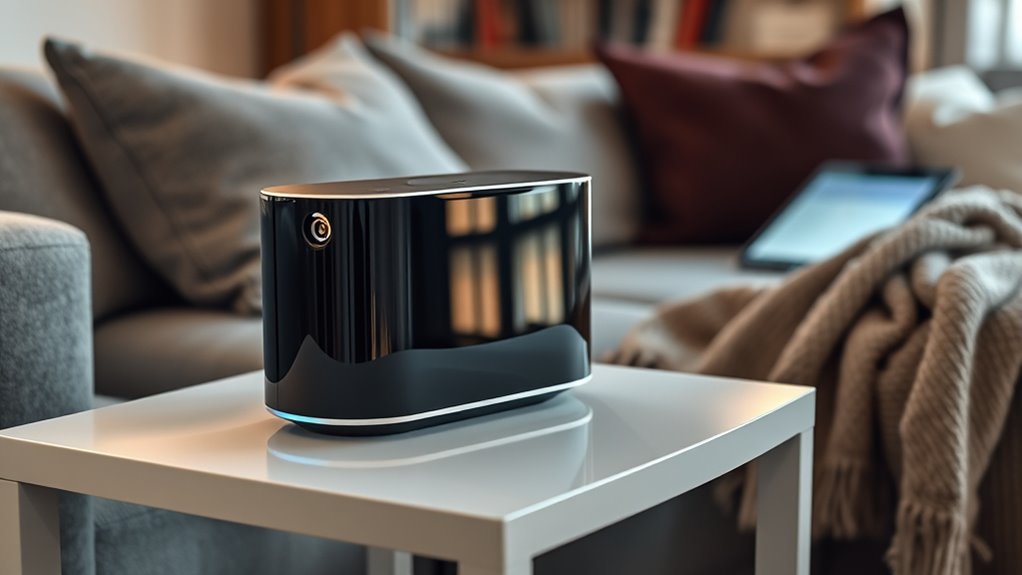
When your voice assistant responds to your commands, it’s not just processing what you say in real time; it’s also collecting and storing data to improve its functionality. This includes voice data, which captures your spoken words, and personal information like your location, preferences, or calendar details. Companies often store this data on servers to refine responses or enable features. Here’s a breakdown:
| Data Type | What It Includes | Purpose |
|---|---|---|
| Voice Data | Speech recordings | Improve speech recognition |
| Personal Info | Name, location, contacts | Personalization and services |
| Usage Data | Commands, device interactions | Troubleshooting and analytics |
| Account Details | Login credentials, preferences | Account management |
This collection raises questions about privacy, as your data is stored and analyzed beyond your direct control. Many users are unaware of data collection practices, which can impact their privacy. It’s important to understand how voice data is handled and the steps you can take to protect your information, especially considering the wave and wind of data sharing and storage practices in today’s AI-driven technology. Additionally, understanding the European cloud infrastructure can help ensure your data is stored securely and in compliance with privacy regulations. Recognizing data privacy regulations can also guide you in managing your voice assistant’s data permissions and settings.
As an affiliate, we earn on qualifying purchases.
Privacy Concerns and Risks
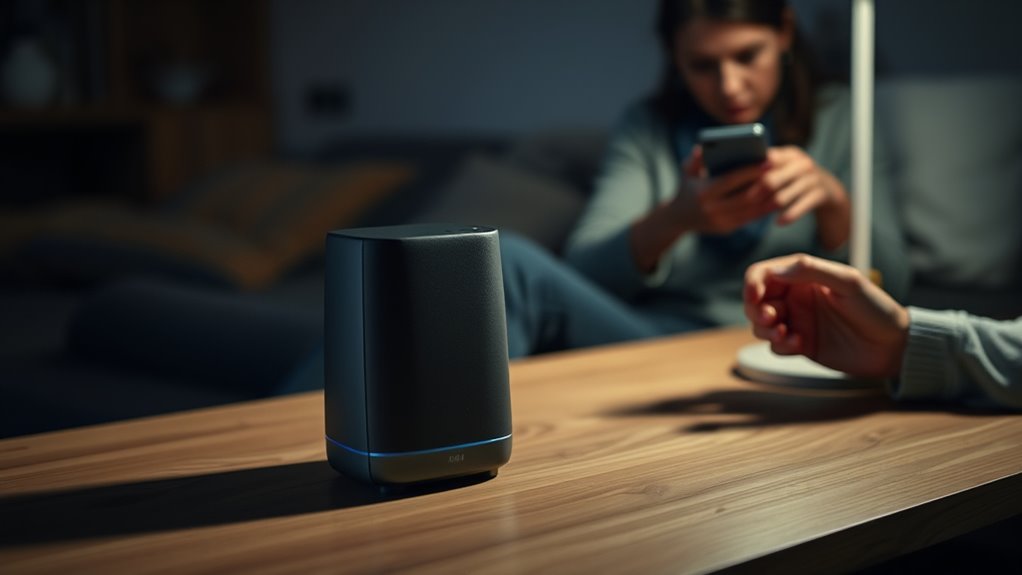
Have you ever considered how much personal information voice assistants have access to and what risks that poses? Privacy concerns stem from several factors:
- Third-party integrations can expose your data to external apps, increasing vulnerability.
- Data encryption isn’t always foolproof, leaving sensitive info susceptible during transmission.
- Voice recordings could be unintentionally stored or accessed without your knowledge, risking privacy breaches.
- The security of your truck bed’s storage can be compromised if digital devices are connected without proper safeguards.
- Additionally, the way voice data is managed by manufacturers can affect how securely your information is stored and used.
- Not all voice assistants have robust security protocols, which can leave your data exposed to unauthorized access.
- Understanding security best practices for smart speakers can help mitigate some of these risks and protect your privacy.
These risks highlight the importance of understanding how your voice assistant handles data. Even with encryption, breaches can occur, especially if third-party apps don’t follow strict security protocols. Always scrutinize permissions and be aware of which services are connected to your device. Protecting your privacy requires vigilance about how your data is shared and stored.
smart speaker data privacy device
As an affiliate, we earn on qualifying purchases.
As an affiliate, we earn on qualifying purchases.
Protecting Your Privacy With Smart Devices
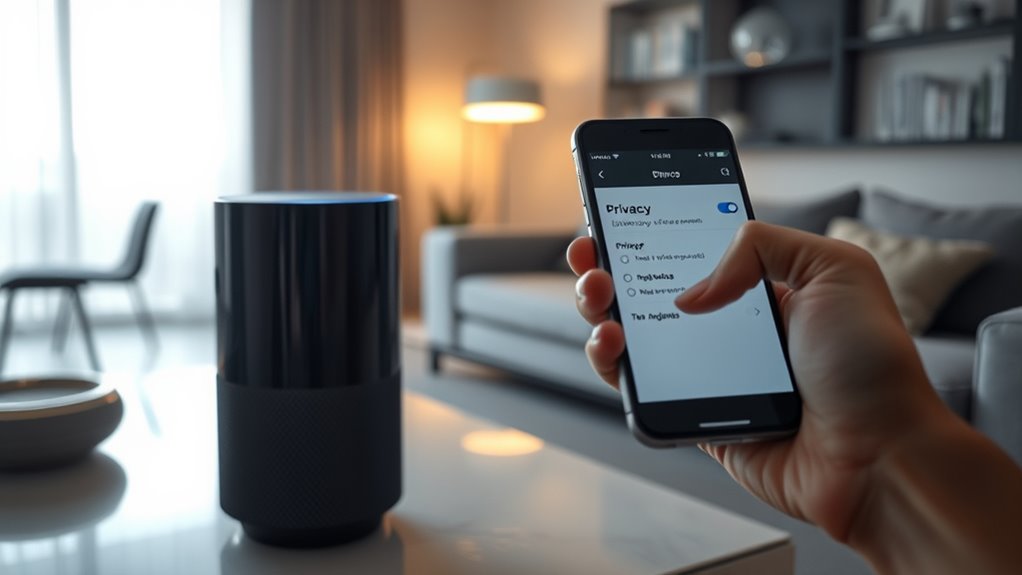
To effectively protect your privacy with smart devices, it’s essential to take proactive steps to control how your data is collected and shared. Start by reviewing your device’s privacy settings, especially those related to voice data security. Many smart speakers allow you to disable voice recordings or delete stored data regularly. Always ensure you give clear user consent when enabling features that collect voice data, and be cautious about granting permissions. Using strong, unique passwords helps prevent unauthorized access to your account. Consider muting your device when not in use or unplugging it entirely if you’re concerned about privacy. Staying informed about your device’s privacy policies empowers you to make better choices and maintain control over your personal information. Additionally, understanding data collection methods can help you make more informed decisions about your device usage. Being aware of privacy risks associated with voice assistants enables you to implement effective safeguards. For example, researching voice data security practices can further enhance your privacy protections, especially given the connected nature of smart devices.
The Future of Voice Technology and Privacy
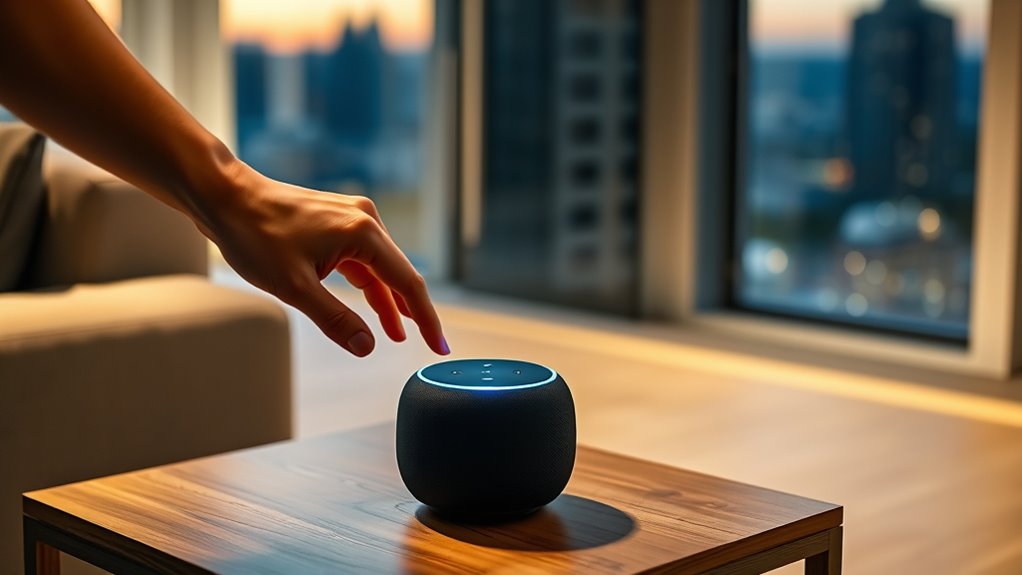
As voice technology continues to evolve, concerns about privacy are becoming more prominent alongside its growing capabilities. The future promises enhanced features like advanced voice authentication, which guarantees only authorized users access sensitive info. Data encryption will play a vital role in safeguarding your voice data from malicious attacks. To stay ahead, consider these developments:
Voice tech advances bring improved security and privacy through authentication and encryption.
- Improved voice authentication methods for stronger security
- Widespread adoption of end-to-end data encryption
- Greater transparency about how voice data is collected and used
- Incorporating secure composting practices can also promote sustainable living and protect your environment, complementing the privacy-conscious lifestyle. Additionally, advancements in vetted products for safety and effectiveness will help ensure your smart devices remain trustworthy and secure. Techniques such as voice biometrics are being refined to provide even more reliable security measures. Research into privacy-preserving technologies continues to advance, aiming to balance convenience with privacy. These innovations aim to balance convenience with privacy, giving you more control over your voice interactions. As technology advances, staying informed about these privacy safeguards helps you make smarter choices about your smart speaker and voice assistant privacy.
Frequently Asked Questions
Can Smart Speakers Be Hacked Remotely?
Yes, smart speakers can be hacked remotely through security vulnerabilities. Hackers exploit weaknesses in their software or network connections to gain unauthorized access. To protect yourself, make sure your device’s firmware is up to date and follow manufacturer policies for security. Use strong, unique passwords and enable two-factor authentication if available. Staying vigilant helps prevent potential breaches and keeps your smart speaker and personal data safe.
How Can I Tell if My Speaker Is Listening?
You can tell if your speaker is listening by paying attention to the voice activation indicator light or sound. When it activates, it’s listening for commands. To enhance your privacy, check your device’s privacy settings and disable features like voice recording or manual mute options. Regularly reviewing these settings helps make sure your smart speaker isn’t constantly listening without your knowledge, giving you more control over your privacy.
Do Voice Assistants Record All Conversations Continuously?
Voice assistants don’t record all conversations continuously; they activate only when they hear a voice activation command like “Hey Siri” or “Alexa.” Once activated, they record your voice for processing and may store data temporarily or long-term, depending on your settings. You can review and delete this data through your device’s privacy options. Remember, understanding how voice activation works helps you control what gets recorded and stored.
Are There Ways to Disable Voice Recording Permanently?
Yes, you can disable voice recording permanently by adjusting your device’s privacy settings. Most smart speakers allow you to turn off voice recording or delete past recordings through their app or settings menu. Regularly review these privacy settings to make certain your voice data isn’t stored or used. Doing so gives you more control over your privacy and prevents your smart speaker from continuously recording conversations.
What Legal Rights Do Consumers Have Over Their Voice Data?
You have legal rights over your voice data, including access and control, thanks to privacy policies and regulations like GDPR and CCPA. These laws emphasize data ownership, meaning you can request what data is stored, delete it, or limit its use. Always review your device’s privacy policies to understand how your voice data is handled, and exercise your rights to protect your privacy effectively.
Conclusion
So, while your smart speaker promises convenience, it’s quietly gathering your secrets. Ironically, in trying to make life easier, you might be handing over your privacy on a silver platter. You trust it to listen only when asked, yet it’s always listening — just in case. As voice tech evolves, maybe the real question isn’t how smart your speaker is, but how much smarter it is than you think — and what it’s really learning.
Fall yard work Picks
leaf blowers
As an affiliate, we earn on qualifying purchases.