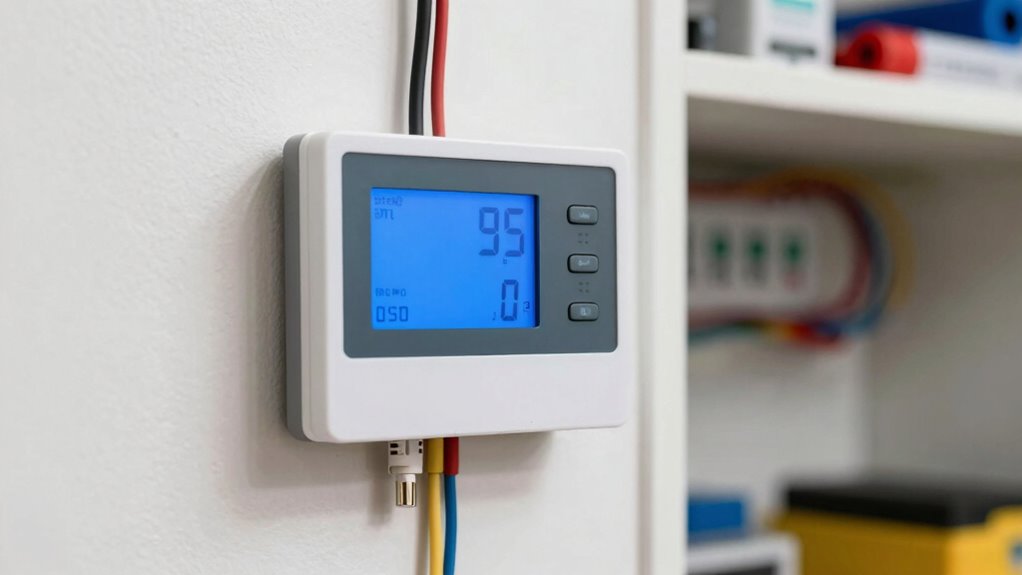

Your C-wire is essential because it supplies constant power to your thermostat, especially for smart models with Wi-Fi and remote features. If your current setup lacks a C-wire, upgrading can be tricky, often requiring extra components or rewiring. Ensuring you have a proper C-wire guarantees reliable operation and better system performance. Stick around—you’ll discover how to manage C-wire challenges and make your upgrade smoother.
Listen free for 30 days with Audible
Thousands of audiobooks and originals — cancel anytime.
As an affiliate, we earn on qualifying purchases.
Key Takeaways
- A C-wire provides continuous power, essential for seamless upgrade to smart thermostats.
- Lack of a C-wire can complicate installation and may require additional components or rewiring.
- Using models that require a C-wire ensures reliable operation and compatibility with smart features.
- Upgrading without a C-wire might lead to power issues, affecting thermostat performance and connectivity.
- Installing a C-wire future-proofs the system, simplifying upgrades and supporting advanced smart home integrations.
Upgrading your thermostat often requires understanding the role of the C-wire, or common wire, which supplies continuous power to the device. Without this wire, your new thermostat might not function properly, especially if it’s a smart model that relies heavily on constant power for features like smart home integration. Many modern thermostats are designed to connect seamlessly with your home’s Wi-Fi, allowing you to control them remotely or through voice commands. But to do that effectively, they need a reliable power source, and that’s where the C-wire comes into play.
If your current setup lacks a C-wire, upgrading to a smart thermostat can become more complicated. Some newer models are designed to work without a dedicated C-wire by using alternative power methods, such as power stealing from existing wires, but these aren’t always reliable or compatible with older systems. In these cases, you might need to install a new C-wire or consider options like a power extender kit, which can help supply continuous power without major rewiring. Your goal should be to guarantee your smart thermostat has a steady power supply, so it functions reliably and maintains connectivity for smart home integration. Ensuring a proper power supply can also help prevent connectivity issues, which are common when the power supply is inconsistent. Additionally, a stable power source can contribute to the overall system reliability of your thermostat setup.
Installing or upgrading your C-wire can also make your system more adaptable to future tech upgrades. As smart home technology continues to evolve, having a robust, consistent power source ensures your thermostat remains compatible with new devices or software updates. It also simplifies the installation process, reducing the likelihood of encountering issues related to power supply, which can otherwise cause malfunctions or inaccurate readings that affect your comfort and savings.
As an affiliate, we earn on qualifying purchases.
Frequently Asked Questions
Can I Install a Smart Thermostat Without a C-Wire?
Yes, you can install a smart thermostat without a C-wire, but it may cause compatibility issues and installation challenges. Many smart thermostats require a C-wire for consistent power, so without it, your setup might not work reliably or could need additional adapters. Before proceeding, check your system’s compatibility and consider options like power extenders or using models designed for no C-wire installations to avoid future problems.
What Are Alternative Solutions if My System Lacks a C-Wire?
Think of your thermostat setup as a puzzle missing a key piece—the C-wire. If your system lacks this wire, don’t worry; you can explore alternative wiring options or use a power adapter designed for smart thermostats. Many models now offer wireless compatibility, eliminating the need for a C-wire altogether. These solutions guarantee your upgrade stays smooth, keeping your home comfortable without rewiring headaches.
How Do C-Wire Requirements Vary Between Heating and Cooling Systems?
C-wire requirements differ between heating and cooling systems mainly due to system compatibility and wiring configurations. For heating, some systems may need a C-wire to power advanced thermostats, while cooling systems might operate without one, relying on different wiring setups. Always check your system’s compatibility before upgrading. If your wiring configuration lacks a C-wire, consider alternatives like a power extender kit or a smart thermostat designed for no C-wire setups.
Are There Wireless or Battery-Powered Thermostats That Bypass C-Wire Needs?
Yes, you can find wireless thermostats that bypass the C-wire, relying solely on battery power. These gadgets are like tiny miracles, offering wireless compatibility and hassle-free installation. They eliminate the need for a C-wire, making upgrades effortless. Just keep in mind, battery life can be a challenge, so you’ll want a model with long-lasting power. This way, you enjoy smart control without rewiring your system.
How Does a Missing C-Wire Impact Energy Efficiency?
A missing C-wire can reduce energy efficiency because your thermostat might not communicate properly with your HVAC system, leading to inefficient heating or cooling. Without a C-wire, some wireless-compatible thermostats rely on batteries or voltage considerations, which may cause inconsistent operation. This can result in higher energy bills and less effective climate control. To improve efficiency, consider upgrading your system or using a C-wire adapter for reliable, consistent performance.
C-wire installation kit for thermostats
As an affiliate, we earn on qualifying purchases.
As an affiliate, we earn on qualifying purchases.
Conclusion
Understanding c-wire requirements can make or break your thermostat upgrade plans. If your system needs a c-wire and you don’t have one, it’s like trying to fit a square peg in a round hole—you’ll hit a snag. But don’t worry; solutions like c-wire adapters or professional installation can save the day. With a little know-how, you can turn the tide in your favor and upgrade smoothly—just keep your eyes on the prize and don’t let wiring issues throw you off course.
wireless power extender kit for thermostats
As an affiliate, we earn on qualifying purchases.
As an affiliate, we earn on qualifying purchases.
best smart thermostats without C-wire
As an affiliate, we earn on qualifying purchases.
As an affiliate, we earn on qualifying purchases.
Flea & tick season Picks
flea and tick prevention
As an affiliate, we earn on qualifying purchases.