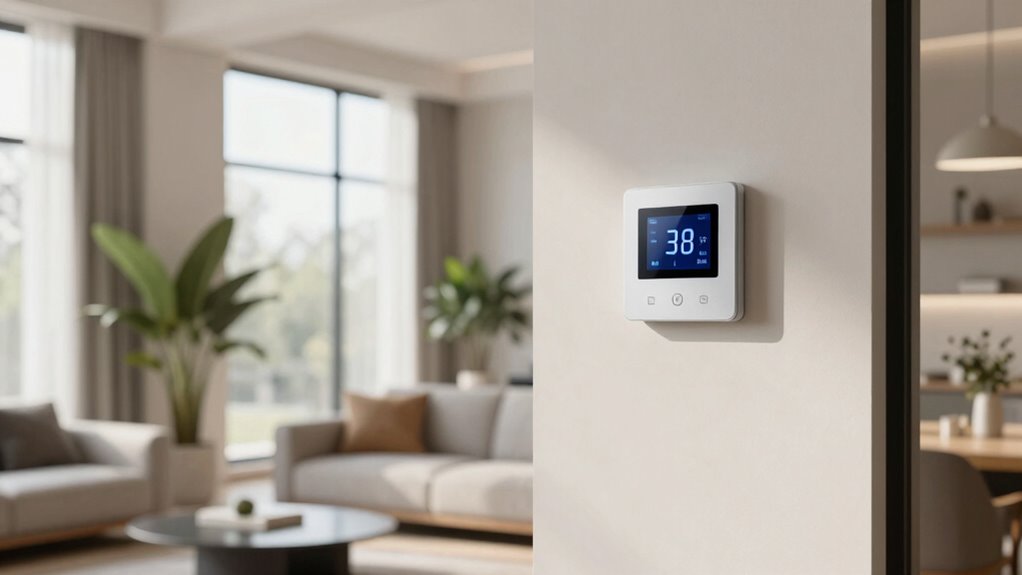
Room sensors add significant value to smarter climate control by providing real-time data on temperature, humidity, and occupancy. This helps you optimize comfort and reduce energy waste by adjusting heating or cooling based on actual room use. They also enable precise calibration for accurate readings and integration with control systems, extending HVAC lifespan and saving on utility costs. If you want to discover how these sensors can transform your space, there’s more to explore.
Key Takeaways
- Provide real-time data on temperature, humidity, and occupancy for more responsive climate adjustments.
- Enable occupancy-based adjustments to reduce energy use in unoccupied spaces.
- Allow integration into centralized systems for zone-specific temperature control.
- Improve system efficiency and equipment longevity through accurate sensor calibration.
- Support environmental sustainability by minimizing energy waste and lowering carbon footprint.
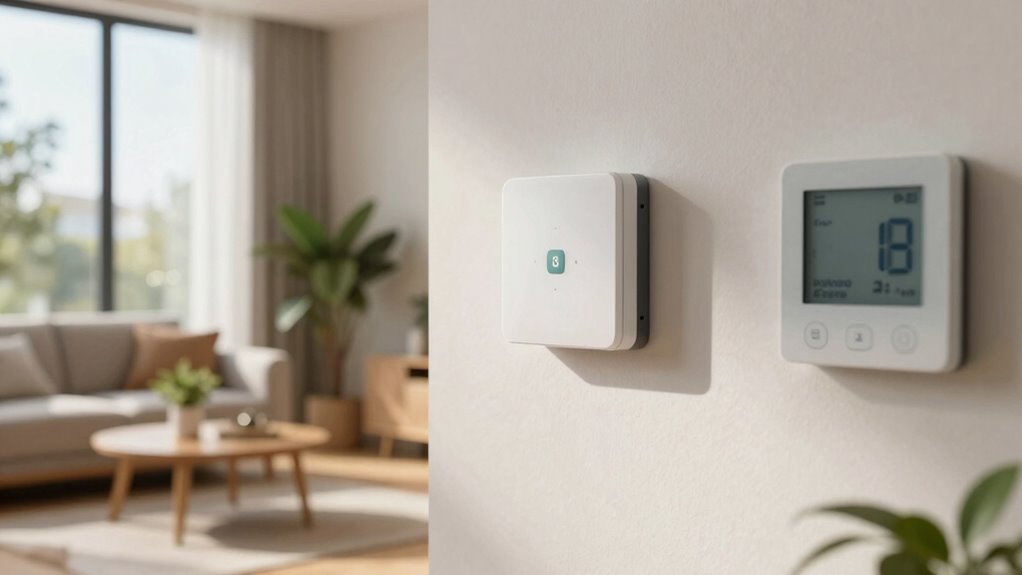
Room sensors are transforming how we manage climate control by providing real-time data on temperature, humidity, and occupancy. With these sensors, you gain a smarter way to optimize your space, guaranteeing comfort while reducing energy waste. One of the key advantages is how they facilitate precise sensor calibration. Proper calibration ensures that the data your sensors collect accurately reflects the actual environment, preventing unnecessary heating or cooling. When sensors aren’t calibrated correctly, you might find your system overcompensating, leading to higher energy consumption and inflated utility bills. Regular calibration becomes essential in maintaining the accuracy of your sensors, which directly impacts your system’s efficiency.
Accurate sensor calibration is essential for optimal climate control and energy efficiency.
By delivering detailed insights into occupancy patterns, room sensors allow your climate control system to respond dynamically. If a room is unoccupied, the system can reduce or turn off heating and cooling, saving power without sacrificing comfort when you return. This targeted approach helps you avoid wasting energy on spaces that don’t need climate adjustments at that moment. As a result, your energy efficiency improves, and your environmental footprint shrinks. You don’t have to guess whether a room is in use; the sensors provide concrete data, making your system smarter and more responsive.
Furthermore, these sensors can be integrated into a centralized control platform, giving you greater oversight and control. You can set specific parameters for different zones, ensuring each area receives the right amount of heating or cooling based on real-time conditions. This level of customization enhances comfort and prevents over-conditioning, which can be costly and unnecessary. When your system adjusts automatically based on sensor feedback, it not only boosts energy efficiency but also reduces wear and tear on your HVAC equipment, extending its lifespan. Sensor calibration is also vital for ensuring these systems operate optimally, further emphasizing the importance of accuracy. Additionally, consistent maintenance and data accuracy are crucial to maximize the benefits of smart climate control. Properly managing sensor data ensures the system remains reliable and efficient over time. Incorporating accurate sensor readings into your system design can significantly enhance its responsiveness and overall performance.
In addition, room sensors contribute to a more sustainable living environment. By fine-tuning climate control based on actual data, you minimize energy waste and lower your carbon footprint. This efficient approach benefits both your wallet and the planet. As smart technology advances, the importance of accurate sensor calibration and intelligent data use becomes even more critical. You’ll find that your climate control system becomes more intuitive, responsive, and environmentally friendly, making your space more comfortable and cost-effective. Ultimately, room sensors are not just about keeping the temperature right—they’re about smarter, more efficient management of your environment.
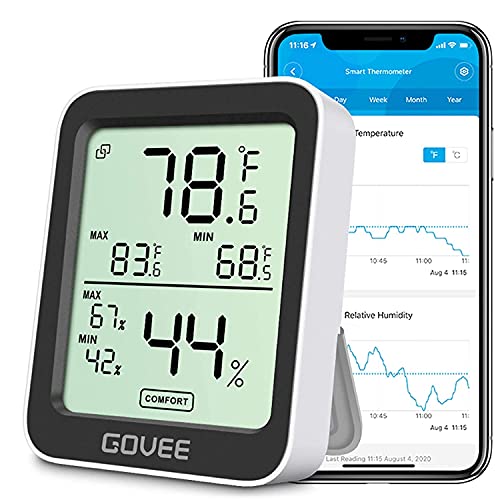
Govee Digital Hygrometer Indoor Thermometer Room H5075, Bluetooth Temperature Humidity Meter with 164ft Remote App Control, Notification Alerts, 2 Years Data Storage Export for Bedroom, Wine Cellar
Smart Features: The Govee Wireless Thermometer Hygrometer supports all basic functions as well as smart functions such as…
As an affiliate, we earn on qualifying purchases.
As an affiliate, we earn on qualifying purchases.
Frequently Asked Questions
How Accurate Are Room Sensors in Different Environmental Conditions?
Room sensors are generally accurate, but their precision can vary with environmental conditions. Proper sensor placement is key; placing sensors away from direct sunlight, drafts, or heat sources helps maintain accuracy. Sensor durability also matters—high-quality sensors withstand humidity and temperature fluctuations better. When installed correctly and chosen wisely, these sensors provide reliable data, ensuring your climate control system responds accurately regardless of changing environmental factors.
Do Room Sensors Require Regular Calibration or Maintenance?
You don’t need to calibrate your room sensors daily, but regular calibration is vital for accuracy. Imagine the sensor’s placement—hidden in a corner or near a vent—making precise readings tricky if misplaced. To keep your climate control smart, check calibration frequency annually or if you notice inconsistent readings. Proper sensor placement and periodic calibration ensure your system responds correctly, maintaining comfort and efficiency effortlessly.
Can Sensors Detect Humidity and Air Quality Alongside Temperature?
Yes, many room sensors can detect humidity and air quality alongside temperature. Proper sensor placement guarantees accurate readings for all these parameters. These sensors often integrate data from multiple sources, providing a thorough view of your environment. This data integration helps your climate control system adjust settings more precisely, improving comfort and efficiency. So, by choosing sensors capable of measuring humidity and air quality, you make your system smarter and more responsive.
Are Room Sensors Compatible With All Smart Thermostat Brands?
Room sensors are like universal adapters—they don’t work seamlessly with all smart thermostat brands. When considering smart sensor compatibility, you’ll find that some brands offer extensive integration options, while others are more limited. Always check the brand’s compatibility list before purchasing. If you want smooth brand integration options, choose sensors specifically designed for your thermostat. This guarantees your climate control system works harmoniously, like a well-conducted orchestra.
How Do Sensors Handle Multiple Rooms With Varying Conditions?
Sensors handle multiple rooms with varying conditions through strategic placement and multi-room zoning. You should position sensors in key areas to accurately detect temperature and humidity differences. With multi-room zoning, the system adjusts heating or cooling independently for each zone, ensuring comfort and efficiency. Proper placement and zoning allow your sensors to respond effectively to each room’s unique environment, optimizing your climate control system for comfort and energy savings.

Leviton Fluorescent/Incandescent Power Pack for Occupancy Sensor with HVAC Relay, 20 Amp FL/INC, 120-277V, OSP20-RD0, Black
Power supply for all OS Series Occupancy sensors and Add-A-Relay
As an affiliate, we earn on qualifying purchases.
As an affiliate, we earn on qualifying purchases.
Conclusion
By now, you see how room sensors revolutionize climate control, turning your home into a sanctuary of perfect comfort. They don’t just make minor adjustments—they orchestrate a symphony of temperature and humidity, ensuring your environment feels just right at all times. With sensors working seamlessly, your system becomes smarter than ever, transforming your space into a haven so comfortable, it’s practically a paradise. Embrace this technology, and watch your home’s comfort reach legendary heights.

GoveeLife 2.0 WiFi Hygrometer Thermometer 3 Pack, Smart Humidity Temperature Sensor with App Notifications, Temperature Humidity for Bedroom, Wine Cellar, Basements(Only Support 2.4G Wi-Fi)
Smart WiFi Control: Monitor indoor thermometer data anytime, anywhere. The gateway can be connected through WiFi via the…
As an affiliate, we earn on qualifying purchases.
As an affiliate, we earn on qualifying purchases.

Peco SP155-017 Trane Compatible Zone Sensor, White
Engineered To Work Within Trane'S Varitrac Zoning
As an affiliate, we earn on qualifying purchases.
As an affiliate, we earn on qualifying purchases.