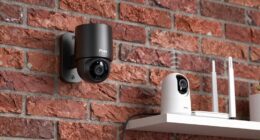

Smart sensors quietly monitor your home’s environment and security without disrupting your daily routine. They track temperature, motion, humidity, and leaks to detect issues early. These sensors communicate seamlessly via IoT, enabling instant alerts and automatic responses like turning on lights or sounding alarms. They provide continuous, unobtrusive protection, making your home safer around the clock. If you stay engaged, you’ll discover how these sensors create a reliable safety shield that adapts and improves over time.
Key Takeaways
- Detect environmental hazards and unusual activity silently, enabling prompt responses without disrupting daily routines.
- Use motion and door/window sensors to monitor suspicious activity and trigger automatic security measures.
- Continuously learn and adapt to environmental changes, enhancing safety and energy efficiency over time.
- Share real-time data across devices via IoT, ensuring quick alerts and coordinated security responses.
- Operate discreetly behind the scenes, providing reliable protection without causing noise or inconvenience.
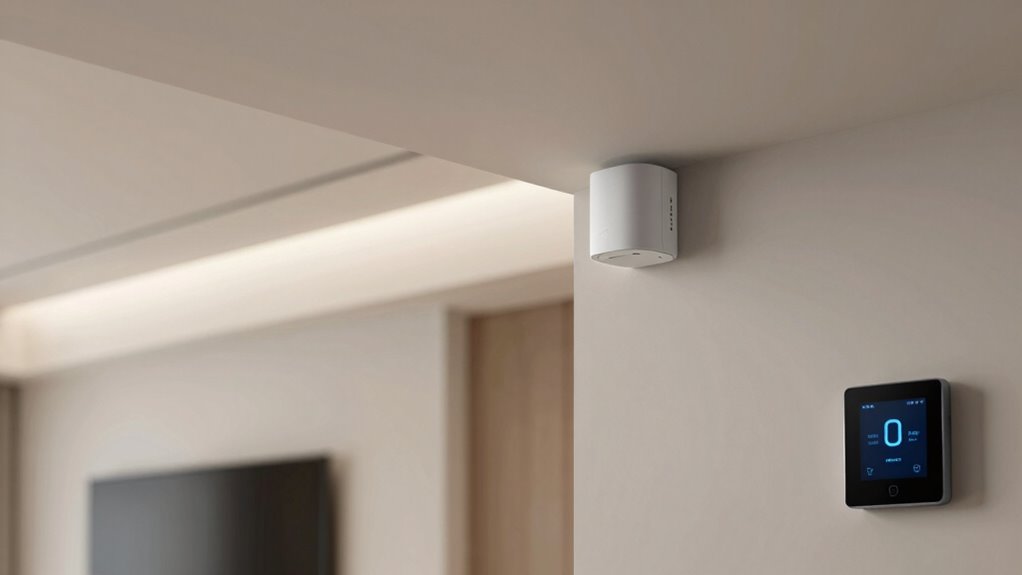
Have you ever wondered how your home becomes smarter and safer at the same time? It all starts with smart sensors quietly working behind the scenes. These tiny devices continuously monitor your environment, detecting everything from temperature changes to motion. They help optimize your home’s systems for energy efficiency, ensuring you’re not wasting electricity or heat. For example, when sensors notice that a room is unoccupied, they can signal your thermostat to lower the temperature or turn off lights, saving energy without any effort on your part. This not only reduces utility bills but also lessens your environmental footprint.
Thanks to IoT connectivity, these sensors seamlessly communicate with other devices in your home. They create a network that shares real-time data, allowing your smart home to respond immediately to different situations. If a sensor detects a sudden increase in humidity or a leak, it can trigger an alert or shut off water supply, preventing costly water damage. Likewise, smoke or carbon monoxide sensors immediately notify you or emergency services if danger arises, providing peace of mind even when you’re away. The interconnected nature of IoT makes these safety features more reliable and faster to act than traditional systems. Sensor connectivity also enables centralized control and monitoring, making it easier to manage your home’s safety features from anywhere.
IoT connectivity enables real-time alerts and faster responses, making your home safer and more reliable.
These sensors work silently and tirelessly, often without you noticing. Their unobtrusive presence is a key part of how they make your home safer. For instance, motion sensors can detect unusual activity when you’re not home, which can be a sign of a break-in. Some systems automatically escalate security measures, like turning on lights or sounding alarms, deterring intruders before they even get close. Additionally, door and window sensors keep track of entries and exits, alerting you if anything unusual happens. All these features work together to create a smart shield around your home, providing security without disrupting your daily routine. Reliable connectivity ensures that these sensors can operate efficiently and respond promptly to any threats or issues.
Moreover, smart sensors continuously learn from their environment, improving their responses over time. They adapt to your lifestyle, making safety and energy management more efficient. Whether it’s adjusting lighting based on natural sunlight or detecting subtle signs of trouble, these sensors help create a home that’s not just smarter but genuinely safer. Understanding sensor connectivity and reliable connectivity mean you can trust that your home is protected at all times, giving you peace of mind without the need for constant oversight. By integrating these sensors into your overall security system, you enhance the effectiveness of home protection. In short, smart sensors are the invisible guardians that make your home safer and more efficient, all through advanced technology working in harmony.

ecobee Smart Sensor 2 Pack – Comfort, Security, Energy Savings, Temperature and Occupancy Detection – Compatible with ecobee Thermostats for Home
Knows when a room is occupied and communicates the temperature to your ecobee smart thermostat from up to…
As an affiliate, we earn on qualifying purchases.
As an affiliate, we earn on qualifying purchases.
Frequently Asked Questions
How Do Smart Sensors Detect Unusual Activity?
Smart sensors detect unusual activity through advanced algorithms that analyze sensor accuracy and patterns. They monitor movement, sound, or environmental changes, triggering alerts only when genuine anomalies occur. This reduces false alarms, ensuring you’re notified of real issues without unnecessary disruptions. By continuously learning and refining their detection capabilities, smart sensors provide reliable safety, giving you peace of mind while quietly safeguarding your home.
Can Smart Sensors Be Hacked or Jammed?
Yes, smart sensors can be hacked or jammed, posing potential security risks. Sensor vulnerabilities include unauthorized access and signal interference, which could disable or manipulate sensor functions. To prevent hacking, you should update firmware regularly, use strong, unique passwords, and enable encryption. Jamming can be thwarted by deploying sensors with anti-jamming features and monitoring unusual activity, ensuring your smart home remains secure and resilient against cyber threats.
What Is the Cost of Installing Smart Sensors?
The cost of installing smart sensors varies based on sensor placement and system complexity, typically ranging from $50 to $300 per device. You’ll want to compare costs carefully, considering installation fees and ongoing subscriptions. A cost comparison helps you decide whether a basic setup or a more advanced system fits your budget. Keep in mind, investing in smart sensors can save money long-term by enhancing home safety and preventing damage.
Do Smart Sensors Require Professional Installation?
Think of smart sensors as your home’s silent guardians; they’re designed for ease. Most smart sensor types are user-friendly, and many can be installed by you, saving on installation challenges. However, some complex systems, like those integrated with existing security setups, might require professional help. If you’re comfortable with basic tech, you can usually set them up yourself, but for complex configurations, hiring a pro guarantees everything runs smoothly.
How Often Do Smart Sensors Need Maintenance?
Smart sensors generally require minimal maintenance, but you should check their sensor battery longevity and replace batteries when needed, usually once every 1-2 years. Firmware updates are typically infrequent, often once or twice a year, and help improve performance and security. Regularly inspecting your sensors guarantees they stay operational, but overall, they’re designed to be low-maintenance, allowing you to enjoy a safer home with minimal effort.

Wireless Motion Sensor Door Chime: Business Entry Doorbell Indoor Motion Detector Buzzer (500Ft Range, 32 Tunes, 5 Level Volume) Store Entrance Alert Bell Bed Alarm for Elderly Dementia Patients
【32 UNIQUE CHIMES & 5 VOLUME LEVELS】Motion sensor doorbell features 32 unique ringtones including alarm sounds, door bell…
As an affiliate, we earn on qualifying purchases.
As an affiliate, we earn on qualifying purchases.
Conclusion
Smart sensors quietly enhance your home’s safety, providing peace of mind without fuss. Imagine a sensor detecting a gas leak early, alerting you instantly and preventing disaster. These tiny devices work behind the scenes, constantly monitoring and protecting your loved ones. As technology advances, your home becomes smarter and safer, giving you confidence that help is just a moment away. Embrace smart sensors—they’re your silent guardians, ensuring peace of mind every day.

Water Leak Detector+Climate Sensor,Hygrometer Thermometer with App Notifications,Wireless 2.4G WiFi,Humidity Temperature Alarm,for Home, Basement, Kitchen,Washroom,Bedroom
2 Funtions in 1 Sensor:This sensor is not only a water leak detector but also a thermometer and…
As an affiliate, we earn on qualifying purchases.
As an affiliate, we earn on qualifying purchases.
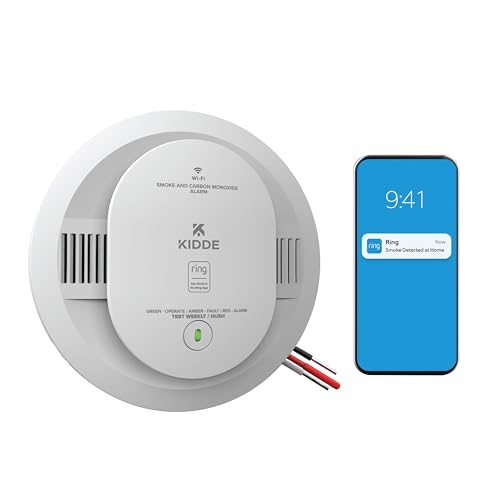
Kidde Smart Smoke and Carbon Monoxide Detector, Ring App Enabled for Real-Time Notifications, Hardwired Alarm, AA Backup Battery
Double the Detection: Alerts you to both smoke and carbon monoxide (CO)
As an affiliate, we earn on qualifying purchases.
As an affiliate, we earn on qualifying purchases.