
Motion detection quickly alerts you when movement happens, but it can’t tell what’s causing it, often leading to false alarms from pets or branches. AI detection, on the other hand, uses smart algorithms to analyze video feeds and identify specific objects, behaviors, or people, making your security more accurate and reliable. Understanding these differences helps you choose the right system for your needs. Keep exploring to discover how combining both methods can boost your security even further.

Get home appliances delivered free with Prime
- Fast, free delivery on millions of items
- Prime Video, Amazon Music and more included
- Member-only deals all year
Key Takeaways
- Motion detection identifies movement based on light or heat changes, while AI detection analyzes video data using algorithms to recognize specific objects or behaviors.
- Motion detection is quick but prone to false alarms from harmless activities; AI detection filters out irrelevant movements for accuracy.
- AI detection offers detailed insights and context, enabling it to distinguish between authorized and suspicious individuals or activities.
- Combining both methods creates a layered security system, enhancing detection accuracy and reducing false positives.
- Motion detection provides rapid alerts for basic monitoring, whereas AI detection supports complex analysis for high-security environments.
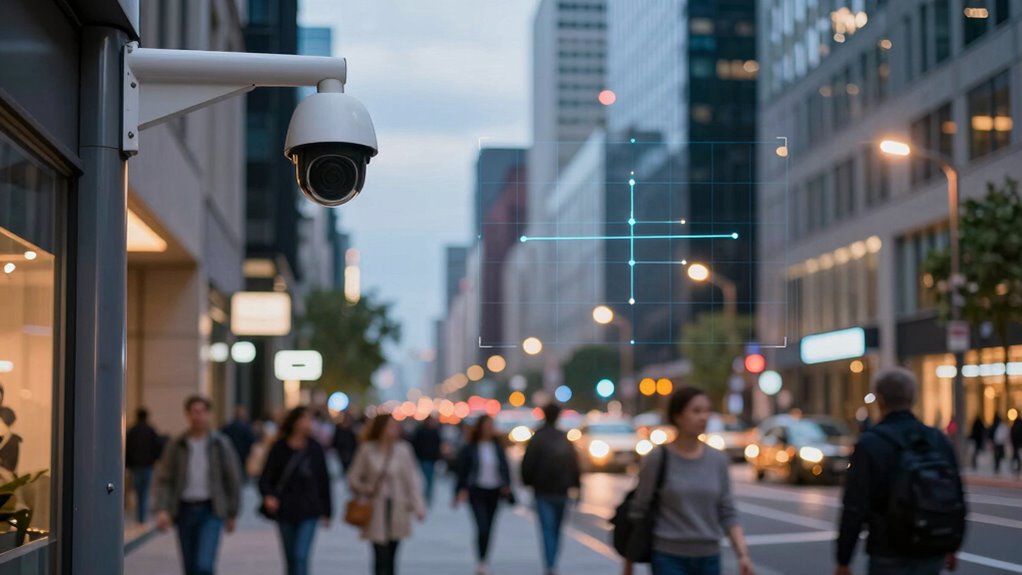
Understanding the difference between motion detection and AI detection is essential as surveillance technology continues to evolve. When you’re setting up security systems, knowing how these technologies work helps you make smarter choices and enhances your security protocols. Motion detection is the simpler of the two; it relies on sensors that trigger alerts when they sense movement within a designated area. These sensors typically detect changes in heat or light and respond quickly, but they lack the ability to distinguish between different types of movement. That means they might alert you to harmless activities like a tree branch swaying or a pet moving around, which can lead to false alarms or unnecessary responses.
Motion detection triggers alerts for any movement but may cause false alarms due to inability to distinguish activities.
AI detection, on the other hand, introduces a new level of intelligence to surveillance systems. It uses advanced algorithms and machine learning to analyze video feeds in real-time. Instead of just noticing movement, AI can identify specific objects, behaviors, or even the identity of people. This ability allows it to filter out irrelevant activities, reducing false alarms and improving your security protocols. When you integrate AI detection into your system, you gain a tool that’s capable of making nuanced decisions, such as recognizing a person who shouldn’t be there, or alerting you only when suspicious activity occurs. This level of sophistication makes AI detection especially valuable in high-security environments where precision matters.
Technology integration plays a pivotal role in maximizing the benefits of both detection methods. Combining motion detection with AI detection creates a layered security approach. For example, you might have motion sensors that initially detect movement, followed by AI analysis to determine whether the activity warrants an alert. This integration reduces the chance of false positives and saves you time and resources. It also supports your security protocols by providing detailed insights and context, so you’re not just reacting to raw data but making informed decisions based on intelligent analysis. Additionally, integrated security systems can adapt over time to recognize new threats and improve their accuracy, ensuring your security remains up-to-date. The incorporation of advanced detection techniques further enhances the system’s ability to handle complex scenarios effectively.
Ultimately, understanding these differences helps you tailor your security system to fit your specific needs. Motion detection offers quick, straightforward alerts, but it lacks the depth of analysis that AI provides. By leveraging technology integration, you can create a smarter, more reliable surveillance setup that enhances your overall security posture. Whether you’re safeguarding a home, a business, or a public space, knowing when and how to use each technology ensures you’re better prepared to respond effectively to any situation. Recognizing the importance of surveillance technology evolution helps you stay ahead in deploying the most effective security solutions. As technology advances, detection methods will continue to become more sophisticated and tailored to diverse security environments.
AI motion detection security camera
As an affiliate, we earn on qualifying purchases.
As an affiliate, we earn on qualifying purchases.
Frequently Asked Questions
How Accurate Is AI Detection Compared to Motion Detection?
AI detection is generally more accurate than traditional motion detection, reducing false alarms by analyzing specific patterns and behaviors. You’ll notice fewer unnecessary alerts, which helps address privacy concerns since it minimizes data collection on irrelevant movements. However, no system is perfect; some false alarms may still occur, but AI’s ability to differentiate between humans and animals makes it a more reliable choice for enhancing security without compromising privacy.
What Are the Cost Differences Between the Two Technologies?
You’ll find that AI detection often requires a more significant investment upfront, due to its advanced capabilities and sophisticated implementation challenges, which can lead to higher costs. Motion detection tends to be more budget-friendly, but it might not address all security vulnerabilities effectively. While AI detection offers all-encompassing coverage, it’s essential to weigh these costs against potential security vulnerabilities and the ease of implementation to find the best fit for your needs.
Can AI Detection Identify Specific Objects or Just General Motion?
AI detection can identify specific objects through advanced object recognition technology, not just general motion. This means you can set alerts for particular items, like a person or vehicle, reducing false alarms caused by irrelevant movements. Unlike basic motion detection, AI systems analyze details to distinguish objects accurately, making your security smarter and more reliable. This targeted approach helps you respond more effectively to genuine security threats.
How Do Environmental Factors Affect Each Detection Method?
Environmental factors like weather, lighting, and obstructions can considerably impact both detection methods. Motion detection often triggers false alarms due to environmental interference like shadows or moving branches, making it less reliable in changing conditions. AI detection, however, is better at filtering out false alarms by analyzing contextual cues, but it can still be affected by extreme environmental interference. Both methods require proper calibration to minimize inaccuracies caused by environmental factors.
Is AI Detection More Energy-Efficient Than Traditional Motion Detection?
AI detection is generally more energy-efficient than traditional motion detection because it uses advanced algorithms that analyze data more precisely, reducing unnecessary power consumption. With better power efficiency, AI systems can operate longer on less energy, saving you electricity costs. While they might require more initial processing power, their smarter detection leads to overall lower energy consumption, making them a more sustainable choice for continuous monitoring.
wireless motion sensor alarm system
As an affiliate, we earn on qualifying purchases.
As an affiliate, we earn on qualifying purchases.
Conclusion
So, now you see how motion detection is like a watchful lighthouse, alerting you to any passing ships, while AI detection is a keen-eyed eagle, analyzing every detail from above. Motion detection quietly whispers, “Something’s here,” but AI detection dives deep, understanding the story behind the movement. Think of it as the difference between a flickering candle and a bright, guiding star—each illuminating your security world in its own unique way.
smart security camera with AI detection
As an affiliate, we earn on qualifying purchases.
As an affiliate, we earn on qualifying purchases.
video surveillance system with motion and AI detection
As an affiliate, we earn on qualifying purchases.
As an affiliate, we earn on qualifying purchases.
Halloween Picks
halloween
As an affiliate, we earn on qualifying purchases.