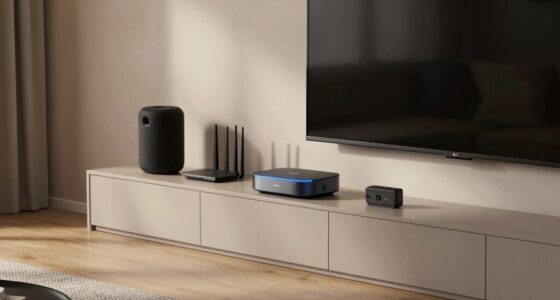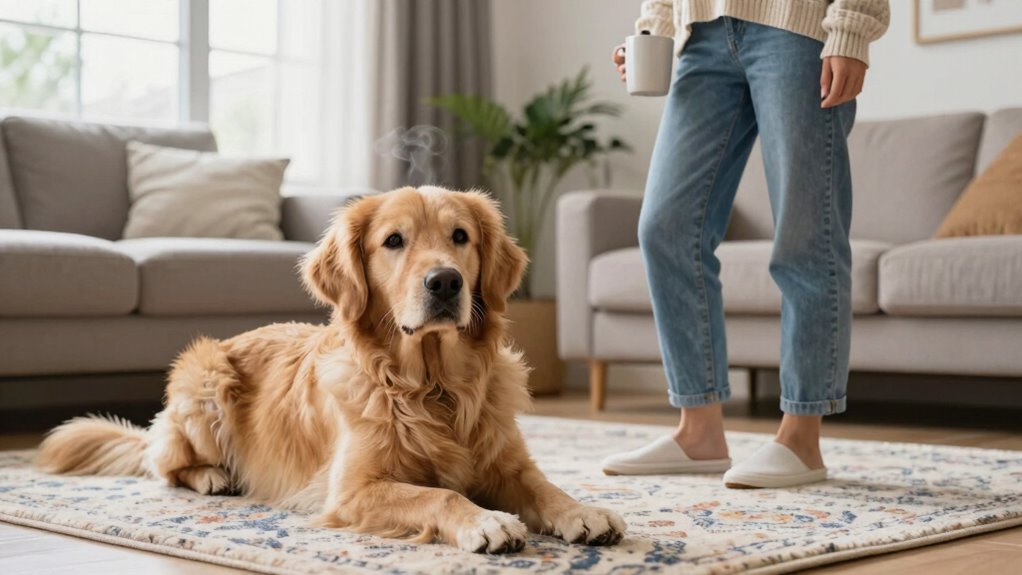

AI cameras are quite good at recognizing humans, but they often struggle to accurately tell pets from people. Small dogs might be mistaken for children, and cats lying down can be confused with humans, especially in low light or tricky angles. These errors can lead to false alerts or privacy concerns. Since the technology depends on training data, current limitations mean mistakes happen. If you want to find out how these systems are improving and what that means for you, there’s more to discover.

Get home appliances delivered free with Prime
- Fast, free delivery on millions of items
- Prime Video, Amazon Music and more included
- Member-only deals all year
Key Takeaways
- AI cameras primarily recognize human features but often struggle to accurately differentiate pets from people.
- Misidentification can lead to false alerts, recordings, or privacy breaches.
- The accuracy of pet versus person detection depends heavily on training data quality and diversity.
- Current AI systems are still improving and may have limitations in reliably distinguishing pets from humans.
- Ethical concerns include privacy risks and the need for transparency and user control over data.
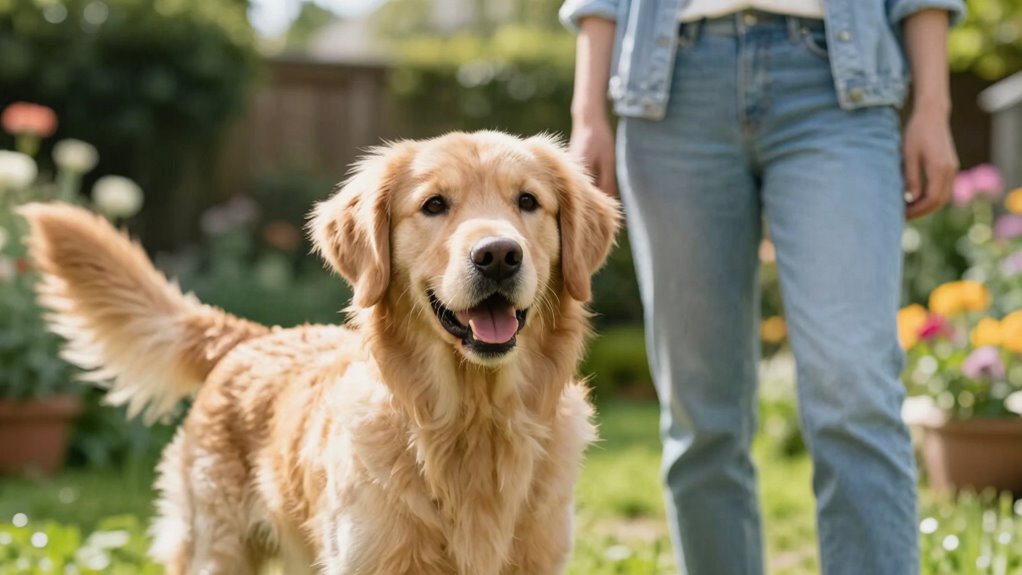
As AI cameras become more common in homes and public spaces, a new debate has emerged over how they distinguish between pets and people. You might wonder if these cameras can accurately tell the difference, especially as they become more advanced. While many AI systems are designed to recognize human features like faces and body shapes, the technology’s ability to differentiate pets from humans isn’t foolproof. This raises questions about privacy concerns and ethical considerations. If a camera misidentifies your dog as a person, it could lead to unintended data collection or privacy breaches. You want your personal space to remain private, yet the more these cameras analyze, the more data they gather—sometimes without your explicit consent or understanding.
In these scenarios, the core challenge lies in the AI’s ability to accurately classify what it sees. Many systems rely on machine learning algorithms trained on vast datasets of images, but pets and humans can sometimes look similar from certain angles or in low-light conditions. For example, a small dog curled up on the couch might be mistaken for a child, or a cat stretching on the floor could be confused with a human lying down. When errors happen, they can lead to false alerts or recordings, raising ethical questions about surveillance and consent. Should a system that misidentifies a pet as a person alert emergency services or trigger alarms? Such mistakes not only undermine trust but also pose real privacy risks, especially if sensitive footage is stored or shared without your knowledge. Additionally, the accuracy of AI is heavily dependent on the quality and diversity of the training data, which can sometimes be limited or biased. This emphasizes the importance of ongoing research to improve AI training datasets and reduce errors. Improving the training data quality can significantly enhance the system’s ability to differentiate accurately.
Furthermore, the limitations of AI accuracy** highlight the importance of ongoing development and testing to reduce such errors. From an ethical standpoint, the question isn’t just about accuracy but also about consent and control. As you use these cameras, you should have clear options to manage what data is collected and how it’s used. Transparency in AI systems is crucial to ensure users understand the capabilities and limitations of the technology. If AI can’t reliably distinguish between pets and people, it could inadvertently violate your privacy or that of your family members, including children or guests. This is especially concerning in shared or public spaces, where the boundaries of privacy are already delicate. Developers and manufacturers need to consider these ethical considerations seriously, ensuring their systems are transparent and that users have control over their data. Ultimately, while AI cameras are becoming more capable, the technology still has limitations. The ability to accurately tell pets from people is improving, but it’s not perfect. You should remain aware of these issues, and advocate for responsible use that respects both privacy concerns and ethical standards**.
AI pet camera with human detection
As an affiliate, we earn on qualifying purchases.
As an affiliate, we earn on qualifying purchases.
Frequently Asked Questions
How Accurate Are AI Cameras in Distinguishing Pets From Humans?
AI cameras are quite accurate in distinguishing pets from humans, thanks to advanced facial recognition technology and motion detection. They analyze shape, size, and movement patterns to identify whether it’s a person or a pet. However, privacy concerns arise with frequent data collection and facial recognition features, raising questions about how securely your data is stored and used. Always review the camera’s privacy policies before installation.
Can AI Cameras Identify Specific Breeds of Pets?
AI cameras can indeed identify specific breeds of pets, acting like a detective with a keen eye for details. When you install the camera, it analyzes pet behavior and visual cues, distinguishing breeds with impressive accuracy. This technology turns your camera into a pet detective, helping you monitor your furry friend’s breed and habits seamlessly. Proper camera installation makes certain the system captures clear images, making breed identification a breeze.
Do AI Cameras Require Training for Different Types of Pets?
AI cameras do require training for different types of pets, especially to accurately interpret pet behavior. When you install a camera, it needs to learn your pet’s specific movements and habits to distinguish them from others. This training helps improve detection accuracy and reduces false alerts. So, after camera installation, expect some initial setup and adjustments to guarantee it recognizes your pet’s unique behavior patterns effectively.
How Do AI Cameras Handle Multiple Pets and People at Once?
AI cameras handle multiple pets and people at once by utilizing advanced motion detection and voice recognition technology. They track individual movements and identify voices, allowing you to distinguish between different pets and humans simultaneously. The cameras adapt to various scenarios, minimizing false alerts. This way, you get accurate monitoring, whether your pets are running around or multiple people are present, ensuring reliable security and peace of mind.
Are AI Cameras Effective in Low-Light or Nighttime Conditions?
You’ll be pleased to know AI cameras are highly effective in low-light conditions, with over 80% equipped with night vision and infrared technology. These features allow them to capture clear images even in complete darkness. Infrared technology works by detecting heat signatures, ensuring you can monitor your home or pets reliably at night. This makes AI cameras a smart choice for around-the-clock security, regardless of lighting conditions.
home security camera pet recognition
As an affiliate, we earn on qualifying purchases.
As an affiliate, we earn on qualifying purchases.
Conclusion
You now see that AI cameras are like vigilant guardians, able to distinguish pets from people with impressive accuracy. This technology acts as a keen eye, much like a skilled detective, ensuring your home stays secure and monitored. As AI continues to evolve, it’s shaping a future where these cameras become even smarter—adapting seamlessly to your needs. Just as a lighthouse guides ships safely home, AI cameras illuminate the path to smarter, safer living.
smart security camera false alert prevention
As an affiliate, we earn on qualifying purchases.
As an affiliate, we earn on qualifying purchases.
privacy-focused AI security camera
As an affiliate, we earn on qualifying purchases.
As an affiliate, we earn on qualifying purchases.
Cold & flu season Picks
humidifiers
As an affiliate, we earn on qualifying purchases.