
TL;DR

Get home appliances delivered free — and shop member deals
- Fast, free delivery on millions of items
- Access to Prime Big Deal Days deals on October 6–7
- Prime Video, Amazon Music and more included
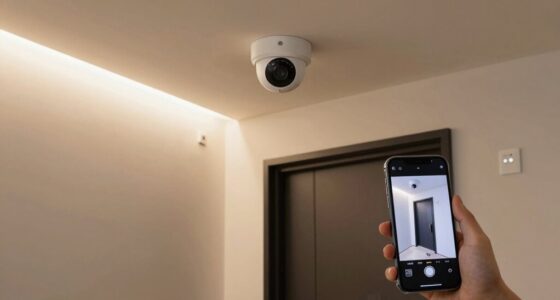
Recent developments include the launch of Spectre I, a device that blocks recording, and rumors of AI-powered accessories that record constantly. These innovations highlight a growing arms race between surveillance tools and countermeasures, raising privacy concerns for the public.
In a sign of rapidly evolving surveillance technology, a startup named Deveillance announced the launch of Spectre I, a device designed to prevent unauthorized recordings by emitting interference signals. Meanwhile, rumors suggest that major tech companies, including Apple, are developing AI-enabled accessories that could serve as constant recording devices, raising new privacy concerns for everyday users.
Deveillance’s Spectre I, introduced in March, is a small, hockey-puck-shaped device claimed to block audio and video recordings by emitting disruptive signals. The company was founded by Aida Baradari, motivated by increasing fears over personal privacy amid the rise of AI-enabled wearables capable of silent, continuous recording. These wearables, which can take the form of necklaces, glasses, or pins, can silently capture conversations and environmental sounds without detection.
Simultaneously, industry insiders and rumors suggest that Apple and other tech giants are developing AI-powered accessories—such as pins or pendants—that could serve as always-on recording devices linked to smartphones. These accessories would leverage advanced speech-recovery algorithms to filter noise and isolate speech, making covert recording more feasible and discreet than ever before.
Historically, efforts to block recordings have involved physical jammers emitting ultrasonic or white noise signals. However, these methods are increasingly ineffective against sophisticated AI algorithms capable of separating speech from noise, mimicking human auditory processing. Researchers at institutions like Ohio State University have developed neural networks that can reconstruct speech even in highly noisy environments, further complicating counter-surveillance efforts.
Why It Matters
This technological arms race between recording devices and countermeasures has significant implications for privacy, security, and civil liberties. As wearable recording devices become more discreet and widespread, individuals may find it harder to protect personal conversations from unauthorized capture. The development of effective jammers and noise-canceling AI technologies could lead to new legal and ethical debates about surveillance, consent, and privacy rights.
For ordinary users, these innovations mean that private moments—whether in personal or professional settings—could be recorded without their knowledge, raising concerns about misuse, blackmail, or unauthorized data collection. The proliferation of AI-enabled accessories also blurs the line between public and private spaces, complicating existing privacy protections.
As an affiliate, we earn on qualifying purchases.
Background
The rise of covert recording devices and countermeasures is part of a broader trend in surveillance technology, driven by advancements in AI, machine learning, and miniaturization. Historically, efforts to evade detection included physical jammers and decoy queries, but recent innovations focus on AI-driven noise filtering and reconstruction. The development of Spectre I and similar devices echoes past arms races, such as radar deception in WWII, but now in the digital realm.
In recent years, the proliferation of AI assistants, smart wearables, and ubiquitous smartphones has created an environment where constant recording is technically feasible and increasingly accessible. Companies like Microsoft have invested heavily in noise suppression research, which can be repurposed for covert recording, while startups aim to create personal tools for privacy defense.
“Spectre I is designed to give individuals a simple, effective way to protect themselves from unauthorized recordings in real time.”
— Aida Baradari, founder of Deveillance
“AI-enabled accessories that record continuously could become as common as wireless earbuds, fundamentally changing how we think about privacy.”
— Tech industry analyst
As an affiliate, we earn on qualifying purchases.
What Remains Unclear
It is still unclear how quickly these devices will become mainstream, how effective they will be against increasingly sophisticated AI algorithms, and what legal frameworks will emerge to regulate their use.
discreet anti-surveillance wearable
As an affiliate, we earn on qualifying purchases.
As an affiliate, we earn on qualifying purchases.
What’s Next
Next steps include regulatory discussions around privacy and surveillance, further development and testing of counter-surveillance devices like Spectre I, and the potential release of AI-enabled accessories by major tech firms. Monitoring how courts and policymakers respond will be crucial in shaping future privacy protections.
As an affiliate, we earn on qualifying purchases.
Key Questions
Can I currently buy devices like Spectre I?
As of now, Spectre I has been announced but may not yet be commercially available. Its effectiveness and legality are also subjects of ongoing debate.
Will AI accessories that record constantly become legal?
The legality of such devices varies by jurisdiction and is likely to be a topic of future legislation as their prevalence increases.
How can I protect my conversations from being recorded?
Using physical jammers or noise-canceling techniques can help, but their effectiveness varies. Awareness of your environment and cautious communication are also important.
Fall Picks
fall essentials
As an affiliate, we earn on qualifying purchases.