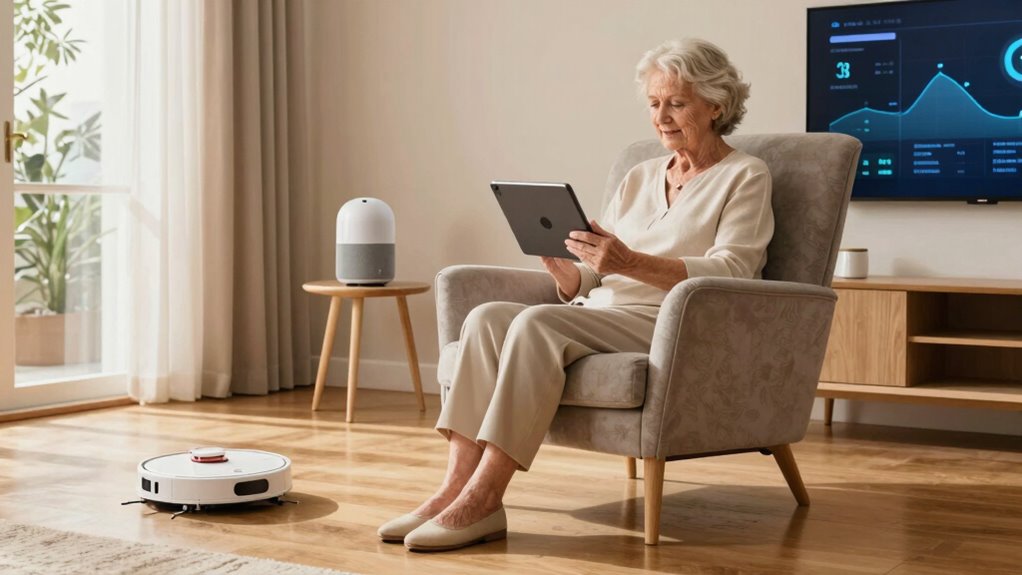

AI helps you age in place by making your home safer, more comfortable, and easier to manage. It automatically adjusts lighting, temperature, and locks, learning your preferences over time. Voice assistants simplify daily tasks, while health sensors monitor your well-being and detect emergencies early. This technology supports independence by providing proactive safety and health insights. Keep exploring to discover how AI can empower your life at home.

Get home appliances delivered free — and shop member deals
- Fast, free delivery on millions of items
- Access to Prime Big Deal Days deals on October 6–7
- Prime Video, Amazon Music and more included
Key Takeaways
- AI-powered systems automatically adjust home environments for comfort and safety, reducing manual effort for seniors.
- Connected devices enable seamless control and automation, enhancing convenience and energy efficiency.
- Wearable sensors and AI detect emergencies like falls or health issues, enabling rapid response.
- Continuous health monitoring helps identify potential problems early, decreasing hospital visits.
- User-friendly AI technology supports independence, safety, and aging in place with proactive safety measures.
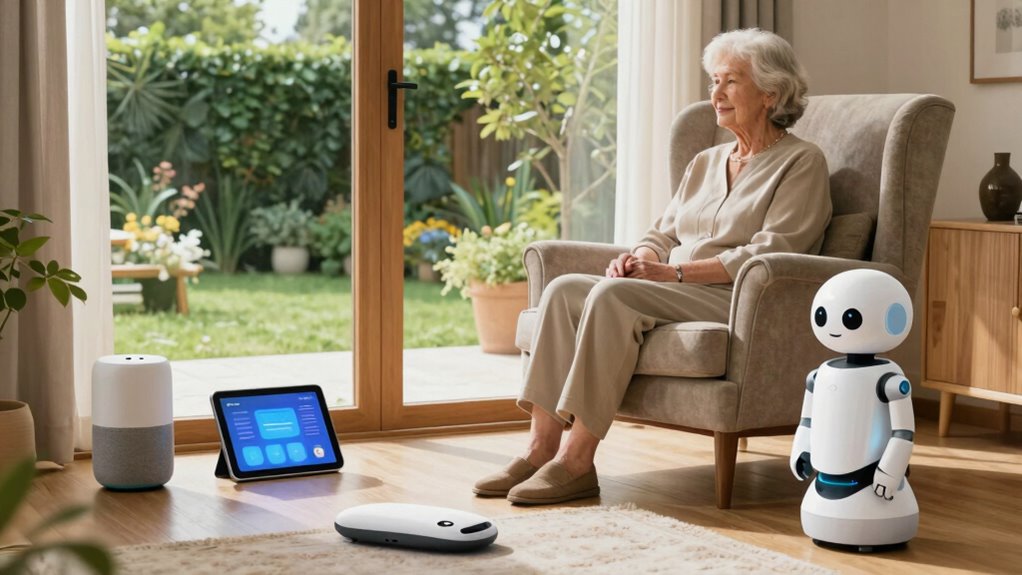
As technology advances, AI is transforming the way seniors live independently, making aging in place safer and more manageable. One of the most significant ways it does this is through smart home integration. With AI-powered devices, your home can automatically adjust lighting, temperature, and even locking systems based on your routines. Imagine waking up in a home that gently brightens your room at dawn or having your door lock itself securely when you leave. These smart systems learn your preferences over time, reducing the need for manual adjustments and creating a comfortable, personalized environment. Furthermore, AI integration connects various devices, so they work together seamlessly. For example, your voice-activated assistant can control your TV, set reminders for medication, or even notify you if a window is left open. This interconnectedness enhances your independence, allowing you to manage daily tasks effortlessly. Additionally, AI-driven home automation can optimize energy use, lowering utility costs and improving overall efficiency. Emergency response systems are another crucial aspect of AI that empower seniors to stay safe. When an emergency occurs, such as a fall or sudden health issue, AI-enabled emergency response systems can detect the problem and alert help immediately. These systems often include wearable devices equipped with sensors that monitor vital signs, movement, and activity levels. If a fall is detected or if you don’t move for a specified period, the system automatically contacts emergency services or designated family members. This rapid response can be life-saving, especially during times when you’re alone or unable to call for help yourself. Additionally, AI-driven systems can provide real-time guidance during emergencies, directing responders exactly to your location and sharing relevant health data. This level of proactive safety support offers peace of mind, knowing help can arrive promptly when needed. As these technologies continue to evolve, they will become even more intuitive, making aging in place more accessible, and more comfortable and secure. The integration of AI in healthcare devices further supports seniors by providing constant health monitoring and early detection of potential issues, ultimately reducing hospital visits and improving quality of life. With AI, you’re empowered to maintain your independence longer, confident that your home is smart enough to support your needs and alert others if help is required. This combination of convenience and safety is transforming the experience of aging at home, giving you peace of mind and a greater sense of control over your environment.
Frequently Asked Questions
How Affordable Is AI Technology for Seniors Living Alone?
AI technology for seniors living alone is becoming increasingly affordable as costs decrease and more user-friendly options emerge. A thorough cost analysis shows that many AI devices, like fall detectors or voice assistants, are now accessible, especially with government programs or subsidies. Your technology adoption process becomes easier when you choose simple, reliable solutions, making AI a practical option for enhancing safety without breaking the bank.
Are There Privacy Concerns With AI Devices in the Home?
Privacy risks and data security concerns are real with AI devices in your home. While these technologies offer safety and convenience, they also collect sensitive information, potentially exposing you to breaches or unauthorized access. You must weigh the benefits against the risks, ensuring devices have robust security measures. Stay informed about privacy policies, and consider using secure networks, so you can enjoy AI’s advantages without compromising your personal privacy.
Can AI Replace Human Caregivers Entirely?
AI can’t replace human caregivers entirely because it lacks emotional support and genuine social engagement. While AI can assist with daily tasks and monitor health, it doesn’t provide the warmth, understanding, or personal connection that humans offer. You still need human caregivers for emotional reassurance and meaningful interactions, especially as these elements are essential for overall well-being. AI enhances care but can’t fully substitute the human touch.
How Easy Is It for Seniors to Learn AI Systems?
You might think seniors struggle with learning AI systems, but user training and tech accessibility make it easier. Many AI tools are designed with simple interfaces and clear instructions, helping you adapt quickly. With patience and support, you can master these systems, gaining independence and confidence. Technology is increasingly intuitive, so embracing AI becomes a manageable, even enjoyable, step toward aging comfortably at home.
What Are the Limitations of Current AI for Aging in Place?
Current AI systems face technological barriers like limited adaptability and complexity, making them hard for seniors to use confidently. These limitations can lead to frustration and feelings of isolation, impacting emotional well-being. While AI can support aging in place, its effectiveness hinges on overcoming these barriers to guarantee ease of use and emotional comfort, helping seniors feel more secure and independent at home.
Conclusion
Embracing AI is like handing you a trusty lighthouse in the fog—it guides your way home safely, illuminating paths you might not see alone. With these digital allies, aging in place becomes a journey filled with confidence and comfort, transforming your home into a sanctuary that whispers, “You’re not alone.” As technology and care intertwine, your golden years sparkle brighter, shimmering like a lighthouse’s beam cutting through the night, guiding you safely to the shores of independence.
Fall yard work Picks
leaf blowers
As an affiliate, we earn on qualifying purchases.