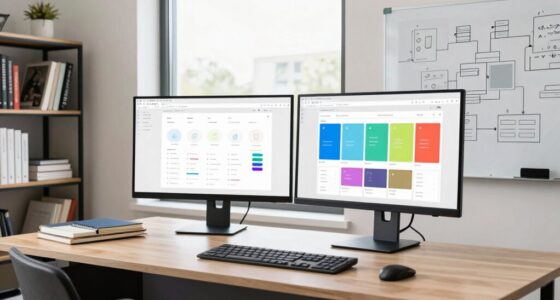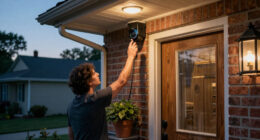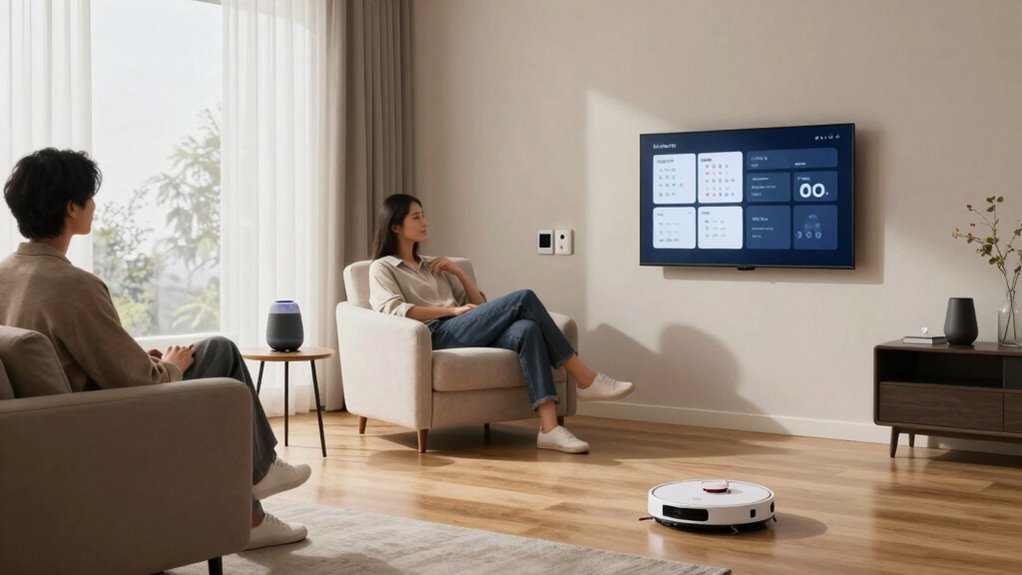

Smart homes support your independence by allowing you to control household functions remotely or through voice commands, making daily routines smoother. They include features like automated lighting, smart locks, and safety systems that cater to your specific needs, enhancing safety and comfort. Accessibility tools help you manage mobility or vision challenges easily. With these technologies, you stay connected, secure, and confident. If you want to discover more about how smart homes can transform your daily life, keep exploring further insights.

Get home appliances delivered free with Prime
- Fast, free delivery on millions of items
- Prime Video, Amazon Music and more included
- Member-only deals all year
Key Takeaways
- Enable remote control of household functions, reducing reliance on others and promoting autonomy.
- Incorporate accessibility features like voice activation and custom setups for diverse needs.
- Automate lighting, blinds, and climate control to create a comfortable, hazard-free environment.
- Integrate emergency systems for quick assistance, enhancing safety and confidence.
- Ensure device interoperability and user-friendly interfaces for seamless daily management.

Have you ever wondered how technology can enhance independence for seniors and individuals with disabilities? It’s all about smart homes and how they bring everyday convenience right to your fingertips. With home automation, you gain the ability to control various household functions remotely or automatically, making daily routines smoother and less stressful. Imagine adjusting your thermostat, turning on lights, or unlocking doors with just a tap on your smartphone or a simple voice command. This level of control can significantly reduce reliance on others, fostering a sense of autonomy and confidence in managing your home environment.
Accessibility features are at the heart of these smart home solutions. They’re designed specifically to meet diverse needs, whether you have mobility challenges, visual impairments, or other disabilities. Voice-activated assistants like Alexa or Google Home are game-changers, allowing you to operate appliances, check the weather, or get reminders without physical effort. Smart doorbells and security cameras not only keep you connected to your home’s safety but also provide peace of mind by enabling remote monitoring. These features are customizable, ensuring that your home adapts to your unique requirements rather than forcing you to fit into a standard setup.
What makes these features so powerful is their ability to create a seamless environment that promotes independence. For example, smart lighting systems can be programmed to turn on automatically at certain times or be controlled by voice, eliminating the need to navigate dark hallways or reach for switches. Automated blinds and curtains can respond to sunlight or be controlled remotely, helping you manage privacy and comfort without physical strain. Additionally, emergency response systems integrated into smart homes can alert caregivers or emergency services instantly if needed, providing an extra layer of safety. These integrated systems are crucial in creating a truly supportive living space. Incorporating accessibility features that are tailored to individual needs further enhances the usability and effectiveness of smart home technology. Understanding the potential for assistive technologies to complement these systems can further empower users and enhance overall independence.
This technology isn’t just about convenience; it’s about empowering you to live more freely in your own space. With simple, intuitive interfaces and customizable accessibility features, smart homes reduce barriers that might otherwise limit your independence. You can also enhance your home’s adaptability by exploring smart home standards, which ensure compatibility across different devices and platforms. You’re able to stay connected, safe, and comfortable, all while maintaining control over your daily routines. The integration of home automation and accessibility features transforms your living environment into a supportive space that adapts to your needs, giving you the confidence to live more independently than ever before.
Products Worth Considering

EcoFlow DELTA 3 Max Portable Power Station, 2048Wh LFP Battery

LG UltraGear 27GX704A-B 27-Inch QHD OLED Gaming Monitor, 240Hz

DJI Mini 5 Pro Fly More Combo with DJI RC 2
As an affiliate, we earn on qualifying purchases.
Frequently Asked Questions
How Do Smart Homes Adapt to Changing Mobility Needs?
Smart homes adapt to your changing mobility needs through innovative adaptive features and mobility solutions. You can easily install motorized doors, adjustable countertops, and automated lighting that respond to your movements. Voice-controlled assistants and remote systems allow you to operate appliances effortlessly. These smart features make your environment more accessible, giving you greater independence and safety as your mobility requirements evolve.
Can Smart Homes Be Customized for Specific Disabilities?
Did you know that 80% of people with disabilities say technology improves their independence? Smart homes can indeed be customized for specific disabilities, making daily life easier. You can use voice activation to control lights, doors, and appliances, tailored to your needs. Customizable interfaces allow you to adjust settings for comfort and accessibility, ensuring your home adapts perfectly to your unique mobility or sensory requirements.
What Are the Privacy Concerns With Smart Home Technology?
You might worry about privacy when using smart home technology, especially regarding data security and surveillance concerns. Your personal data could be vulnerable if not properly protected, risking unauthorized access or breaches. Surveillance concerns also arise if devices continuously monitor your activities without clear consent. To safeguard your privacy, choose reputable systems with strong security features and stay informed about how your data is stored, used, and shared.
How Affordable Are Smart Home Systems for Seniors?
Smart home systems are becoming more affordable for seniors, with options that range from budget-friendly to premium. When considering cost comparison, affordability factors include the system’s features, installation costs, and ongoing maintenance. You can find basic setups for a few hundred dollars, while more advanced systems might cost a few thousand. Many providers offer discounts or financing plans, making smart home technology accessible and supporting independent living without breaking the bank.
Are Smart Homes Easy to Operate for Non-Tech-Savvy Individuals?
If you’re not tech-savvy, smart homes can still be easy to operate. For instance, a senior in a case study used voice control to turn on lights and adjust the thermostat, finding it straightforward and user-friendly. Smart systems are designed with simplicity in mind, featuring intuitive interfaces and voice commands that make daily tasks manageable without technical expertise. You’ll likely find these features eliminate frustration, making smart homes accessible for everyone.
Conclusion
So, congratulations! With smart homes, you’re officially living in the future—where your fridge might judge your snack choices and your thermostat whispers sweet nothings to keep you cozy. Who needs independence when your smart devices can do everything for you, right? Just sit back, relax, and let technology handle the chaos. After all, why bother with pesky independence when you can have a home that’s smarter than you?