
What makes AI smart home content stand out is its ability to adapt and personalize based on your habits, preferences, and environment. It uses voice recognition and context understanding to respond naturally and efficiently. Unlike basic automation, it learns over time, improving responses and anticipating your needs. This creates a seamless and intuitive experience. If you stay with us, you’ll discover how these features can truly transform your living space into an intelligent, responsive environment.

Get home appliances delivered free with Prime
- Fast, free delivery on millions of items
- Prime Video, Amazon Music and more included
- Member-only deals all year
Key Takeaways
- Adaptive learning capabilities enable AI to personalize experiences and improve functionality over time.
- Contextual understanding allows for natural, intuitive interactions that differentiate AI responses from basic automation.
- Real-time data analysis optimizes energy use and comfort, offering tangible benefits beyond standard features.
- Continuous system refinement through machine learning ensures the AI evolves with user preferences.
- Integration of predictive analytics anticipates needs, creating a proactive and seamless smart home environment.
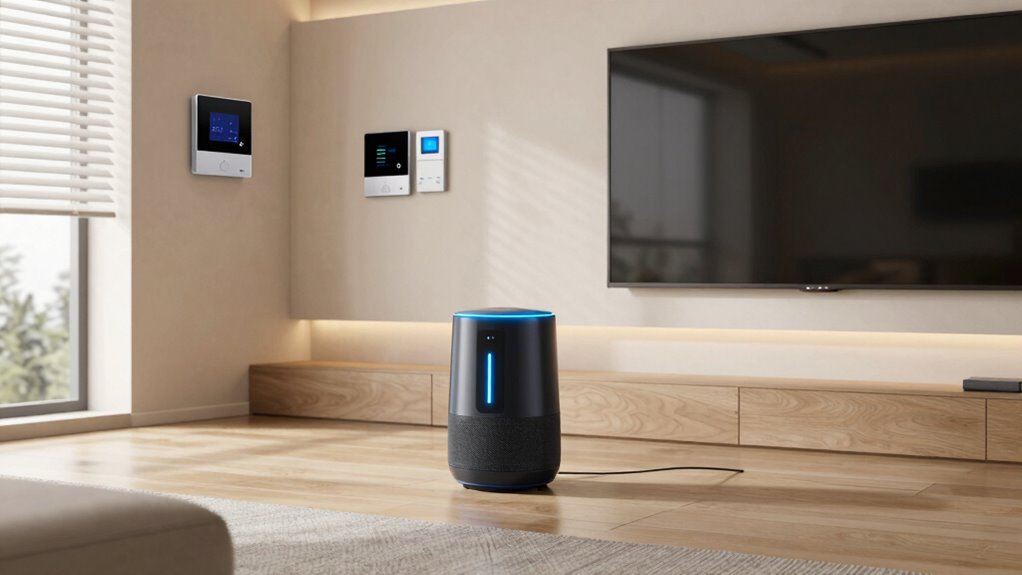
As smart home technology advances, distinguishing genuine AI-powered content from basic automation becomes increasingly important. You want devices that do more than just follow preset commands—you need systems that adapt, learn, and improve over time. When exploring AI smart home content, look for features like voice recognition, which allows your devices to understand and respond to natural language. Unlike simple voice-activated switches, advanced voice recognition can interpret context, differentiate between users, and handle complex requests seamlessly. This makes interactions feel more natural, intuitive, and personalized, saving you time and effort.
Energy optimization is another hallmark of true AI integration. Instead of just turning devices on or off at scheduled times, AI-driven systems analyze your habits, occupancy patterns, and environmental data to fine-tune energy use. For example, your smart thermostat learns when you’re typically home or away, adjusting temperatures to maximize comfort while minimizing energy consumption. This real-time, data-driven approach not only reduces your utility bills but also contributes to sustainability efforts. When evaluating smart home content, check for these adaptive features—they indicate a system that goes beyond basic automation to provide genuine value.
AI-powered energy management learns your habits to optimize comfort and reduce utility costs through real-time, adaptive data analysis.
What sets AI smart home content apart in a crowded market is its ability to learn and personalize. Basic automation typically relies on fixed rules, like turning on lights at sunset or locking doors at midnight. In contrast, AI-powered systems analyze ongoing data to create a customized experience. They recognize your routines, preferences, and even voice patterns, enabling a more responsive environment. For example, if you usually listen to music in the evening, an AI-enabled system might automatically prepare your favorite playlist when it detects your presence, all through voice recognition. This level of personalization creates a more seamless, connected living space, making your home not just smarter but more attuned to your lifestyle.
Furthermore, AI content is distinguished by its capacity for continuous improvement. As you interact with your devices, they gather data and refine their responses, becoming more accurate and efficient over time. This ongoing learning process ensures that your smart home adapts to evolving needs, unlike static automation setups. Additionally, machine learning algorithms in these systems help identify patterns and optimize functions more effectively with each interaction. Incorporating feedback mechanisms can further enhance this learning process, allowing users to guide system behavior and improve its responsiveness. Recognizing the importance of adaptive learning helps you select systems that truly evolve along with your lifestyle. In fact, some systems even integrate predictive analytics to anticipate your needs before you explicitly request them, elevating the intelligence of your home environment. When browsing options, look for systems that emphasize machine learning capabilities, as these indicate a commitment to delivering an increasingly intelligent environment.
In a market flooded with smart devices, the key to identifying truly AI-driven content lies in its ability to learn, adapt, and personalize your experience through voice recognition and energy optimization. These features transform your home from a simple automation setup into a dynamic, responsive environment that genuinely enhances your daily life.
AI smart home voice recognition devices
As an affiliate, we earn on qualifying purchases.
As an affiliate, we earn on qualifying purchases.
Frequently Asked Questions
How Do AI Smart Home Products Ensure User Privacy?
AI smart home products guarantee your privacy by using data encryption, which protects your information from unauthorized access. They also prioritize user consent, meaning you control what data gets shared and with whom. Manufacturers implement strict security measures and transparent policies, so you can trust that your personal data remains secure. By actively managing permissions and encrypting data, these products keep your privacy intact while offering smart convenience.
What Are the Cost Benefits of AI Smart Home Integration?
Imagine spending less on energy bills while enjoying maximum comfort—that’s the power of AI smart home integration. You benefit from cost savings through optimized energy use, helping you stick to your budget planning. AI automates routines, detects inefficiencies, and conserves resources, all while enhancing convenience. This smart investment ultimately reduces expenses and increases your home’s efficiency, making it a smart financial choice in today’s tech-driven world.
How Do AI Devices Adapt to Individual User Habits?
AI devices adapt to your habits through advanced personalization strategies and habit recognition. As you use your smart home, these devices analyze your routines, preferences, and patterns. They then automatically adjust settings like lighting, temperature, or security to suit your daily schedule. This continuous learning makes your smart home more responsive, comfortable, and efficient, ensuring that your environment aligns seamlessly with your unique lifestyle.
What Are Common Challenges in AI Smart Home Setup?
You’ll often face challenges with AI smart home setup, like ensuring seamless device interoperability and accurate voice recognition. Getting all your devices to communicate smoothly can be tricky, especially with different brands or platforms. Additionally, voice recognition might struggle with accents or background noise, causing frustration. Overcoming these issues requires careful planning, choosing compatible devices, and fine-tuning settings to create a cohesive, user-friendly smart home environment.
How Do AI Smart Homes Improve Energy Efficiency?
AI smart homes improve energy efficiency through energy optimization and smart scheduling. You can set your devices to operate only when needed, reducing unnecessary power consumption. The AI learns your routines, adjusting thermostats, lights, and appliances automatically for maximum efficiency. This smart scheduling minimizes waste, lowers your energy bills, and helps the environment, making your home not only smarter but also more sustainable and cost-effective.
adaptive learning smart thermostats
As an affiliate, we earn on qualifying purchases.
As an affiliate, we earn on qualifying purchases.
Conclusion
So, next time you’re scrolling through AI smart home content, remember: blending tech talk with a sprinkle of wit and a dash of real-world charm is what truly makes your content stand out. Don’t just sell the dream—make it relatable, make it fun, and maybe, just maybe, your audience will actually want to upgrade their homes instead of hitting snooze. After all, who said smart homes can’t have a personality? Stay clever, stay memorable.
energy optimizing smart home systems
As an affiliate, we earn on qualifying purchases.
As an affiliate, we earn on qualifying purchases.
As an affiliate, we earn on qualifying purchases.
NFL season / tailgating Picks
team gear
As an affiliate, we earn on qualifying purchases.