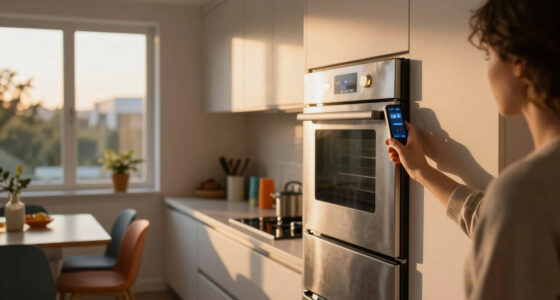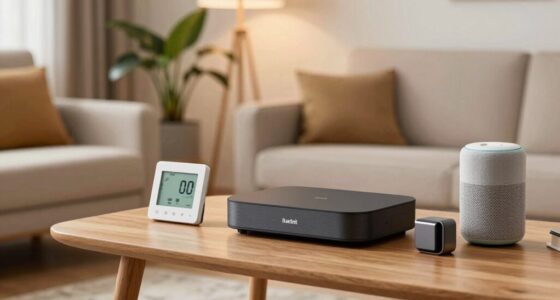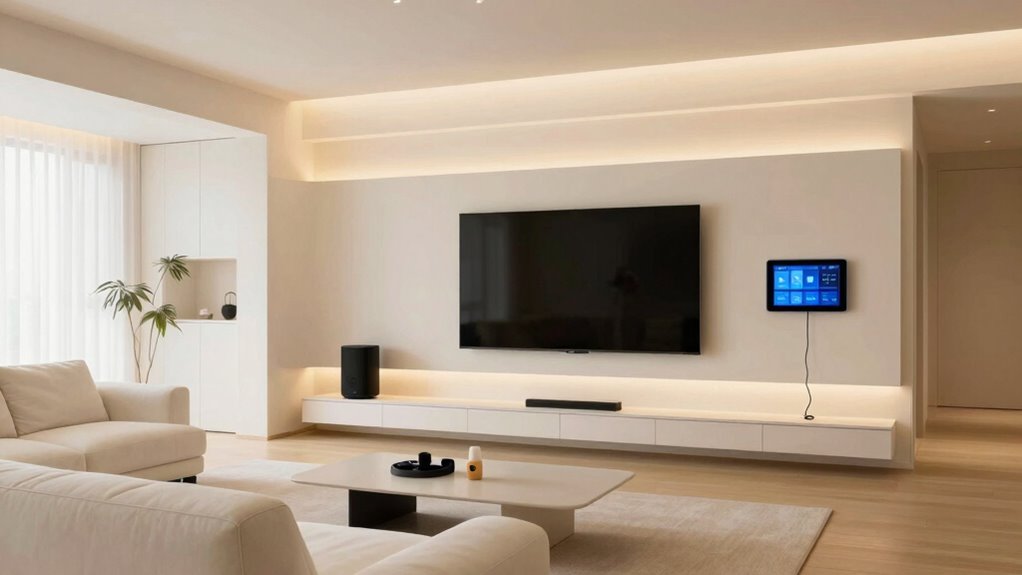

Your U.S. home layout affects what smart devices you choose and where you place them. Open floor plans make centralized control easier, while compartmentalized rooms require strategic placement of hubs or extenders. Smaller homes benefit from compact devices, and larger homes need specialized gear like multi-room audio and security cameras. Placement of thermostats and lights should match your home’s flow for efficiency. If you want to discover how layout influences your smart choices further, keep exploring this topic.

Get home appliances delivered free — and shop member deals
- Fast, free delivery on millions of items
- Access to Prime Big Deal Days deals on October 6–7
- Prime Video, Amazon Music and more included
Key Takeaways
- Open floor plans facilitate centralized smart control systems due to fewer walls and better signal flow.
- Compartmentalized rooms require strategic device placement and range extenders for reliable connectivity.
- Smaller homes benefit from compact, multifunctional smart devices to optimize space.
- Multi-story layouts necessitate multiple thermostats and zone-specific lighting for consistent comfort.
- Building materials and home design influence device placement choices to ensure optimal signal coverage and performance.
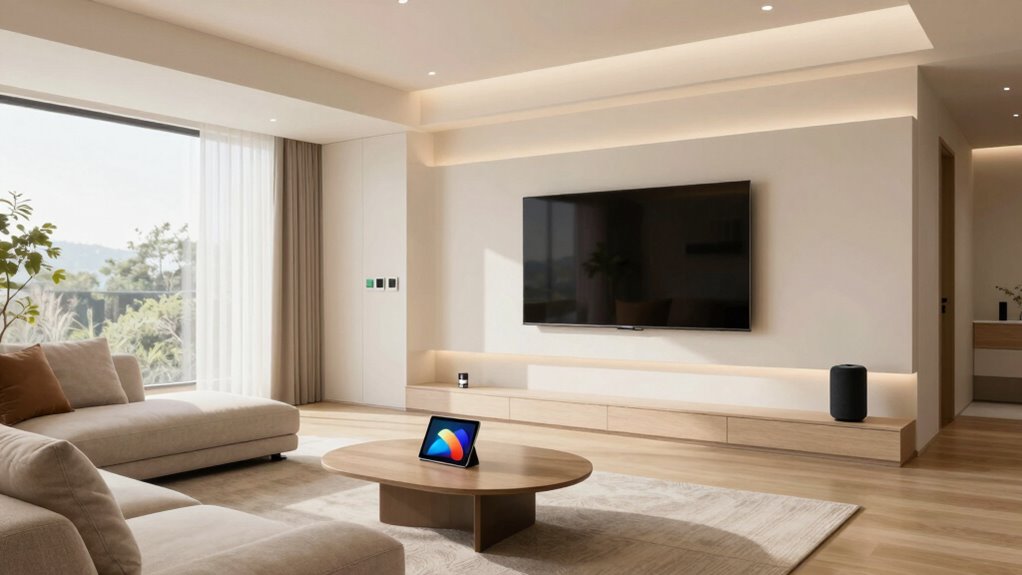
Your home layout plays a crucial role in how effectively you can integrate smart devices into your everyday life. When considering automation integration, the design of your space influences which devices will work seamlessly and how well they’ll perform. Open floor plans, for example, tend to support more centralized control systems because fewer walls and barriers mean signals travel more efficiently. You might find that a simple hub or voice assistant can manage multiple devices across a large, open area without dead spots. Conversely, homes with compartmentalized rooms can pose challenges for automation integration, requiring more strategically placed hubs or range extenders to guarantee consistent connectivity.
Home layout influences smart device connectivity, requiring strategic placement and hubs for seamless automation.
Space optimization becomes a critical factor in choosing smart devices that suit your home’s layout. In smaller or more confined spaces, compact and multifunctional devices are your best bet. These help you maximize utility without cluttering your environment. For example, a smart speaker with a built-in display can serve as both a voice assistant and a control center for your other smart gadgets, saving space and reducing the need for multiple devices. Larger homes with expansive rooms allow for more specialized devices—like multi-room audio systems or security cameras—that take advantage of the space without overwhelming the environment. You can position sensors and cameras strategically across different zones to monitor and automate lighting, climate, and security systems effectively.
Your home’s layout also dictates the placement of smart lighting and thermostats, which are essential for automation and comfort. In multi-story homes, installing smart thermostats on each level ensures temperature consistency without wasting energy. Smart lighting can be tailored to specific areas, so you don’t waste power lighting unoccupied rooms or hallways. When planning your layout, consider how the natural flow of movement affects device placement. High-traffic zones might benefit from motion sensors or smart switches that automatically turn on lights or adjust climate settings, creating a more intuitive and energy-efficient environment. Additionally, understanding home layouts can help you identify optimal locations for signal range extenders or hubs to improve connectivity throughout your space. Recognizing the importance of signal range and coverage can further enhance your smart home experience by preventing connectivity issues. Furthermore, considering home layout can also help in planning for future smart device upgrades or expansions, ensuring your system remains flexible and scalable.
Being aware of building materials and their impact on wireless signals can also influence your choice of smart devices and their placement, leading to a more reliable network. Ultimately, your home’s design influences which smart devices will integrate smoothly into your daily routines. A well-thought-out layout allows you to streamline automation, optimize space, and enjoy a connected living experience that feels natural and effortless. By understanding how your space impacts device placement and connectivity, you can build a smart home that’s both functional and comfortable, enhancing your lifestyle in ways you might not have initially considered.
smart home hub with range extender
As an affiliate, we earn on qualifying purchases.
As an affiliate, we earn on qualifying purchases.
Frequently Asked Questions
How Do Basement Layouts Influence Smart Device Placement?
Basement layouts influence your smart device placement by determining where ventilation and emergency alert systems work best. You should position smart devices near basement vents to optimize ventilation monitoring and guarantee emergency alerts reach all areas effectively. Keep emergency alert systems accessible in central spots to notify you quickly during emergencies. Proper placement ensures these devices communicate seamlessly, keeping your basement safe and well-ventilated at all times.
Do Open Floor Plans Require Different Smart Devices?
Open floor plans are like a seamless dance floor, demanding smart device compatibility across the entire space. You’ll want versatile home automation systems that connect easily and cover large areas, avoiding dead spots. Wireless smart devices, such as speakers, lighting, and thermostats, should be strategically placed to maintain fluid control. This setup guarantees your smart home functions smoothly, creating a cohesive, integrated environment where every device works together effortlessly.
How Do Multi-Story Homes Impact Device Connectivity?
In multi-story homes, device connectivity can be affected by wireless interference and limited signal range. You might notice slower response times or dropped connections as signals struggle to reach upper floors. To improve connectivity, consider using Wi-Fi extenders or mesh networks, which boost signal range across all levels. Position your router centrally and away from obstructions to reduce interference and make sure your smart devices stay reliably connected throughout your home.
Are Smart Devices Suitable for Historic or Unique Home Architectures?
Smart devices can suit historic preservation and architectural uniqueness if you choose models that blend seamlessly with your home’s style. You might opt for discreet, wireless, or retrofit options that don’t compromise the structure. Keep in mind, some older homes may require additional planning for wiring or Wi-Fi range. With careful selection, you can enjoy smart technology while respecting and maintaining your home’s historic charm.
How Do Outdoor Spaces Affect Smart Device Integration?
Outdoor spaces influence your smart device integration by presenting landscaping challenges and privacy considerations. You might struggle with installing sensors or cameras amid trees or uneven terrain. Privacy is also key, as outdoor devices could expose your property to neighbors or passersby. To overcome these issues, select weatherproof, wireless devices and position them discreetly, ensuring your outdoor smart setup enhances security without compromising your privacy or landscaping aesthetics.
compact smart speaker with display
As an affiliate, we earn on qualifying purchases.
As an affiliate, we earn on qualifying purchases.
Conclusion
So, your home layout isn’t just about walls and rooms — it’s a secret mastermind behind your smart device choices! If you ignore this, you might end up with gadgets fighting for space like cats vying for a sunny window. Embrace your home’s unique design, and your smart tech will work smoother than a barista’s perfect latte. Trust me, understanding your layout turns your house into a futuristic haven — no more tech battles, only seamless living!
As an affiliate, we earn on qualifying purchases.
smart thermostats for multi-story homes
As an affiliate, we earn on qualifying purchases.
As an affiliate, we earn on qualifying purchases.
Fall Picks
fall essentials
As an affiliate, we earn on qualifying purchases.