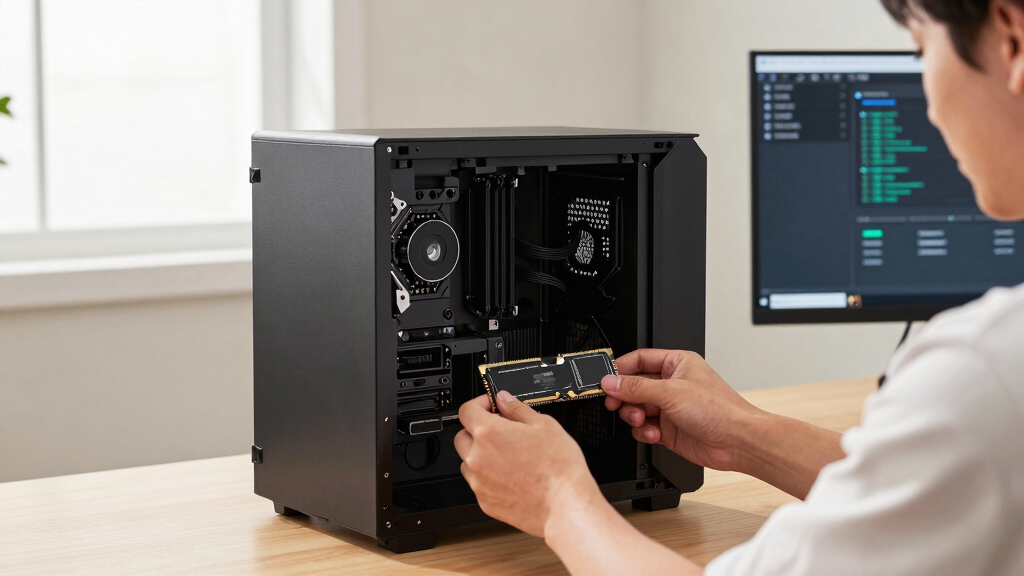

TL;DR
A late-June 2026 buyer guide in Thorsten Meyer AI’s memory-crunch series recommends buying only the DDR5 capacity a system needs now. The guide argues that waiting for DDR6 is risky because mainstream availability and pricing remain projected, while DDR5 price relief is not expected soon.
Thorsten Meyer AI published the third installment of its 2026 memory-crunch series with a clear checkout message for PC buyers: buy the DDR5 capacity you need now, avoid new DDR4 builds, and do not delay a mainstream build for DDR6. The recommendation matters because cited market forecasts say price relief may not arrive before 2028, while DDR6 is still tied to new platforms and early-adopter pricing.
The confirmed development is the publication of a buyer-focused guide, not a new memory standard or product launch. Its main claim, attributed to the guide and its cited analysts, is that waiting for cheaper RAM is risky in this cycle because relief is forecast no earlier than 2028 and the next quarter could be more expensive.
The guide does not advise every buyer to stockpile RAM. It says the safer move is right-sizing DDR5: 32GB for most gaming and general desktops, 64GB for content creation and heavy multitasking, and more only for workloads that can prove the need, such as large local AI models.
For mainstream builds, the source identifies DDR5-6000 CL30 as the current value target and says faster kits buy little for most games or daily work. It also flags CUDIMM support for buyers pushing higher speeds and advises workstation buyers to check the motherboard QVL before filling many slots.
DDR5 now, DDR6 soon
A buyer’s field guide. The 20-year instinct — wait for prices to drop, or wait for the next generation — is broken this cycle. Buy the DDR5 you actually need now; don’t wait for DDR6. Here’s the reasoning.
Driven to end-of-life, production slashed. Same money, dead-end socket. Leave a working DDR4 box alone — but never start a new build on DDR4 to “save.”
A framework, not a gamble. Buy the DDR5 you need now, at the sweet spot, in the capacity you’ll actually use — don’t buy DDR4, don’t wait for DDR6. The two costliest mistakes in this market are the ones that feel prudent: waiting for a price drop that isn’t coming, and waiting for a next-gen part that launches dearer than what’s on the shelf. Next: The SSD Squeeze.
DDR5 Costs Drive the Decision
For readers pricing a PC in mid-2026, the stakes are immediate: memory is no longer the cheap variable part of a build. A buyer who waits for a normal down-cycle may instead face higher quotes, fewer preferred kits, or delayed systems if server and AI demand keep pulling production toward higher-margin memory, according to the source’s cited market analysts.
The recommendation also affects platform choice. Starting a new machine on DDR4 can appear cheaper at the motherboard level, but the guide argues that the memory savings have weakened or disappeared while the buyer accepts an older socket path. Waiting for DDR6 carries the opposite risk: paying early platform prices while missing two years of CPU and GPU gains.

Crucial 32GB DDR5 RAM Kit (2x16GB), 5600MHz (or 5200MHz or 4800MHz) Laptop Memory 262-Pin SODIMM, Compatible with Intel Core and AMD Ryzen 7000, Black – CT2K16G56C46S5
- Memory Capacity: 32GB DDR5 RAM Kit (2x16GB)
- Memory Speed: 5600MHz, 5200MHz, or 4800MHz
- Compatibility: Intel Core and AMD Ryzen 7000
As an affiliate, we earn on qualifying purchases.
As an affiliate, we earn on qualifying purchases.
How the Crunch Changed Buying
The guide follows two earlier installments that described how the 2026 memory crunch pushed DRAM and NAND prices higher. The source cites market reporting from TrendForce and Tom’s Hardware that tied 2026 contract-price pressure to AI server demand, tighter consumer DRAM supply and long-term orders from cloud providers.
On DDR6, the source points to reporting from TechPowerUp, OC3D and HWCooling that describes expected performance targets around 8,800 to 17,600 MT/s, four 24-bit sub-channels and possible desktop arrival in 2027. It also references JEDEC standards work, which matters because a memory generation does not become a normal retail choice until CPUs, motherboards, firmware and validated modules are ready together.
“Buy the DDR5 you genuinely need now”
— Thorsten Meyer AI buyer guide
As an affiliate, we earn on qualifying purchases.
DDR6 Timing and Prices Remain Fluid
The largest unknown is DDR6 retail timing. The source’s timeline puts server availability around 2026-27 and desktop systems in 2027, but public reporting still treats those dates as projections, and JEDEC standards status plus platform validation can shift real availability.
Pricing is also unresolved. The guide says DDR6 could launch at 2 to 3 times DDR5 per gigabyte, but actual street prices will depend on yields, motherboard support, early demand and the shape of the current memory shortage. It is also not yet clear whether near-term DDR5 retail dips, if they appear, would last.
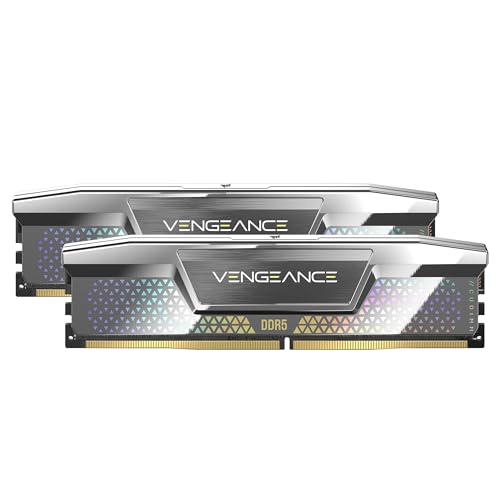
CORSAIR Vengeance DDR5 CUDIMM 48GB (2 x 24GB) DDR5 8400MHz CL40-52-52-135 1.40V Intel XMP iCUE Compatible Computer Memory – Silver (CMKC48GX5M2X8400C40)
- High-Speed DDR5 Memory: 8400MHz for fast data transfer
- Enhanced Stability: Onboard clock driver for signal integrity
- Custom Performance Profiles: Adjust and save XMP profiles via iCUE
As an affiliate, we earn on qualifying purchases.
As an affiliate, we earn on qualifying purchases.
Buyers Face 2026 Checkout Calls
The next practical step is not a bet on a future label but a workload check: buyers approving a build in late June 2026 should price the actual capacity needed, confirm motherboard support and choose a validated DDR5 kit where the system requires new memory.
The guide’s series is set to continue with the SSD squeeze, while buyers should watch updated DRAM forecasts, DDR6 standards progress and motherboard roadmaps before treating DDR6 as a mainstream option.

PNY DDR5 8GB (1x8GB) 5600MHz CL46 Performance Desktop Memory
- Compatibility: Supports Intel 12th-14th Gen, AMD Ryzen 7000-9000
- Memory Technology: DDR5 for faster performance and efficiency
- Standards & Testing: Meets JEDEC standards for reliability
As an affiliate, we earn on qualifying purchases.
As an affiliate, we earn on qualifying purchases.
Key Questions
Should I buy DDR5 now or wait for prices to fall?
The guide says buy needed DDR5 now if the machine has to be built or upgraded. Its reasoning is that meaningful relief is not forecast before 2028 and waiting could expose buyers to higher short-term quotes.
Is DDR6 close enough to wait for?
For most mainstream buyers, the guide says do not wait for DDR6. It treats DDR6 as a future platform shift with uncertain retail timing, new motherboard requirements and likely launch premiums.
What DDR5 kit does the guide recommend?
The source names DDR5-6000 CL30 as the practical target for many AMD and Intel systems. It says pricier, faster kits often deliver limited real-world gains for gaming and everyday work.
Is DDR4 still a good way to save money?
The guide says leave a working DDR4 PC alone if it still meets the need, but avoid starting a new build on DDR4. Its argument is that DDR4 price advantages have eroded while the platform path is older.
Who should wait for DDR6?
The guide lists only narrow cases: bandwidth-bound AI or scientific workloads, long-life workstation plans and buyers with budgets for early platform costs. For typical desktop users, it recommends DDR5 instead.
Source: Thorsten Meyer AI