
TL;DR

Get home appliances delivered free with Prime
- Fast, free delivery on millions of items
- Prime Video, Amazon Music and more included
- Member-only deals all year
A Veranda writer reports that cape plumbago is producing frequent new blooms in her front-door containers several weeks after planting. The South African shrub is presented as a sun-loving, relatively low-maintenance choice for warm climates, but its performance through summer and fall remains unconfirmed.
A Veranda writer says her potted cape plumbago has begun producing new blooms almost daily several weeks after planting, offering an early report on a flowering shrub she chose for sunny front-door containers. The writer describes the South African plant as a promising low-maintenance option for warm climates, though its performance through the rest of the growing season is still unknown.
The writer says she was looking for a plant that could handle heat and full sun, need relatively little water, and forgive an occasional missed watering. After speaking with coworkers and researching options, she selected Plumbago auriculata, commonly called cape plumbago. The report describes it as deer-resistant and suitable for several forms of planting, including as a shrub, climbing plant, or container specimen.
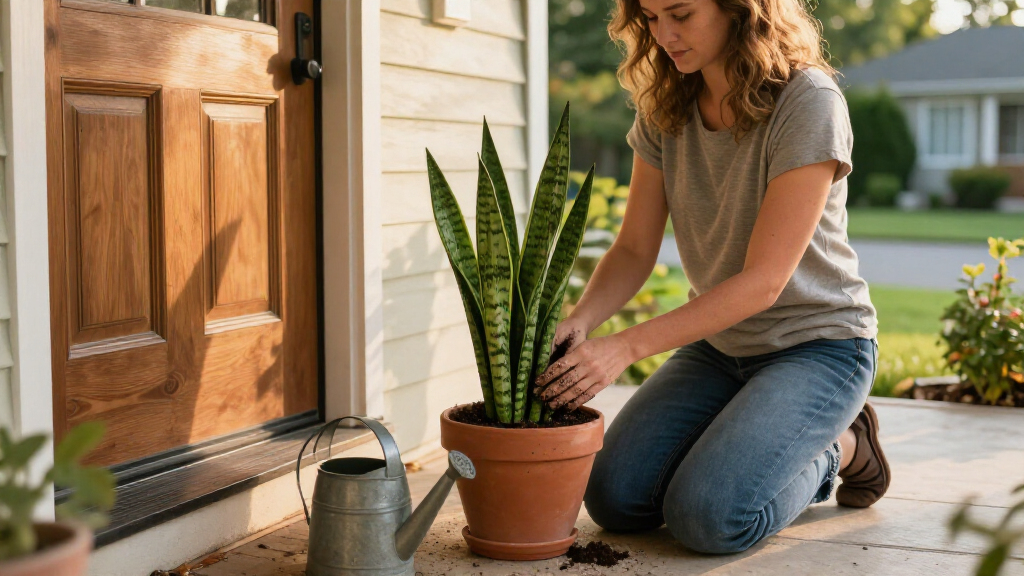
For her containers, the writer bought two one-gallon plants and four pint-sized plants, along with potting mix. She removed remnants of the previous plantings and some old soil, loosened the plumbago roots, and set the plants into holes about twice the size of their root balls. She then backfilled with potting mix and applied a balanced, slow-release fertilizer around the plants, avoiding direct contact with their stems.
After several weeks, she observed fresh blooms and upward growth, with some stems beginning to spill over the containers. Rain in her area meant she had watered only once by the time of the report. She says plumbago generally needs water one to two times per week, depending on how dry the soil is near the surface; that is guidance from the report, not a record of watering needs in every climate or container.
A Flowering Option for Sunny Entrances
For people choosing plants for an exposed porch or entryway, cape plumbago offers a possible combination of blue flowers, container versatility, and tolerance for warm conditions. The writer’s early observations suggest it can establish and bloom in pots without frequent watering when local rainfall supplies some of its moisture. That may make it worth considering for gardeners who want a flowering display but do not want a plant that demands daily attention.
The report is a personal account, not a controlled comparison of plants or a guarantee of easy care. Water needs vary with rainfall, heat, pot size, soil, and drainage. The practical takeaway is to check soil conditions rather than rely on a fixed schedule, and to treat the writer’s experience as an encouraging early result rather than proof that the plant will thrive unattended.
Products Worth Considering

Amazon Kindle Paperwhite Signature Edition (12th Generation, 2024), 32 GB, Metallic Black

DJI Mic 3 Wireless Microphone System (2 Transmitters, 1 Receiver, Charging Case)

Apple AirPods Pro 3 Wireless Earbuds
As an affiliate, we earn on qualifying purchases.
What the Report Says About Plumbago
Cape plumbago is identified in the report as a shrub native to South Africa. Veranda says it is suited to USDA hardiness zones 8–11 and can tolerate winter temperatures that dip to roughly 20–25 degrees Fahrenheit. Those figures do not establish that the plant will survive every winter in those zones; conditions and local growing guidance can differ.
The writer’s project began in spring, with the intention of growing the plants in front-door containers over summer. She says the plants were already shooting upward, so she had purchased obelisks for them to climb. The report describes possible pruning and additional fertilizer as plans to watch for, not steps she had already found necessary. Its account covers only the first several weeks after planting.
Summer Growth Has Not Been Tracked
The report does not yet establish whether the containers will keep blooming into fall, reach the plant’s stated potential height of at least six feet, or require extra fertilizer and pruning. The writer says those outcomes remain to be seen. It also gives no detailed results from a dry spell, a full winter, or growing conditions outside her location.
Although the article characterizes plumbago as low-maintenance and drought-tolerant, that description is not a promise that it can go without water. The writer’s own watering experience occurred during steady rain. How quickly a pot dries will depend on its size, the potting mix, exposure, temperature, and local weather; the report does not provide a single watering schedule that applies everywhere.
The Plants’ First Full Season
The writer plans to monitor the plants over summer for signs that they need additional fertilizer or pruning and hopes to see blooms continue into fall. She also expects the stems to grow around the obelisks she bought. Those are intentions, not confirmed results. A later update would be needed to show how the plants perform through the full season and whether their care needs change.
For readers considering the plant, the report points to checking whether local conditions suit cape plumbago, then monitoring the soil and adjusting watering to the weather and container. The source does not provide further testing or a follow-up date.
Key Questions
What is cape plumbago?
Cape plumbago is Plumbago auriculata, a South African flowering shrub. The report describes its flowers as blue and says it can be grown as a shrub, climbing plant, or container plant.
How often should cape plumbago be watered?
The report gives a general guide of one to two times per week, depending on how dry the soil is near the surface. The writer watered only once over several weeks because her area had steady rain, so local weather and container conditions matter.
Can cape plumbago grow in a pot by a front door?
Yes. The Veranda writer planted it in front-door containers and reported new blooms and growth several weeks later. Her early account does not establish how the plants will perform through a full season.
Will cape plumbago survive winter?
The report says it is suited to USDA zones 8–11 and can tolerate temperatures around 20–25 degrees Fahrenheit. Actual survival depends on local conditions, and the report does not describe how the writer’s plants handled winter.
Source: veranda.com