
TL;DR

Get home appliances delivered free — and shop member deals
- Fast, free delivery on millions of items
- Access to Prime Big Deal Days deals on October 6–7
- Prime Video, Amazon Music and more included
A developer has created a 13.3-inch E-ink monitor capable of 60Hz refresh rate, overcoming traditional speed limitations. This breakthrough could expand E-ink’s use beyond e-readers into computing displays.
A developer has demonstrated a 13.3-inch E-ink display capable of a 60Hz refresh rate, a significant breakthrough that challenges long-held assumptions about E-ink technology’s speed limitations. This development makes E-ink monitors more viable for general computing, offering low power consumption and high readability in a new form factor.
The breakthrough was achieved through a custom controller designed to overcome the traditional slow refresh rates of E-ink displays. Historically, E-ink screens have been limited to low refresh rates suitable only for static reading, largely due to their controller hardware and interface constraints. The new controller, developed by an independent engineer, enables a 13.3-inch monochrome and color E-ink display to refresh at 60Hz, making it suitable for tasks requiring smoother updates, such as reading documents or even basic computer use.
This development was showcased at Hackaday Supercon 2024, where initial tests demonstrated promising responsiveness and image stability. The project has now culminated in a fully open-source, user-repairable portable E-ink monitor called Modos Flow, available through Crowd Supply. The device aims to combine the low power benefits of E-ink with a refresh rate that approaches that of traditional LCDs, expanding potential applications.
Implications for E-Ink’s Role in Computing
This breakthrough could significantly expand E-ink’s role in computing devices, providing a low-power alternative to traditional screens for portable monitors, e-readers, and even secondary displays. The ability to achieve 60Hz refresh rates addresses a key limitation that has kept E-ink confined mainly to static content display. If adopted widely, this could lead to more energy-efficient devices with excellent readability in various lighting conditions, reducing reliance on power-hungry LCDs and OLEDs.
Additionally, the open-source nature of the project encourages further development and customization, potentially accelerating adoption and innovation in low-power display technology. However, it remains to be seen how well the display performs in everyday use, including color accuracy, latency in different modes, and long-term reliability.
As an affiliate, we earn on qualifying purchases.
E-Ink Speed Limitations and Recent Advances
E-ink displays have traditionally been limited to low refresh rates, typically under 1Hz, making them suitable only for static content like e-books. This limitation stems from the design of their controllers and interface constraints, which prioritize power efficiency over speed. For many years, attempts to increase refresh rates have been hampered by hardware limitations and vendor restrictions.
Recent developments, including efforts by independent engineers, have challenged these constraints. The key turning point was the creation of a custom controller that can handle higher refresh rates, demonstrated by the recent portable E-ink monitor project, Modos Flow. This progress was showcased at Hackaday Supercon 2024, where the developer explained that the controller’s design enables the display to refresh at 60Hz, a significant step forward.
“The controller’s design can push E-ink displays into new territory, making them suitable for more dynamic applications than ever before.”
— an anonymous researcher
As an affiliate, we earn on qualifying purchases.
Remaining Questions About Performance and Durability
It is still unclear how the new controller will perform in long-term use, particularly regarding display durability, color accuracy, and latency under various workloads. While initial tests are promising, comprehensive evaluations are needed to confirm reliability and practical usability for everyday computing tasks. Additionally, the extent to which this technology can be scaled or integrated into commercial products remains uncertain.
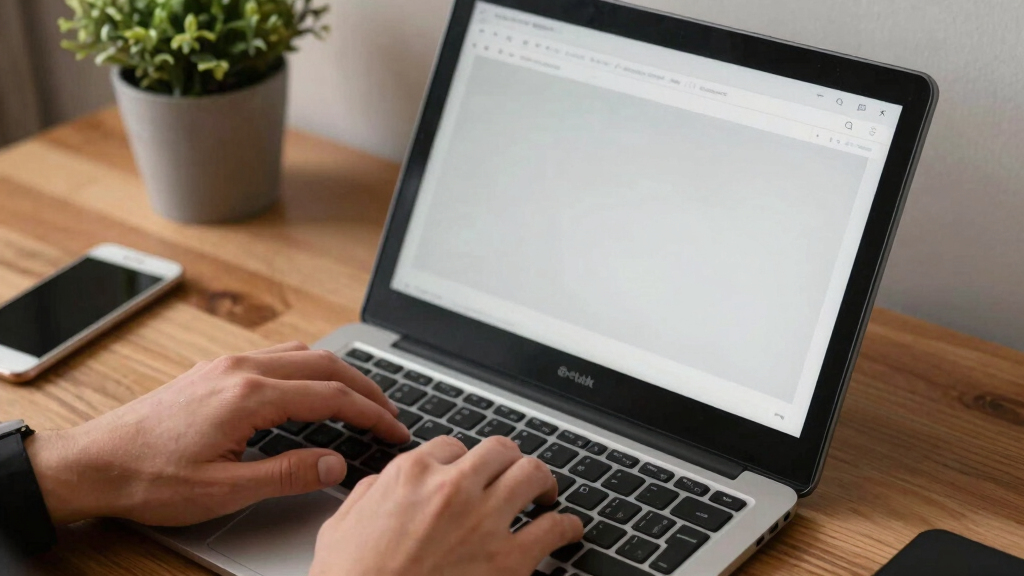
low power E-ink display for computer
As an affiliate, we earn on qualifying purchases.
As an affiliate, we earn on qualifying purchases.
Next Steps for Adoption and Development
Further testing and user feedback will determine the viability of this high-refresh-rate E-ink display for mainstream use. Developers and manufacturers may begin exploring integration into portable monitors, e-readers, or secondary screens. Meanwhile, the open-source project is likely to evolve as more contributors refine the controller and display performance, potentially leading to commercial products in the near future.
As an affiliate, we earn on qualifying purchases.
Key Questions
Can this E-ink monitor be used as a primary computer display?
While promising, it is still early to confirm its suitability as a primary monitor. Performance in terms of latency, color accuracy, and long-term durability needs further evaluation.
How does the refresh rate compare to traditional LCD monitors?
The current development achieves 60Hz, comparable to many LCD monitors, but with the benefits of lower power consumption and better readability in bright environments.
Is this technology available commercially?
The Modos Flow portable E-ink monitor is available through Crowd Supply, with monochrome and color versions, but wider commercial availability depends on further testing and adoption.
What are the main advantages of E-ink displays over LCDs or OLEDs?
E-ink displays consume less power, offer excellent readability in sunlight, and do not emit light directly, reducing eye strain. The challenge has been their slow refresh rate, which this development aims to overcome.
Will this breakthrough impact other E-ink applications?
Potentially yes. Higher refresh rates could enable new uses beyond static reading, such as digital signage, portable monitors, and low-power tablets, depending on further development.
Source: Hackaday
NFL season / tailgating Picks
team gear
As an affiliate, we earn on qualifying purchases.