To set up a secure home network for your smart devices, start by choosing a reliable router with strong security features like WPA3 encryption and high coverage. Create separate guest networks to protect your main devices, regularly update firmware, and manage device access carefully. Use strong, unique passwords for your Wi-Fi. Monitor connected devices and network activity to catch any unusual behavior. Exploring these steps further will give you the complete picture of keeping your smart home safe and efficient.

Get home appliances delivered free with Prime
- Fast, free delivery on millions of items
- Prime Video, Amazon Music and more included
- Member-only deals all year
Key Takeaways
- Use strong, unique passwords and enable WPA3 encryption to secure your Wi-Fi network.
- Set up separate guest networks to isolate visitor devices from your main smart home devices.
- Regularly update router and device firmware to patch security vulnerabilities.
- Manage device access with permissions, and monitor network activity for unauthorized connections.
- Optimize Wi-Fi coverage using mesh systems or extenders, and place devices strategically for better performance.
As an affiliate, we earn on qualifying purchases.
Understanding Your Home Network Components
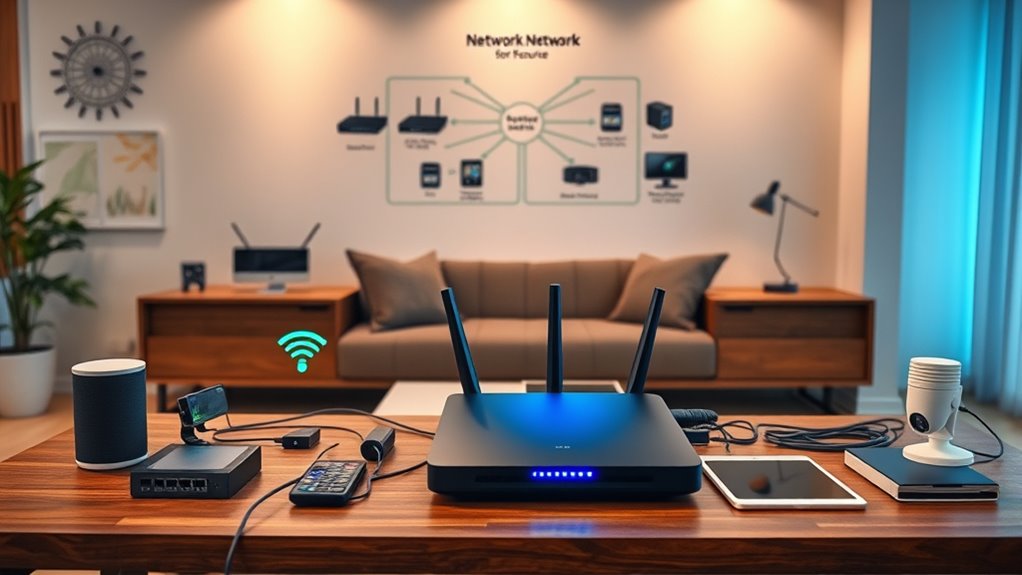
To understand your home network, you need to familiarize yourself with its main components. Ethernet switches are central devices that connect multiple wired devices, like computers and smart TVs, allowing them to communicate efficiently. These switches manage data traffic within your local network, ensuring smooth data transfer. Every device on your network has an IP address, a unique identifier that allows it to send and receive information properly. Knowing how IP addresses work helps you troubleshoot connectivity issues and manage device access. Your network also includes a modem that connects to your internet provider, and often a router that manages both wired and wireless connections. Understanding the contrast ratio of your projector can help you optimize image quality in your home cinema setup. Getting comfortable with these components empowers you to optimize your home network for speed, security, and reliability. Additionally, being aware of network security protocols can help protect your devices from unauthorized access. Recognizing the importance of network management tools can further enhance your ability to monitor and control your network effectively. Being knowledgeable about network performance optimization techniques can also help ensure your network runs efficiently under various conditions.
mesh Wi-Fi system for large home
As an affiliate, we earn on qualifying purchases.
As an affiliate, we earn on qualifying purchases.
Choosing the Right Router for Your Needs

Selecting the right router is essential for ensuring your home network meets your specific needs. If you have a large home or many devices, consider routers that support mesh networks, which provide seamless coverage and reduce dead zones. Mesh systems are ideal for smart homes with multiple gadgets spread out across different rooms. If your Wi-Fi signal is weak in certain areas, wifi extenders can help enhance coverage without replacing your main router. Look for routers with high-speed capabilities, multiple antennas, and support for the latest Wi-Fi standards to future-proof your network. Choosing a router that fits your home’s size and device load ensures a reliable, secure connection for all your smart devices and eliminates frustrating dead spots. Additionally, paying attention to backup power options can help keep your network operational during power outages, ensuring uninterrupted connectivity for your smart devices. Incorporating power backup solutions can further enhance reliability and prevent disruption during outages. It’s also important to select a router with security features like WPA3 encryption to protect your network from unauthorized access. Understanding the lifecycle and performance metrics of your networking equipment can help you plan for timely upgrades and maintain optimal performance.
As an affiliate, we earn on qualifying purchases.
Securing Your Wi-Fi With Strong Passwords and Encryption

Securing your Wi-Fi with strong passwords and encryption is essential to protect your network from unauthorized access and potential threats. A strong password combines uppercase and lowercase letters, numbers, and symbols, making it harder for hackers to guess. Avoid common or easily guessable passwords, and change them regularly. Additionally, confirm you’re using robust encryption protocols, such as WPA3 or WPA2, which encrypt data transmitted over your network. These protocols guard your information from eavesdropping and tampering. Regularly updating your router’s firmware also enhances security by patching vulnerabilities. Understanding the thermal behavior of your network devices can help you better manage their performance and security settings. Properly managing device temperature can prevent overheating that might affect security features and device longevity. Monitoring network device performance can help identify unusual activity and strengthen your overall security posture. Implementing security best practices for your network setup is crucial to maintaining a safe and reliable environment. By prioritizing password strength and choosing the right encryption protocols, you considerably reduce the risk of unauthorized access, keeping your smart devices and personal data safe from cyber threats.
As an affiliate, we earn on qualifying purchases.
Creating Guest Networks to Protect Your Main Devices
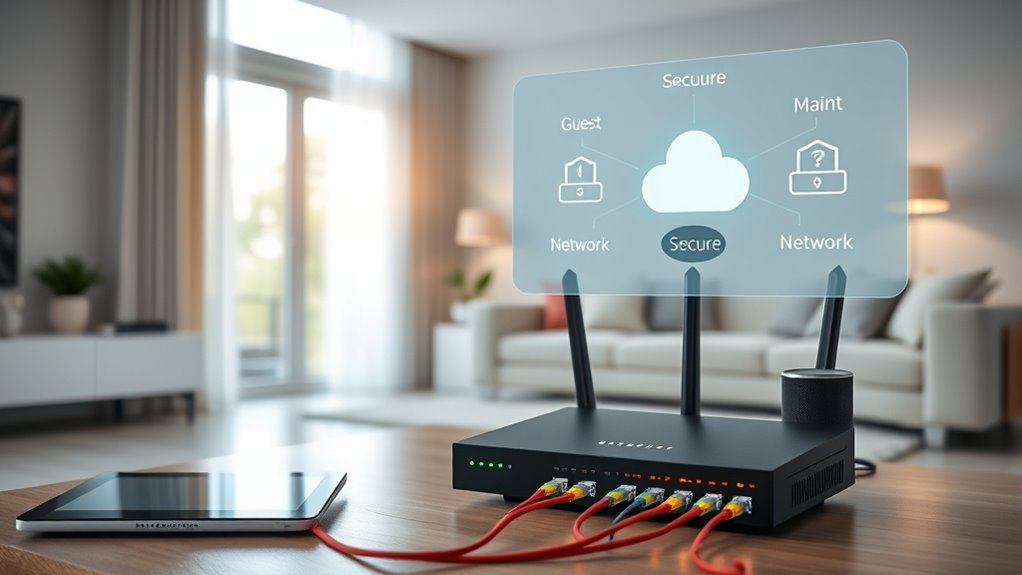
Creating a guest network is a simple yet effective way to protect your main devices from potential threats. By offering guest access, you segment your primary network from visitors, preventing unauthorized access to your personal data and smart devices. Network segmentation keeps your main devices isolated, reducing the risk of malware or hacking attempts spreading. Setting up a separate guest network is usually straightforward through your router’s settings. Once configured, you can give visitors internet access without exposing your main network’s resources. This approach ensures your smart home devices, computers, and sensitive information stay secure. Additionally, understanding the principles of Free Floating can help you optimize your network’s security and flexibility, allowing for better Network segmentation and control. Implementing secure network protocols further enhances the safety of your segmented networks, providing peace of mind for all users. Informed configuration and ongoing management of your wireless security settings are essential for maintaining a safe network environment.
Keeping Your Devices Updated and Protected

Keeping your devices updated is essential because outdated software can leave your network vulnerable to security threats. Regular firmware updates fix bugs and close security gaps, keeping your devices protected. Check for updates on your smartphones, smart TVs, and IoT gadgets regularly, and install them promptly. Additionally, make sure you have reliable antivirus protection on your computers and other connected devices. Antivirus software detects and removes malware before it can damage your network or steal your data. Staying current with firmware updates and maintaining strong antivirus protection creates a layered defense against cyber threats. Don’t ignore update notifications; they’re critical for your network’s security. Being aware of security vulnerabilities in your devices helps you understand the importance of timely updates. Understanding device security and its importance can motivate you to stay vigilant. By staying vigilant and proactive, you help safeguard your smart home from potential cyber attacks and data breaches. Regularly reviewing firmware update procedures ensures you’re not missing important security patches. Additionally, understanding AI cybersecurity jobs highlights the importance of employing professionals to protect your network infrastructure. Recognizing the significance of software updates can further motivate consistent maintenance of your devices.
Managing Device Access and Network Monitoring
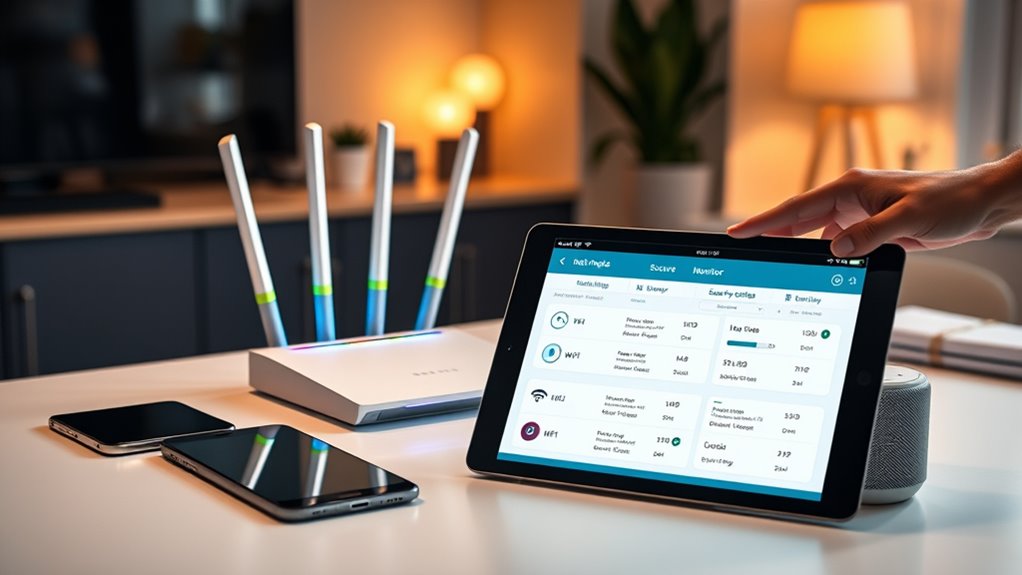
Managing who can access your network and tracking device activity keeps your home secure. You can set access permissions to control device privileges and create guest networks so visitors can connect safely. Monitoring device activity helps you spot any suspicious or unauthorized usage quickly. To find reliable trusted businesses and services nearby, consider consulting local directories or service aggregators. Implementing network security protocols enhances your ability to defend against potential threats. Additionally, staying informed about the value of home security systems can guide you in choosing the right security measures for your needs. Understanding the best security systems of 2024 can provide insights into reliable options that suit your home security requirements.
Setting Access Permissions
Ever wondered who’s connected to your home network and what they’re doing? Managing device access starts with setting user permissions and establishing access control. You want to make certain only trusted devices and users can connect to your network. Begin by reviewing your router’s settings to assign permissions, such as blocking unknown devices or limiting bandwidth for certain users. Use strong passwords and change them regularly to prevent unauthorized access. Some routers allow you to set specific access rules for different devices or user profiles, giving you better control. Regular monitoring helps you spot suspicious activity early. By managing device access carefully, you create a safer, more secure environment for your smart devices and personal data, reducing the risk of security breaches or unauthorized use.
Creating Guest Networks
Have you considered how a guest network can enhance your home’s security? By setting up a dedicated guest network, you create a separate space for visitors’ devices, preventing them from accessing your main network and sensitive data. This guest network acts as a barrier, providing device isolation that keeps your primary devices safe from potential threats or malware. Many routers allow you to easily enable and customize this feature, giving you control over who connects and what resources they can access. Using a guest network helps manage device access efficiently, ensuring your smart devices and personal information remain protected. It’s a simple yet effective way to maintain security while offering reliable internet access to guests.
Monitoring Device Activity
Once you’ve set up a guest network to keep visitors’ devices separate, it’s important to monitor which devices are connected and how they’re using your network. Network monitoring helps you understand device activity, detect unusual behavior, and maintain security. Stay vigilant with these steps:
- Check connected devices regularly to identify unfamiliar or unauthorized access.
- Review network activity logs to spot suspicious patterns or bandwidth hogs.
- Set alerts for unusual device activity to react quickly to potential threats.
Tips for Optimizing Your Smart Device Performance
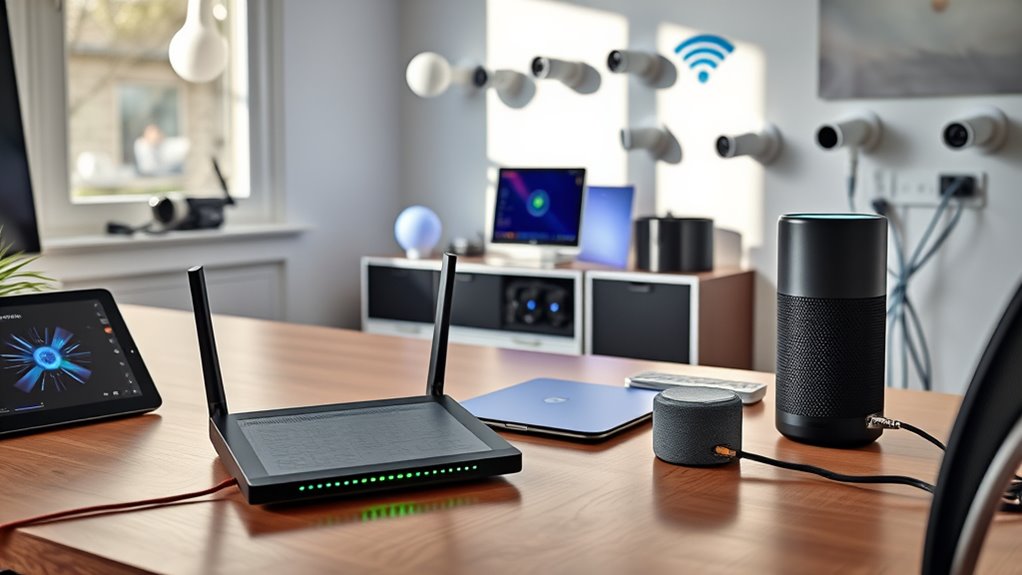
To guarantee your smart devices run smoothly, start by placing them closer to your Wi-Fi router. Proper device placement reduces signal loss and ensures stronger connectivity. Keep devices off metal surfaces or thick walls that can interfere with signals. Next, manage your bandwidth effectively; avoid running multiple high-demand apps simultaneously, which can slow down your network. Use quality-of-service (QoS) settings on your router to prioritize traffic for your smart devices, ensuring they get the bandwidth they need. Regularly update your device firmware and router software to fix bugs and improve performance. Disconnect unused devices to free up bandwidth and reduce network congestion. These tips help optimize your smart device performance, making your home network more responsive and reliable.
Frequently Asked Questions
How Can I Troubleshoot Connectivity Issues With My Smart Devices?
To troubleshoot connectivity issues with your smart devices, start by checking for firmware updates, as outdated software can cause problems. Next, examine your Wi-Fi signal for interference from other electronics or neighboring networks. Try moving your router closer to your devices or changing the Wi-Fi channel. Restart your router and devices to refresh the connection. These steps often resolve common issues and improve your smart device performance.
What Are the Best Practices for Segregating Iot Devices on My Network?
You should implement VLAN segmentation to separate your IoT devices from your main network, reducing security risks. Create a dedicated VLAN specifically for your smart devices, ensuring they can’t access sensitive data. Additionally, set up a guest network for visitors’ devices, keeping them isolated from your IoT and primary network. This layered approach minimizes potential breaches and enhances your home’s overall network security.
How Do I Prioritize Bandwidth for Smart Home Devices?
Did you know that smart devices use up to 50% of home bandwidth during peak times? To prioritize bandwidth for your smart home devices, use device prioritization features in your router settings. Enable Quality of Service (QoS) to assign higher bandwidth to essential devices like security cameras or smart thermostats. This guarantees your smart devices perform smoothly without disrupting other internet activities, making your home smarter and more efficient.
What Security Risks Are Associated With Smart Home Devices?
Smart home devices pose security risks like data breaches and unauthorized access. To protect yourself, make certain device encryption is enabled, which secures your data during transmission. Regular firmware updates are vital—they patch vulnerabilities and improve security. Keep your devices updated and use strong, unique passwords to minimize risks. Also, segment your network to isolate smart devices from personal computers, reducing potential damage if a device is compromised.
How Can I Monitor Network Activity for Unauthorized Access?
You can monitor network activity for unauthorized access by using network monitoring tools or software that track all device connections and data flows. Set up alerts for unusual activity, such as unknown devices joining your network or large data transfers. Regularly review logs and use intrusion detection systems to detect unauthorized access attempts. Staying proactive helps you quickly identify and respond to potential security threats on your smart home network.
Conclusion
Think of your home network as a garden; with careful planning and regular maintenance, it thrives. When you set up strong passwords, update devices, and monitor access, you’re like a gardener tending to healthy plants, keeping pests away. Just as a well-tended garden blossoms, a secure, optimized network keeps your smart devices running smoothly and safely. With these basics, you’ll enjoy a seamless, stress-free connected home.
Evergreen bestsellers Picks
bestsellers
As an affiliate, we earn on qualifying purchases.