
Yes, you can run two robot vacuums together if they have advanced sensors, mapping, and communication features that enable coordination. These technologies help prevent collisions, overlapping paths, and missed spots, especially in open spaces or well-organized layouts. Properly managing their schedules and ensuring both are charged can make simultaneous cleaning effective. To discover how to optimize their teamwork and avoid conflicts, keep exploring the details here.
Key Takeaways
- Many modern robot vacuums can coordinate via Wi-Fi or apps to clean simultaneously without collisions.
- Advanced sensors and mapping technology help prevent overlapping paths and conflicts during multitasking.
- Proper space layout and clear zones enhance efficiency and reduce the risk of robots getting stuck together.
- Ensuring both robots have sufficient battery life and scheduled charging prevents interruptions during cleaning.
- Using separate operation times or zones further minimizes conflicts and optimizes cleaning coverage.
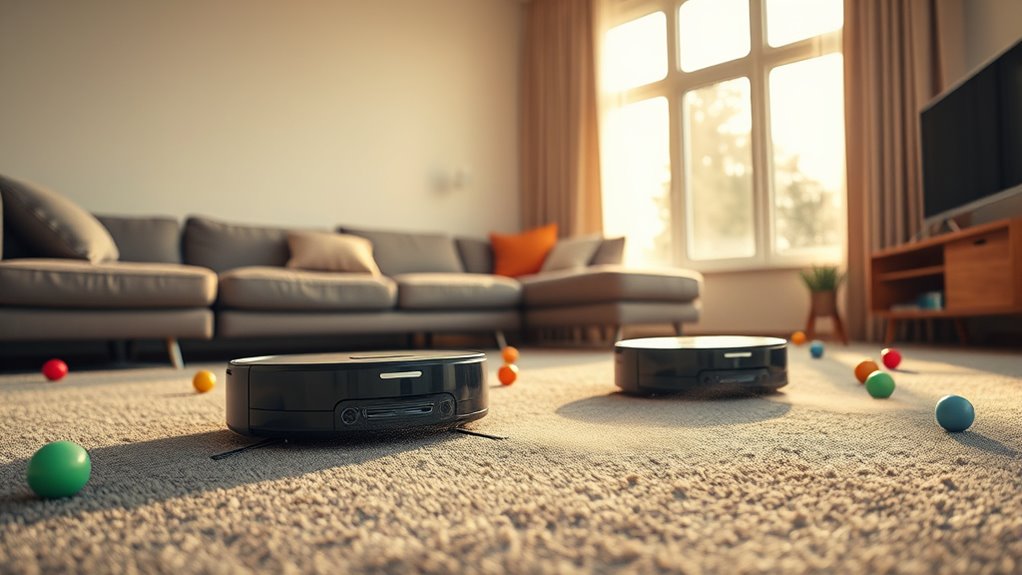
Managing multiple robots simultaneously can boost efficiency and productivity, but it also presents unique challenges. When you consider running two robot vacuums at the same time, it’s natural to wonder if they can clean together without causing issues. The good news is, in many cases, yes—you can operate two robots simultaneously, but there are important factors to bear in mind to make certain they work effectively and don’t interfere with each other.
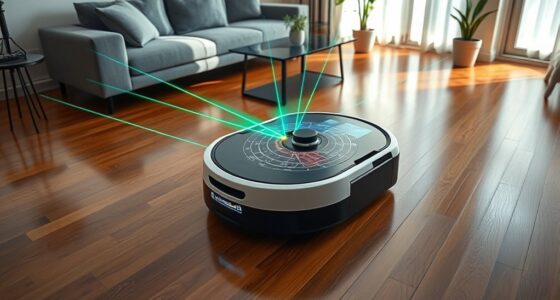
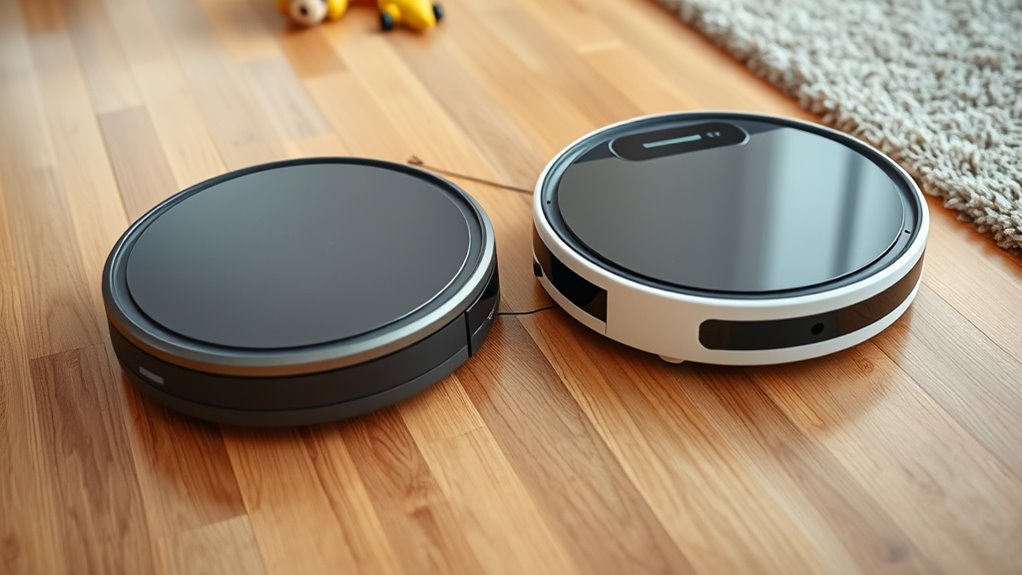
First, the key is to understand how your specific robot vacuums function. Many modern models are equipped with collision avoidance sensors and mapping technology. These features help the robots recognize obstacles, including each other, and navigate around them. If your robots have these capabilities, running them together can be quite successful. They can divide the cleaning task, cover more ground in less time, and reduce the likelihood of missed spots.
Modern robot vacuums with collision sensors and mapping technology can work together efficiently.
However, even with advanced sensors, communication between the robots is vital. Some models are designed to coordinate with others via a shared app or home Wi-Fi network. This means they can create a cleaning plan, assign zones, and avoid overlapping paths. If your robots support this kind of integration, you could set them to clean different areas or work in tandem without stepping on each other’s toes. Without this coordination, however, they might end up cleaning the same spots repeatedly or, worse, get stuck in a loop or bump into each other, wasting time and battery life.
Another consideration is the layout of your space. Open, unobstructed areas are ideal for running multiple robots, as they have fewer obstacles to navigate around. In cluttered or complex environments, the robots might struggle to find clear routes, leading to potential conflicts or missed spots. Clear pathways, minimal furniture, and well-defined zones can help maximize the efficiency of multiple robots working simultaneously.
Battery life also plays a role. Running two robots at once means double the power consumption, so you need to make certain both units are adequately charged before cleaning sessions. Managing charging schedules or setting them to operate at different times can help prevent interruptions. Additionally, keeping an eye on the robots during operation can help you quickly address any issues, like a robot getting stuck or encountering an obstacle. Understanding the technology behind smart navigation can further improve your success with multiple devices.
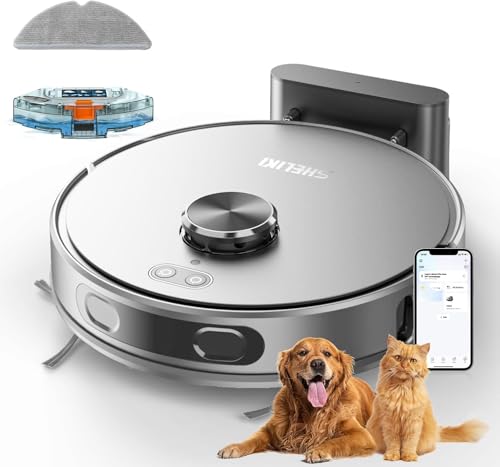
Robot Vacuum and Mop, Mapping Robotic Vacuums Cleaner with LiDAR Navigation Smart & Strong Suction, WiFi/App/Alexa/Voice Control, Obstacle Avoidance, for Home, Wood/Hard Floors, Pet Hair -Gray
360° LiDAR Smart Navigation: D60S robotic vacuum features advanced LiDAR mapping technology that scans your home in real-time,…
As an affiliate, we earn on qualifying purchases.
As an affiliate, we earn on qualifying purchases.
Frequently Asked Questions
Can Two Robots Coordinate Their Cleaning Routes Effectively?
Yes, two robots can coordinate their cleaning routes effectively. You should set up a shared map or use a compatible app to plan their paths, ensuring they don’t overlap or miss spots. Keep their sensors and navigation systems updated, and schedule cleaning times to avoid conflicts. With proper planning and technology, you’ll find that dual robot vacuums work seamlessly together, saving you time and ensuring thorough cleaning.
Do Different Brands of Robot Vacuums Work Well Together?
In the age of digital enlightenment, you’ll find that different brands of robot vacuums often struggle to work well together. They may have incompatible apps or conflicting navigation systems, causing overlaps or missed spots. While some newer models support universal smart home integrations, it’s best to stick with one brand for seamless coordination. Mixing brands usually hampers efficiency, so for peak cleaning, choose robots that are designed to be compatible.
How Do Robots Avoid Colliding During Simultaneous Cleaning?
You can prevent collisions by ensuring your robot vacuums use advanced navigation systems like LIDAR or cameras. These features help them detect obstacles and each other in real-time, adjusting their paths accordingly. Keep their sensors clean and update their firmware regularly. Many models communicate via Wi-Fi or app, allowing them to coordinate cleaning routes. Properly setting boundaries and scheduling cleaning times also minimizes the chances of bumping into each other.
Is It Necessary to Set up Separate Schedules for Each Robot?
You don’t need separate schedules for each robot, but it helps to prevent overlaps and collisions. Setting distinct times guarantees they don’t operate simultaneously in the same space, reducing the risk of interference. Many robot vacuums let you customize schedules easily, so you can coordinate cleaning times to maximize efficiency. Adjusting schedules based on your routine makes cleaning smoother and ensures your home stays tidy without robots getting in each other’s way.
What Are the Benefits of Running Multiple Robots Simultaneously?
Running multiple robots simultaneously boosts cleaning efficiency and saves you time. You can cover different areas at once, ensuring your entire space gets cleaned faster. It also prevents overlap, which conserves battery life and reduces cleaning time. Plus, with separate schedules, you can customize each robot’s task, making your cleaning routine more flexible and thorough. Overall, using multiple robots helps keep your home cleaner with less effort on your part.

roborock Q7 M5 Robot Vacuum and Mop Combo, 10,000Pa HyperForce Suction, Robotic Vacuum Cleaner, Dual Anti-Tangle System, APP-Controlled Mopping, LiDAR Navigation, for Pet Hair and Carpet, Black
10,000 Pa HyperForce Suction: Effortlessly lifts dust, dirt, pet hair, and debris from carpets, tiles, and hard floors,…
As an affiliate, we earn on qualifying purchases.
As an affiliate, we earn on qualifying purchases.
Conclusion
You might think running two robot vacuums saves time, but in reality, they often get in each other’s way, reducing efficiency. While some models are designed for collaboration, most struggle with coordination, leading to missed spots or even damage. The theory that two robots clean better together isn’t entirely true—unless they’re specifically built for teamwork. So, if you want a spotless floor, it’s best to choose a high-quality single robot or invest in models that are designed to work as a duo.

Tikom Robot Vacuum and Mop Combo, 5000Pa Robotic Vacuum Cleaner, 150 Min Max, App & Remote Control, Ideal for Hard Floor, Carpet, Pet Hair, Self-Charge(G8000 Max)
5000Pa Strong Suction: Robot Vacuum With 5000Pa suction power, it effortlessly removes pet hair, dust, and debris from…
As an affiliate, we earn on qualifying purchases.
As an affiliate, we earn on qualifying purchases.

Tikom Robot Vacuum and Mop, 6000Pa Robotic Vacuum Cleaner with Self-Emptying Base, 90 Days Capacity, LiDAR Navigation, Home Mapping, Ideal for Pet Hair, Hard Floors, Carpet (L8000 Plus)
90-Day Hands-Free Cleaning: The 3L self-emptying dustbag holds weeks of debris, eliminating the need for frequent emptying. Enjoy…
As an affiliate, we earn on qualifying purchases.
As an affiliate, we earn on qualifying purchases.