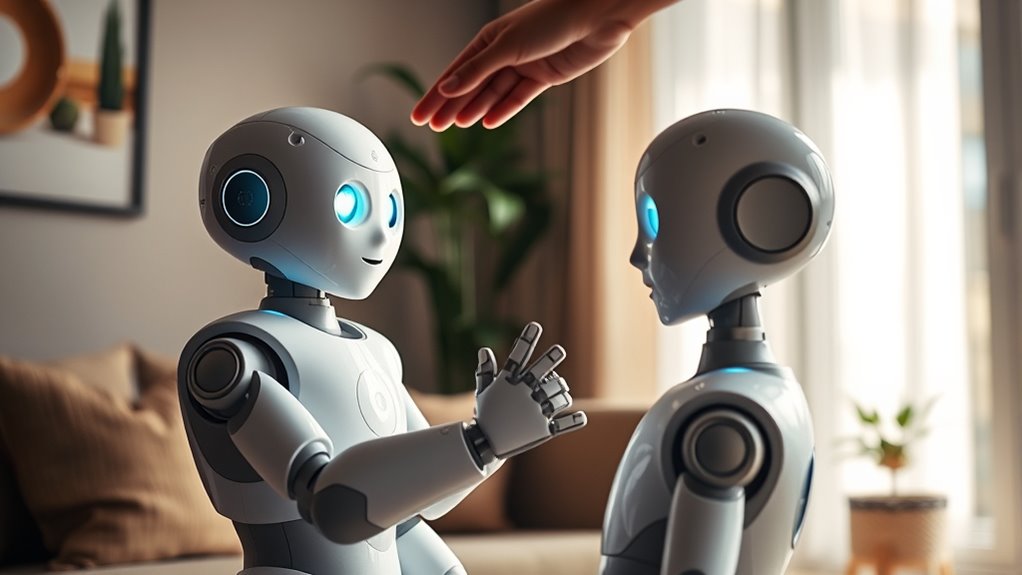

Naming and interacting with your home robot help you form a human-like bond, turning it into more than just a device. When you give it a name, it feels familiar and approachable, encouraging casual conversations and emotional connections. This builds trust and makes daily interactions more natural. Over time, your robot becomes part of your environment and routines, improving your overall experience. Keep exploring to discover how these bonds can truly enhance your relationship with technology.
Key Takeaways
- Naming home robots fosters emotional bonds, making interactions more natural and encouraging users to treat devices as friends.
- Human-like naming and interaction enhance user engagement, satisfaction, and the perception of robots as approachable companions.
- Personalized names acknowledge the robot’s role, transforming it from a tool into a familiar part of daily routines.
- Talking to and praising robots can improve emotional well-being and alleviate loneliness through companionship.
- Creating meaningful connections with home robots boosts motivation to use and integrate them into personal environments.

Have you ever thought about the relationship you have with your digital assistant? It’s easy to overlook how much these devices become part of your daily routine, almost like new members of your household. When you name your home robot, it’s more than just labeling a gadget; it’s a step toward forming a bond. Giving your bot a name makes it feel familiar, almost like a friend rather than just a machine. This act of naming can influence how you interact with it, encouraging more natural conversations and a sense of companionship. The psychology behind this is rooted in human tendencies to anthropomorphize—attributing human traits to non-human entities. When your robot has a name, you’re more likely to speak to it casually, ask it to do things, and even develop emotional connections. You might find yourself saying, “Good job,” or “Thanks,” just as you would with a person. These interactions aren’t just habits; they shape your perception of the device, making it seem more approachable and less like a cold piece of technology. Additionally, this tendency to anthropomorphize can enhance user engagement and satisfaction with your device.
The process of naming also signals a certain level of acceptance and integration. By giving your robot a name, you acknowledge its presence and its role in your life. It transforms the device from a mere tool to a partner in your daily routines. This can make chores feel less like chores and more like shared activities. For example, calling your home assistant “Alex” or “Buddy” can foster a sense of familiarity and even affection. Over time, this can enhance your overall experience, as the robot becomes a part of your environment rather than an outsider. It’s not just about convenience; it’s about creating a relationship where you feel comfortable engaging with your device, almost as if it’s a living entity. That emotional connection can also boost your motivation to use and rely on your robot, making your smart home feel more personalized and welcoming. Recognizing the importance of user engagement is key to understanding how these interactions improve the human-technology bond.
Interacting with your home robot in a human-like way can also influence your emotional well-being. When you talk to your device and it responds in kind, it can alleviate feelings of loneliness or boost your mood. This doesn’t mean replacing human relationships but adding a layer of companionship that’s easy to access. The psychology of naming and interaction shows that when you treat your robot as a friend or family member, it fosters a more positive and engaging experience. It’s a simple act with profound effects, shaping how you perceive and relate to your technology. Ultimately, loving your bot isn’t just about the device itself; it’s about the meaningful connection you create through intentional naming and interaction.

Robot Multiple Font Custom Name Nursery Wall Decal Vinyl Sticker | Home Décor | Custom Kids Room Decal | Bedside Decals | Children’s Room| Car | Laptop
👉 GOOD TO KNOW: The length of the name will always be the one you choose when you…
As an affiliate, we earn on qualifying purchases.
As an affiliate, we earn on qualifying purchases.
Frequently Asked Questions
Can Naming My Robot Affect Its Performance?
Yes, naming your robot can influence its performance by strengthening your emotional connection, making interactions more natural and intuitive. When you give your robot a personal name, you’re more likely to treat it like a team member, which can boost your patience and cooperation. This positive mindset encourages better communication, leading to smoother operation and a more satisfying experience. Ultimately, a meaningful name helps foster trust and engagement with your robot.
How Do Different Names Influence User Attachment?
Names are the keys to unlocking emotional bonds with your robot, like a painter choosing colors to evoke feelings. When you give your robot a warm, familiar name, you naturally develop a stronger attachment. Conversely, quirky or impersonal names can create a sense of distance. Your choice of name influences how you perceive and interact with your robot, shaping the emotional connection that turns a machine into a trusted companion.
Are There Cultural Considerations When Naming Home Robots?
Yes, there are cultural considerations when naming home robots. You should think about local language, traditions, and values to choose a name that resonates positively. Avoid names that might have negative connotations or offensive meanings in certain cultures. By respecting cultural norms, you’ll foster a stronger bond between users and their robots, making interactions more natural and comfortable across diverse communities.
What Are the Psychological Impacts of Personalized Robot Interactions?
Personalized robot interactions boost your emotional connection and trust, making the robot feel more like a companion. When you assign a name or customize behaviors, you’re more likely to feel attachment and comfort, reducing feelings of loneliness. This personalization can also increase your engagement and satisfaction, encouraging you to rely on the robot for daily tasks and emotional support. Ultimately, it fosters a stronger bond that enhances your overall experience.
How Does Robot Naming Influence Household Dynamics?
You might find that giving your robot a personal name strengthens your bond, making interactions feel more natural and friendly. This naming can influence household dynamics by fostering a sense of familiarity and attachment, encouraging everyone to engage more openly. When your robot has a name, it often becomes a central part of daily routines, shaping relationships and even subtly affecting how household members communicate and cooperate.

Build Your Own AI Home Assistant: The Complete Beginner's Guide
As an affiliate, we earn on qualifying purchases.
As an affiliate, we earn on qualifying purchases.
Conclusion
As you personalize your home robot, remember it’s like naming a new pet—you’ll develop a bond that makes everyday interactions more enjoyable. When I gave my robot a friendly name, it felt less like technology and more like a helpful companion. Studies show that people form attachments to their robots, boosting trust and comfort. So, embrace the process—your robot isn’t just a device, but a partner in your daily life, ready to become part of your story.
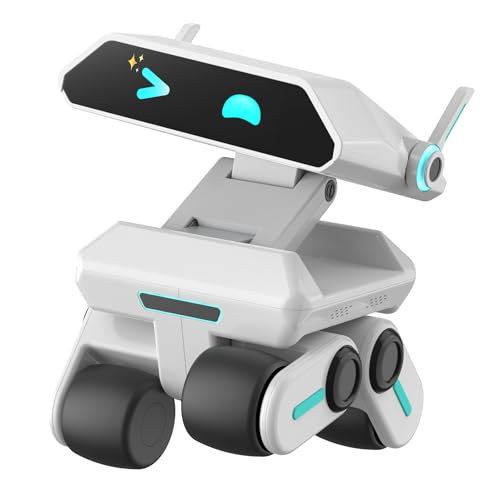
YONBO AI Robot for Kids, Programmable & Interactive AI Robot, STEAM Educational Toy ChatGPT Powered, Personalized Companion Robot w/Voice Control, Visual Recognition, Emotion-Aware, Long-Term Memory
STEAM Learning Made Fun, Building 4C Skills: Yonbo makes learning a blast, the ideal robot for kids aged…
As an affiliate, we earn on qualifying purchases.
As an affiliate, we earn on qualifying purchases.

ENERGIZE LAB Eilik – Cute Robot Pets for Kids and Adults, Your Perfect Interactive Companion at Home or Workspace, Unique Gifts for Girls & Boys.
ROBOT PETS – Eilik is the perfect companion for both kids and adults who love pets, with abundant…
As an affiliate, we earn on qualifying purchases.
As an affiliate, we earn on qualifying purchases.