
If your De’Longhi Magnifica Evo espresso machine is leaking water, it can disrupt your daily coffee routine and potentially cause damage. Understanding common causes and following safe troubleshooting steps can help you resolve the issue quickly and keep your machine running smoothly.

Get home appliances delivered free with Prime
- Fast, free delivery on millions of items
- Prime Video, Amazon Music and more included
- Member-only deals all year
This guide provides clear, step-by-step instructions to identify the source of the leak and fix it safely at home.
Key Takeaways
| Identify the leak source | Check for visible water drips and determine if the leak is from the water tank, hoses, or internal components. |
| Regular maintenance helps | Using recommended descalers and filters prevents buildup that can cause leaks. |
| Handle repairs carefully | Always unplug the machine before inspecting or repairing to avoid electrical hazards. |
| Replace damaged parts promptly | Worn hoses or faulty seals should be replaced to prevent ongoing leaks. |
Step 1: Unplug and Prepare Your Machine
- Turn off and unplug your De’Longhi Magnifica Evo to ensure safety.
- Remove the water tank and check for obvious cracks or damage.
Step 2: Inspect the Water Tank and Connections
- Ensure the water tank is seated properly and the lid is secure.
- Look for cracks or leaks around the tank and its connection points.
Step 3: Check Internal Components and Hoses
- Remove the drip tray and inspect hoses and internal seals for cracks or disconnections.
- Look for mineral buildup or debris that could cause blockages or leaks.
Step 4: Test for Leaks and Repair
- Fill the water tank, reattach it securely, and plug in the machine.
- Turn it on and observe for leaks during operation.
- If leaks occur, identify whether it’s from the tank, hoses, or internal seals.
Step 5: Fix or Replace Damaged Parts
- Replace any cracked hoses or seals with compatible parts.
- Use a descaler if mineral buildup is suspected, following product instructions.
The Products in This Guide
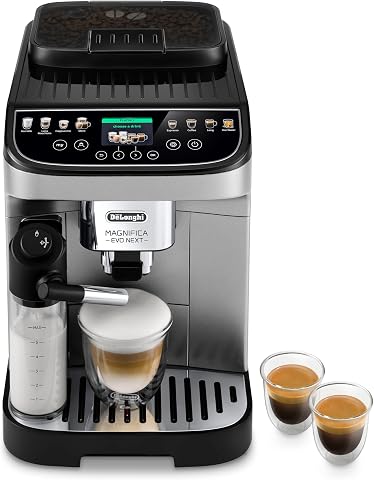
De’Longhi Magnifica Evo Next Fully Automatic Espresso Ma
- ✔ Power: 1450W
- ✔ Dimensions: 11.4 x 15.7 x 14.2 inches
- ✔ Warranty: 1 Year

De’Longhi Replacement Water Filter
- ✔ Replaces: De’Longhi DLSC002
- ✔ Size: Approx. 3 inches
- ✔ Weight: 0.2 lbs
De’Longhi Magnifica Evo Next Fully Automatic Espresso Ma
The De’Longhi Magnifica Evo Next Fully Automatic Espresso Machine offers a comprehensive solution for coffee lovers. Its programmable features, built-in grinder, and milk frother make it versatile. Regular maintenance, including descaling and filter replacement, helps prevent leaks.
Pros:
- Programmable for customized drinks
- Built-in grinder with 13 settings
- Automatic milk frother
- Fast heat-up time
Cons:
- Can be complex to troubleshoot for beginners
- Requires regular descaling
- Water tank may leak if not properly seated
Best for: Home baristas seeking a versatile, automatic espresso machine.
Not ideal for: Those uncomfortable with DIY repairs or descaling procedures.
Bottom line: A reliable espresso machine that benefits from regular maintenance to prevent leaks.
De’Longhi Replacement Water Filter
Using a high-quality water filter like the De’Longhi Replacement Water Filter can significantly reduce mineral buildup, which is a common cause of leaks. It’s easy to install and ensures cleaner water for better-tasting coffee.
Pros:
- Prevents lime scale buildup
- Easy to install
- Enhances machine performance
- Extends lifespan of your machine
Cons:
- Requires regular replacement
- Additional cost
- Only compatible with specific models
Best for: Maintaining optimal water quality and preventing leaks.
Not ideal for: If your machine already has internal damage, filter replacement alone won’t fix leaks.
Bottom line: A simple upgrade that helps prevent leaks by improving water quality.
Frequently Asked Questions
Can mineral buildup cause water leaks in my De’Longhi espresso machine?
Yes, mineral deposits from hard water can cause blockages or damage internal components, leading to leaks. Regular descaling helps prevent this.
How do I know if the water tank is the source of the leak?
Check for visible cracks, ensure the tank is seated properly, and observe if water leaks when the machine is in operation. Removing and inspecting the tank can reveal damage.
Is it safe to repair internal hoses myself?
Only attempt repairs if you are confident and have unplugged the machine. Otherwise, consult a professional or contact De’Longhi customer service.
How often should I descale my De’Longhi espresso machine?
Follow the manufacturer’s recommendations, typically every 2-3 months or after 200 cups, using a suitable descaling solution.
Keep Your Coffee Flowing Smoothly
Regular maintenance and careful inspection are key to preventing water leaks in your De’Longhi espresso machine. By following these troubleshooting steps and using quality replacement parts like filters and descalers, you can extend the life of your machine and enjoy perfect espresso every time.
Affiliate disclosure: As an Amazon Associate we earn from qualifying purchases. Prices and availability are accurate as of the time of publishing.
Halloween Picks
halloween
As an affiliate, we earn on qualifying purchases.