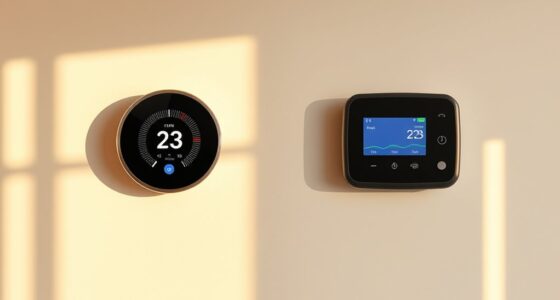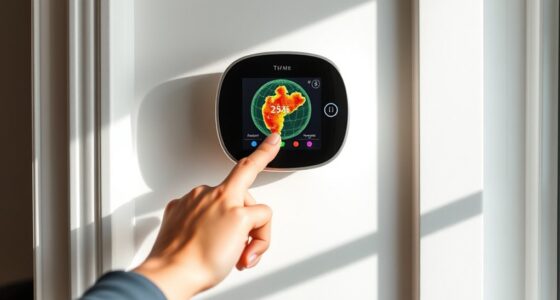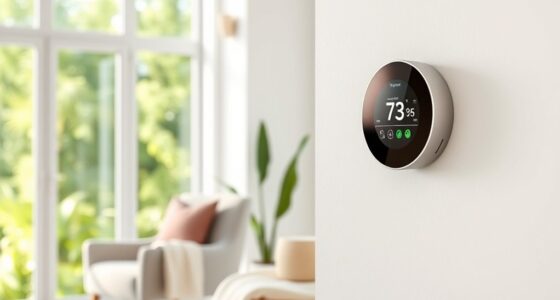
To weatherproof your smart home, you can integrate sensors that monitor rainfall, wind, and humidity to detect severe conditions early. Automated features like storm shutters, window locks, and retractable awnings activate remotely or automatically when needed. Reinforcing vulnerable areas, maintaining backup power, and scheduling regular tests ensure your home stays protected during storms. By combining these strategies, you create a resilient system that minimizes damage, and you’ll discover more ways to prepare as you explore further.
Key Takeaways
- Integrate weather sensors to monitor real-time conditions and detect severe weather early.
- Automate protective responses like storm shutters and window locks based on weather data.
- Reinforce vulnerable areas such as roofs and gutters, and ensure backup power for continued protection.
- Conduct regular system tests and maintenance to ensure automated responses function correctly during emergencies.
- Combine sensors, automation, reinforcement, and testing for a comprehensive, proactive weather preparedness system.

Have you ever been caught off guard by sudden rain or harsh winds? If so, you know how disruptive unexpected weather can be, especially when your home isn’t prepared. That’s where weatherproofing your smart home comes into play. Modern technology allows you to take proactive steps that protect your property and ensure your comfort, safety, and peace of mind. From smart sensors to automated systems, you can create a resilient home that responds dynamically to changing weather conditions.
First, you should focus on integrating weather sensors throughout your property. These devices monitor real-time weather data, such as rainfall, wind speed, humidity, and temperature. When they detect an approaching storm or severe weather, they can trigger automated responses. For example, if high winds are detected, sensors might activate storm shutters or secure outdoor furniture. Rain sensors can notify your system to close windows or retract awnings, preventing water intrusion. These sensors serve as your home’s early warning system, allowing you to react swiftly and minimize damage. Incorporating outdoor sensor networks can improve the coverage and accuracy of your weather monitoring.
Next, consider automating your home’s protective features. Smart window and door locks can be programmed to lock automatically when severe weather is forecasted, preventing break-ins or accidental openings that could lead to water damage. Automated storm shutters or hurricane-proof windows can be remotely activated or scheduled to close at certain weather thresholds. These systems not only safeguard your home but also reduce the stress of manual intervention during emergencies. You can control them via smartphone apps or voice commands, making it effortless to respond even if you’re away.
Additionally, reinforce vulnerable areas such as roofs, gutters, and drainage systems. Smart home systems can monitor these components for leaks, blockages, or wear, alerting you to necessary repairs before a storm hits. Installing backup power sources, like generators or battery systems, ensures that your weatherproofing measures stay operational during power outages caused by storms. This way, your home remains protected, and your essential systems continue functioning when they’re needed most.
Finally, don’t forget to plan and test your weatherproofing setup regularly. Run simulations or conduct drills to ensure your sensors and automation work seamlessly together. Keep software updated and review your system’s responses to different weather scenarios. By staying proactive, you reduce the risk of unexpected damage and enhance your home’s resilience. Weatherproofing a smart home isn’t just about technology; it’s about creating a thorough approach that keeps you safe, comfortable, and prepared for whatever nature throws your way.
Frequently Asked Questions
Can Smart Home Devices Withstand Flooding or Water Damage?
Smart home devices aren’t typically designed to withstand flooding or water damage. If exposed to water, they can short-circuit, malfunction, or become permanently damaged. To protect your devices, consider installing water-resistant covers, elevating critical equipment, and using smart sensors that alert you to leaks or floods early. While some hardware offers limited water resistance, full protection against flooding usually requires additional waterproofing measures and careful placement.
How Do Smart Homes Detect Approaching Storms Automatically?
Smart homes detect approaching storms automatically through integrated sensors and connected weather services. You’ll notice your system monitoring local weather data, radar, and alerts from trusted sources. When a storm is imminent, your smart devices can trigger actions like closing windows, activating shutters, or adjusting HVAC settings. This proactive approach helps protect your home, keeping you safe and minimizing damage by responding swiftly to changing weather conditions.
Are There Specific Certifications for Weatherproof Smart Home Equipment?
Yes, there are specific certifications for weatherproof smart home equipment. When you shop, look for labels like IP (Ingress Protection) ratings, which indicate water and dust resistance, or UL (Underwriters Laboratories) safety certifications, ensuring reliability under harsh conditions. These certifications help you trust that your devices can withstand storms and extreme weather, so your home stays protected. Always check product specs to confirm they meet industry standards before installation.
What Is the Lifespan of Weatherproofing Upgrades in Smart Homes?
The lifespan of weatherproofing upgrades in your smart home typically ranges from 5 to 10 years, depending on the quality of materials and installation. You should regularly inspect and maintain these upgrades to guarantee their effectiveness. Factors like weather conditions, usage, and technological advancements can affect durability. Staying proactive with maintenance and updates helps you maximize the longevity and performance of your weatherproofing investments.
How Much Do Weatherproofing Enhancements Typically Cost?
Like a fortress standing tall in a storm, weatherproofing enhancements in your smart home typically cost between $1,000 and $10,000, depending on the scope. You might spend on smart windows, reinforced roofing, or advanced sealing systems. While this investment can seem steep, it’s like building your castle’s defenses—protecting your home and savings from extreme weather’s wrath. The key is choosing upgrades that fit your needs and budget.
Conclusion
As you embrace smart home weatherproofing, think of your house as a sturdy ship prepared for storms. Just last year, a family’s automated shutters and sensors prevented flood damage during a sudden downpour, saving thousands. With these tools, you’re not just reacting to weather — you’re confidently steering through it. By investing in these technologies, you turn your home from vulnerable to resilient, ready to weather any storm that comes your way.