
TL;DR

Get home appliances delivered free with Prime
- Fast, free delivery on millions of items
- Prime Video, Amazon Music and more included
- Member-only deals all year
A warehouse in Castrop-Rauxel, Germany, was found to contain hundreds of rare Cold War-era computers and artifacts from Eastern Bloc and Western manufacturers. Curators are assessing the collection for potential museum acquisition.
In July 2006, a warehouse in Castrop-Rauxel, Germany, was found to contain hundreds of rare Cold War-era computers, including significant systems from Eastern Bloc countries. This discovery has attracted attention from technology historians and museums, as it offers a rare glimpse into the computing technology of the Cold War period.
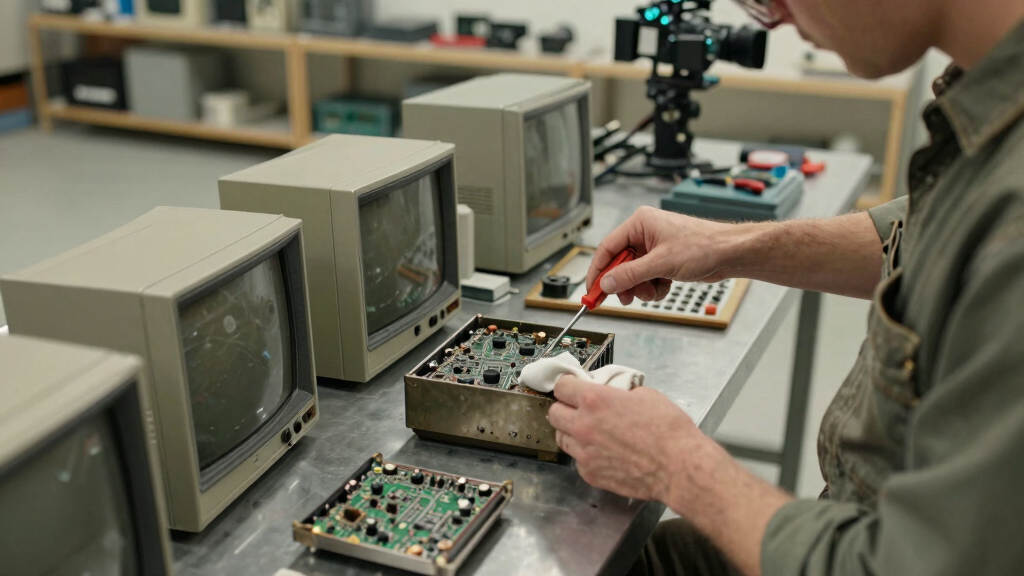
Curators from the Computer History Museum in Mountain View, California, visited the site after an anonymous tip led them to a large warehouse in the Ruhr region. Inside, they uncovered a vast collection of vintage computing hardware, media, and documentation dating from the 1930s to the 1980s. The collection includes mainframes, minicomputers, punch card equipment, and analog/hybrid systems, many of which are rare or previously undocumented.
The collection appears to have been assembled by Professor Walter Ameling, associated with RWTH Aachen University, and includes artifacts from major companies such as IBM, Siemens, Telefunken, and several Eastern Bloc manufacturers. Curators spent ten days cataloging and evaluating the items, with plans to potentially add select pieces to the museum’s permanent collection.
Historical and Technological Significance of the Collection
This discovery provides a physical record of Cold War-era computing technology from both Western and Eastern countries. It offers insights into the hardware, software, and documentation used during that period. The artifacts may contribute to a better understanding of technological developments and industrial history during the Cold War.
Products Worth Considering

Sonos Era 100 SL Compact Microphone-Free Speaker, Black

Samsung Galaxy Tab A11+ 11-Inch Tablet, 6GB RAM, 128GB Storage, Expandable, Gray

Bose Lifestyle Ultra Wireless Home Speaker
As an affiliate, we earn on qualifying purchases.
Cold War Computing and the Ruhr Region’s Industrial Legacy
The Ruhr region, historically known for coal and steel production, also hosted technological development during the Cold War, with several companies and research institutions involved in early computer systems. Prior to this find, many of these artifacts were thought to be lost or destroyed, making this collection a noteworthy discovery of that period’s technological landscape.
“Finding this collection provides valuable insight into Cold War technology. It is a significant resource for researchers and historians.”
— Dag Spicer, CHM Senior Curator
Details of Ownership and Preservation Status Still Unclear
The ownership history of the collection prior to its discovery remains uncertain, and it is not yet clear whether the items are operational or require restoration. The full extent of the collection has not been documented, and legal ownership rights are still being clarified.
Next Steps for Cataloging and Museum Acquisition
Curators plan to continue detailed cataloging of the artifacts, assess their condition, and determine which items are suitable for display or research. Negotiations with potential owners or heirs are ongoing, with the aim of securing the collection for public exhibition and scholarly study.
Key Questions
How rare are the Eastern Bloc computers found in the warehouse?
The Eastern Bloc systems, such as Bulgarian hard drives and Soviet computers, are considered rare outside their countries of origin, with few known surviving examples.
Are any of the computers operational?
It is not yet clear if any of the hardware is functional; many items are likely in need of restoration due to age and storage conditions.
What is the significance of this discovery for historical research?
The collection provides a tangible record of Cold War-era computing, offering insights into technological development, industrial history, and the context of the period.
Will this collection be publicly accessible?
Plans are underway for cataloging and potential display at museums, but access will depend on legal and preservation considerations.
How did the collection end up in the warehouse?
The exact history of ownership is unclear; it appears to have been assembled by a researcher or collector associated with the local university, but further investigation is needed.
Source: Hacker News