

Smart homes powered by AI are changing how you interact, share, and live together. They make household chores easier and allow for more personalized connections, but they also raise privacy concerns and can influence family roles and social boundaries. As access to these technologies varies, social divides may widen. While smarter security fosters safety, it might reduce neighborhood face-to-face interactions. To understand how these changes could reshape your daily life, consider the broader social and ethical implications that are worth exploring further.

Get home appliances delivered free with Prime
- Fast, free delivery on millions of items
- Prime Video, Amazon Music and more included
- Member-only deals all year
Key Takeaways
- Smart homes alter social interactions by enabling voice-controlled communication and shared experiences, impacting family dynamics.
- Increased automation reduces household chores but may weaken interpersonal skills and cooperation among residents.
- Access disparities to smart technology can widen socioeconomic divides, affecting social equity within communities.
- Enhanced connectivity through smart systems can improve neighborhood safety but also raises privacy and cyber threat concerns.
- The integration of AI challenges traditional living norms, emphasizing the need to balance technological benefits with maintaining human relationships.
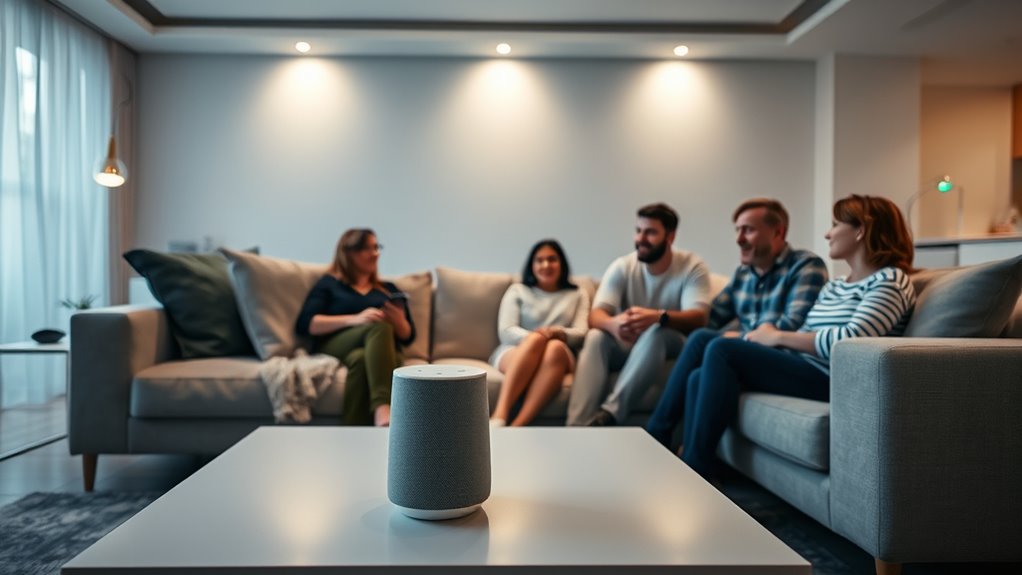
Have you ever wondered how smart homes are transforming the way we live? As these technologies become more integrated into our daily routines, they’re not just making life more convenient—they’re reshaping social dynamics in profound ways. When you step into a smart home, you might notice how your interactions with family, friends, and even neighbors change. Devices that respond to voice commands or predict your needs can foster a sense of connection, but they also raise questions about privacy and autonomy. You could find yourself sharing more personal information with AI systems, trusting them to manage everything from lighting to security. This shifts the traditional boundaries of privacy, impacting how you and your loved ones interact in shared spaces.
Smart homes reshape interactions, blending convenience with privacy challenges and altering social connections in everyday life.
Smart homes also influence social roles and responsibilities. For example, automation might reduce the burden of household chores, giving everyone more leisure time. But it can also lead to a reliance on technology, potentially weakening interpersonal skills or the sense of communal effort that often binds families together. If a voice-activated assistant handles meal planning or cleaning, you might rely less on your partner or children to contribute to household tasks, subtly changing family dynamics. Additionally, as smart homes become more common, they could deepen social divides. Access to these technologies often depends on economic means, which can widen existing inequalities. Those who can afford the latest systems may enjoy a higher quality of life, while others might feel left behind, leading to a digital divide that extends into private spaces.
Furthermore, smart homes influence how communities connect. With integrated security and neighborhood networks, you might feel safer and more connected, sharing alerts or coordinating responses. Conversely, the increased connectivity could also introduce new risks, such as cyber threats or privacy breaches that impact entire communities. The social fabric of neighborhoods might shift as residents become more reliant on centralized systems, possibly reducing face-to-face interactions. While some see smart homes as fostering a safer, more efficient environment, others worry about the erosion of spontaneous social encounters that traditionally defined community life. It’s also important to recognize that the technological infrastructure required for these systems may not be equally available to all, which can further influence social equity.
Ultimately, these technological advancements challenge how you live together. They offer incredible convenience and safety, but they also require careful consideration of the social implications. As AI and smart systems continue to evolve, you’ll need to navigate the balance between leveraging their benefits and maintaining meaningful human connections. It’s a delicate dance—embracing innovation while safeguarding the social bonds that make our shared lives rich and resilient.
smart home security system with privacy features
As an affiliate, we earn on qualifying purchases.
As an affiliate, we earn on qualifying purchases.
Frequently Asked Questions
How Do Smart Homes Affect Privacy and Data Security?
Smart homes can threaten your privacy and data security since they collect and transmit personal information constantly. You might not realize how much data is shared or who has access to it. Hackers could exploit vulnerabilities, risking your sensitive info. To protect yourself, use strong passwords, regularly update device firmware, and choose reputable brands that prioritize cybersecurity. Stay informed about privacy policies to keep your personal life safe.
Will AI in Smart Homes Lead to Increased Social Isolation?
AI in smart homes won’t turn you into a hermit, but it might make you feel more isolated if you rely too much on technology. Instead of engaging with others, you could spend hours chatting with virtual assistants. To avoid this, balance tech use with real-world interactions. Remember, AI is here to assist, not replace genuine human connections—so stay social and keep relationships strong.
How Accessible Are Smart Home Technologies for Elderly and Disabled?
Smart home technologies are becoming more accessible for elderly and disabled individuals, with many devices designed for easy use and voice activation. You’ll find that manufacturers are prioritizing affordability and user-friendly features, making it easier for you to control your environment. However, some advanced systems may still require technical knowledge or assistance, so ongoing support and customization are crucial to guarantee everyone benefits equally from these innovations.
What Are the Implications for Household Job Roles With AI Integration?
AI in smart homes acts like a silent conductor, orchestrating household tasks seamlessly. You’ll find your roles shifting as AI takes on chores like cleaning, cooking, and managing schedules. This frees you to focus on relationships and personal growth. However, it also means adapting to new tech, trusting automation, and possibly losing some traditional roles. Embrace the change, and you’ll discover a rhythm that could make daily life more harmonious.
Can Smart Homes Help Reduce Energy Consumption and Environmental Impact?
Smart homes can substantially reduce your energy consumption and environmental impact. By using AI to optimize heating, cooling, and lighting based on your habits, you can lower utility bills and lessen your carbon footprint. Smart systems automatically adjust settings for efficiency, detect waste, and suggest eco-friendly actions. With these technologies, you actively participate in conserving resources, making your home more sustainable and environmentally friendly.
voice-controlled smart home assistant
As an affiliate, we earn on qualifying purchases.
As an affiliate, we earn on qualifying purchases.
Conclusion
As you consider the rise of smart homes, it’s no coincidence that technology often brings people closer or pushes them apart. While AI can foster connection and convenience, it also challenges privacy and independence. Ultimately, the way you choose to embrace or resist these changes will shape how you live and share your space. Maybe, just maybe, your next decision about smart technology will be the most important step toward truly reimagining how we live together.
smart home automation kits for family living
As an affiliate, we earn on qualifying purchases.
As an affiliate, we earn on qualifying purchases.
smart lighting and climate control devices
As an affiliate, we earn on qualifying purchases.
As an affiliate, we earn on qualifying purchases.
Cold & flu season Picks
humidifiers
As an affiliate, we earn on qualifying purchases.