TL;DR

Get home appliances delivered free with Prime
- Fast, free delivery on millions of items
- Prime Video, Amazon Music and more included
- Member-only deals all year
UT Austin researchers have developed a jacket that can extract drinkable water from the air. This innovation could address water scarcity, especially in arid regions. The technology is still in testing phases and not yet commercially available.
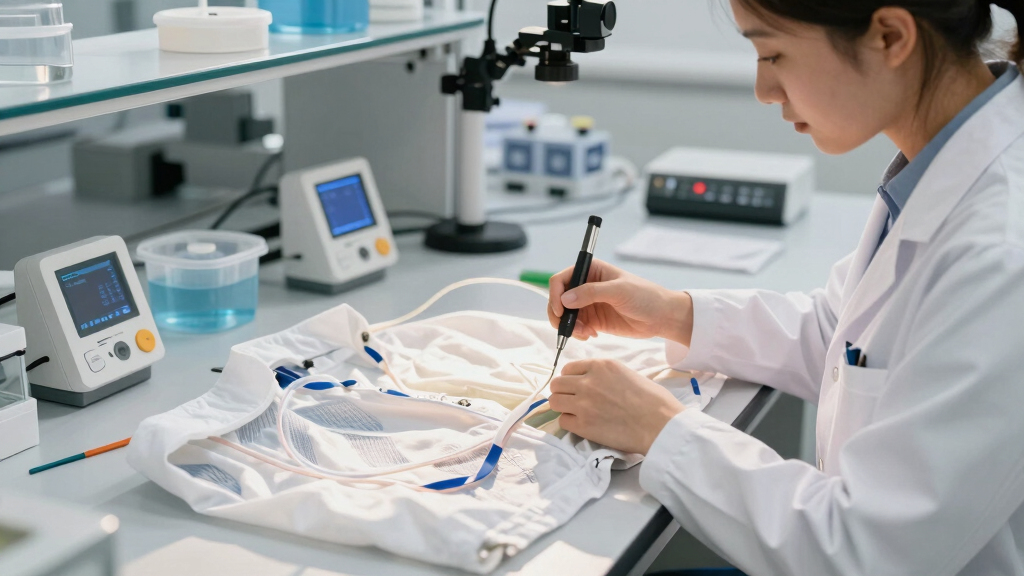
Researchers at the University of Texas at Austin have developed a wearable jacket capable of extracting drinkable water directly from atmospheric humidity, a breakthrough in personal water collection technology. The innovation aims to address water scarcity issues and provides a portable solution for hydration in arid environments.
The jacket integrates a novel moisture-harvesting system that condenses water vapor from the air and filters it into safe drinking water. According to the research team, the prototype is capable of producing up to one liter of water per day under typical conditions, with higher yields in more humid environments.
This development was announced by UT Austin researchers on May 25, 2026, who stated that the technology uses advanced materials and a compact cooling system embedded within the jacket’s fabric. The device is designed to be lightweight and suitable for everyday wear, making it a potential tool for outdoor enthusiasts, disaster relief efforts, and populations facing water shortages.
While the concept has shown promising results in laboratory settings, it remains in the experimental stage. The researchers emphasized that further testing is needed to optimize performance across different climates and to develop scalable manufacturing processes.
Potential Impact on Water Scarcity Solutions
This innovation could significantly impact regions facing water scarcity by providing a portable, personal water source. If successfully commercialized, the jacket could reduce dependence on external water supplies in disaster zones, remote locations, and arid areas, improving access to safe drinking water and enhancing resilience against climate-related challenges.
Experts suggest that wearable water-harvesting devices like this could complement existing water infrastructure and contribute to sustainable resource management, especially as climate change intensifies drought conditions worldwide.
Products Worth Considering

Jackery Solar Generator 1000 V2 with 200W Solar Panel, 1070Wh

Jackery Explorer 300 Portable Power Station, 292Wh

Jackery HomePower 3600 Plus Portable Power Station, 3584Wh, 3600W
As an affiliate, we earn on qualifying purchases.
Advances in Wearable Water Harvesting Technologies
The concept of extracting water from air is not new; previous research has focused on large-scale atmospheric water generators. However, the development of wearable devices represents a new frontier in personal hydration technology. Prior efforts have faced challenges related to efficiency, weight, and practicality.
UT Austin’s recent breakthrough builds on these efforts by integrating advanced materials and miniaturized cooling systems into a wearable form factor. The university has been exploring innovative solutions for water collection and environmental sustainability, with this jacket representing a significant step forward.
“This jacket demonstrates the potential for personal, portable water harvesting solutions that could supplement traditional water sources.”
— an anonymous researcher
Performance and Scalability Still Under Evaluation
It is not yet clear how well the jacket will perform outside laboratory conditions, especially in dry or windy environments. The durability, battery life, and cost of production remain unconfirmed, and the timeline for commercial availability has not been announced.
Further Testing and Development Phases
UT Austin researchers plan to conduct field trials in diverse climates to assess the jacket’s real-world performance. They aim to refine the design for mass production and seek partnerships for commercialization. No specific launch date has been provided.
Key Questions
How much water can the jacket produce daily?
The prototype can produce up to one liter of drinkable water per day under typical humidity conditions.
Is the jacket suitable for everyday wear?
Yes, the jacket is designed to be lightweight and comfortable for daily use, though further testing is ongoing to optimize its practicality.
When will this technology be available for consumers?
There is no confirmed timeline for commercial release; the technology is currently in experimental stages and undergoing further testing.
Can this jacket work in very dry climates?
The efficiency of water extraction decreases in low-humidity environments, and it is not yet clear how well it performs under such conditions.
Source: designboom