
Among the best Matter-compatible smart home devices, I’d put the Eve Energy smart plug first for buyers who want energy monitoring and broad platform flexibility; the Tapo Matter Smart Plug Mini is a better value for everyday outlet control, while the Tapo P400M stands out for outdoor use. The main tradeoffs are whether you need energy data, dimming, multiple outlets, or installation that involves household wiring. Matter support can simplify cross-platform control, but device type, home network, and controller setup still shape what works well. Read on for my comparison of 15 plugs, switches, outlets, bulbs, and power strips, with picks matched to different needs.

Get home appliances delivered free — and shop member deals
- Fast, free delivery on millions of items
- Access to Prime Big Deal Days deals on October 6–7
- Prime Video, Amazon Music and more included
Complete the kit


Key Takeaways
- Eve Energy is the strongest all-around plug choice for buyers who want Matter compatibility plus energy monitoring, while simpler plugs make more sense when power data is unnecessary.
- Tapo covers more kinds of jobs than any other lineup here, with compact indoor plugs, outdoor dual outlets, a power strip, in-wall outlets, and dimmer and standard switches.
- Multi-packs shift the value calculation: Tapo, Kasa, Linkind, and GE Cync offer several devices per package, which can make a coordinated room setup easier than buying one unit at a time.
- Smart bulbs and smart switches solve different lighting problems: bulbs add color or app control without replacing a switch, while switches preserve control of the room’s wired fixtures.
- Installation separates the easiest picks from the most involved: plug-in devices need no wiring, but in-wall outlets and switches require electrical compatibility and may call for a qualified installer.
| Eve Energy Outlet (Matter) – Smart Outlet & Power Meter |  | Best for Local Control and Energy Monitoring | Connectivity: Matter, Thread | Outlet positions: 2 | Control: App, voice, remote | VIEW LATEST PRICE | See Our Full Breakdown |
| TP-Link Tapo Matter Supported Smart Plug Mini, 15A/1800W, Compact, White (3-Pack) |  | Best Value for Adding Matter Plugs | Pack size: 3 plugs | Connectivity: Bluetooth, Matter, Wi-Fi | Wi-Fi band: 2.4 GHz | VIEW LATEST PRICE | See Our Full Breakdown |
| Tapo P400M Matter Outdoor Smart Plug with Two Individually Controlled Outlets | 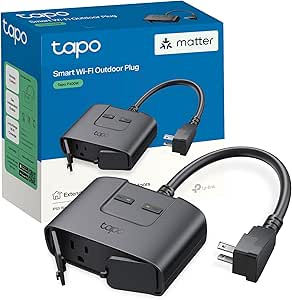 | Best Outdoor Matter Plug | Outlets: 2 individually controlled AC outlets | Connectivity: Matter, 2.4 GHz Wi-Fi | Weather resistance: IP65 | VIEW LATEST PRICE | See Our Full Breakdown |
| Linkind Matter Smart Light Bulbs, Works with Apple Home, Alexa, Google Home |  | Best for Colorful Smart Lighting | Light type: LED | Bulb shape and base: A19, E26 | Light output: 800 lumens | VIEW LATEST PRICE | See Our Full Breakdown |
| Kasa Matter Smart Light Switch, Single Pole, 3-Pack |  | Best for Whole-Room Lighting Control | Pack size: 3 switches | Switch type: Single-pole, on/off | Connectivity: Matter, 2.4 GHz Wi-Fi | VIEW LATEST PRICE | See Our Full Breakdown |
| Tapo Smart Wi-Fi Power Strip, Matter, P316M, Energy Monitoring |  | Best for Managing Multiple Devices | AC outlets: 6 | USB ports: 3 | Maximum current: 15 A | VIEW LATEST PRICE | See Our Full Breakdown |
| Eve Energy (Matter) – Smart Plug with App and Voice Control |  | Best for Privacy-Focused Thread Homes | Connectivity: Matter and Thread | Voltage: 120 V | Amperage: 15 A | VIEW LATEST PRICE | See Our Full Breakdown |
| Tapo Matter Smart 3-Way Dimmer Switch Kit (S515D) |  | Best for Two-Location Lighting Control | Circuit type: 3-way | Dimming range: 0–100% | Connectivity: Matter and Wi-Fi | VIEW LATEST PRICE | See Our Full Breakdown |
| Enbrighten Matter Indoor Smart Plug, 1 Grounded Outlet, White, 1 Pack | 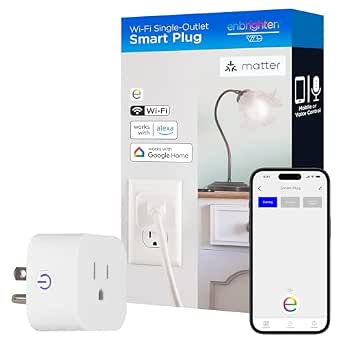 | Best Simple Matter Plug | Connectivity: Matter and Wi-Fi | Operating voltage: 120 V | Wattage: 1250 W | VIEW LATEST PRICE | See Our Full Breakdown |
| Tapo P210M Matter-Compatible Smart In-Wall Outlet |  | Best for Permanent Dual-Outlet Control | Model: P210M | Outlet control: Two devices, independently or simultaneously | Connectivity: Matter and 2.4 GHz Wi-Fi | VIEW LATEST PRICE | See Our Full Breakdown |
| Linkind Matter Smart LED Bulbs, A19, 4-Pack |  | Best for Tunable White Lighting | Pack size: 4 bulbs | Bulb shape and base: A19, E26 | Brightness: 800 lumens | VIEW LATEST PRICE | See Our Full Breakdown |
| Linkind Matter Smart Plug, Compatible with Apple Home, Alexa, Siri, Google Home | 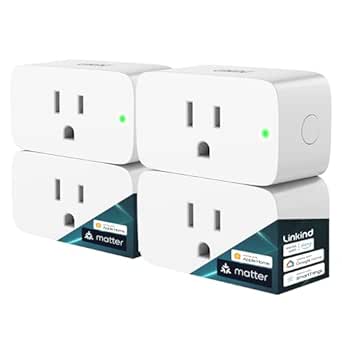 | Best for Local-Control Simplicity | Plug type: Type A | Power capacity: 1800W | Amperage: 15 A | VIEW LATEST PRICE | See Our Full Breakdown |
| Kasa KP125MP4 Matter Smart Plug with Energy Monitoring, 4-Pack |  | Best for Energy Monitoring | Model: KP125MP4 | Pack size: 4 plugs | Maximum wattage: 1800 W | VIEW LATEST PRICE | See Our Full Breakdown |
| GE Cync Matter Smart Plug, Wi-Fi, 3-Pack |  | Best for Hub-Free Setup | Pack size: 3 plugs | Operation mode: On/off | Operating voltage: 120 V | VIEW LATEST PRICE | See Our Full Breakdown |
| TP-Link Tapo Matter Smart Light Switch 2-Pack | 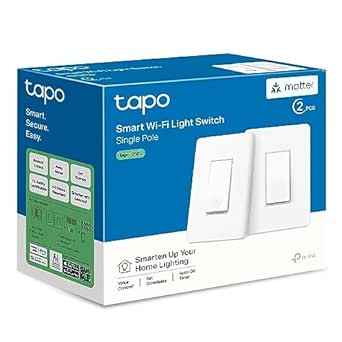 | Best for Built-In Lighting | Model: Tapo S505 | Unit count: 2 switches | Operating voltage: 100–120 VAC | VIEW LATEST PRICE | See Our Full Breakdown |
| Matter-compatible smart home device | Connectivity | Operating voltage |
|---|---|---|
| Eve Energy Outlet | Matter, Thread | 120 volts |
| TP-Link Tapo Matter Supported | Bluetooth, Matter, Wi-Fi | 120 volts |
| Tapo P400M Matter Outdoor Smar | Matter, 2.4 GHz Wi-Fi | 125 volts |
| Linkind Matter Smart Light Bul | — | — |
| Kasa Matter Smart Light Switch | Matter, 2.4 GHz Wi-Fi | 100–120 VAC, 50/60 Hz |
| Tapo Smart Wi-Fi Power Strip | — | — |
| Eve Energy | Matter and Thread | — |
| Tapo Matter Smart 3-Way Dimmer | Matter and Wi-Fi | 100–120 V |
| Enbrighten Matter Indoor Smart | Matter and Wi-Fi | 120 V |
| Tapo P210M Matter-Compatible S | Matter and 2.4 GHz Wi-Fi | 125 V |
| Linkind Matter Smart LED Bulbs | 2.4 GHz Wi-Fi and Bluetooth | — |
| Linkind Matter Smart Plug | Matter and Wi-Fi | — |
| Kasa KP125MP4 Matter Smart Plu | Matter, Wi-Fi, SmartThings | 120 V |
| GE Cync Matter Smart Plug | Wi-Fi, Bluetooth, Matter | 120 V |
| TP-Link Tapo Matter Smart Ligh | Matter and Wi-Fi | 100–120 VAC |
More Details on Our Top Picks
Eve Energy Outlet (Matter) – Smart Outlet & Power Meter
I’d choose the Eve Energy Outlet when I want a built-in, two-outlet installation with power monitoring and local Matter control. Unlike the plug-in Tapo P125M, it replaces an existing outlet, so it avoids a bulky adapter and can control its two receptacles independently. Its Thread connectivity and local operation appeal to buyers who want smart-home control without relying on a cloud service. The tradeoff is installation: this is not a quick plug-in upgrade, and full functionality depends on a compatible hub or Thread router. It also supports 120-volt wiring only. Compared with the outdoor Tapo P400M, Eve is meant for an indoor wall installation, not weather-exposed equipment.
Pros:- Controls two outlets independently from a built-in installation
- Power monitoring adds visibility into connected-device use
- Matter and Thread support local smart-home connectivity
- Works with Apple HomeKit, Alexa, and Google Home
Cons:- Requires in-wall installation and suitable wiring
- A compatible hub or Thread router is needed for full functionality
- Limited to 120-volt use
Best for: Homeowners who want two independently controlled, in-wall outlets with power monitoring and local Matter control
Not ideal for: Renters or anyone who wants a plug-in device, lacks a compatible hub or Thread router, or needs international voltage support
- Connectivity:Matter, Thread
- Outlet positions:2
- Control:App, voice, remote
- Operating voltage:120 volts
- Maximum wattage:1800 watts
- Mounting:Flush-mounted
- Dimensions:1.7 × 2.93 × 4.7 inches
- Color:Black
Our verdict“Choose Eve if you want a permanent, locally controlled smart outlet with power monitoring; choose the Tapo P125M for simpler plug-in setup.”
TP-Link Tapo Matter Supported Smart Plug Mini, 15A/1800W, Compact, White (3-Pack)
The Tapo P125M three-pack is my pick for adding Matter control to several everyday devices without replacing outlets. Its compact plug-in format keeps the wall receptacle easier to use than a larger adapter, while Bluetooth onboarding can simplify initial setup. Matter support lets it fit into Apple Home, Alexa, Google Home, or SmartThings setups, and schedules give lamps and other appliances predictable routines. Compared with the in-wall Eve Energy Outlet, the Tapo is easier to move and does not call for wiring work, but it lacks the listed power-monitoring feature and uses Wi-Fi rather than Thread. Its 2.4 GHz-only connection may also be a limitation for buyers with a different network setup. This is an indoor plug, not a weather-rated alternative to the Tapo P400M.
Pros:- Three plugs let buyers automate multiple devices
- Compact design preserves access to nearby outlet space
- Bluetooth onboarding can ease initial setup
- Matter supports use with several major smart-home platforms
Cons:- Requires a 2.4 GHz Wi-Fi connection
- Does not list power monitoring, unlike the Eve Energy Outlet
- Plug-in form factor takes up a wall receptacle
Best for: Households that want to add Matter control to several indoor lamps or appliances using plug-in adapters
Not ideal for: Buyers who need outdoor protection, power monitoring, or a device that can use a network other than 2.4 GHz Wi-Fi
- Pack size:3 plugs
- Connectivity:Bluetooth, Matter, Wi-Fi
- Wi-Fi band:2.4 GHz
- Operating voltage:120 volts
- Maximum wattage:1800 watts
- Mounting:Plug-in, surface mount
- Color:White
- Control:App, voice, scheduling
Our verdict“Pick the Tapo P125M for a straightforward multi-room Matter upgrade; choose Eve if built-in installation and power monitoring matter more.”
Tapo P400M Matter Outdoor Smart Plug with Two Individually Controlled Outlets
For outdoor automations, the Tapo P400M fills a role the indoor Eve Energy Outlet and Tapo P125M cannot: it has IP65 weather resistance and two independently controlled AC outlets. That makes it easier to schedule separate garden lights or other compatible outdoor devices without adding a second plug. Matter support connects it to Apple Home, Alexa, Google Home, and SmartThings, while the stated open-field Wi-Fi range can help where an exterior receptacle is farther from the router. This model relies on 2.4 GHz Wi-Fi, however, rather than the Thread connection in the Eve outlet, and the stated range depends on open-field conditions. I’d reserve it for outdoor use; for indoor lamps and small appliances, the three-pack Tapo P125M is the more flexible fit.
Pros:- IP65 weather resistance supports outdoor installation
- Two outlets can be controlled and scheduled independently
- Matter works with Apple Home, Alexa, Google Home, and SmartThings
- Rated for an operating temperature range from -4°F to 122°F
Cons:- Requires 2.4 GHz Wi-Fi
- Wi-Fi range may be reduced by walls and other obstructions
- Larger outdoor-focused design is less suited to everyday indoor plug use
Best for: Homeowners automating two outdoor devices, such as garden lighting, from a weather-exposed outlet
Not ideal for: Buyers who need Thread connectivity, a plug for indoor-only use, or dependable range through walls and obstructions
- Outlets:2 individually controlled AC outlets
- Connectivity:Matter, 2.4 GHz Wi-Fi
- Weather resistance:IP65
- Operating voltage:125 volts
- Maximum wattage:1800 watts
- Open-field Wi-Fi range:Up to 300 feet
- Operating temperature:-4°F to 122°F (-20°C to 50°C)
- Mounting:Wall mount
Our verdict“Choose the P400M for two individually controlled outdoor loads; opt for the Tapo P125M if your smart plugs will stay indoors.”
Linkind Matter Smart Light Bulbs, Works with Apple Home, Alexa, Google Home
The Linkind A19 bulb brings Matter-compatible smart-home control to lighting without changing a switch or adding a plug. Its color options, preset scenes, and music-sync effects suit rooms where atmosphere matters as much as simple on/off automation. At 800 lumens, it is a familiar 60-watt incandescent-equivalent format, so it can replace many standard indoor bulbs while adding app and voice control. Compared with the Kasa Matter Smart Light Switch, this bulb can change color and light temperature, but it controls only the bulb it replaces; a switch can manage a broader lighting circuit. The supplied data lists Wi-Fi connectivity, not Matter, so buyers should verify the exact Matter support for their setup before choosing it for a Matter-only system. It also requires 2.4 GHz Wi-Fi and is generally unsuitable for traditional dimmer switches.
Pros:- Color options and preset scenes support flexible room lighting
- Music-sync effects add dynamic lighting control
- A19 shape and E26 base fit many standard fixtures
- 800-lumen output and 25,000-hour listed operating life
Cons:- Product data lists Wi-Fi rather than Matter, so Matter compatibility is unclear
- Requires a 2.4 GHz Wi-Fi network
- Generally not compatible with traditional dimmer switches
Best for: Buyers who want app-controlled color, scenes, and music-synced effects in a standard indoor E26 fixture
Not ideal for: Anyone requiring verified Matter connectivity, outdoor lighting, traditional dimmer compatibility, or control of multiple bulbs from one switch
- Light type:LED
- Bulb shape and base:A19, E26
- Light output:800 lumens
- Wattage:9 watts
- Incandescent equivalent:60 watts
- Color temperature:Up to 6500 Kelvin
- Connectivity listed:2.4 GHz Wi-Fi
- Listed operating life:25,000 hours
Our verdict“Choose this Linkind bulb for colorful Wi-Fi lighting effects, but verify Matter support first if protocol compatibility is a firm requirement.”
Kasa Matter Smart Light Switch, Single Pole, 3-Pack
The Kasa KS205P three-pack makes more sense than the Linkind bulb when I want to automate existing ceiling fixtures or a group of lights from the wall. Matter support connects it with Apple Home, Alexa, Google Home, and SmartThings, while schedules, timers, and Away Mode add useful routines without requiring color-changing bulbs. Unlike the Tapo P125M, it replaces a wall switch rather than controlling one plugged-in device, making it a better fit for fixed lighting. The tradeoff is installation: it is a single-pole on/off switch, requires a neutral wire, and works on 2.4 GHz Wi-Fi. Buyers should check their wiring and circuit type before selecting it; it is not a substitute for a three-way switch or a dimmer.
Pros:- Three switches support smart control in multiple rooms
- Matter compatibility spans Apple Home, Alexa, Google Home, and SmartThings
- Scheduling, timers, and Away Mode support useful routines
- Controls fixed lighting circuits rather than a single plug-in device
Cons:- Requires a neutral wire and in-wall installation
- Limited to single-pole on/off control
- Requires 2.4 GHz Wi-Fi
Best for: Homeowners with neutral-wire, single-pole lighting circuits who want Matter control across several rooms
Not ideal for: Renters, homes without a neutral wire at the switch box, or buyers needing dimming or three-way control
- Pack size:3 switches
- Switch type:Single-pole, on/off
- Connectivity:Matter, 2.4 GHz Wi-Fi
- Neutral wire:Required
- Operating voltage:100–120 VAC, 50/60 Hz
- Maximum wattage:600 watts
- Dimensions:5.04 × 3.33 × 1.41 inches
- Certification:UL
Our verdict“Choose the Kasa three-pack for fixed single-pole lights and multiple rooms; choose the Linkind bulb for color effects without replacing a wall switch.”
Tapo Smart Wi-Fi Power Strip, Matter, P316M, Energy Monitoring
The Tapo P316M is the most useful pick here when one outlet needs to serve a cluster of electronics: it offers six individually useful AC outlets and three USB ports, with monitoring and schedules to help track or automate connected devices. Matter support and local control add flexibility, though the strip still relies on Wi-Fi for full functionality. Compared with the single-outlet Enbrighten Matter Indoor Smart Plug, it consolidates more gear and avoids filling several wall sockets. Its long body, at 16.2 inches, is the tradeoff: it can crowd a desk or block nearby outlets, and setup may take more work than a basic plug. I’d choose it for a media center or home office, not for a tight space or a buyer who only needs to automate one lamp.
Pros:- Six AC outlets and three USB ports accommodate a mix of devices
- Energy monitoring and schedules support usage tracking and automation
- Matter compatibility supports control across major smart home platforms
- Local control can keep some functions available during internet outages
Cons:- Long 16.2-inch body may crowd furniture or nearby outlets
- Full functionality requires Wi-Fi
- Setup may be more involved than pairing a single smart plug
Best for: Home-office and media-center owners who want to automate and monitor several devices from one wall outlet
Not ideal for: People with limited desk or floor space, or buyers who only need to switch one appliance
- AC outlets:6
- USB ports:3
- Maximum current:15 A
- Voltage:120 V
- Plug type:Type B, North American
- Dimensions:16.2 x 4.8 x 1.9 in
- Weight:1.4 lb
Our verdict“Choose the P316M when you need one Matter-compatible strip for several electronics; pick a compact single plug if space matters more.”
Eve Energy (Matter) – Smart Plug with App and Voice Control
The Eve Energy is a strong fit for buyers who value local control and want a Matter plug that also uses Thread for smart-home connectivity. Its no-cloud approach keeps control and data handling closer to home, a meaningful distinction from Wi-Fi plugs such as the Enbrighten Matter Indoor Smart Plug. It also works with major platforms, so it suits households that want flexibility rather than a single-assistant setup. The tradeoff is that Thread operation requires a compatible hub, adding a piece of infrastructure that a Wi-Fi plug does not need. This is a single-outlet device, too, so it cannot replace the multi-device Tapo P316M. I’d put Eve ahead for privacy and Thread-based setups, but not for shoppers seeking multiple switched outlets or the simplest hub-free installation.
Pros:- Matter and Thread support suit multi-platform, Thread-based homes
- Local control without cloud dependency or data tracking
- Works with Apple Home, Alexa, Google Home, and SmartThings
- Compact plug-in design for a single appliance
Cons:- Requires a compatible hub for operation
- Controls one outlet rather than multiple devices
- Limited to 120 V use
Best for: Privacy-conscious smart-home owners with a compatible Thread border router who want a single Matter-controlled outlet
Not ideal for: Buyers without a compatible hub, or anyone who needs to control several devices from one plug
- Connectivity:Matter and Thread
- Voltage:120 V
- Amperage:15 A
- Plug compatibility:Type B socket; Type A and B appliances
- Dimensions:2.36 x 2.76 x 1.52 in
- Weight:85 g
- Warranty:2 years
Our verdict“Pick Eve Energy for privacy-focused local control over Thread, provided your home already has a compatible hub.”
Tapo Matter Smart 3-Way Dimmer Switch Kit (S515D)
For a hallway, stairwell, or larger room with switches at both ends, the Tapo S515D solves a problem a plug-in device cannot: it brings Matter-compatible dimming to a 3-way circuit, with brightness adjustment from 0–100%. Schedules, fade effects, and away mode add practical lighting automation, while the included satellite dimmer keeps control at both locations. Compared with the Tapo P210M in-wall outlet, this kit is designed around lighting rather than appliance control; the P210M is the better match for switched receptacles and energy tracking. The S515D demands more from the installation, though: it needs a neutral wire, 2.4 GHz Wi-Fi, and comfort with electrical work. I’d choose it for replacing a two-location lighting setup, but skip it if wiring access is uncertain or a plug-in solution will do.
Pros:- Controls lighting from two locations with a 0–100% dimming range
- Matter support works with major smart home platforms
- Fade effects, schedules, and away mode add useful lighting automation
- Kit includes a satellite dimmer and two wall plates
Cons:- Requires neutral wiring and a 2.4 GHz Wi-Fi network
- Installation involves electrical wiring and may call for a certified electrician
Best for: Homeowners upgrading a two-switch lighting circuit who want Matter dimming and automated schedules
Not ideal for: Renters or buyers whose switch boxes lack neutral wiring, or who want a no-wiring smart device
- Circuit type:3-way
- Dimming range:0–100%
- Connectivity:Matter and Wi-Fi
- Wi-Fi band:2.4 GHz
- Wiring requirement:Neutral wire required
- Operating voltage:100–120 V
- Maximum power load:600 W
- Compatible platforms:Amazon Alexa, Apple HomeKit, Google Home, Samsung SmartThings
Our verdict“Choose the S515D for a Matter-enabled 3-way lighting circuit; opt for the Tapo P210M if your priority is controlling outlets instead.”
Enbrighten Matter Indoor Smart Plug, 1 Grounded Outlet, White, 1 Pack
The Enbrighten VIBE keeps smart-plug control straightforward: plug it in, connect one appliance, and use Matter-compatible control, schedules, or voice commands. Its single grounded outlet makes it a simpler fit than the multi-outlet Tapo P316M when the goal is automating a lamp, fan, or seasonal decoration without adding a whole power strip. It also avoids the hardwiring needed by the Tapo P210M. That simplicity comes with limits: it uses Wi-Fi rather than Thread, requires a 2.4 GHz network, and is rated for indoor use only. The supplied product data names Alexa and Google Assistant as controllers, so buyers relying on another platform should verify their setup before choosing it. I’d favor this for a basic indoor automation, not for energy monitoring or controlling several devices.
Pros:- Simple plug-in setup for a single grounded device
- Matter and Wi-Fi support remote control and automation
- Scheduling can automate lamps, fans, and seasonal décor
- Compact format takes less space than a power strip
Cons:- Requires a 2.4 GHz Wi-Fi network
- Indoor use only
- No energy monitoring is listed in the supplied product details
Best for: Smart-home newcomers who want to automate one indoor lamp, fan, or decoration through a Matter-compatible controller
Not ideal for: Buyers who need energy monitoring, outdoor use, Thread connectivity, or control of multiple outlets
- Connectivity:Matter and Wi-Fi
- Operating voltage:120 V
- Wattage:1250 W
- Outlet type:1 grounded outlet
- Mounting type:Plug-in
- Switch type:SPST
- Controller types listed:Amazon Alexa, Google Assistant
Our verdict“Choose Enbrighten for straightforward Matter control of one indoor device, but use the Tapo P316M if you need multiple outlets or energy monitoring.”
Tapo P210M Matter-Compatible Smart In-Wall Outlet
The Tapo P210M is the in-wall choice for buyers who want a built-in finish and independent control of two devices from one receptacle. Matter support, scheduling, and energy monitoring make it more capable than a basic wall outlet, while local app control during internet outages adds resilience. Compared with the plug-in Enbrighten Matter Indoor Smart Plug, the P210M avoids occupying an existing outlet and can manage two connected devices; compared with the Tapo P316M, it trades extra ports and USB charging for a cleaner permanent installation. The cost of that finish is practical rather than monetary: installation requires neutral wiring, a 2.4 GHz Wi-Fi network, and electrical work. I’d choose it for an owner planning a lasting outlet upgrade, not for renters or anyone who needs a tool-free setup.
Pros:- Controls two devices independently or together
- Matter support spans Alexa, Apple Home, Google Home, and SmartThings
- Energy monitoring and scheduling support informed automation
- Local app control is available when the internet is down
Cons:- Requires neutral wiring and in-wall installation
- Setup requires a 2.4 GHz Wi-Fi network
Best for: Homeowners replacing a receptacle who want two independently controlled Matter outlets with energy monitoring
Not ideal for: Renters, homes without neutral wiring, or buyers who need a plug-in device they can move easily
- Model:P210M
- Outlet control:Two devices, independently or simultaneously
- Connectivity:Matter and 2.4 GHz Wi-Fi
- Wiring requirement:Neutral wire required
- Maximum current:15 A
- Operating voltage:125 V
- Maximum wattage:1875 W
- Operating temperature:32°F–104°F
Our verdict“Pick the P210M for permanent, dual-device outlet control; choose a plug-in model if installation flexibility matters more.”
Linkind Matter Smart LED Bulbs, A19, 4-Pack
I’d choose these Linkind Matter bulbs when adjustable white light matters more than adding smart control to an entire circuit. Their 2700K–6500K range lets you shift from warmer evening light to cooler task lighting, while dimming down to 1% offers more control than a basic on/off plug such as the GE Cync Matter Smart Plug. The four-bulb pack also makes it easier to coordinate several fixtures through schedules and group control. The tradeoff is that these are Wi-Fi bulbs, not a replacement for a wall switch: they need 2.4 GHz Wi-Fi, and traditional dimmer switches are incompatible. Some platform setups also call for a compatible hub or controller. Pick these for flexible room lighting; choose a smart switch instead if you want to automate fixed ceiling lights at the circuit.
Pros:- Matter support works across compatible smart home platforms
- Adjustable 2700K–6500K white light and 1%–100% dimming
- Four bulbs support coordinated scenes, schedules, and group control
- Rated for up to 25,000 hours of use
Cons:- Requires 2.4 GHz Wi-Fi
- Not compatible with traditional dimmer switches
- Some platform integrations require a compatible hub or controller
Best for: Households that want Matter-controlled bulbs with adjustable white color for several indoor lamps or fixtures
Not ideal for: Buyers with traditional dimmer switches, a 5 GHz-only network, or a preference for controlling fixed lights at the wall switch
- Pack size:4 bulbs
- Bulb shape and base:A19, E26
- Brightness:800 lumens
- Color temperature:2700K–6500K
- Wattage:8.5 watts
- Dimming:1%–100%, app or voice control
- Connectivity:2.4 GHz Wi-Fi and Bluetooth
- Smart home compatibility:Matter, Apple Home, Amazon Alexa, Google Home
Our verdict“Choose this four-pack if you want adjustable white light and app or voice control at individual bulbs, rather than circuit-level control from a smart switch.”
Linkind Matter Smart Plug, Compatible with Apple Home, Alexa, Siri, Google Home
This Linkind Matter Smart Plug is a straightforward way to automate a lamp or small appliance without changing its wiring. Its standout difference is offline LAN communication, which can keep local control available when the internet connection drops. Like the GE Cync Matter Smart Plug, it supports major platforms and scheduled or voice control; Linkind also lists a 15A, 1800W capacity. That makes it a flexible pick for everyday plug-in devices, though the product data does not identify energy monitoring, unlike the Kasa KP125MP4. Setup depends on a 2.4 GHz network, and full platform integration may require a Matter-certified controller. I’d favor it for a buyer who values local operation over usage tracking, but skip it if monitoring power consumption is part of the goal.
Pros:- Matter support spans several major smart home platforms
- Offline LAN communication supports local control without internet access
- 15A and 1800W capacity for compatible plug-in devices
- Supports remote control, voice commands, and scheduling
Cons:- Supports 2.4 GHz Wi-Fi only
- Full platform integration requires a Matter-certified hub or controller
- No energy monitoring is listed, unlike the Kasa KP125MP4
Best for: Smart home owners who want a general-purpose Matter plug with local network control for lamps and compatible appliances
Not ideal for: Buyers who need energy-use tracking, a 5 GHz-only Wi-Fi network, or platform setup without a compatible Matter controller
- Plug type:Type A
- Power capacity:1800W
- Amperage:15 A
- Wi-Fi support:2.4 GHz
- Connectivity:Matter and Wi-Fi
- Control features:Remote control, voice commands, and scheduling
- Local control:Offline LAN communication
- Certification:ETL
Our verdict“Pick the Linkind plug for local control and broad platform support, but choose the Kasa KP125MP4 if energy monitoring is a priority.”
Kasa KP125MP4 Matter Smart Plug with Energy Monitoring, 4-Pack
The Kasa KP125MP4 earns its place by adding energy monitoring to a practical four-plug Matter set. That distinction matters if you want to track the consumption of compatible devices, not just switch them on and off. It also supports local network control when the internet is unavailable, and its compact design helps leave the neighboring outlet usable. Compared with the Linkind Matter Smart Plug, Kasa gives you explicit usage monitoring; Linkind instead emphasizes offline LAN communication and lists a 15A rating. Kasa’s listed maximum is 1800W, and it needs 2.4 GHz Wi-Fi, so it is not a fit for every network setup. I’d choose it for multi-room control and power tracking, but look elsewhere if the main need is a plug designed for a different Wi-Fi band.
Pros:- Energy monitoring adds usage information beyond basic on/off control
- Four-pack supports automation in multiple rooms
- Local network control works when the internet is unavailable
- Compact design helps avoid blocking an adjacent outlet
Cons:- Requires a 2.4 GHz Wi-Fi network
- Maximum rated load is 1800W
- Four plugs may be more than a buyer needs for a single device
Best for: Households that want several Matter smart plugs and want to monitor energy use from connected devices
Not ideal for: Buyers without a 2.4 GHz Wi-Fi network or those who need a single plug rather than a four-pack
- Model:KP125MP4
- Pack size:4 plugs
- Maximum wattage:1800 W
- Operating voltage:120 V
- Connectivity:Matter, Wi-Fi, SmartThings
- Wi-Fi band:2.4 GHz
- Control methods:App and voice
- Warranty:2-year limited warranty
Our verdict“Choose the Kasa four-pack if energy tracking across several outlets is more useful to you than the simpler control focus of the Linkind plug.”
GE Cync Matter Smart Plug, Wi-Fi, 3-Pack
I’d put the GE Cync Matter Smart Plug near the top for buyers who want to add outlet control without a separate hub: the product description explicitly says no hub is required. Its three-plug pack offers a practical middle ground between the four-plug Linkind and Kasa sets, and the compact form is designed to leave the second wall outlet available. Like the Linkind Matter Smart Plug, it handles remote control, voice commands, and schedules across major platforms. Unlike the Kasa plug, though, no energy monitoring is listed, so it is less informative for tracking appliance use. It is also specified for indoor use, and the description gives no Wi-Fi band details. Choose GE for simple Matter on/off automation; skip it if power data or outdoor operation matters.
Pros:- No separate hub required according to the product description
- Works with Apple Home, Alexa, Google Assistant, and SmartThings
- Compact design leaves the second wall outlet available
- Supports remote, voice, and scheduled on/off control
Cons:- Indoor use only
- Energy monitoring is not listed, unlike the Kasa KP125MP4
- Wi-Fi band is not specified in the provided product data
Best for: Buyers who want a three-pack of indoor Matter plugs with major platform support and no separate hub
Not ideal for: People who need energy monitoring, outdoor-rated control, or a product with a clearly specified Wi-Fi band
- Pack size:3 plugs
- Operation mode:On/off
- Operating voltage:120 V
- Maximum wattage:1800 W
- Connectivity:Wi-Fi, Bluetooth, Matter
- Compatible platforms:Amazon Alexa, Google Assistant, Samsung SmartThings, Apple Home
- Hub requirement:No hub required
- Use:Indoor
Our verdict“Choose GE Cync for hub-free Matter control of indoor plug-in devices, but pick Kasa if energy monitoring is a deciding feature.”
TP-Link Tapo Matter Smart Light Switch 2-Pack
For fixed lights, the TP-Link Tapo Matter Smart Light Switch solves a different problem from the bulbs and plug-in models here: it puts smart control at the wall switch, so the connected lighting is not dependent on keeping a bulb’s physical switch on. The two-pack, Matter compatibility, scheduling, and local LAN control suit buyers updating more than one circuit. Compared with the Linkind Matter bulbs, it controls a circuit rather than each bulb’s color temperature or dimming; compared with the GE Cync plug, it requires installation instead of simply plugging in. That installation has real limits: the product requires a neutral wire and supports only a single-pole setup. Buyers unfamiliar with household wiring may need an electrician. Choose it for compatible one-way circuits, not for renters or multi-way lighting.
Pros:- Matter-certified for use across major smart home platforms
- Local LAN control supports operation without internet access
- Two-pack can update more than one compatible circuit
- App-guided installation, voice control, and scheduling
Cons:- Requires a neutral wire
- Limited to single-pole circuits
- Installation may be challenging for buyers without electrical experience
Best for: Homeowners replacing standard single-pole switches who want Matter control of built-in lights across two circuits
Not ideal for: Renters, homes without a neutral wire, or buyers needing a three-way or other multi-way switch setup
- Model:Tapo S505
- Unit count:2 switches
- Operating voltage:100–120 VAC
- Wattage:600 watts
- Circuit type:Single-pole, one-way
- Connectivity:Matter and Wi-Fi
- Control methods:App, touch, and voice
- Installation requirement:Neutral wire required
Our verdict“Choose the Tapo switch for compatible fixed lighting circuits, but select bulbs or a plug-in device if you cannot modify the wall wiring.”
How We Picked
I ranked these 15 devices by how well their Matter support serves a real household need, not by the number of features on a box. I weighed device type and usefulness, setup and installation demands, control options, and practical distinctions such as energy monitoring, outlet count, dimming, and indoor versus outdoor placement. I also compared single devices with multi-packs, since a bundle can be more useful for outfitting several rooms but less suitable when a buyer needs only one unit.
The order favors products with a clear advantage for a broad group of Matter shoppers, then gives specialized options credit when they solve a distinct problem. That puts the Eve Energy smart plug ahead for its combination of plug-in simplicity and energy information, while the Tapo Matter Smart Plug Mini earns a value role for basic control. Outdoor use, three-way wiring, integrated outlets, and bulb-versus-switch choices matter more to particular homes, so those options rank by fit rather than being treated as interchangeable upgrades. Matter branding alone does not guarantee identical features across platforms; buyers should check device capabilities and controller compatibility before choosing.
Factors to Consider When Choosing Best Matter-compatible Smart Home Devices
Choosing among Matter devices starts with the job you want to solve, then narrows to installation, platform, and control needs. These broader checks can prevent a common mismatch: buying a compatible device that does not fit the wiring, placement, or level of control you actually need.
Match the device type to the job
Decide whether you need to control an existing appliance, lighting circuit, or individual bulb before comparing models. A smart plug is the least invasive route for lamps and compatible plug-in equipment, but it does not dim a connected lamp or make an unsuitable appliance safe to control. A smart bulb offers lighting features at the bulb, though a wall switch that cuts its power can make app control unavailable until power returns. A smart switch controls the wired lighting circuit and keeps ordinary bulbs usable, but requires checking the switch box and wiring. For several lamps or electronics in one area, a power strip may reduce clutter; choose an in-wall outlet when you want built-in control and accept the more involved installation. Buying the wrong device class is a more common source of disappointment than choosing between two Matter labels.
Check Matter support across your actual platforms
Matter is meant to help smart-home devices work across supported ecosystems, but it does not make every feature identical in every app. Before buying, check that your controller and app support the device category, and confirm whether features such as energy monitoring or advanced lighting controls are exposed where you plan to use them. A device may need a compatible controller or hub for setup and remote control, depending on the ecosystem and configuration. If more than one person uses the home, check how device sharing and permissions work in your chosen platform. Avoid assuming that Matter compatibility means every brand-specific app feature transfers to Apple Home, Alexa, Google Home, or another controller. Choose around the control interface your household will use every day.
Treat installation and wiring as a hard filter
Plug-in devices and bulbs generally avoid electrical work, while smart switches and in-wall outlets require a closer look at the existing installation. Check the circuit type, number of switches controlling the light, available box space, and the product’s stated wiring requirements before ordering. Three-way dimmer kits need a matching multi-switch setup; they are not a substitute for a standard single-pole switch. If wiring is unfamiliar or the box does not match the product instructions, get help from a qualified electrician rather than guessing. Also account for the time and disruption of replacing wall hardware compared with adding a plug. A low-effort device that fits your setup can be a better choice than a more integrated one that creates an installation project.
Decide whether energy monitoring will change your choices
Energy monitoring can help identify how much power a connected device uses, but it is useful only when you plan to act on the information. It may help compare an appliance’s operating patterns or spot a device that draws power when you expected it to be idle. If you mainly want a schedule or voice command, paying attention to energy data may add complexity without changing your routine. Check whether the readings appear in the app or platform you intend to use, since access and presentation can vary. Do not treat a smart plug as a substitute for a dedicated electrical monitor or as permission to connect any high-load appliance. For several monitored devices, compare the usefulness of separate plugs with a power strip that centralizes control.
Choose bundles around rooms, not just device count
Multi-packs can simplify outfitting a group of lamps or switches, but the right bundle depends on how many suitable locations you have. Count the devices you will automate and check whether each is appropriate for the same product type: a pack of bulbs is not useful if some fixtures need a different bulb shape or remain controlled by a frequently used wall switch. A multi-outlet unit offers a different benefit from several independent plugs, since separate control matters when devices need different schedules. Outdoor outlets also need a location and use case that match their stated environment rating, rather than being placed wherever an indoor plug would fit. Start with the room plan, then compare bundles with individual devices. This avoids ending up with unused units or a setup that cannot control equipment separately.
Pay for the feature that removes a real limitation
A higher-feature device makes sense when it solves a need you already have: outdoor control, dimming, integrated outlets, or energy monitoring. For straightforward on/off automation, a basic Matter plug may be all you need, and a more feature-rich model can add little practical value. Conversely, a buyer replacing a wall switch across several locations may value a compatible multi-pack more than a single premium plug. Consider what happens if your internet connection is unavailable, and check the device and controller documentation for local-control behavior rather than assuming every setup responds the same way. Keep network placement in mind too; adding many smart devices can expose weak Wi-Fi coverage. Buy the smallest feature set that fits the task, then expand once you know which parts of the setup your household uses.
Frequently Asked Questions
Do I need a Matter hub to use these devices?
Not every setup uses a separate box called a hub, but Matter devices need a compatible controller in the ecosystem you choose. That role may be handled by a smart speaker, display, or other supported home device, depending on the platform and product. Some features, remote access, or sharing arrangements can also depend on the controller’s capabilities. Check the current requirements for the exact device and ecosystem before purchase rather than assuming your phone alone will handle everything. If you already use a Matter controller, confirm it supports the device category you want to add.
Will Matter let me use every feature in any smart-home app?
No. Matter can provide common device control across supported ecosystems, but brands and platforms may expose different features in their apps. Basic functions such as switching a compatible plug on and off may be available where a more specific feature, such as energy data, is not. Check the product documentation and the platform’s device support details for the features that matter to you. If a brand app is needed for setup or advanced options, factor that into your preferred control routine. Do not buy on the assumption that the Matter logo makes all app experiences identical.
Should I choose a smart bulb or a Matter smart switch?
Choose a smart bulb when you want control at the bulb, such as color or lighting changes, and can keep power available to it. A smart switch is a better fit when you want the wall control to operate the circuit and ordinary bulbs to remain usable. Bulbs can be simpler to install, but a person turning off the physical switch can interrupt app control. Switches involve wiring and need to match the home’s circuit and switch arrangement. Think about how people in the room use the lights, not just which device has more features.
Can I use a smart plug for any appliance?
No. A smart plug should be used only with equipment that fits its electrical ratings and the manufacturer’s guidance. Large heating or motor loads may not be suitable, and switching power to some appliances can interrupt settings or create a safety issue. Check the appliance’s requirements against the plug’s stated limits before connecting it. A plug also provides on/off control, not a replacement for the appliance’s own controls or safety features. If the intended device is high-load or critical to household safety, choose a control method designed for that use.
Can I add Matter devices from different brands to one home?
Often, yes: Matter is designed to support compatible devices from different brands within one supported smart-home ecosystem. Each product still needs to meet the requirements of the controller and device category, and setup steps can differ by brand. Some households may also need to share a device with another platform or household member, which can require extra configuration. Start by adding a single device and confirming that its needed functions appear in your chosen app before building a larger setup. That small check can reveal controller or feature limits before you buy a whole bundle.
Conclusion
For most buyers who want a flexible plug with useful energy information, I’d choose the Eve Energy smart plug as the best overall. The Tapo Matter Smart Plug Mini is my best value for uncomplicated indoor on/off control, while the Tapo Matter Smart Plug Mini multi-pack suits buyers outfitting several locations. For beginners, I’d start with a plug-in device rather than wiring a switch; it is a simpler way to confirm that a Matter controller and app fit the household. Buyers seeking a premium or specialized setup should choose by the job: Eve Energy for monitoring, the Tapo P400M for outdoor dual-outlet control, the Tapo power strip for a shared cluster, and the three-way dimmer kit for compatible multi-switch lighting. If integrated wall control is the priority, compare the Kasa and Tapo switches or the Tapo in-wall outlet against your wiring before buying. The best choice is the one that matches your controller, installation, and daily use—not simply the one with the longest feature list.
Fall yard work Picks
leaf blowers
As an affiliate, we earn on qualifying purchases.